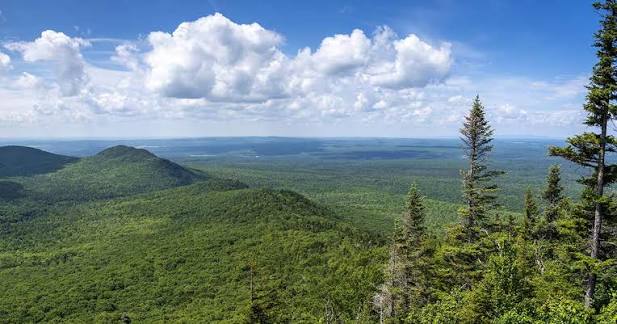
A mountain range carries no awareness of where a state ends. It gives no attention to borders drawn across a map, changes no part of its character at a checkpoint, and asks no question about whether the people living along its slopes call themselves American or Canadian. The Appalachian Mountains have followed their ancient course for hundreds of millions of years, rising through the southern reaches of the United States and reaching finally toward the cold waters of the North Atlantic.
Following that spine from south to north reveals something larger than a collection of states and provinces. Along the way, people have developed remarkably similar ways of living, cooking, working, and telling stories, even though national borders eventually cut through the region.
The journey opens in Mississippi, where the land begins its slow climb toward the southern mountains. From there the route moves through Alabama, where forested foothills rise through valleys before the range continues into Georgia. Georgia carries the traveler deeper into the southern Appalachian world, where forests thicken and the terrain finally resembles the image many people picture when they hear the word Appalachia. The path continues through South Carolina and into North Carolina, where the Blue Ridge and the Great Smoky Mountains create some of the most recognized scenery found anywhere along the range.
North Carolina also holds a deep mountain traditions. Music, storytelling, farming, food preservation, and family recipes have survived across generations here, and a meal served in a mountain home can reveal as much about its people as any historical marker standing along the road.
From North Carolina the mountains continue through Tennessee, where the eastern side of the state becomes woven into the larger Appalachian fabric. Ridges and valleys stretch onward into Virginia, carrying travelers into a region where mountain communities built their own distinctive customs while carrying many older traditions along with them.
Virginia opens naturally into Kentucky and West Virginia, where the mountains take on a different character altogether. Here the landscape becomes tied to coal country, deep hollows, winding roads, and communities built around the resources the mountains offered. West Virginia in particular carries a strong Appalachian identity, its ridges and valleys shaped by generations of families who built lives among them.
From West Virginia the journey moves into Maryland and Pennsylvania, where the mountains grow gentler in places, yet the Appalachian spirit remains present in small communities, wooded ridges, and old farms carrying the story northward. Ohio adds its own chapter, its eastern hills and forests long tied to the larger mountain culture even as the terrain flattens elsewhere across the state.
New York marks a turning point, where the northern Appalachian landscape starts to feel like an entirely different world. Climate and vegetation shift the farther north a traveler goes, and the Green Mountains of Vermont soon rise as one of the clearest expressions of the northern Appalachians. New Hampshire carries the range further into New England, and by the time the journey reaches Maine, the landscape has transformed completely from the warm southern forests of Mississippi and Alabama. Cooler air settles over more northern forests, and the mountains themselves grow harder and more weathered with age.
The Appalachian story keeps moving. Maine marks the final American state along this route, and Mount Katahdin, the northern terminus of the Appalachian Trail, feels like a natural ending from the American side of the border. Geologically speaking, the range continues onward regardless.
Crossing into Quebec changes the experience immediately. French becomes the language of daily life, communities take on a different cultural rhythm, and the mountains carry new names. The Notre Dame Mountains extend the Appalachian system further north, eventually reaching the Gaspé Peninsula and the Chic Choc Mountains. Standing in a place that felt culturally distant from the Appalachia I once knew, while recognizing the same ancient mountains beneath my feet, left a lasting mark on how I came to understand the entire range. The mountains had crossed the border, and so had some of the older traditions carried along with them.
Traveling through the Canadian provinces reveals food traditions that feel surprisingly familiar to anyone raised around Appalachian cooking. Potatoes, cabbage, root vegetables, slow cooked meats, and hearty breads appear across the region in different forms. Ingredients change from place to place, and names shift along the way, yet the underlying idea remains recognizable everywhere, make a good meal from what the land provides, feed everyone gathered at the table, and waste as little as possible.
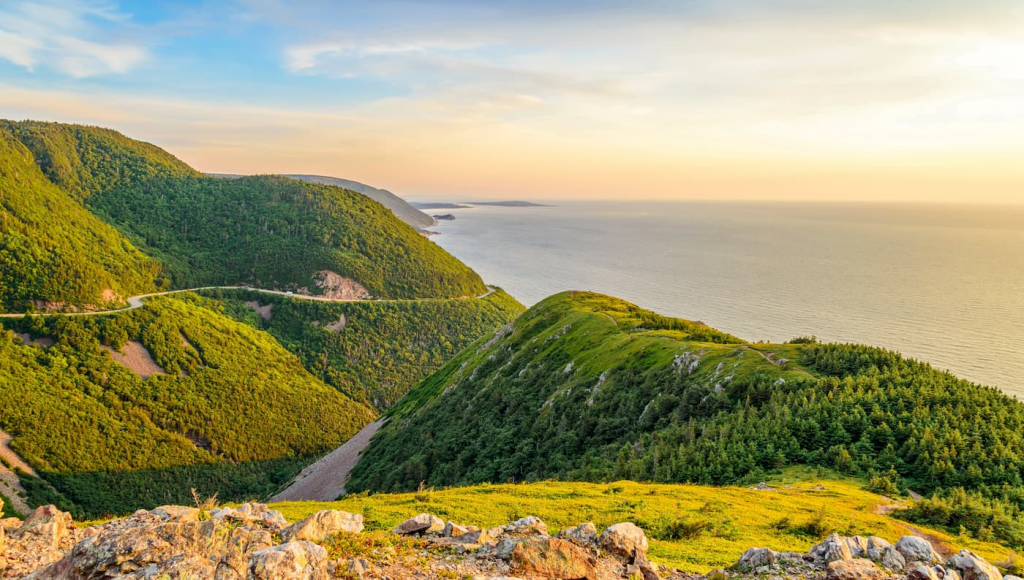
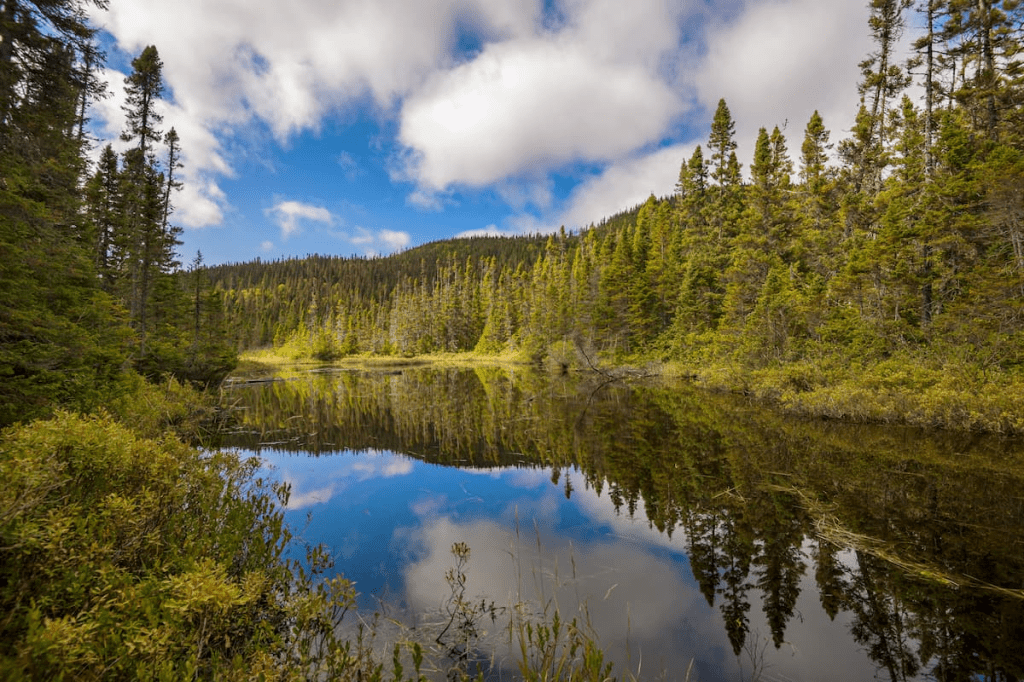
That connection grows even stronger further east. From Quebec, the story continues into New Brunswick and then Nova Scotia, and by the time I reached Sydney, the mountains seemed to turn directly toward the ocean. Cape Breton Island (image below) carries a rugged northern expression of the Appalachian landscape, its mountains, forests, and coastal terrain creating scenery far removed from the humid valleys of Tennessee or the ridges of the Blue Ridge. Here the Atlantic becomes part of the mountain story itself.
Cultural threads connect these distant places as well. Southern Appalachia holds a famous reputation for banjo, fiddle, and old time musical traditions, and Cape Breton carries its own powerful fiddle tradition, shaped heavily by Scottish heritage. A tune born beside the Atlantic can feel remarkably close to one played in a mountain community hundreds of miles south.
Food carries a similar thread through the region. In Nova Scotia and the other Maritime provinces, traditional cooking grew from the realities of climate, agriculture, fishing, and long winters, and hearty meals built around potatoes, vegetables, and preserved meats hold a familiar place at the table, much like they do throughout Appalachia. Prince Edward Island adds another chapter to this northern story, its culture and food traditions shaped within the Maritime world, with potatoes playing an especially important role in local farming and cooking. The further north the journey travels, the clearer it becomes that communities separated by great distance can still arrive at similar answers to the same basic question, how does a family create a satisfying meal from whatever the land provides.
Newfoundland and Labrador brings the Appalachian journey to its northern end. Traveling to Corner Brook placed me once again among mountains, though these belonged to a landscape shaped entirely by the North Atlantic. The Long Range Mountains form the northernmost major extension of the Appalachian system, their valleys and highlands carved first by immense geological forces and later reshaped by glaciers. Corner Brook carries a ruggedness difficult to compare directly with the southern Appalachians, and the warm forests of Alabama feel impossibly distant from this place, as though they belong to another climate altogether. The connection between them remains present beneath the surface all the same.
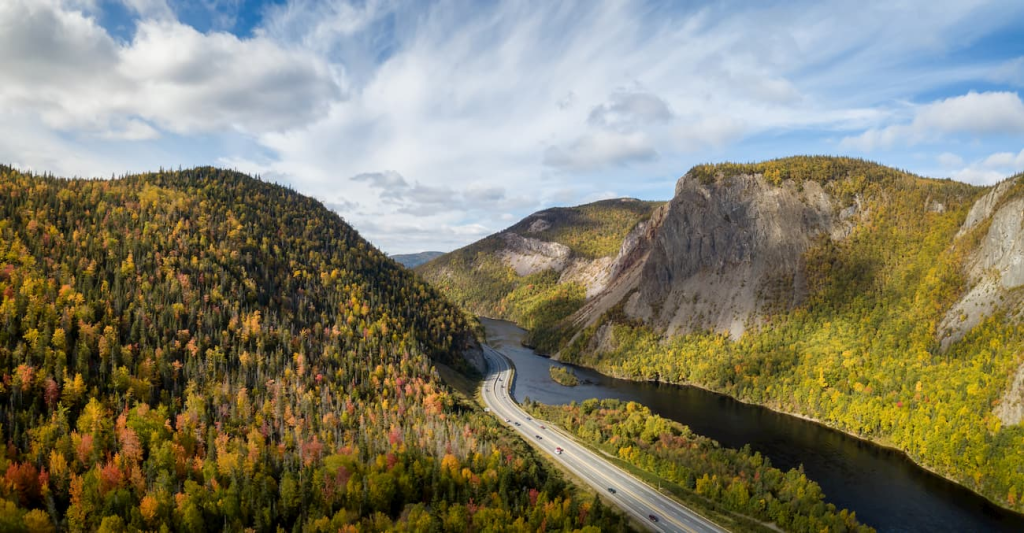
Then came St Anthony. Standing there brought the entire journey into focus, the mountains that began their story far to the south had carried me through Mississippi, Alabama, Georgia, South Carolina, North Carolina, Tennessee, Virginia, Kentucky, West Virginia, Maryland, Pennsylvania, Ohio, New York, Vermont, New Hampshire, and Maine before crossing into Canada. From there they continued through Quebec, New Brunswick, Nova Scotia, and Prince Edward Island before finally reaching Newfoundland and Labrador.
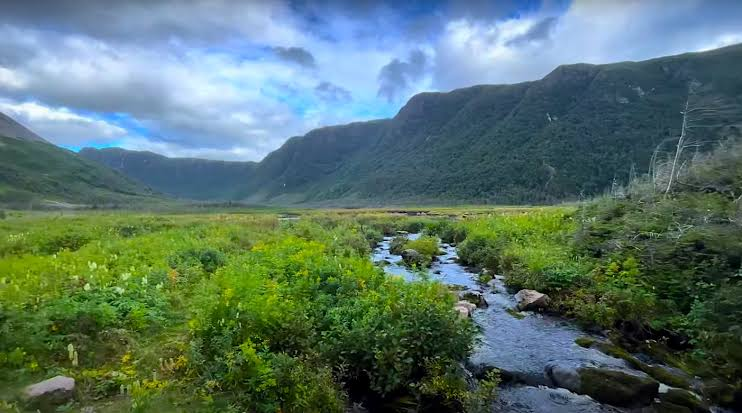
The final landscape looks almost unrecognizable compared to the southern end of the journey. The warmth of Mississippi gives way to the cold breath of the North Atlantic, and thick southern forests yield to a harsher northern terrain where fog rolls across the coast and the sea demands attention at every turn. The Appalachian identity remains present regardless. Jiggs Dinner, the traditional Newfoundland meal made with salt beef, potatoes, cabbage, carrots, and turnip, often served alongside pease pudding and figgy duff, stands among the most memorable examples of this connection. The meal belongs unmistakably to Newfoundland, shaped by its own history and culture, and its hearty combination of meat and vegetables can remind an Appalachian traveler of the Sunday dinners and boiled meals found throughout the mountains farther south.
The greatest connection found along this entire journey has little to do with mountains at all. It comes down to the people. From Quebec through New Brunswick, Nova Scotia, Prince Edward Island, and Newfoundland and Labrador, I met people who carried genuine warmth, politeness, and kindness with them everywhere. Their hospitality had an ease to it that made a traveler feel comfortable even far from home, the kind of welcome where a simple question could turn into laughter, directions, stories, or advice from someone who had every reason to keep walking along their way.
That kindness reminded me of home. Southern Appalachian hospitality carries its own long tradition, welcoming people inside, offering something to eat, asking where a stranger comes from and listening closely to the answer, helping whenever help becomes necessary, and treating a stranger with the same basic decency anyone would hope someone might show their own family. I found much of that same spirit across these five Canadian provinces. Accents shifted, scenery changed, and traditions carried their own separate histories, yet the warmth felt remarkably close to the hospitality I grew up knowing.
Anyone with the chance to visit Quebec, New Brunswick, Nova Scotia, Prince Edward Island, or Newfoundland and Labrador should take it. See the mountains, drive the coast, eat the local food, listen to the music, talk with the people along the way.
A traveler may arrive believing they have crossed into another country entirely, and may leave feeling instead as though they discovered another corner of Appalachia.
From Mississippi to Newfoundland and Labrador, the Appalachian story reaches far beyond the borders drawn across it. It lives inside the mountains themselves, inside the food prepared by families, inside old songs carried from one generation into the next, and inside the simple habit of building a home wherever the mountains offer a place to settle.
I once saw the Appalachians as a southern American landscape alone. After traveling north, I came to see them as something far larger. They form a spine, one that runs from the southern edge of Mississippi all the way to the cold Atlantic shores of Newfoundland and Labrador.
-Tim Carmichael


Leave a Reply