• Why Electric Bills Keep Creeping Higher Across Appalachia

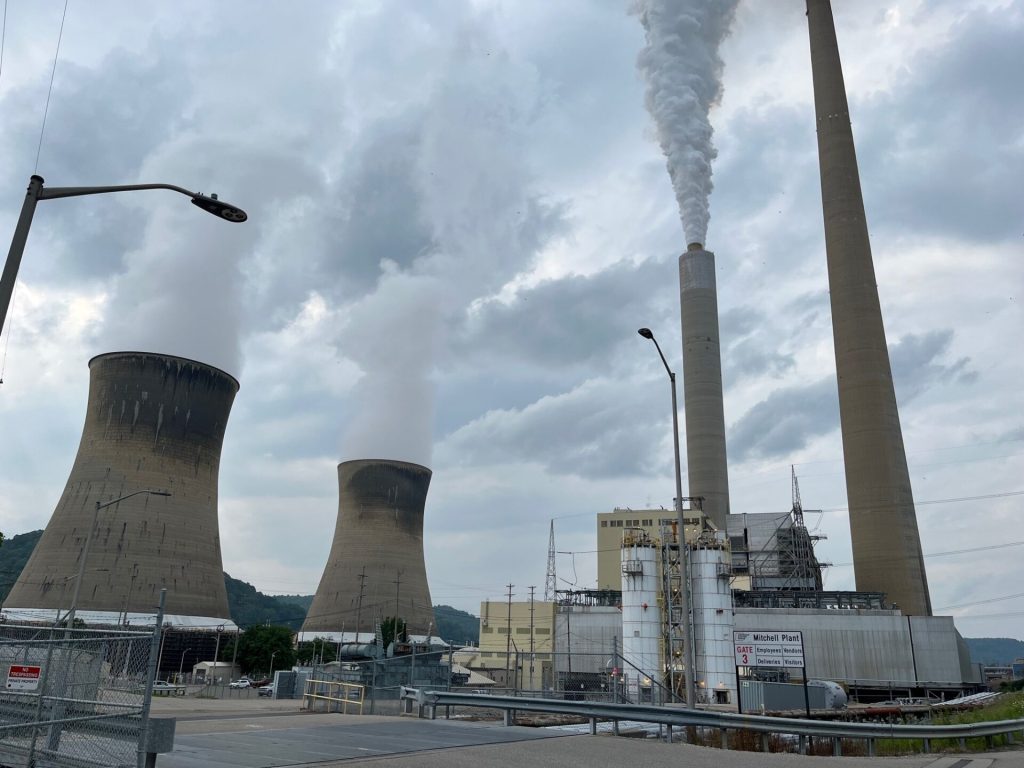
    State regulators approved a request from Appalachian Power to raise the average residential electric bill by $4.36 beginning March 1. The increase allows the company to recover costs tied to renewable energy developments.

    With the change, the typical household bill should reach around $168 next spring. That amount reflects a rise of roughly $44 compared with July 2022. Earlier in the year, the average bill reached $174, though regulators later authorized a temporary reduction in fuel costs passed along to customers. A typical residential household uses about 1,000 kilowatt-hours of electricity each month.

    The latest rate increase allows the utility to recover about $69 million connected to renewable energy projects already generating electricity or expected to begin operating between March 2026 and February 2027.

    The company sought the increase while working toward a carbon-free electricity portfolio by 2050, a goal required under the Virginia Clean Economy Act. That law requires utilities to obtain approval for solar, wind, and battery storage developments.

    In addition to projects tied to the $4.36 increase, the company also requested approval from the Virginia State Corporation Commission for several other renewable initiatives.

    Those proposals included plans to:

    • recover costs tied to purchasing the 255-megawatt Livingston Wind Project in Illinois, currently under development by EDF Renewables and scheduled to begin operation in 2029;
    • acquire and operate a 52-megawatt battery storage system in Wythe County designed for four hours of energy storage and developed by RWE, expected to begin operation in 2027;
    • purchase solar power from the 7.5-megawatt HCE Collier Solar Project once the project begins operating in May 2027.

    Regulators approved future cost recovery related to the Livingston wind project under certain conditions. The project must remain within its estimated $1.07 billion cost and secure major federal tax credits before those incentives expire under the One Big Beautiful Bill Act.

    That legislation ends tax credits for wind facilities entering service after Dec. 31, 2027 unless construction began before July 4, 2026. Regulators stated that the loss of those incentives could make future projects required by the Virginia Clean Economy Act harder to secure.

    Although the wind project sits in Illinois, it qualifies toward renewable energy requirements because both the project and Appalachian Power’s Virginia customers operate within the regional electric grid managed by PJM Interconnection. That network handles wholesale electricity transmission across Illinois, Virginia, eleven additional states, and Washington, D.C.

    Regulators also approved the company purchasing electricity from the Wise County solar project. However, they rejected the request to operate the Wythe County battery storage system. Officials concluded that the project’s $164 million cost would fail to provide strong value for ratepayers even with federal incentives.

    A spokesperson for Appalachian Power said the company welcomed the ruling, stating that it helps the utility meet clean-energy requirements in a cost-effective way while using federal tax credits to lower expenses for customers. The company also expressed disappointment regarding the rejected battery storage proposal while saying it plans to continue pursuing new energy infrastructure investments.

    The utility also serves customers in West Virginia and filed a request with regulators there earlier in the year to recover part of the costs tied to these renewable projects. A public hearing in that case is scheduled for Dec. 16.

    In a separate regulatory case, the Virginia State Corporation Commission recently allowed the company to temporarily reduce the amount customers pay for fuel and purchased electricity. That step was expected to lower bills by about $10 beginning Nov. 1 while regulators review the request.

    Earlier this month, the commission also granted permission for the company to spend money evaluating a site in Campbell County for a potential Small Modular Reactor. The utility has indicated it may seek approval next year to recover those evaluation expenses.

    Another rate review case should arrive in May, as state law requires utilities to file those reviews every two years. During the previous case, the company requested roughly a $10 increase in the average customer bill. Regulators approved a smaller increase of $1.39.

    Two additional regulatory proposals currently under review include a $135 million plan to upgrade grid technology and a project to modernize 18 miles of transmission line in the New River Valley. Estimated impacts on customer bills from those plans remain unclear.

    The company, a subsidiary of American Electric Power, serves roughly 540,000 customers across western Virginia.

    Many customers feel frustrated with the steady rise in electricity costs. Critics argue that utilities continue pursuing higher rates and new projects while households struggle to keep up with bills. Some residents believe power companies will remain unsatisfied until every possible nickel flows from consumers’ pockets, while executives and shareholders reap the largest financial rewards.

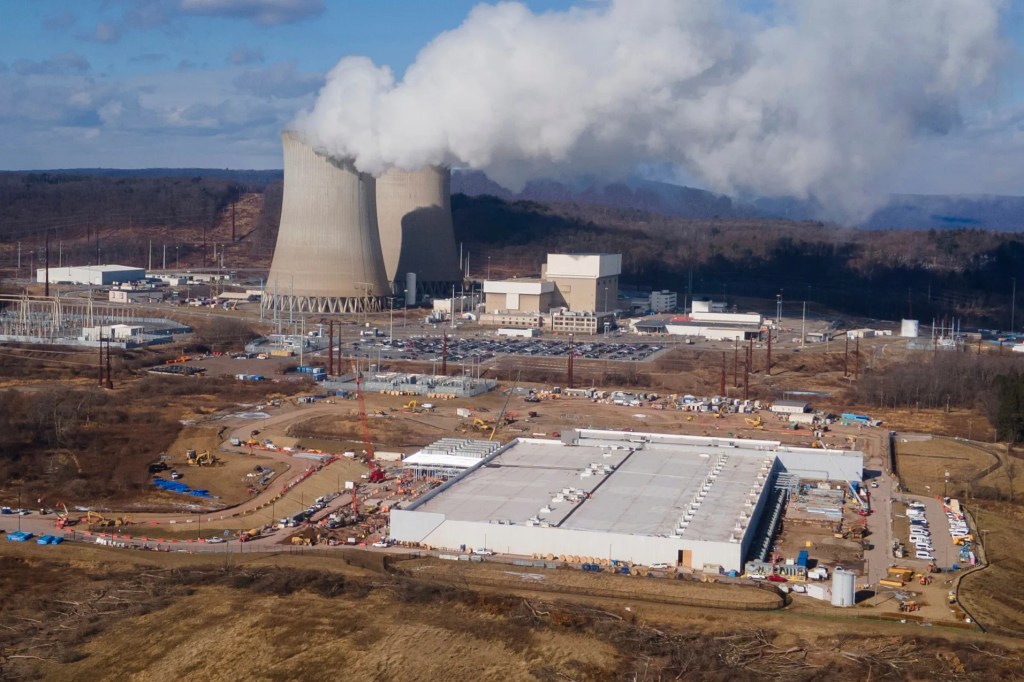
    Questions also remain about the growing electricity demand from large AI data centers being built across parts of Appalachia. Those facilities require enormous amounts of energy, which often leads utilities to expand power generation, transmission lines, and grid infrastructure. When companies build that infrastructure, the costs frequently appear in future rate increases for customers.

    -Tim Carmichael

  • The Sun Over the Hollers

    The sun spills over the hills like a broken jar of honey,

    staining the world in a bright, sudden glow.

    The heavy sleep of the land is over.

    Where the ground was hard and dark,

    a sharp, new life pushes through the soil,

    searching for the warmth of a clear sky.

    I stand in the open field

    and feel the pulse of the earth

    rising to meet my breath.

    🌷

    Everything I carried through the long, cold months

    falls away like a coat no longer needed.

    The grief that felt so solid,

    shattering now within my spirit,

    dissolves in the wash of this brilliant morning.

    🌷

    The redbird moves through the wet grass,

    a small fire against the damp earth,

    while wild birds I have never seen

    fling their music into the wide, deep space above.

    🌷

    There is no need for words or reasons.

    The beauty of the day is enough to break

    the last of the ice around my heart.

    🌷

    I watch the light run down the steep mountains,

    chasing the shadows into the hollers,

    until everything is radiant and new.

    The morning is a wild, strange gift,

    and I am lost in the glory of its coming.

    Written by Tim Carmichael

  • When People Move to Appalachia for the Lifestyle – But Not the Community

    Over the last decade, a pattern has emerged across the Appalachian region. People arrive from cities and suburbs drawn by a certain idea of mountain life. They picture small towns tucked into green hills, winding back roads, gardens behind modest houses, and a pace of life that feels calmer than crowded metropolitan centers. Many come searching for space, scenery, and a sense of personal freedom. They often describe their decision as a lifestyle change.

    Appalachia has always attracted newcomers for different reasons. Coal once brought workers from across the country. Timber camps pulled in laborers seeking wages. Later, college towns, outdoor recreation, and lower property prices drew people looking for opportunity. The current wave, however, carries a different tone. A growing number of arrivals seek the aesthetic and rhythm of rural living while remaining separate from the social fabric that has long defined the region.

    The Appalachian Mountains stretch across thirteen states. Each community carries its own character shaped by generations of families, shared hardships, and strong traditions. Local churches host suppers that fill fellowship halls with neighbors. Volunteer fire departments anchor rural areas where emergency services depend on people willing to answer a late night call. High school football games bring crowds that greet one another by name. In many places, these institutions hold communities together.

    For longtime residents, community operates as a form of mutual reliance. When someone’s barn collapses in a storm, neighbors show up with tools. When a family member falls ill, casseroles arrive at the door. This system grows from familiarity and trust built over decades. Relationships form through church pews, school events, and family ties that extend across generations.

    Newcomers who arrive chasing a slower lifestyle often admire the surface of this world while avoiding participation in its deeper responsibilities. They buy property on scenic hillsides. They renovate cabins or build modern homes with large windows overlooking ridgelines. They spend weekends hiking trails or tending raised garden beds. Their social lives remain centered on friends from previous cities, remote work colleagues, or online communities.

    From a distance, their presence appears harmless. Rural towns benefit from new investment. Abandoned houses find owners. Local contractors gain work through renovations. Property tax revenue increases. Coffee shops and breweries open in areas where younger arrivals gather.

    Yet a tension grows when the lifestyle draws interest while the community receives little attention.

    In many Appalachian towns, belonging develops through participation. Showing up matters. Attending fundraisers for the volunteer fire department matters. Offering time during church events matters. Listening to older residents talk about family histories matters. Participation signals respect for the place and its people.

    When new arrivals stay on the margins, the social balance shifts. Local residents observe houses filled with people who enjoy the scenery while remaining distant from civic life. Invitations to community gatherings receive polite declines. Volunteer organizations struggle to recruit members despite an increase in population. Longtime residents begin to feel that their traditions function as background scenery for someone else’s rural dream.

    This divide becomes clearer during moments of crisis. Floods, storms, and economic downturns have shaped Appalachian communities for generations. During these moments, local networks activate quickly. Neighbors check on one another. Churches organize food drives. Volunteer crews clear roads or repair damaged homes.

    Residents who have grown up in these traditions often expect newcomers to join in collective efforts. Participation strengthens trust. When new arrivals remain detached during these moments, resentment can develop quietly.

    Economic differences deepen the tension. Many newcomers arrive with remote jobs connected to technology, finance, marketing, or other industries tied to distant urban economies. Their salaries exceed local averages. This income gap influences housing markets across parts of Appalachia.

    Small towns that once held modest home prices experience sudden increases as outside buyers compete for property. Older houses become short term rentals or second homes. Young local families searching for their first house face rising costs that push them farther from town centers.

    Longtime residents sometimes view these changes through a complicated lens. On one hand, economic activity brings improvements. Dilapidated buildings gain new life. Restaurants and shops attract visitors. Infrastructure receives attention.

    On the other hand, rising costs create pressure for people who have lived in the same valley for generations. When newcomers focus mainly on personal lifestyle goals, concerns about affordability or displacement rarely enter the conversation.

    Cultural misunderstanding also plays a role. Appalachia carries a rich history of storytelling, music, craft traditions, and regional dialects. Bluegrass festivals fill fields with fiddles and banjos. Quilting circles pass patterns across generations. Oral history travels through front porch conversations.

    Many newcomers admire these traditions from a distance. They attend festivals, purchase handmade crafts, and photograph scenic moments for social media. Appreciation alone rarely leads to cultural continuity. Traditions survive through participation and transmission.

    When newcomers consume the culture as an attraction rather than a shared responsibility, the relationship remains shallow. Local residents sense the difference between admiration and engagement.

    The issue rarely stems from hostility toward outsiders. Appalachian communities have welcomed newcomers throughout their history. Teachers, doctors, coal miners, and factory workers have arrived from many places over the decades. The difference lies in the willingness to become part of the collective life of the region.

    People who move into a town and join local organizations tend to integrate more smoothly. Coaching youth sports teams creates connections with families. Volunteering at libraries introduces newcomers to civic efforts. Participation in local festivals builds relationships across age groups.

    These forms of engagement require time and patience. Trust grows slowly in small communities where families have known one another for generations. New arrivals who approach the process with humility often find themselves welcomed.

    Those who seek isolation within a picturesque setting create a different dynamic. They may value privacy, calm surroundings, and scenic beauty. Their homes become self contained retreats. Social interaction occurs through digital networks or periodic visits from friends outside the region.

    Over time, this pattern forms pockets of parallel lives. One community continues traditional patterns of gathering, volunteering, and local decision making. Another community occupies nearby houses with little interaction beyond brief greetings at grocery stores.

    Technology contributes to this separation. Remote work allows people to maintain professional networks far away from their physical location. Entertainment streams through online platforms rather than local theaters or community centers. Social media replaces front porch conversations.

    These tools offer convenience and flexibility. They also reduce incentives to form local relationships.

    The resulting environment can feel confusing for both sides. Longtime residents wonder why people who moved specifically for the region show limited interest in community life. New arrivals sometimes interpret local caution as exclusion rather than a reflection of historical experience.

    Many Appalachian communities have experienced waves of economic extraction from outside companies that removed resources while leaving environmental and social damage behind. This history shapes attitudes toward newcomers who appear interested in the landscape more than the people who live there.

    Trust builds when newcomers demonstrate commitment beyond personal lifestyle goals. Supporting local schools, shopping at family owned stores, and attending town meetings sends a clear message of investment in the shared future of the area.

    The idea of lifestyle alone rarely sustains a healthy rural community. Scenic landscapes provide beauty and recreation. Strong communities provide stability and resilience. One element without the other leaves a hollow foundation.

    Across Appalachia, many towns continue to navigate this shift. Some residents welcome the influx of new energy and perspectives. Others worry about cultural dilution and economic displacement. Both viewpoints reflect real experiences shaped by rapid change.

    New arrivals often arrive with sincere intentions. They seek a slower pace, access to nature, and a sense of authenticity missing from urban life. The mountains offer all of these qualities. They also hold a long tradition of neighborly obligation that cannot be separated from the scenery.

    Living in Appalachia has always meant more than occupying land within the mountains. It involves participation in a web of relationships that sustain communities through hardship and celebration alike.

    Those who embrace this responsibility often discover that the greatest reward of mountain life lies within the people who call the region home. Shared meals, local stories, and collective problem solving create bonds that deepen the meaning of place.

    Those who remain distant may still enjoy beautiful views from their porches. They may cultivate gardens, hike wooded trails, and admire the calm of rural evenings. Their experience of Appalachia will remain partial.

    A region shaped by generations of cooperation cannot be reduced to scenery and lifestyle choices alone. Appalachia exists through its communities, carried forward by people who continue to show up for one another year after year.

    -Tim Carmichael

  • How the SAVE America Act Bill Could Reshape Voting Access in Appalachia

    Debate around the SAVE America Act has intensified across the United States as lawmakers and advocacy groups examine how the proposal could change voter registration. Supporters frame the bill as a safeguard for election integrity. Critics warn that the policy could block eligible citizens from participating in elections. The conversation often centers on national politics, yet regional realities matter. Appalachia stands out as an area where the requirements in the bill could carry particularly strong consequences because of economic conditions, rural geography, and patterns of identification ownership.

    The proposal would require American citizens to present documentary proof of citizenship before registering to vote. Acceptable documents would include a passport or a certified birth certificate. The bill also introduces a requirement for government issued photo identification when casting a ballot and directs states to share voter registration data with the United States Department of Homeland Security. Advocates say these steps strengthen election systems. Critics say the proposal inserts new administrative barriers into the earliest stage of civic participation.

    Understanding the policy requires attention to documentation patterns across the Appalachian region. Research from the Appalachian Regional Commission indicates that passport ownership remains far below the national average in many Appalachian states. West Virginia shows a passport ownership rate of about 20.8 percent, one of the lowest levels in the country. The Appalachian portion of Mississippi shows a similar rate of roughly 20.6 percent. Kentucky holds a higher level at about 27.4 percent, while Tennessee reaches approximately 31.4 percent. Even the highest of these figures remain well below the national landscape, where roughly 48 percent of Americans hold valid passports. In comparison, states such as New Jersey and New York report much higher rates of 68.1 percent and 64.6 percent respectively. These differences highlight how documentation requirements built around passports could affect regions like Appalachia very differently from wealthier or more urban parts of the country.

    These numbers make a difference because the SAVE America Act centers voter registration around documentary proof of citizenship. A resident without a passport would need to present a certified birth certificate. Many Americans possess birth certificates somewhere within family records. Access to the official certified version required for legal verification presents a different question. Families move, documents become lost, and many residents’ store paperwork in locations that become difficult to track over time.

    Geography creates additional barriers across Appalachia. The region stretches across rugged mountain terrain that shaped transportation routes and settlement patterns for generations. Many small towns sit far from state offices that handle vital records. A resident who needs to obtain a certified birth certificate may travel across several counties to reach the correct office. Travel time, fuel costs, and work schedules all influence whether that trip happens.

    Digital ordering systems for vital records exist in many states, though internet access across rural Appalachia remains uneven. Broadband infrastructure has expanded in recent years, though many counties still report slow service or limited connectivity. Residents without reliable internet often rely on mail requests or in person visits. Each method requires time and planning that may discourage some people from completing the process.

    Economic conditions in the region shape the issue further. Appalachia includes many counties with lower median incomes compared with national averages. Fees for official documents can create financial pressure for families already managing tight budgets. Certified birth certificates often carry fees between twenty and forty dollars depending on the state. Additional charges appear for shipping or expedited processing. A household that must request several documents at once can face a meaningful expense.

    Supporters of the SAVE America Act frequently describe documentation requirements as common sense safeguards. They argue that verifying citizenship represents a reasonable step before granting access to voter rolls. Election security groups maintain that a standardized federal rule would create consistent procedures across states while increasing public confidence in election outcomes.

    Opponents argue that the scale of the new requirement does not match the scale of the problem it aims to solve. Researchers across the field of election studies report extremely small numbers of confirmed cases of noncitizen voting in past elections. Many studies describe these incidents as rare occurrences that hold little potential to influence results. Critics therefore question whether the proposed system introduces significant barriers without clear evidence of widespread fraud.

    Name changes represent another issue raised during the debate. Many married women carry identification that shows a different surname than the name on their birth certificate. Under strict documentation rules, election officials would need to verify that both records refer to the same person. That verification could require additional documents such as marriage certificates or court records. Each added step increases the complexity of registration.

    Community registration drives represent a long tradition across Appalachia. Churches, civic organizations, and labor groups often organize events designed to help neighbors register before elections. Volunteers distribute forms at festivals, schools, and town gatherings. The SAVE America Act would change how those events function. Residents who arrive without required documentation could leave without completing registration, shifting the process from a quick civic activity into a paperwork heavy task.

    Historical factors within Appalachia also influence document access. In earlier decades many births occurred outside hospitals, particularly in isolated communities. Record keeping practices evolved gradually as state health systems expanded. Some older residents later received delayed birth certificates issued years after birth. Locating those records today may involve lengthy verification steps through state agencies.

    Natural disasters also contribute to document loss across the region. Floods, fires, and storms periodically damage homes and personal records. Families who relocate after such events often lose track of paperwork stored in older residences. Replacing those documents requires interaction with state record offices that may sit far from affected communities.

    Another component of the SAVE America Act involves data sharing between state election systems and the Department of Homeland Security. Supporters argue that federal databases could help verify citizenship status more efficiently. Critics raise concerns about privacy and potential administrative errors. Large data systems sometimes produce mismatches due to spelling variations, outdated information, or clerical mistakes. When mismatches occur, individuals may face delays while officials attempt to resolve discrepancies.

    Rural voters often encounter different administrative environments compared with residents in major metropolitan areas. Urban regions tend to host multiple passport agencies, legal aid organizations, and government service centers capable of assisting people who require documentation. Appalachian counties frequently rely on a limited number of offices that serve large geographic areas. Long travel distances and appointment backlogs can become routine aspects of obtaining records.

    Public opinion across Appalachia remains divided. Some residents support stricter verification rules because they believe strong identification requirements protect elections. Others view the proposal as a barrier that could silence rural voices already facing economic hardship and limited political representation. Political leaders across the region echo this divide, reflecting the varied perspectives of their constituents.

    Civil rights organizations emphasize that voter registration represents the foundation of democratic participation. Any new requirement placed at that stage influences who ultimately appears on voter rolls. When documentation rules intersect with poverty, rural isolation, or historical record gaps, the impact can fall unevenly across communities. Appalachia represents one region where those factors overlap.

    Supporters respond that the documentation process remains manageable for most Americans. They argue that citizens can request replacement birth certificates through state agencies or apply for passports if necessary. From their perspective, the SAVE America Act introduces a straightforward standard that ensures only citizens register for federal elections.

    The debate therefore centers on two competing priorities. One side emphasizes strong verification designed to prevent even rare cases of improper voting. The other side emphasizes minimizing barriers so every eligible citizen can participate without unnecessary obstacles. The SAVE America Act places these visions of democracy in direct tension.

    For communities across Appalachia, the outcome of this legislative debate could shape how residents engage with elections for years to come. Low passport ownership rates, economic constraints, and geographic isolation combine to create conditions where documentation requirements carry greater weight. A policy that appears simple on paper may interact with local realities in complicated ways across mountain towns and rural counties.

    As Congress continues to examine the SAVE America Act, lawmakers face a decision that extends beyond national political messaging. The final policy could determine whether registration systems become more restrictive or remain broadly accessible. Careful attention to the experiences of Appalachian residents may help ensure that democratic participation across the region remains strong. Some analysts argue that a bill aimed at stopping Democrats and “illegals” from voting could actually backfire on Republicans if documentation barriers reduce participation among rural conservative voters across Appalachia. Low passport ownership, limited access to certified records, and economic constraints affect many communities that traditionally support Republican candidates, creating a scenario where the rules designed to protect elections could reshape turnout in unexpected ways.

    -Tim Carmichael

  • Sovereignty and Sanctuary, The Land Ownership Conflict in Appalachia

    The Appalachian Mountains currently host a profound legal battle regarding the fundamental rights of global citizens and the preservation of domestic safety. This struggle centers upon recent legislative actions within several states, most notably Tennessee, where lawmakers have enacted bans against land ownership by individuals from specific foreign nations labeled as adversarial. These statutes represent a significant shift in property law, moving away from open acquisition toward a model of restrictive protectionism. Legislators argue that such measures shield critical infrastructure and agricultural resources from potential foreign interference. They view the soil of the mountains as a strategic asset that must remain under the control of those loyal to the domestic cause. This perspective treats land as a component of the national defense system rather than a mere commodity on the open market.

    Opponents of these bans view the situation through a lens of civil liberties and human rights. Many affected individuals have resided within these communities for decades, contributing to the local economy and raising families in the shadow of the ridges. To these residents, the laws feel like a targeted assault on their personal stability and their dreams of permanent settlement. Plaintiffs in federal lawsuits claim the mandates violate the equal protection clause of the Constitution by discriminating based on national origin. They suggest that the government should focus on specific threats instead of implementing broad prohibitions that sweep up peaceful neighbors. The debate illuminates an ancient friction between the collective need for security and the individual right to liberty.

    In Tennessee, the specific language of the law targets citizens from countries deemed hostile by federal entities. This creates a complex legal landscape where state authority intersects with international relations. Supporters believe the proximity of foreign-owned land to military installations or utility grids poses an unacceptable risk. They cite concerns over surveillance and the potential for economic sabotage. The rugged terrain of Appalachia, with its hidden valleys and strategic passes, has always held a special place in the American psyche as a fortress of independence. Protecting this land feels like a moral imperative to those who fear global instability.

    Conversely, the legal challenges highlight the human cost of these policies. When a family is told they may no longer purchase a home or maintain a farm because of their birthplace, the sense of belonging vanishes. Critics argue that these bans mirror dark periods of history where certain groups faced exclusion from the American dream. They believe that true security comes from inclusive communities and the fair application of the law. The federal courts must now determine if a state possesses the power to override individual property rights in the name of vague geopolitical concerns.

    The cultural impact within Appalachian towns is palpable. Conversations in local diners and town halls reflect a deep divide. Some see the move as a courageous stand for the home front, while others see a betrayal of the hospitality for which the region is famous. The economic implications also loom large, as restricted markets can lead to decreased property values and stifled investment. Real estate agents and developers watch the proceedings with caution, aware that these laws change the very nature of land transactions. The mountains have always been a place of refuge and resilience, yet today they serve as a courtroom for the future of American property rights.

    As the lawsuits progress, the nation watches how the judiciary will balance these competing interests. The outcome will likely set a precedent for other states considering similar restrictions. If the courts uphold the bans, the definition of ownership in the United States may undergo a permanent transformation. If the courts strike them down, the tension between local safety and global mobility will continue to simmer. For now, the people of Appalachia live in the middle of this legal storm, waiting to see who will truly own the land beneath their feet. The struggle is about more than just dirt and deeds; it is about the soul of a region caught between its defensive instincts and its democratic ideals.

    The legislative momentum for these bans grew from a climate of increasing global tension. Lawmakers saw a need to act before foreign entities could establish a foothold near sensitive sites. They believe the Appalachian landscape, with its vast timber and water resources, requires a unique level of vigilance. This protective stance resonates with many who feel that federal oversight has failed to address local vulnerabilities. For them, the state law acts as a necessary shield against an uncertain world.

    Legal experts pointing toward the plaintiffs’ side argue that the state lacks the authority to dictate foreign policy. They maintain that the federal government alone should handle matters involving international citizens and national security. This jurisdictional dispute adds another layer of complexity to the mountain conflict. The tension remains high as both sides prepare for lengthy courtroom battles. Every hearing brings fresh arguments about the meaning of citizenship and the limits of government reach.

    The dialogue surrounding these bans often ignores the nuances of individual lives. A scientist working at a local university or a small business owner contributing to the town square may find themselves suddenly unwelcome as landowners. This personal displacement creates a ripple effect of anxiety throughout immigrant communities. They wonder if these land bans are merely the first step in a broader movement toward exclusion. The advocates for the law maintain that the focus remains strictly on security, yet the shadow of suspicion falls broadly.

    Appalachia stands at a crossroads of history and law. The rugged beauty of the land provides a stark contrast to the sharp divisions in the public square. Whether the mountains remain a place of open opportunity or become a restricted zone depends on the wisdom of the courts and the evolving consensus of the people. The debate over foreign land bans will continue to echo through the valleys for years to come.

    -Tim Carmichael

  • Appalachia Rises as America’s New Data Center Frontier

    Northern Virginia remains the Northern Virginia data center capital of the world, home to the highest concentration of operational facilities on Earth. The dense corridor that stretches through Loudoun County continues to anchor global cloud traffic, financial systems, federal networks, streaming platforms, and artificial intelligence infrastructure. Rows of warehouse sized buildings hum with servers that store, process, and transmit vast quantities of information every second. For more than a decade, this region has served as the beating heart of the modern internet.

    Yet beyond the suburban office parks and fiber rich interchanges of Northern Virginia, a dramatic shift is unfolding across the mountains and valleys of Appalachia. Rural counties in West Virginia, Pennsylvania, Kentucky, and Southwest Virginia are witnessing an unprecedented surge in data center proposals, land acquisitions, and infrastructure planning. Technology developers who once focused almost exclusively on Northern Virginia are now turning their attention toward ridgelines, reclaimed coalfields, and small towns that rarely appeared in conversations about digital infrastructure.

    The momentum reflects both necessity and opportunity. Traditional hubs such as Loudoun County face land constraints, rising property values, transmission congestion, and growing community resistance. Developers searching for large tracts of affordable property with access to high voltage lines are increasingly drawn toward Appalachia. The region offers expansive acreage, legacy energy infrastructure, and state governments eager to attract major investment.

    A September 2025 national pipeline report identified approximately ninety two gigawatts of data center capacity under development across the United States. A significant share of that capacity is moving into Appalachian territory. Gigawatt scale campuses, once concentrated near major metropolitan areas, are now appearing on planning maps in counties known historically for coal extraction, timber, and agriculture.

    In many communities, the transition has been framed as coal to cloud. In Wise County and Mingo County, former mining land is being marketed as prime real estate for hyperscale facilities designed to power artificial intelligence systems. These sites often come with existing transmission corridors and industrial zoning legacies that simplify large scale construction. Reclaimed land that once produced fossil fuels is being reshaped to host the digital engines of the twenty first century.

    Local leaders describe the shift as a path toward economic reinvention. Coal employment declined steadily over the past two decades, leaving many Appalachian communities searching for stable tax bases and long term investment. Data centers promise billions of dollars in capital expenditures, expanded property tax revenues, and improved infrastructure. The image of towering cooling systems rising where coal tipples once stood carries symbolic weight. It signals an attempt to align regional identity with technological progress rather than industrial decline.

    State governments have moved aggressively to position themselves as attractive destinations. In April 2025, lawmakers in West Virginia approved legislation removing local zoning authority over designated high impact data center projects. The measure streamlined approvals and authorized large scale energy developments built specifically to supply new facilities. Supporters argued that centralized decision making would accelerate construction timelines and strengthen the state’s competitiveness in attracting hyperscale operators.

    Other Appalachian states have pursued incentive packages that include tax abatements, sales tax exemptions on equipment, and workforce training grants. Economic development agencies market abundant land, proximity to Eastern population centers, and comparatively low energy costs. The pitch emphasizes speed, scale, and readiness.

    Energy availability stands at the center of the regional appeal. Appalachia contains extensive high voltage transmission infrastructure built to serve coal fired plants and heavy industry. Developers view that legacy grid as a foundation for rapid expansion. Proposals for new natural gas generation facilities and utility scale solar installations are being evaluated to meet the immense electricity requirements of modern data centers. Artificial intelligence workloads in particular demand continuous, high density power flows.

    In West Virginia, Fundamental Data LLC is advancing a major project in Tucker County, a largely rural area known for forests and outdoor recreation. A separate 1.9 million square foot high impact facility is planned for Berkeley County, situated along the state’s eastern panhandle with access to interstate highways and fiber routes. Together these projects signal a scale of investment rarely seen in the state’s recent economic history.

    In Kentucky, PowerHouse Data Centers and Poe Companies are developing the state’s first hyperscale campus in Louisville. The project represents a milestone for Kentucky’s digital infrastructure ambitions. State officials describe it as a catalyst that could attract related technology firms and supply chain partners.

    Southwest Virginia, long overshadowed by its northern counterpart, is also experiencing renewed attention. A proposed one billion dollar artificial intelligence campus in Wythe County underscores the region’s potential to host energy intensive facilities. Local leaders highlight transportation access, available land, and the possibility of integrating new renewable generation into project designs.

    Despite the enthusiasm among policymakers and developers, the expansion raises complex questions for host communities. Data centers operate around the clock, drawing enormous quantities of electricity. Facilities exceeding one hundred megawatts require substantial upgrades to substations, transmission lines, and distribution networks. Local utilities must plan years in advance to accommodate projected loads. In smaller counties, the scale of required investment can challenge existing budgets and engineering capacity.

    Water use also emerges as a focal point. Many data centers rely on water based cooling systems to manage server temperatures. In regions where public water systems serve small populations, additional industrial demand may require infrastructure expansions. Residents in some Appalachian counties have voiced concern regarding long term sustainability, particularly during periods of drought or extreme heat.

    Noise from cooling equipment and backup generators has sparked debate in rural areas where ambient sound levels remain low. Large buildings illuminated through the night alter visual landscapes traditionally defined by forests and rolling hills. Community meetings often feature spirited discussion over how to balance economic opportunity with preservation of local character.

    Utility rate impacts present another dimension of the conversation. Critics argue that rapid industrial growth could shift infrastructure costs onto residential customers. Supporters counter that new tax revenue and long term contracts may strengthen grid reliability and distribute expenses across a broader base. The financial structure of each project varies, shaping outcomes differently from county to county.

    Employment expectations generate additional scrutiny. Construction phases bring a surge of activity. Skilled trades workers, engineers, heavy equipment operators, and suppliers benefit during multi year build outs. Hotels, restaurants, and service providers experience temporary boosts in demand. Once facilities become operational, staffing levels typically decline to a few dozen permanent positions focused on maintenance, security, and network oversight. For communities seeking large scale, long term job creation, the employment profile may fall short of earlier industrial eras.

    Even so, supporters argue that the value of data center investment extends beyond direct payroll. Property tax contributions can support schools, emergency services, and infrastructure upgrades. Fiber expansions and substation improvements may enhance regional connectivity. The presence of hyperscale operators can signal economic stability to other investors considering manufacturing or technology projects.

    Northern Virginia’s continued dominance remains undeniable. The region still leads in total operational capacity, planned expansion, and global interconnection density. Fiber networks in Loudoun County connect directly to major exchange points, enabling low latency communication across continents. That ecosystem took years to build and continues to attract new tenants.

    Yet the very success of Northern Virginia has encouraged diversification. Developers recognize the strategic advantage of geographic distribution. Spreading facilities across multiple states enhances resilience against outages, weather events, and grid congestion. Appalachia’s proximity to Eastern population centers makes it a logical extension of the existing corridor while offering room to grow.

    The phrase data center capital of the world may still belong to Northern Virginia, though the frontier spirit increasingly defines Appalachia’s role. Mountains once associated primarily with extraction industries are being reframed as hosts for digital infrastructure. Economic development strategies that once revolved around mines and manufacturing plants now feature artificial intelligence clusters and hyperscale campuses.

    The outcome of this transformation remains uncertain. Energy policy debates, environmental considerations, market fluctuations, and technological advances will shape the trajectory. Artificial intelligence growth could accelerate demand beyond current projections. Efficiency improvements in server design could alter power requirements. Community response may influence permitting decisions and regulatory frameworks.

    What stands clear is the scale of ambition. Billions of dollars are flowing into counties that have faced decades of economic hardship. State legislatures are adjusting statutes to attract and accommodate development. Transmission planners are modeling new load scenarios across mountain ridges and river valleys.

    Appalachia’s emergence as a major destination for data center construction represents a defining moment in the geography of the American cloud. Northern Virginia retains its crown as the world’s most concentrated hub, though the digital map is expanding westward into terrain shaped by a very different industrial past. The story unfolding across West Virginia, Kentucky, Pennsylvania, and Southwest Virginia reflects a broader national shift in how and where the infrastructure of the internet is built.

    From reclaimed coalfields to newly cleared campuses, the region is positioning itself at the center of the next era of technological growth. Servers that power artificial intelligence models, financial transactions, and global communication may soon rely on electricity generated amid Appalachian peaks. In that evolution lies a powerful narrative of adaptation, ambition, and the ongoing redefinition of place in the digital age.

    -Tim Carmichael

  • The Erasure of Pike County, Kentucky

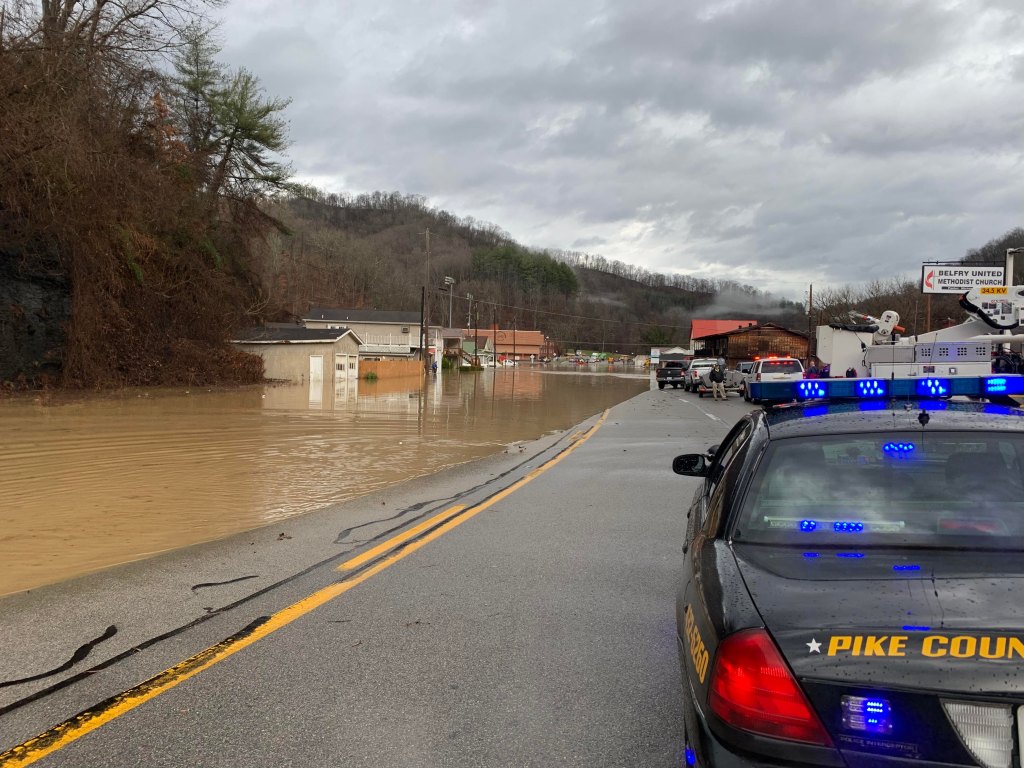
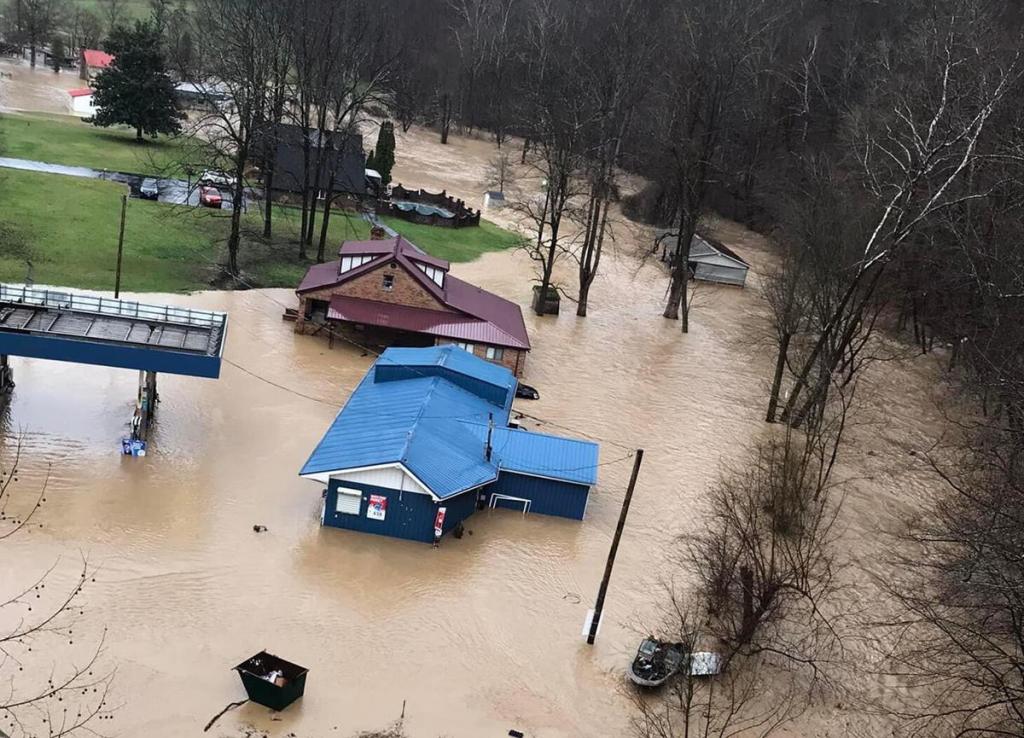
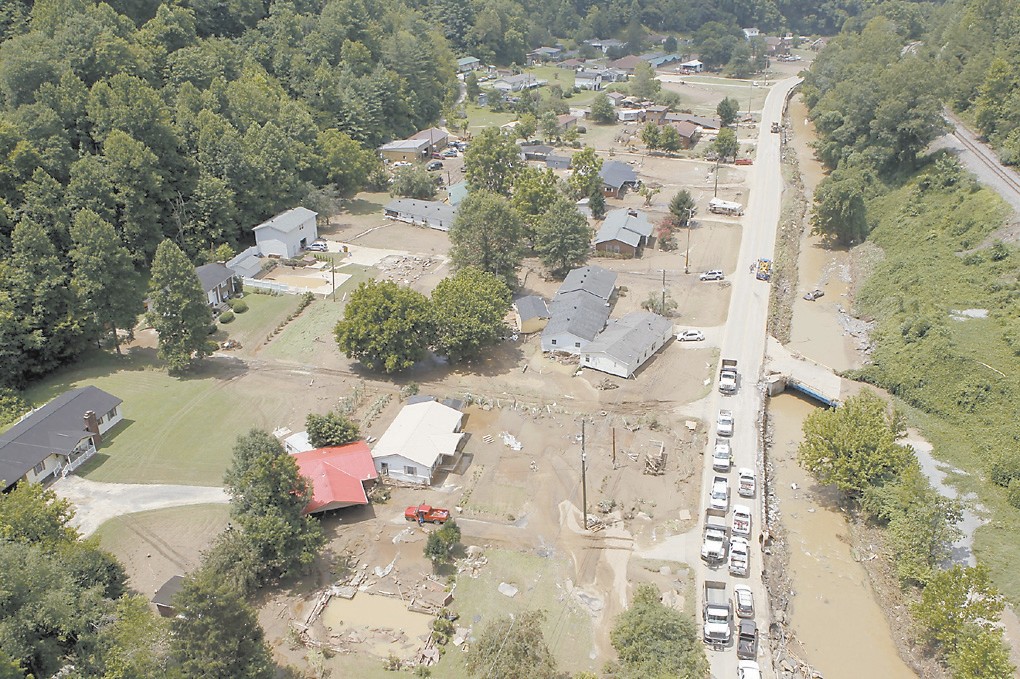
    In the wake of the catastrophic floods of 2025, a transformation is unfolding across Pike County that few residents ever imagined possible. Entire neighborhoods are being purchased by the government, razed to their foundations, and returned to open ground. The language attached to the process sounds clinical: “managed retreat,” “risk mitigation,” “floodplain restoration.” On the ground, it feels like disappearance.

    The floods started after days of relentless rain that swelled creeks into rivers and rivers into walls of brown water that tore through hollers with terrifying speed. In communities stretching from small crossroads settlements to the edges of Pikeville, homes that had stood for generations filled to their rafters. Trailers were knocked from blocks. Farm equipment twisted in currents. Gravel roads dissolved. In a region carved by narrow valleys and steep ridges, water had nowhere to go except through living rooms and bedrooms.

    For many families, flood recovery had always meant cleanup and rebuilding. Eastern Kentucky has endured high water before. People hauled out soaked furniture, replaced drywall, and returned to the rhythms of mountain life. This time, the response carries a different trajectory. Instead of reconstruction, officials are offering buyouts. Instead of rebuilding neighborhoods, bulldozers are flattening them.

    State and federal agencies, working through disaster mitigation programs, have launched one of the largest property acquisition efforts in the history of the region. Homeowners in designated flood zones receive offers based on pre-disaster value. If they accept, their properties transfer to public ownership. Structures are demolished. The land is restricted from future residential development and is slated for open space, wetland restoration, or permanent green buffer.

    The policy rests on a clear premise: recurring floods will intensify, and moving residents out of high-risk areas will save lives and reduce long-term costs. Officials describe it as forward-looking planning in an era of climate instability. Many residents hear a different message: the hollers that shaped their families for centuries are deemed uninhabitable.

    In Pike County, geography defines identity. Homes sit close to creeks because flat land exists only in ribbons between water and mountainside. Generations share adjoining parcels, cousins within walking distance, grandparents across a narrow bridge. Family cemeteries dot the slopes above the floodplain, holding the names of those who cut timber, mined coal, preached in clapboard churches, and taught in one-room schools. To remove a house from a holler carries more problems than a change of address. It disrupts a lineage rooted in place.

    Participation in the buyout program is described as voluntary. On paper, homeowners choose whether to sell. In practice, choice narrows under the pressure of repeated disaster, insurance complications, mounting repair costs, and the prospect of future floods. Rebuilding in a mapped floodplain invites higher premiums and stricter codes. For elderly residents on fixed incomes, or young families already strained by economic uncertainty, the offer can feel like the only viable path forward.

    Drive along certain stretches of creek road today and the pattern becomes visible. One home remains, curtains drawn and porch swept. Next door, a cleared lot spreads where a house once stood, its outline faintly visible in disturbed soil. Farther along, another structure sits vacant, windows boarded, awaiting demolition. The rhythm of habitation has fractured into gaps.

    The physical dismantling unfolds methodically. Crews disconnect utilities. Personal belongings are removed or abandoned. Excavators claw through siding and roof trusses. Debris is loaded into trucks and hauled away. Within hours, decades of birthdays, funerals, arguments, and reconciliations are reduced to splintered lumber and dust. What follows is grading and seeding, a deliberate smoothing of the terrain that erases signs a neighborhood ever existed.

    For those who remain nearby, the silence can be startling. No porch lights flicker at dusk. No engines start before dawn for a shift at the mine or hospital. Dogs that once barked across property lines have been relocated. The absence acquires a presence of its own.

    Relocation reshapes social networks that once functioned as informal safety nets. In tight-knit hollers, neighbors checked on one another during illness, watched children after school, shared garden harvests, and organized church suppers. Dispersal scatters those relationships across towns and counties. A family that accepts a buyout may find affordable housing miles away on higher ground, severing daily contact with relatives who remain. Churches lose congregants. Volunteer fire departments lose members. Small stores lose customers.

    Younger residents often frame the buyouts as an opportunity. Some see a chance to move closer to jobs, schools, and medical care. For families who endured multiple floods in recent years, the promise of safety carries undeniable appeal. Parents who carried children through chest-deep water in 2025 weigh memories of fear against attachment to land. Security exerts a powerful pull.

    Older residents frequently describe a more complicated calculus. Their sense of self intertwines with ridgelines and creek bends. They recall stories of ancestors who settled the hollows long before paved roads arrived. They remember coal camps, labor strikes, high school football games under Friday night lights. Selling a family home can feel like relinquishing stewardship of a story that extends beyond any single lifetime.

    Local officials navigate competing pressures. On one hand lies responsibility to protect residents from predictable danger. On the other lies awareness that shrinking population undermines the tax base and strains public services. Schools consolidate as enrollment declines. Hospitals confront financial stress when communities thin out. The economic ripple spreads outward from each demolished house.

    Managed retreat in Pike County also intersects with a longer narrative of extraction and transition. For more than a century, coal defined the region’s economy and landscape. As mining employment declined, communities searched for new footing. Now, climate-driven disaster overlays economic fragility. The buyouts arrive within that context, amplifying anxieties about whether Eastern Kentucky will be sustained as a living region or gradually reduced to memory.

    Environmental advocates emphasize that restoring floodplains can yield ecological benefits. Reconnected wetlands absorb water, reduce downstream flooding, and create wildlife habitat. Reforestation stabilizes soil on steep slopes. In purely hydrological terms, fewer structures in harm’s way translate into fewer tragedies. The science underpinning that logic carries weight.

    Yet land carries meaning beyond hydrology. When a holler empties, cultural knowledge tied to that specific place risks fading. Dialects, recipes, local histories, and kinship patterns developed in relation to terrain. Remove the terrain from daily experience and those elements evolve in unpredictable ways. Migration has long shaped Appalachia, though the current wave bears a distinct driver: environmental risk acknowledged at governmental scale.

    The term “erasure” circulates quietly among some residents. It captures a sense that what is occurring transcends relocation. The bulldozed lots signal a permanent shift. Zoning restrictions prevent future residential construction. Children who grow up after the buyouts may find it difficult to imagine houses lining creeks where only grass stretches now.

    Photographs taken before demolition assume new significance. A snapshot of a modest white house with a swing set in the yard becomes archival evidence of existence. Social media groups dedicated to former neighborhoods share memories and images, stitching together a digital version of what physical space no longer holds.

    There are residents who decline buyouts and choose to rebuild on the same footprint. Their homes stand as solitary markers amid expanding green space. They speak of resilience and attachment, of refusing to surrender land their grandparents cleared. Their presence complicates any simple narrative of departure.

    Across Pike County, the process continues, parcel by parcel. Government vehicles mark boundaries. Survey flags punctuate yards. Meetings in community centers explain timelines and eligibility. Paperwork flows through offices in Frankfort and Washington. Meanwhile, backhoes idle beside porches that once hosted summer evenings.

    The transformation unfolding in these hollers raises broader questions about how a nation responds to intensifying climate disasters. Coastal communities confront rising seas. Western towns face wildfire corridors. Here in the mountains, water courses through valleys with renewed force. Managed retreat emerges as one tool among many, though its human cost remains difficult to quantify.

    For families packing boxes in Pike County, policy debates feel distant. Their focus rests on immediate logistics: finding new housing, enrolling children in different schools, transferring mail, transporting heirlooms. Amid those tasks, grief surfaces in unexpected moments. A final walk through an empty room. A hand resting on a doorframe marked with growth measurements. A glance toward hillsides where ancestors lie buried.

    When the last structure in a holler falls, the landscape settles into a quieter configuration. Grass spreads. Birds nest where eaves once sheltered porch swings. Water flows through a broader channel unobstructed by foundations. The view from the road opens wider, revealing slopes that had been partially hidden by homes.

    What disappears along with those homes carries no simple replacement. Pike County endures, its courthouse still standing, its ridges unchanged in outline. Yet within its boundaries, whole neighborhoods fade from lived reality into recollection. The managed retreat advances with administrative precision, while families negotiate the emotional terrain of departure.

    In years to come, travelers passing through Eastern Kentucky may see open fields along creeks and assume they have always been that way. Only longtime residents will recall the cadence of daily life that once animated those spaces. The erasure unfolding now ensures that memory, rather than architecture, will hold the burdens of centuries-old communities rooted in the hollers of Pike County.

    -Tim Carmichael

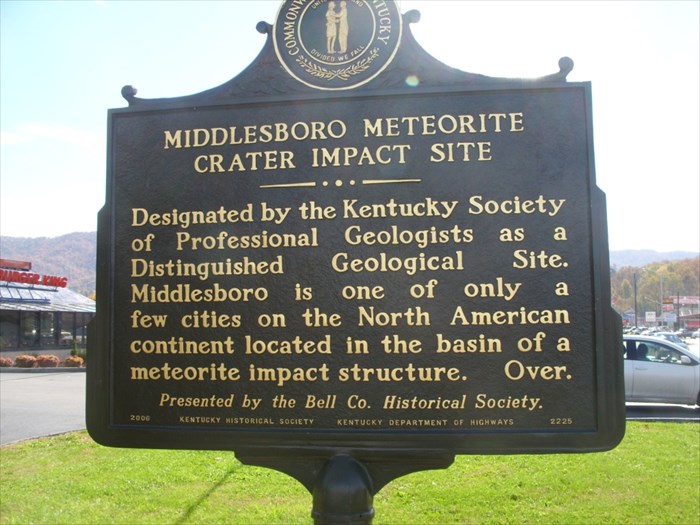
  • Appalachia’s Cosmic Bowl- The Astonishing Story of the Middlesboro, KY Crater City

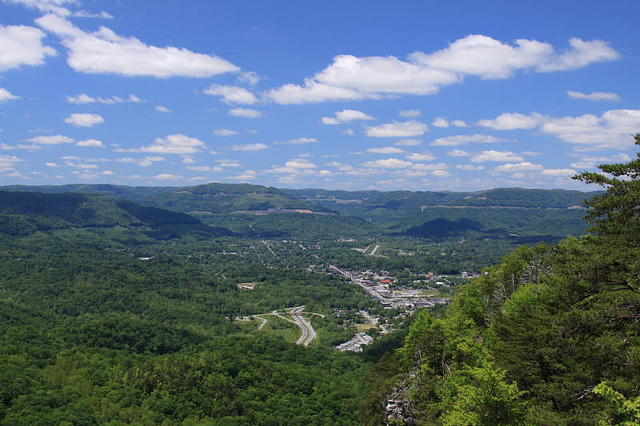
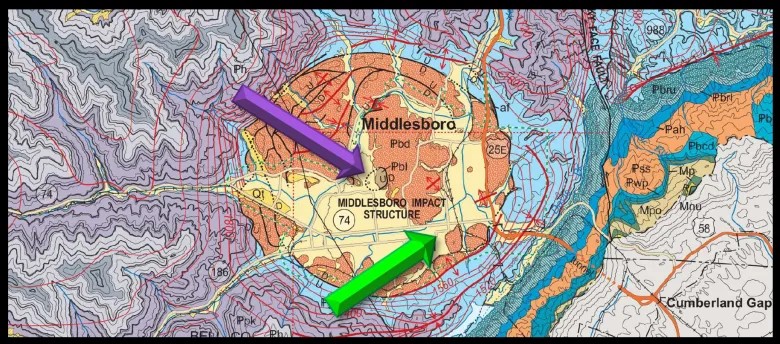
    Tucked into the far southeastern corner of Kentucky, where the borders of Tennessee and Virginia meet the Appalachian Mountains, the city of Middlesboro occupies one of the most unusual settings in North America. From the surrounding ridges, the landscape appears almost theatrical in its symmetry. A circular valley spreads out below, ringed by steep wooded slopes that rise like the rim of a colossal bowl. Streets form a grid across the flat basin floor. Homes, schools, and businesses stand where unimaginable forces once reshaped the Earth. Middlesboro rests entirely within the boundaries of the Middlesboro Crater, a meteorite impact structure measuring roughly 3.7 miles in diameter.

    The crater formed less than 300 million years ago during the late Paleozoic Era, long before human settlement, long before the Appalachian Mountains reached their present form. A meteorite traveling at tremendous speed slammed into the ancient landscape. The collision released energy far beyond any volcanic eruption in recorded history. Rock layers folded, fractured, and lifted. Shock waves radiated outward through sandstone, shale, and limestone. In a matter of seconds, a cavity opened in the crust and rebounded, leaving a circular depression encircled by uplifted ridges.

    Over millions of years, erosion softened the raw edges of the impact. Sediments accumulated on the basin floor. Forests covered the rim. By the time European settlers arrived in the eighteenth and nineteenth centuries, the crater blended into the broader Appalachian terrain. Few suspected its violent origin. To early residents, the circular valley offered fertile soil and natural shelter from wind. The ring of mountains provided timber and coal. The shape of the land felt distinctive, though its story remained hidden in stone.

    In the late nineteenth century, industrial investors recognized opportunity in the basin. Coal seams ran through the surrounding hills. Iron ore deposits appeared nearby. Railroad access expanded across the region. Middlesboro emerged during the boom of American steel production, and planners laid out the town with ambitious vision. The flat crater floor allowed for an orderly street grid rarely seen in mountainous Appalachia. Entrepreneurs promoted the city as the “Magic City” due to its rapid growth. Buildings rose, furnaces roared, and mines tunneled into the encircling ridges.

    The geology beneath this growth held secrets that puzzled observers. Rock layers appeared tilted and disrupted in unusual patterns. Miners encountered formations that seemed out of place. The circular valley shape defied easy explanation. Some speculated about volcanic origins. Others proposed gradual erosion shaped by water. The true cause remained elusive until the mid twentieth century.

    In 1966, geologist Robert S. Dietz arrived in the area with a hypothesis. Dietz had spent years studying meteorite impact structures and developing criteria to identify them. Across the world, scientists were beginning to recognize that circular depressions once attributed to volcanism often traced back to cosmic collisions. Dietz examined sandstone exposures within and around Middlesboro. There, he found definitive evidence known as shatter cones.

    Shatter cones form under intense, high pressure shock waves generated by meteorite impacts or nuclear explosions. Their distinctive conical shapes feature radiating striations that resemble the tail of a horse. No ordinary geologic process produces them. Volcanic activity cannot replicate their patterns. Tectonic forces fail to create their precise geometry. When Dietz identified shatter cones in local rock, the conclusion became clear. Middlesboro sat within an astrobleme, a scar left by a meteorite strike.

    The discovery transformed scientific understanding of the region. The circular valley emerged as a classic example of an impact crater modified by erosion. The surrounding ridges represented uplifted rock pushed upward during the rebound stage of impact. Beneath the city streets lay fractured and brecciated formations, rocks shattered and welded together by pressure and heat. The coal seams miners pursued had endured shock metamorphism, altering their structure in subtle ways.

    Middlesboro gained distinction as the only city in the world built entirely inside a confirmed meteorite impact crater where industrial development required adaptation to impact altered geology. Other towns exist near craters. Some communities sit partly within impact structures. Middlesboro alone occupies the whole basin floor, its civic life unfolding within a cosmic footprint.

    Mining operations in the area faced challenges tied directly to the crater’s formation. The impact fractured rock layers into complex patterns. Coal seams that might run in predictable lines elsewhere twisted and dipped unexpectedly around the basin. Faults crisscrossed the subsurface. Engineers developed specialized surveying and extraction methods to track seams through disrupted strata. Traditional assumptions about Appalachian coal geology required revision inside the crater.

    The unusual structure also influenced groundwater flow. The fractured rock created pathways for water movement that differed from surrounding terrain. Managing water infiltration in mines demanded careful planning. Drainage systems accounted for the radial and concentric fracture networks born from the ancient collision. Each tunnel carved into the rim passed through rock that once absorbed a shock wave powerful enough to reshape the crust.

    Above ground, the crater rim frames daily life. Cumberland Gap National Historical Park borders the area, preserving mountain passes once used by Indigenous peoples and early settlers. From elevated trails, visitors can look down upon the circular basin and trace its outline with the eye. The symmetry becomes unmistakable from that vantage. The city grid rests within a natural amphitheater formed by extraterrestrial force.

    The impact occurred during a period when the supercontinent Pangaea assembled. The Appalachian region experienced tectonic compression as ancient landmasses collided. The meteorite strike added sudden violence to an already dynamic environment. Though erosion erased the original crater walls, geophysical surveys reveal the deeper structure. Studies of gravity anomalies and subsurface imaging confirm the basin’s circular outline beneath layers of sediment.

    Shatter cones remain the most dramatic field evidence. Visitors can view examples displayed in local institutions and along certain outcrops. Each cone preserves the direction of shock wave propagation. Their surfaces record an instant when pressure exceeded tens of thousands of atmospheres. Holding a shatter cone connects present observers with a moment nearly three hundred million years in the past.

    The city’s identity intertwines with this geological heritage. Schools teach students about the crater’s origin. Museums interpret the science for tourists. Civic pride draws strength from uniqueness. Middlesboro occupies a site shaped by forces that link Earth to the broader solar system. The ground beneath homes and businesses carries memory of a cosmic encounter.

    Urban development within the crater required careful consideration of topography. The basin floor offers level terrain rare in mountainous Appalachia. This flatness supported rail yards, factories, and residential blocks. At the same time, the encircling rim limits outward expansion. Growth tends to follow the natural boundary set by the crater walls. Roads curve toward gaps in the rim where passes allow connection to neighboring valleys.

    Environmental management also reflects crater geology. Soil composition within the basin differs from that on surrounding slopes. Sediment derived from uplifted rim rock accumulated over ages, creating fertile ground suited to agriculture and landscaping. Flood control planning accounts for the bowl shaped drainage pattern. Rainwater flows inward from the rim toward central low points before exiting through natural channels.

    The story of Middlesboro demonstrates how scientific insight can reshape perception of familiar landscapes. For decades, residents lived within a circular valley without understanding its extraterrestrial origin. The 1966 work of Robert Dietz provided the missing piece. By identifying shatter cones in local sandstone, he confirmed that a meteorite impact created the structure. His findings joined Middlesboro to a global network of recognized impact sites such as Meteor Crater in Arizona and Chicxulub crater in Mexico.

    Each crater tells a story about Earth’s vulnerability to cosmic events. The Chicxulub impact contributed to the mass extinction that ended the age of dinosaurs. Meteor Crater in Arizona offers a relatively young and well preserved example of a smaller strike. Middlesboro represents an older, eroded structure integrated into a living community. Its basin hosts neighborhoods, schools, and parks rather than standing as an isolated landmark.

    Scientists continue to study the crater to refine estimates of its age and the size of the impacting body. Analysis of shocked minerals and stratigraphic relationships narrows the time frame to less than 300 million years ago. Estimates suggest the meteorite may have measured several hundred meters across. The energy released would have equaled many millions of tons of TNT. Such force carved a cavity that time gradually softened into the valley visible today.

    For residents, daily routines unfold atop rock once subjected to catastrophic shock. Children play sports in fields layered over fractured sandstone. Drivers navigate streets aligned across an ancient impact floor. Miners who once worked the rim encountered coal shaped by both tectonic compression and extraterrestrial violence. The city stands as a testament to human adaptability within landscapes forged by extreme events.

    Middlesboro invites reflection on deep time. The crater formed long before mammals dominated the planet. It endured continental drift, mountain building, and climatic shifts. Erosion sculpted its rim while forests rose and fell across epochs. Human history occupies only a fleeting chapter in comparison. Yet within that brief span, people built a community that thrives inside a cosmic scar.

    The circular valley that once marked devastation now frames civic life. Church steeples rise where shock waves once rippled through stone. Schools educate new generations inside a basin blasted from the crust. The discovery of shatter cones by Robert Dietz revealed a hidden narrative etched in rock. Middlesboro’s story unites astronomy, geology, industry, and community in a single landscape.

    Standing on the crater rim at sunset, one can trace the arc of mountains encircling the city. The symmetry speaks of sudden impact and long endurance. Few places on Earth offer such a direct connection between cosmic events and everyday existence. Middlesboro occupies that rare space, a city cradled within a meteorite crater, shaped by ancient collision and sustained by human strength.

    -Tim Carmichael

  • Appalachia and the Coastal Elite Irony: Wealth Extraction and the Politics of Regional Value

    In the hills and hollers of Appalachia, political identity carries layers of memory, pride, grievance, and hope. The region has long stood at the center of American debates about work, dignity, and belonging. In recent years, a powerful narrative has taken root. It claims that forgotten communities have risen against distant institutions and arrogant elites. Yet within that story lies a striking contradiction. Many of the loudest champions of anti-establishment anger arrive from the very circles they condemn.

    Figures such as JD Vance and Donald Trump present themselves as tribunes of the working class. Their language evokes coal miners, factory towns, church pews, and small businesses along two lane roads. Their campaigns frame politics as a struggle between virtuous heartland citizens and powerful coastal insiders. Crowds cheer the message of disruption and revenge against a cultural and political order that appears to look down upon rural America.

    The irony emerges when one examines biography and power. These leaders move within elite institutions, possess vast wealth or connections to it, and operate through national media networks headquartered far from Appalachian ridgelines. Their daily routines bear little resemblance to the lives of miners descending into shafts before dawn or nurses driving an hour across mountain roads to reach a clinic. The anti establishment banner flies in the hands of people deeply embedded within the establishment.

    This contradiction resonates in a region shaped by extraction. For more than a century, outside corporations arrived in Appalachia to harvest timber, coal, and later natural gas. Company towns rose quickly. Wealth flowed outward. Profits enriched distant shareholders while local streams filled with runoff and mountains lost their peaks. The land gave its resources. The region carried the scars.

    Coal powered American industry. Generations of miners risked injury and disease underground. Families built tight knit communities around union halls and churches. Yet ownership often remained elsewhere. Rail lines carried black rock to steel mills and power plants across the nation. Revenues accumulated in financial centers along the coasts. Environmental costs remained in the valleys.

    Hydraulic fracturing introduced a new chapter. Energy firms leased mineral rights. Drilling rigs punctured farmland and forest. Promises of prosperity accompanied each project. Some residents benefited. Many others witnessed a familiar pattern. Roads cracked under heavy trucks. Water sources faced contamination fears. Short term booms faded into uneven recoveries. Once again, capital circulated far from the place of extraction.

    The language of populist politics echoes this history in symbolic form. Votes become another resource drawn from a region hungry for recognition and stability. Candidates visit during campaign season. They promise revival of coal, restoration of pride, and punishment of distant bureaucrats. Rallies generate energy and hope. After elections, legislative priorities often shift toward tax structures and regulatory frameworks that favor corporations and wealthy donors.

    This dynamic has fueled a perception of a good bully and a bad bully. Many Appalachian voters describe experiences with national media, academic institutions, and segments of the Democratic Party as humiliating. Cultural commentary has portrayed the region as backward, dependent, or trapped in its own failures. Such portrayals generate anger and shame. They feel like scolding from people who neither understand mountain life nor respect its values.

    In that emotional landscape, a forceful leader who lashes out at journalists and political opponents can appear protective. A figure who insults elite critics on television may seem to defend local honor. The good bully fights the bad bully. He channels rage outward. He tells supporters that their struggles arise from betrayal by corrupt insiders rather than from personal shortcomings. That message restores dignity in the face of ridicule.

    Pride plays a central role. Appalachia carries a strong tradition of self reliance, kinship, and attachment to land. Being labeled poor or ignorant strikes at identity. When policy debates focus on dependency or decline, many residents hear moral judgment. A shift toward the political right has functioned as a declaration of independence from that judgment. Casting a vote becomes an assertion of worth.

    This story demands nuance. Appalachia contains a wide spectrum of political views. Organizers advocate for labor rights, environmental restoration, and healthcare expansion. Churches run food banks. Young entrepreneurs launch technology ventures in renovated downtown buildings. Many residents evaluate candidates based on complex mixes of economic, cultural, and religious priorities. Some express regret about specific policy outcomes. Others remain enthusiastic supporters of populist leaders. A single narrative cannot capture the entire region.

    Income inequality and rising living costs intensify the stakes. Housing prices climb even in rural counties. Healthcare expenses strain family budgets. Opioid addiction has torn through communities already coping with job loss. Public schools struggle with limited tax bases. These pressures create fertile ground for bold promises. When a candidate pledges to bring back high paying industrial jobs, the appeal resonates deeply.

    Yet structural economic forces complicate those promises. Global energy markets shift toward automation and renewable sources. Coal employment declined due to mechanization as well as environmental regulation. Reviving an earlier era of labor intensive mining faces economic barriers beyond the reach of campaign rhetoric. Meanwhile, tax policies that reduce revenue for social programs can constrain investment in education, infrastructure, and public health.

    What would it take for low income Appalachian voters to reconsider support for elite champions who claim to save them. Any answer must respect agency rather than assume ignorance. Many residents make calculated decisions based on perceived cultural alignment and skepticism toward alternative parties. Change would require credible pathways toward economic security that also honor regional identity.

    First, tangible results matter. If political leaders promise job growth and wage increases, communities will assess outcomes. Transparent data on employment trends, healthcare access, and school funding can shape future choices. Local journalism and civic groups play a vital role in tracking whether rhetoric aligns with reality.

    Second, policy proposals must connect directly to lived experience. Investments in broadband expansion, community colleges, and small business loans can diversify local economies. Support for black lung benefits and mine reclamation projects can address historical harms. When voters witness concrete improvements in roads, clinics, and paychecks, trust can shift.

    Third, cultural respect remains essential. Messaging that frames Appalachia as a problem to be solved risks deepening resentment. Collaborative approaches that elevate local leadership foster partnership rather than paternalism. National figures who spend sustained time in the region, listening as well as speaking, may build relationships grounded in reciprocity.

    Fourth, coalition building across class lines could reshape political incentives. When working families in rural counties find common cause with urban labor movements around wages and healthcare, the narrative of coastal versus heartland weakens. Shared economic interests can bridge cultural divides. Such coalitions require patient organizing and storytelling that highlights interdependence.

    Finally, accountability must extend beyond party labels. Voters can demand that any candidate, regardless of ideology, demonstrate commitment to reducing inequality and addressing cost of living pressures. Town halls, local forums, and primary challenges create mechanisms for pressure from within existing political alignments. Civic engagement need not depend on wholesale partisan realignment.

    The metaphor of extraction offers a cautionary tale. When coal companies removed mountaintops, the landscape changed for generations. When political campaigns harvest anger without delivering structural reform, democratic trust erodes. Both processes leave behind voids that prove difficult to fill. Reclamation requires investment, patience, and shared responsibility.

    The coastal elite irony therefore speaks to a broader American tension. Anti establishment energy can empower leaders who possess elite credentials. Symbolic rebellion may coexist with policies that entrench existing hierarchies. In Appalachia, this tension intersects with a history of resource exploitation and cultural marginalization.

    Recognizing irony does mean dismissing the grievances that fuel it. Many Appalachian families experienced plant closures, declining wages, and social upheaval. They perceived condescension from media narratives that simplified complex realities. They sought leaders who would fight on their behalf. Understanding that motivation forms the first step toward meaningful dialogue.

    At the same time, confronting contradiction invites reflection. When politicians with Ivy League degrees and investment portfolios present themselves as outsiders, voters can ask how power operates in practice. Who benefits from tax changes. Which industries receive subsidies. How do regulatory shifts affect workplace safety and environmental health. These questions move beyond personality toward policy.

    The future of Appalachia will depend on choices made within the region as well as decisions in state capitals and Washington. Economic transition toward renewable energy, advanced manufacturing, tourism, and remote work carries both risk and opportunity. Educational attainment and public health outcomes will shape competitiveness. Political representation will influence resource allocation.

    Saving communities from deep inequality and rising expenses requires more than a charismatic defender. It calls for durable institutions, equitable taxation, and sustained public investment. It demands leaders who view Appalachia as a partner in national renewal rather than as a stage for symbolic battles. It invites voters to evaluate whether the rhetoric of protection aligns with the distribution of power and wealth.

    The story unfolding in the mountains challenges simplistic assumptions. Pride and pain coexist. Loyalty and doubt intermingle. Some residents may continue to see elite populists as their best shield against cultural disdain. Others may seek new alliances focused on material improvement. The path forward remains open.

    In the end, the question of extraction extends beyond coal seams. It reaches into the heart of democratic practice. Will political actors draw value from communities without replenishing them. Or will regional voices shape policies that circulate wealth, opportunity, and respect within the places that generate them. Appalachia stands as a mirror reflecting that choice back to the nation.

    -Tim Carmichael

  • Love on the Biggest Stage

    When I sat down to watch Bad Bunny’s halftime show, I did not know exactly what to expect. I had already seen reactions online. Praise, anger, confusion, certainty. All of it swirling together. I watched with curiosity rather than anticipation, and within minutes it became clear that what I was seeing was not just a performance.

    What Bad Bunny delivered was not provocation. It was not disrespect. It was not an attack. It was love. Bold, expansive, and deeply American in a way that feels increasingly rare.

    On the largest stage in the world, before more than one hundred million viewers, he made a choice that was both simple and radical. He told the truth about who he is. He sang every single word in Spanish. Not a chorus translated for comfort. Not a token verse. Every lyric. No apology. No explanation. Just confidence, joy, and presence.

    That choice was not exclusionary. It was honest.

    The football field transformed into something else entirely. Sugarcane rose from California turf, a reminder that American land has always carried more stories than the narrow ones we are taught. Roots run deeper than fences. History stretches wider than borders.

    The performance unfolded as a celebration. Lady Gaga appeared and moved effortlessly into salsa, not as a novelty but as a participant. Ricky Martin lit up the stadium with the ease of someone who has spent a lifetime crossing borders through music. Dancers filled the field. At one point, a couple was married right there in the middle of it all. Love made literal. Ordinary and sacred at the same time.

    Then came a moment that carried more weight than any spectacle ever could. Bad Bunny handed his Grammy, won just days earlier for Album of the Year, to a young boy standing beside him. The child looked up with wide eyes, the way children do when something clicks and they realize the future might actually have room for them. That single gesture said more about legacy than any speech ever could.

    And then, standing there as the son of a truck driver and a schoolteacher from Vega Baja, Puerto Rico, Bad Bunny looked out at the crowd and said, simply, God bless America.

    Not sarcastically. Not defensively. As a statement of belonging.

    What followed was the heart of the night. He began naming countries slowly. Chile. Argentina. Uruguay. Paraguay. Bolivia. Peru. Ecuador. Brazil. Colombia. Venezuela. Panama. Costa Rica. Nicaragua. Honduras. El Salvador. Guatemala. Mexico. Cuba. The Dominican Republic. Jamaica. The United States. Canada.

    And then his voice broke as he said, Mi patria, Puerto Rico. Seguimos aquí.
    My homeland, Puerto Rico. We are still here.

    As he spoke, flags appeared. Not one. All of them. Carried across the field by dancers and musicians, moving together instead of competing for space. The stadium screens filled with the only message that mattered.

    THE ONLY THING MORE POWERFUL THAN HATE IS LOVE.

    I cried. Fully. Without shame.

    Because what I was watching felt like the America I believe in. Not the narrow, fearful version that insists patriotism has one language and one face. But the real one. The complicated one. The multilingual, multicolored country built by people who came from everywhere and made something together.

    That truth is not limited to cities or coastlines. It lives in Appalachia too.

    Appalachia is so often flattened into a caricature, held up as shorthand for some imagined pure America. In reality, it is a tapestry of immigrants. Scots Irish. German. Welsh. African. Indigenous. Eastern European. Coal towns built by hands from across oceans. Music shaped by African rhythms and Celtic melodies. Food, faith, and language braided together over generations.

    Every one of us has immigrant blood running through our veins. Every one of us.

    There is no untouched origin. No pure line. No version of America that was not built by people who came from somewhere else, speaking something else, carrying stories they refused to abandon. Appalachia did not emerge from isolation. It emerged from convergence.

    That is the America this performance honored.

    That is the America I want children to inherit. One where, when the whole world is watching, a Puerto Rican artist can stand on the biggest stage imaginable, sing in his mother’s language, bless every nation in the hemisphere, and remind us that belonging is not conditional.

    And yet, almost immediately, that vision was rejected by powerful voices.

    The performance was dismissed as terrible. People claimed no one could understand it. It was framed as an insult rather than a gift.

    Let that sit.

    A celebration of culture, unity, and shared humanity was reduced to something foreign. Something threatening. Something labeled disgusting.

    That reaction says nothing about the performance and everything about the lens through which it was viewed.

    Strength does not fear diversity. Patriotism does not shrink at the sound of another language. Love of country does not require erasing the people who make it real. When someone hears the voices of hundreds of millions across this hemisphere and feels attacked, that is not leadership. It is poverty of the soul.

    As if to underline the contrast, an alternative performance was offered up as the so called real America. Framed as wholesome. Familiar. Safe. As if this country has a velvet rope. As if culture needs permission. As if you only count if you sing in English.

    The implication was clear. Some Americans belong more than others.

    Here is the part we do not talk about enough.

    What people post in moments like this does not disappear. Screenshots live forever. Children grow up and scroll back. One day, your kids and their kids will see what you celebrated and what you rejected. They will know which side you stood on when love and fear were placed next to each other.

    History is not only written in textbooks. It is written in timelines.

    And when future generations look back at this moment the way we look back at other turning points, moments when the moral choice was clear but not universally taken, they will recognize the pattern. They will see who dismissed joy as threat. Who labeled inclusion as offense. Who chose resentment over belonging.

    This is not written with anger. It is written with sadness.

    Because hate is an inheritance no one asks for, yet it gets passed down, belief by belief, post by post. It hardens people. It shrinks them. It convinces them the world is smaller than it actually is.

    Bad Bunny did not need to shout slogans. He did not need to attack anyone. He did not need to explain himself. He simply showed us what America looks like when it is not afraid.

    An America where culture is shared, not policed. Where language is music, not menace. Where flags from every nation in this hemisphere can walk across the same field together.

    More than one hundred million people saw that.

    And no angry post, no dismissive comment, no attempt to rewrite the moment can take it away.

    Because once love is seen at that scale, it cannot be unseen.

    And that is why it mattered.

    -Tim Carmichael