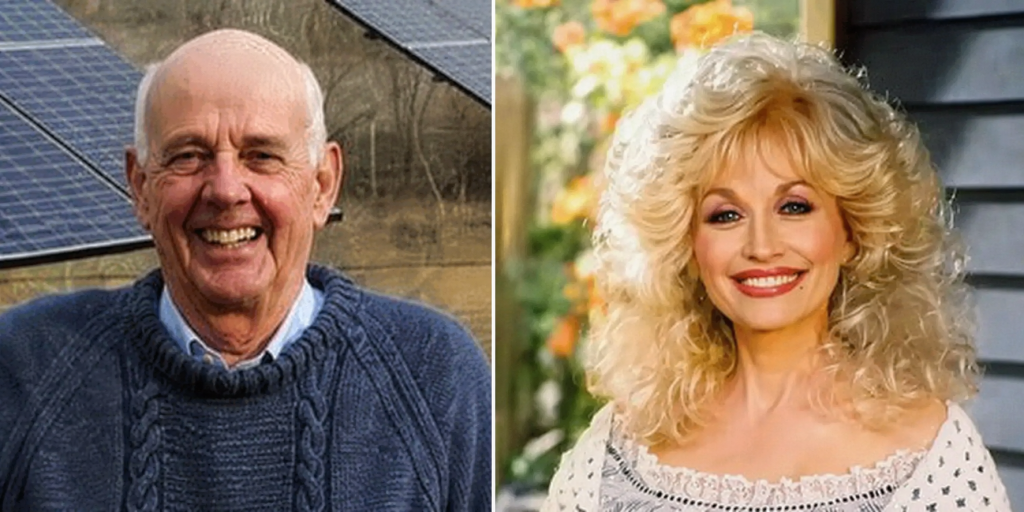
Dolly Parton, Wendell Berry, and the Appalachia that raised me
There are losses that belong to a family, losses that belong to a town, and then there are losses that seem to reach across an entire world. This week has brought me two of those losses. First came Dolly Parton, whose death on August 25 broke my heart in a way I had trouble putting into words. Then, yesterday, came the news that Wendell Berry had died at his home in Kentucky at the age of ninety-two. I sat with that news this morning and felt something I had already been carrying grow heavier. The Appalachian Mountains had lost two voices that had spoken to generations of us, and for me, those voices had been part of my life since childhood.
I grew up listening to Dolly Parton. Her music was part of the sound of home, the type of music that could come through a radio and settle into your memory before you were old enough to understand why it mattered. Dolly knew where she came from, and she never tried to hide it. She came from a large, poor family in the mountains of East Tennessee, and when she became one of the most successful entertainers in the world, she carried those beginnings with her. She understood the humor of mountain people, the pride, the hardship, the family bonds and the determination that can grow in a person who learns early that wanting more from life requires work.
What has always meant the most to me is that Dolly never treated leaving home as the same thing as abandoning home. She went farther than most people from these mountains ever imagined they could go, yet she kept returning to her home in East Tennessee. She created Dollywood, invested in the communities around her, supported families after the devastating wildfires in the Smokies and established the Imagination Library, putting books into the homes of millions of children around the world. She became a worldwide celebrity while continuing to speak with affection about the people and place that formed her. Dolly Parton showed Appalachia to the world while making sure the world understood that Appalachia had given something to her, too.
That speaks to a person like me. because I know what it means to come from these mountains. I know the difference between the way Appalachia is sometimes described by people looking in from the outside and the way it feels to those who were raised here. People can see poverty and miss the family gathered around it. They can see an old house and never know the stories that happened inside it. They can see a mountain road and have no idea how many generations have traveled it. They can talk about what Appalachia lacks while overlooking everything its people have carried forward. Music, storytelling, food, faith, humor, craftsmanship, loyalty and an understanding that neighbors sometimes become family because life requires people to depend upon one another.
Dolly understood those things because she lived them. Her songs could tell stories about poor families, broken hearts, hard work and impossible dreams while still leaving room for laughter. She never needed to make mountain people into something they were not in order to make them worthy of a song. She knew their lives already contained enough truth. That is one reason her death felt so personal to me. I had been listening to her music for so many years that her voice had become connected to memories of my own childhood. When I learned she was gone, it felt as though somebody from the world I grew up in had been taken away.
Then came Wendell Berry.
My connection to him reaches back even farther in a different way because I grew up listening to my mother read his poems. I did not understand everything I heard then. I was a child. I only knew that my mother was reading something she cared about, and because she cared about it, I listened.
Years later, I understood more.
That is one of the gifts our mothers give us. They put things into our lives before we have the minds to understand their importance.
Berry’s writing became part of my understanding of Appalachia and of rural life. He wrote about work, family, farming, community, responsibility and the land people depend upon. He wrote about what happens when we forget that a place is more than something we can use.
He understood that a person’s relationship with home can reach deeper than ownership.
That idea has stayed with me.
Berry belonged to Kentucky, yet his concerns reached far beyond Kentucky. He wrote about a way of living that valued care over consumption and community over isolation. He challenged the idea that progress always means moving faster, producing more and taking more.
He also spoke against mountaintop-removal mining and stood up for the places he believed were being damaged by decisions made far from the people who had to live with the consequences. His writing gave voice to concerns many people in these mountains had carried for generations.
That is where Dolly Parton and Wendell Berry meet for me, even though their careers could hardly have looked more different. Dolly spoke through country music, television, film and philanthropy. Berry spoke through poetry, novels, essays and decades of public thought. While he was famously a peaceful agrarian pacifist, he believed deeply that writing alone wasn’t always enough to fight the destruction of communities and the natural world. Dolly reached millions through a song, while Berry could spend pages considering a single question about how human beings ought to live. Yet both understood something fundamental about home. Neither treated rural people as a curiosity. Neither believed a person had to escape their beginnings in order to become worthy of respect. They carried the places that formed them into work that reached far beyond those places.
For me, that connection is deeply personal because both entered my life through people and experiences I knew as a child. Dolly came through music. Berry came through my mother reading poetry. One gave me songs I could carry through the years, and the other gave me words that became part of the way I understood home. When I think about Berry now, I cannot separate the writer from the memory of my mother reading his poems. The two have become connected in my mind, and his death has brought back a part of childhood I had carried for decades.
That may be one of the strangest things about losing people whose work has accompanied us for years. We discover that we have attached pieces of our own lives to their work. A song can take us back to a room we have not thought about in years. A poem can bring back the voice of someone who has been gone for a long time. A book can remind us of who we were when we first encountered it. The work survives, yet the knowledge that the person who created it is gone changes the way we hear and read it.
I think that is why these two deaths have affected me so deeply. I am grieving Dolly Parton, the singer whose music was part of my childhood, while also grieving Wendell Berry, the writer whose poems came to me through my mother’s voice. I am grieving two artists, yet I am also grieving pieces of my own history. Their deaths have made me think about how much of Appalachia exists inside the people who grew up here and how much of that inheritance is carried through voices that have been with us for years.
Appalachia has always known how to carry the dead. We tell their stories. We repeat their sayings. We cook the foods they taught us to make. We sing the songs they sang. We keep photographs tucked away and remember who everybody in them was. We give children the names of people they never had the chance to meet. We do this because forgetting somebody feels like losing them a second time. Memory is one of the ways mountain people keep their families close across generations.
Dolly Parton and Wendell Berry have given us something larger to remember. Dolly left behind songs that will continue to be sung by people who have never met her and books that will continue reaching children because of a program she created. Berry left behind decades of poetry and prose that will continue challenging readers to think about home, work, community and the responsibilities of living on this earth. Their work will continue finding people long after the two of them are gone.
Still, I wish they were here.
I wish there could be another Dolly song, another interview, another appearance where that unmistakable voice reminds us where she came from. I wish Wendell Berry could sit down and write another poem that made somebody stop and consider the life they were living. I wish my mother could read one of his poems to me again. Those wishes have no place to go now, so they remain inside the memories themselves.
The Appalachian Mountains have suffered a great loss this week. So have I. I know there will be many articles written about Dolly Parton and Wendell Berry, and there should be. Their accomplishments deserve to be remembered. Their contributions deserve careful attention. Yet beneath all the awards, books, records, honors and public achievements are the simpler truths that matter most to people like me. Dolly Parton was somebody whose music grew up alongside me. Wendell Berry was somebody whose poetry entered my life through my mother’s voice. Their work became part of the story of who I am.
That is what I will remember now.
I will remember Dolly singing about people who were trying to make it through another day, because she knew those people. I will remember the way she returned again and again to East Tennessee and used what she had gained to help the place that gave her her beginning. I will remember Wendell Berry as the writer whose words first came to me through my mother, and I will remember the years it took for me to understand why she wanted me to hear them.
Two Appalachian voices are gone now. Their lives have ended, yet the songs and poems remain, waiting for another generation to find them. Somewhere, a child will hear Dolly Parton for the first time. Somewhere, a young person will open a Wendell Berry book and discover words that change the way they see home. That is how their voices will continue.
And for those of us who knew their work before we understood its importance, there will always be something more. There will be the sound of a song coming from an old radio. There will be a poem remembered from childhood. There will be the voice of a mother reading to her child. There will be the knowledge that two people from this part of the world gave their gifts to the wider world while carrying Appalachia with them.
This week, I lost two voices I had carried for most of my life. One came to me through music. One came through my mother. Both helped teach me something about where I came from.
I will miss them both.
-Tim Carmichael
 Echoes of Appalachia
Leave a comment