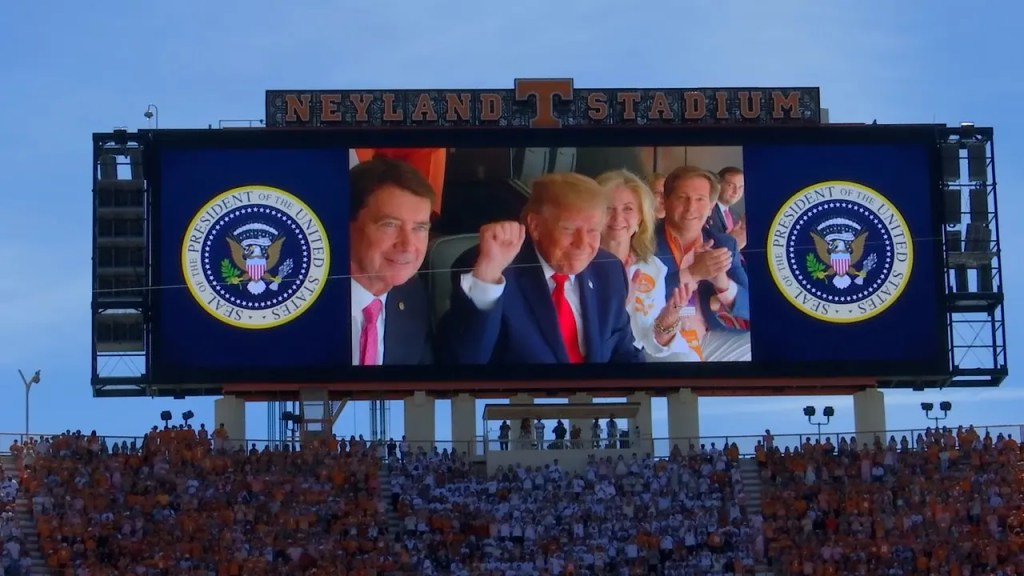
When Air Force One executed its low altitude flyover above Neyland Stadium on a crisp Saturday morning, it signaled more than just the arrival of a high stakes Southeastern Conference matchup between Tennessee and Texas. For the massive crowd packed into the legendary Knoxville venue, it was another chapter in a growing political routine. Donald Trump’s presence in East Tennessee was ostensibly framed around college football, but the underlying reality was transparent. This was a carefully orchestrated political staging designed to prop up U.S. Senator Marsha Blackburn’s campaign for governor.
Underneath the roar of the crowd, the orange checkerboards, and the intense media spotlight, a deeper disconnect lingers. While political elites and high profile surrogates trade handshakes in VIP suites, the everyday people of Appalachia face a starkly different reality. The pageantry of modern political campaigning has detached itself from the daily struggles of working class families, leaving many to wonder how long this political theater can continue before the public demands a reckoning.
The Price Tag of Political Stunts
The choice of a college football Saturday as a backdrop for political maneuvering is no accident. By embedding political endorsements into massive public sporting events, campaigns manage to capture a captive audience of tens of thousands of voters while leveraging the immense cultural gravity of the sport. Yet, this strategy comes with heavy logistical and financial implications that fall squarely on the shoulders of the public.
Securing a venue for a sitting president or major national figure requires an extraordinary mobilization of resources. Local law enforcement, state troopers, campus security, and federal agencies must coordinate massive security perimeters, traffic control measures, and road closures. Taxpayers ultimately foot the bill for the extensive security apparatus required to host these high profile drop-ins.
This dynamic explains the pattern of appearances at marquee college football games across the country. It offers a direct line to campaign for someone he is supporting and the cost goes to ordinary taxpayers who absorb the financial and logistical disruptions, the utility of these visits remains deeply questionable, and why is the Republican campaign money not paying for these travels?
The Contrast Between Luxury and Appalachian Hardship
The optics of these grand entrances create a jarring juxtaposition. While leaders travel from event to event aboard heavily funded state and private aircraft, the economic landscape across the Appalachian region tells a story of quiet desperation. Families throughout the mountains and rural valleys grapple with relentless inflation, volatile energy costs, and stagnant wages.
For many working people in East Tennessee, getting to work is a daily economic calculation. The price of a gallon of gas takes a measurable toll on a weekly paycheck that is already stretched to its absolute limit. Keeping food on the kitchen table requires difficult choices at the grocery store aisle, where essential items continue to climb in price. Beyond food and fuel, the fundamental security of keeping a stable roof overhead hangs by a thread for renters and homeowners alike who face skyrocketing property costs and utility bills.
The contrast between the multi-million dollar logistics of a presidential motorcade and the struggles of a single parent working two jobs in a rural county could not be starker. When political figures jet in for a three hour game and depart before the final whistle, they leave behind a community that must return to the grinding reality of economic survival. This gulf between the ruling class and the working class prompts a hard question: When will the people of Appalachia say that enough is enough?
The Future of Tennessee Under Blackburn
As the gubernatorial race intensifies, voters are forced to evaluate what a transition from Washington politics to the governor’s mansion means for the state’s future. Marsha Blackburn’s alignment with national political figures highlights a specific vision for Tennessee, but critics argue that vision overlooks the immediate needs of everyday citizens.
A central concern for many local communities involves the rapid proliferation of massive industrial data centers across the state. While proponents frame these massive technological hubs as economic progress, the reality on the ground often tells a different story. These facilities consume staggering amounts of electricity and water, frequently straining local utility grids and driving up power costs for residential ratepayers. Furthermore, they offer relatively few permanent jobs compared to the massive footprints they occupy, often displacing agricultural lands and hurting local farming communities that form the backbone of Tennessee’s heritage.
Farmers across the state are already hurting from shifting market dynamics, unpredictable weather patterns, and rising operational costs. Paving over rural acreage to accommodate server farms that primarily benefit out of state tech giants does little to alleviate the financial pressures facing local agriculturists. When governance prioritizes corporate infrastructure over the well-being of local families, the state drifts away from its foundational values.
Time for a Wake-Up Call
Elections serve as the ultimate referendum on priorities. When political campaigns rely on stadium spectacles, high production value stunts, and superficial appeals to regional pride, they attempt to distract voters from substantive policy outcomes. The core issues facing Tennessee require serious, sustained engagement with healthcare access, educational funding, agricultural preservation, and economic mobility. None of these challenges are solved by a flyover or a wave from a stadium suite.
The people of Tennessee and the wider Appalachian region possess a rich history of independence, resilience, and common sense. Recognizing when political theater replaces genuine representation is the first step toward reclaiming the political process. If leadership continues to cater to outside corporate interests and high-flying donors while local families struggle to pay for groceries and fuel, voters hold the power to change direction. It is time to look past the distractions, evaluate the true impact of these policies, and ensure that leadership serves the public interest rather than political ambition.
-Tim Carmichael


Leave a comment