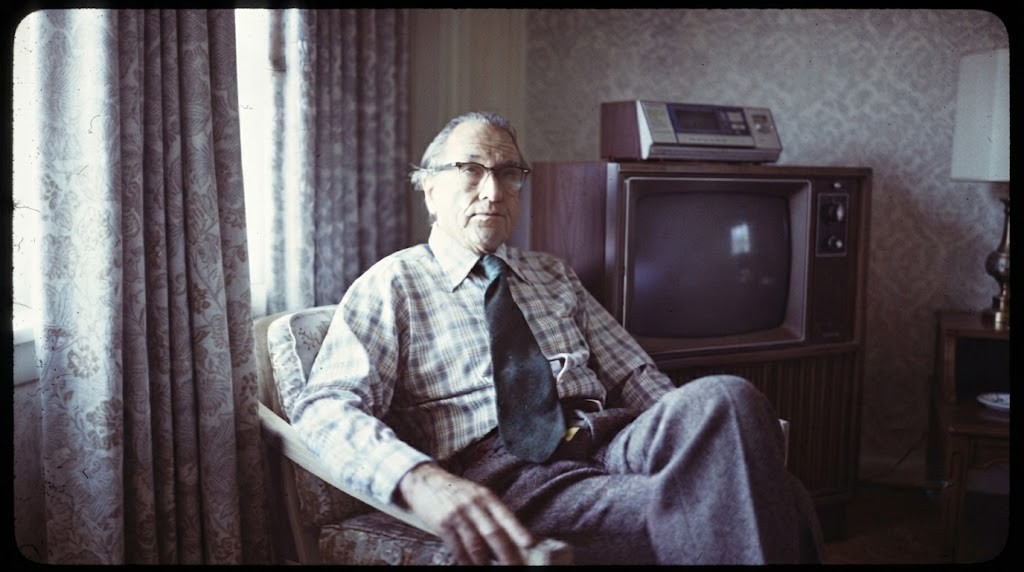
How Myles Horton changed history by refusing to stand at the front of the classroom
In 1959, state officials descended upon a small school tucked into the hills of Tennessee. Police officers raided the property, lawmakers denounced its founder, and newspapers fueled accusations that the school threatened the American way of life. Before long, the state confiscated its land and forced it to close.
The target was neither a military camp nor a political headquarters.
It was a school.
Its founder, Myles Horton, believed that education could become the most powerful force for democracy when everyday people discovered the strength they already possessed. That conviction frightened those who depended upon silence, division, and inequality. He never claimed to have the answers. Instead, he built a place where coal miners, factory workers, sharecroppers, domestic workers, and future civil rights leaders could gather, share their experiences, and recognize that the solutions to many of their struggles already existed within their communities.
His classroom changed American history precisely because it looked nothing like one.
“You don’t have to introduce people to their problems,” Horton once said. “They live with them.”
Those words became the foundation of an educational philosophy that continues to shape community organizing around the world.
Born in 1905 in rural Tennessee, Horton grew up surrounded by poverty and hardship. He watched timber companies clear forests, mining interests reshape mountains, and powerful industries profit while working families remained trapped in cycles of low wages and limited opportunity. These experiences convinced him that the greatest obstacle facing poor communities was rarely a lack of intelligence or determination. More often, people had simply been taught to believe their voices carried little value.
Traditional education, as Horton saw it, reinforced that imbalance. Teachers spoke. Students listened. Experts delivered answers. Communities were expected to accept solutions created by people who had never experienced their daily realities.
Horton imagined something entirely different.
After studying theology, sociology, and educational movements in both the United States and Europe, he founded the Highlander Folk School in Monteagle, Tennessee, in 1932. Rather than creating another institution filled with lectures and examinations, he built a gathering place where working people could learn from one another.
There were no rows of desks.
There were circles of chairs.
Instead of beginning with textbooks, conversations began with questions.
What challenges do you face at work?
Why do they exist?
Who benefits from the current system?
What can people accomplish together that they cannot accomplish alone?
The discussions often lasted for hours. Coal miners shared stories with textile workers. Farmers listened to labor organizers. Community members examined their own experiences until patterns emerged. Horton believed that oppressed people possessed deep knowledge about their circumstances. What many lacked was the opportunity to analyze those experiences collectively.
“We don’t provide answers,” Horton explained. “We provide an environment where people can find their own answers.”
That simple idea transformed Highlander into one of the most influential educational institutions in American history.
Its earliest work centered on labor organizing throughout Appalachia and the South. Workers facing dangerous conditions, poverty wages, and hostile employers gathered at Highlander to discuss organizing strategies and leadership. He did not stand before them delivering speeches about labor rights. Instead, participants explored successful campaigns, debated difficult choices, and returned home prepared to lead their own communities.
The victories belonged to the workers.
Highlander simply helped them recognize what they were already capable of achieving.
As the decades passed, Horton recognized another urgent struggle unfolding across the South. Segregation denied Black Americans equal access to education, voting, employment, and public life. While many institutions accepted Jim Crow as an unchangeable reality, Highlander quietly became one of the few places where Black and white participants met together as equals.
That decision alone made the school a target.
Long before integration became federal law, Highlander welcomed interracial workshops despite enormous political and social risks. Horton believed that systems of exploitation harmed poor people across racial lines, even when those communities had been encouraged to distrust one another.
The school’s influence reached far beyond Tennessee.
Among those who attended Highlander workshops was Rosa Parks. Popular history often portrays Parks as an exhausted seamstress whose refusal to surrender her bus seat happened spontaneously. In reality, she was a seasoned activist committed to justice long before the Montgomery Bus Boycott. Her time at Highlander strengthened her confidence and connected her with others working toward the same goals.
Dr. Martin Luther King Jr. also visited Highlander, joining conversations about leadership, nonviolent resistance, and community action. Highlander offered space where organizers could reflect, exchange ideas, and return home with renewed purpose.
One of Highlander’s most influential contributions emerged through the Citizenship Schools. Across the South, discriminatory literacy tests prevented countless Black citizens from registering to vote. Rather than merely criticizing these barriers, Highlander developed educational programs that helped adults improve literacy while preparing them to exercise their constitutional rights.
The impact spread rapidly.
Thousands learned to navigate unjust voting requirements, and many later became teachers themselves, multiplying the movement across Southern communities. Education became both practical and deeply democratic. People gained skills while discovering confidence in their own ability to lead.
For those invested in preserving segregation and inequality, Highlander represented something deeply unsettling.
It encouraged ordinary people to organize.
It brought Black and white Southerners together.
It challenged systems of economic and racial oppression without relying upon charismatic heroes.
As Cold War fears intensified during the 1950s, Horton became an easy target. Political opponents accused him of communist sympathies, even though his work centered on grassroots democracy and community participation. Investigations followed. Congressional committees scrutinized his activities. The FBI monitored Highlander. Critics understood that institutions teaching people to question power often become threats to those who benefit from unquestioned authority.
In 1959, Tennessee officials revoked Highlander’s charter, seized its property, and attempted to erase the institution altogether.
Buildings could be confiscated.
Ideas could not.
The work continued under a new organization, and Horton’s educational philosophy spread far beyond the mountains where it had begun. Community organizers, labor movements, environmental advocates, educators, and human rights leaders across the world adopted versions of Highlander’s participatory approach.
Its influence can still be found wherever neighbors gather around folding tables to solve local problems, wherever workers organize collectively instead of waiting for rescue, and wherever educators begin by listening before speaking.
Perhaps Horton’s greatest contribution was reminding society that expertise does not belong exclusively to professors, politicians, or professionals. Every community possesses knowledge born from lived experience. Real education does not replace that wisdom with outside authority. It helps people recognize its value and act upon it together.
“I like to think of education as something that liberates the mind and releases the energy of people,” Horton said.
That belief remains remarkably relevant.
In an age overflowing with information, many people still struggle to feel heard. Communities continue searching for ways to address inequality, economic hardship, and social division. Horton’s answer remains refreshingly simple: begin by listening to those living the problem.
His legacy was never about creating followers.
It was about creating leaders.
“You can’t judge what people can do by what they are doing,” Horton reminded us. “You have to judge what they can do by what they can become.”
More than half a century after state officials tried to silence a mountain school, that vision continues to inspire people across the globe. The buildings may have changed. The conversations now take place in community centers, churches, union halls, libraries, and neighborhood organizations. The principle remains the same.
The people closest to a problem are often closest to its solution.
Sometimes all they need is a place to sit together in a circle and discover the power they already possess.
-Tim Carmichel
 Echoes of Appalachia
Leave a comment