Every so often I come across a piece of Appalachian history that makes me stop and wonder how it slipped past me. I spend a great deal of time reading about this region. I know the stories that fill history books and documentaries. I know the names people repeat generation after generation. Then I discovered Cora Wilson Stewart, and I realized one of Appalachia’s greatest success stories had been hiding in plain sight for more than a century.
Her story begins in Rowan County, Kentucky, during the summer of 1911.
At first glance, nothing about the county appeared unusual. Small farms clung to the hillsides. One-room schoolhouses dotted the countryside. Families worked from sunrise until darkness settled across the valleys. Life followed the seasons, and every able hand carried responsibilities that could never wait until tomorrow.
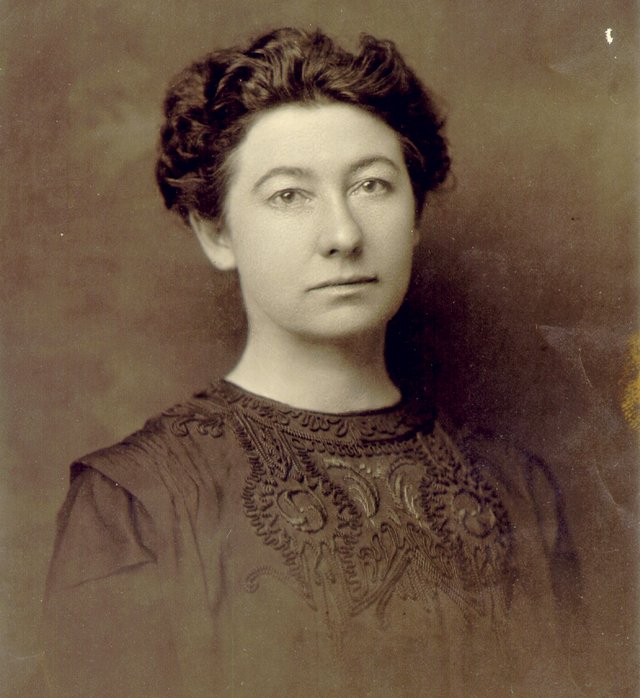
Cora Wilson Stewart served as the county superintendent of schools. Her work carried her into communities scattered across the mountains where she visited teachers, parents, and students. During those visits she discovered a crisis that statistics alone could never explain.
Thousands of adults could neither read nor write.
Many had entered the fields before they were old enough for regular schooling. Others had spent childhood caring for younger brothers and sisters while parents struggled to keep food on the table. Education had become another sacrifice demanded by survival. Years passed. Children became adults. Adults became grandparents. The opportunity many assumed would eventually arrive never came.
Illiteracy reached into every corner of daily life.
Someone unable to read a deed could lose land that had belonged to a family for generations. A contract became little more than a sheet of paper carrying words written by someone else. Medicine bottles, newspapers, election ballots, bank papers, and letters from distant family members all depended upon another person’s kindness.
The more I learned about that period, the more I realized how vulnerable those families truly were. Reading meant independence. Writing meant dignity. Without either one, everyday life required placing enormous trust in strangers.
Many people accepted that reality.
Cora Wilson Stewart never did.
She believed the adults of Rowan County deserved the same chance children received every autumn when school doors opened. The challenge came from finding a way to bring them together. Daylight belonged to work. Crops could never wait for spelling lessons. Livestock demanded attention every morning and every evening. Families living miles from the nearest schoolhouse also faced another obstacle. After sunset, mountain roads disappeared into darkness, and kerosene remained too valuable to waste.
Then Cora looked toward the night sky.
Every month the full moon climbed above the Kentucky hills and cast enough light across roads, creek crossings, and footpaths for people to travel safely.
The answer had been there all along.
She asked local teachers if they would volunteer their time during evenings when the moon shone brightest. The schoolhouses would reopen after dark. Adults could finish their work, eat supper with their families, and then make their way to class beneath the light of the moon.
The plan carried modest expectations.
Cora hoped around one hundred adults might attend.
September 4, 1911, arrived.
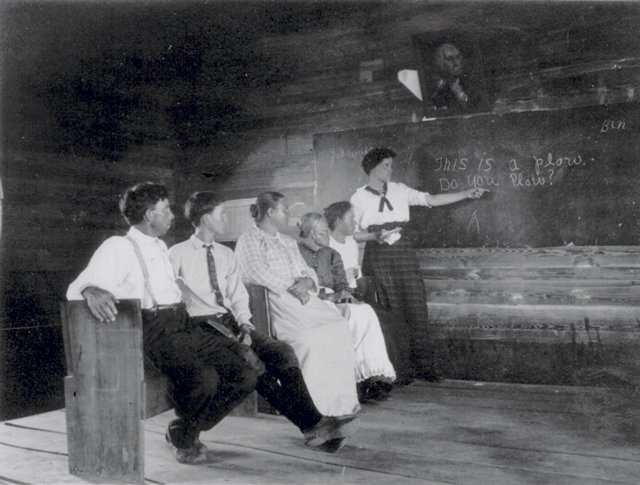
Schoolhouses that had emptied after the children’s lessons welcomed an entirely different group of students. Men whose hands bore the marks of years behind a plow took seats beside women who had spent decades raising families. Young laborers shared benches with elderly neighbors. Several students had already reached an age when many people believed learning had passed them forever.
More than twelve hundred adults came.
That number still amazes me.
It tells a story all by itself.
Those people had never lost their desire to learn. They had lost their opportunity.
Newspapers soon reported that eighty-year-old students sat inside the classrooms alongside people young enough to be their grandchildren. Many wanted to read the Bible without assistance. Others hoped to write letters to sons and daughters who had moved away searching for work. Some wanted the confidence that came from signing their own names instead of making an X.
Each person entered for a different reason.
Each person walked through the same door.
One decision made by Cora Wilson Stewart impresses me almost as much as the Moonlight Schools themselves.
She refused to teach adults from children’s books.
Many educators would have reached for the same primers handed to first graders. Stewart understood how deeply insulting that could feel to someone who had worked an entire lifetime. She believed adults deserved lessons that reflected adult lives.
She wrote new materials from the ground up.
Her reading lessons resembled newspapers instead of children’s readers. Stories focused upon farming, local events, citizenship, health, household finances, practical arithmetic, and subjects students encountered every day. She removed embarrassment from the classroom and replaced it with respect.
That choice became one of the foundations of the movement.
Students entered as adults.
They learned as adults.
They succeeded as adults.
Word spread quickly beyond Rowan County.
Reporters traveled into eastern Kentucky to see the evening schools for themselves. Editors printed stories describing classrooms filled with adults determined to master reading and writing after years without formal education. Educators arrived asking how the program worked. Communities across Kentucky wanted Moonlight Schools of their own.
The movement grew far beyond the mountains where it began.
Other states adopted Stewart’s methods. Adult literacy campaigns borrowed her teaching materials, her philosophy, and her belief that education belonged to every stage of life. An experiment born inside rural Appalachia became a national model.
That part of the story deserves far more attention than it receives.
People often speak about Appalachia through the lens of poverty, isolation, or hardship. Those realities existed, yet they never defined the region completely. Cora Wilson Stewart reminds me that Appalachia also produced ideas capable of changing the country. Her work reached thousands of people because she understood the community standing right outside her own door.
She listened before she acted.
She observed before she proposed solutions.
She trusted local teachers.
She trusted adults who had carried the weight of illiteracy for decades.
Most of all, she trusted education.
As I continued reading about her life, another detail caught my attention. Stewart never described her students as failures. She viewed them as people whose circumstances had denied them an opportunity. That distinction shaped everything she built. Shame had no place inside her classrooms. Respect greeted every student who crossed the threshold.
Many historians point toward the Moonlight Schools as one of America’s earliest successful adult literacy movements, and I understand why. Stewart recognized that education demanded more than books and teachers. It required removing every obstacle standing between people and the classroom. For some communities, that obstacle came from distance. For others, it came from work schedules. Across Rowan County, one obstacle arrived every evening with darkness.
She answered it with moonlight.
Cora Wilson Stewart spent the following decades promoting adult education across the United States. She wrote books, delivered lectures, advised educators, and encouraged communities to build literacy programs based upon the Kentucky model. The ideas first tested among Appalachian schoolhouses reached thousands of adults who had long believed education belonged to someone else.
She died on March 4, 1950, at the age of seventy-six.
She is buried in Machpelah Cemetery in Mount Sterling, Kentucky.
Whenever I read about remarkable people from Appalachia, I find myself asking why some names survive while others slowly fade from public memory. Cora Wilson Stewart should stand beside the great reformers of American education. Her legacy reaches far beyond Rowan County because she proved that a practical idea, rooted in compassion and shaped by the realities of mountain life, could influence an entire nation.
The image that remains with me has never changed.
A full moon hangs above the eastern Kentucky hills.
One-room schoolhouses glow with lamplight.
Adults who spent years believing education had slipped beyond reach walk through the doors carrying little more than determination.
When class ends, they step back into the night carrying something far more valuable than they brought with them.
They carry the ability to read their own future.
-Tim Carmichael
 Echoes of Appalachia
Leave a comment