• The Skills We Are Losing One Generation at a Time

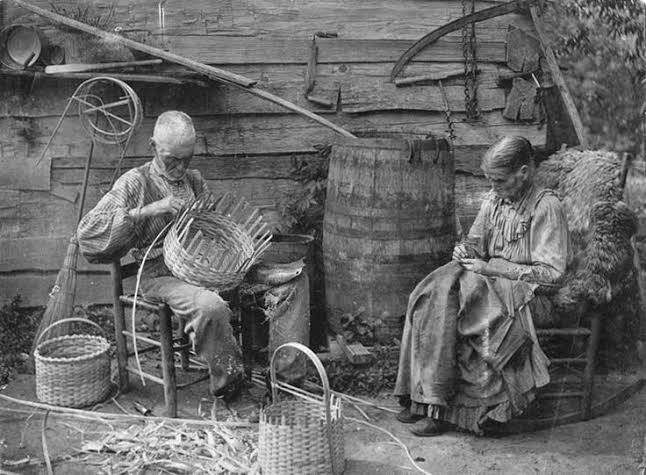
    The blade moves through the work with a confidence that comes from decades of repetition. Every cut has a purpose. Every motion has been refined over years of practice. The person holding the knife knows what to save, what to remove, and how to complete a task that fewer people today have ever seen performed.

    Across Appalachia, scenes like this are becoming harder to find.

    A generation of specialized knowledge is reaching a breaking point. The people who know how to butcher an animal, preserve food, identify useful plants, repair old machinery, build with traditional methods, play regional music, and tell stories with the rhythm of a lifetime are aging. Fewer people are learning these abilities before they disappear.

    The loss is larger than a collection of old techniques. These are systems of understanding created through observation, repetition, and problem solving. They represent decades of lessons gathered through hands-on work.

    Much of this knowledge has never existed in manuals. It lives in the small details. The sound of an engine that signals a failing part. The appearance of a plant that separates one species from another. The feel of wood before it is shaped into a structure. The timing required to preserve food correctly.

    When the people carrying that understanding are gone, replacing it becomes difficult.

    For generations, butchering was a practical necessity for many Appalachian families. It required knowledge of anatomy, sanitation, preparation, and efficiency. A person learned how to handle the process by standing beside someone who knew the work and slowly taking on more responsibility.

    The lessons came through observation. A younger person watched how tools were handled, how decisions were made, and how each part of the animal could be used.

    Today, fewer people grow up around that process. Meat arrives packaged and prepared, separated from the work that produced it. The ability to process an animal remains valuable, yet the number of people who know how to do it continues to shrink.

    The same pattern can be seen in canning.

    A shelf filled with jars represents hours of preparation. It reflects an understanding of seasons, ingredients, storage, and timing. Someone skilled at preserving food knows how to prepare a large harvest and how to make careful choices that prevent waste.

    Canning requires more than following instructions. It requires judgment developed through repetition. A person who has filled hundreds of jars recognizes details that are difficult to explain on paper.

    Modern food systems have changed how people prepare meals. Many households have fewer reasons to preserve food themselves. As fewer people practice the craft, fewer people are available to teach it.

    Plant knowledge faces an even greater challenge because much of it depends on recognition. Appalachia has long been home to people who understood local plants, their uses, and the methods involved in preparing them.

    That understanding required attention to details that are easy to overlook. The shape of a leaf. The timing of growth. The difference between similar plants. The conditions that determine whether a plant is useful.

    A field guide can provide information. It cannot replace someone pointing out the details that take years to notice.

    The same issue appears in traditional building.

    Older builders often understood how to work with materials available in their area. They knew how wood responded to cutting and weather. They understood construction methods through years spent creating, repairing, and improving structures.

    Those methods represented more than craftsmanship. They showed an ability to solve problems with what was available.

    Modern construction has changed the industry. New materials, tools, and methods have improved efficiency. At the same time, fewer people learn older approaches. When a builder with decades of knowledge steps away from the work, that understanding can vanish with them.

    Machinery repair tells a similar story.

    Across rural Appalachia, many farmers and mechanics developed a remarkable ability to diagnose problems. They could listen to an engine, observe a machine’s movement, and identify issues before taking anything apart.

    Their knowledge came from years of repairing equipment, studying failures, and finding solutions when replacement options were limited.

    Today’s machinery often requires specialized systems and advanced technology. Repair remains essential, yet fewer people develop the broad mechanical understanding that once existed among many rural workers.

    Storytelling and traditional music carry another form of disappearing expertise.

    A skilled storyteller understands timing, humor, emotion, and memory. They know how to hold attention and turn ordinary events into something people remember.

    Traditional musicians develop their abilities through years of playing, listening, and performing. A song carries techniques and styles that may never appear in written form.

    As fewer people learn these traditions directly, details begin to fade. A melody may survive in a recording, yet the methods behind the performance can disappear.

    Hunting knowledge faces the same challenge.

    A successful hunter understands far more than equipment. They learn patience, observation, safety, preparation, and decision-making. Much of that understanding comes through time spent alongside someone who knows the process.

    Those lessons are difficult to transfer through technology alone. They are built through participation.

    The decline of these abilities reflects changes happening throughout rural communities. Work has changed. Technology has changed. Daily routines have changed.

    The question is what happens when the people who hold specialized knowledge become fewer and fewer.

    Preserving these abilities requires more than recording them. A video can show how something is done. A document can describe the steps. Real understanding comes from practice.

    Across Appalachia, some people are working to keep these traditions alive. Workshops, apprenticeships, community programs, and individual teachers are creating opportunities for younger people to learn crafts, repairs, food preservation, music, and other practical abilities.

    The timing matters.

    Many of the people who carry these abilities spent decades refining them. They learned through thousands of small moments: a mistake corrected, a technique improved, a problem solved.

    That kind of understanding cannot be rebuilt overnight.

    The last generation that knows how to perform many of these tasks is still here. The opportunity to learn remains available, yet it will not remain open forever.

    A skill survives when someone chooses to learn it. It continues when someone practices it enough to understand it. It reaches the future when another person decides that knowledge earned over a lifetime deserves to continue.

    -Tim Carmichael
  • Appalachia’s Future Is on the Ballot: Why the Next Governors Will Decide Whether Our Farmland Survives the Data Center Boom

    I was born and raised in Appalachia, and the mountains, valleys, farms, rivers, and hollers that I have known my entire life mean far more than scenery. They are home. They are where generations of families have worked the land, raised their children, helped their neighbors, and held onto the traditions that make Appalachia what it is.

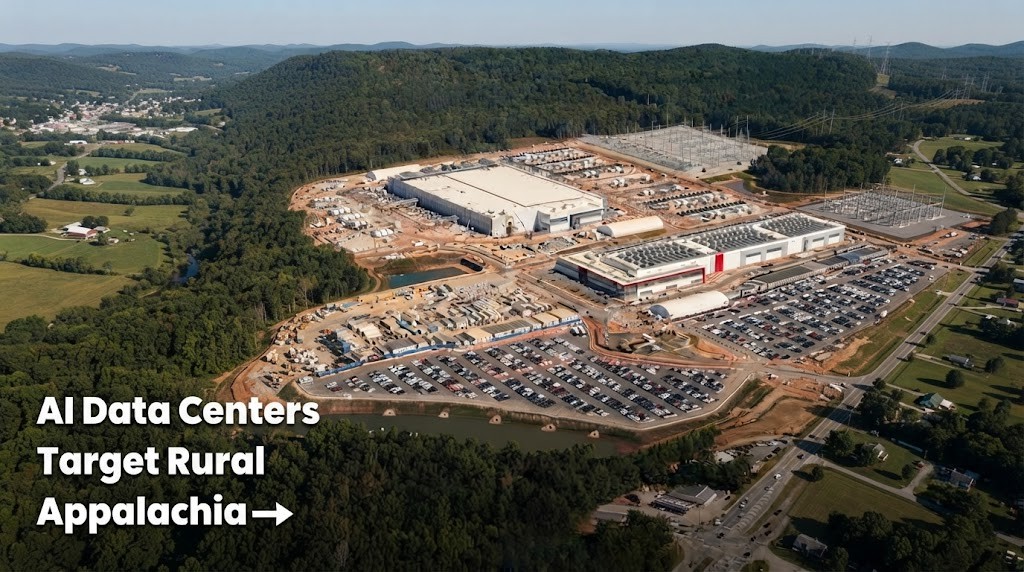
    I am not writing this to tell you who to vote for, all I am asking is for you to please research who you are voting for. I am deeply concerned about the upcoming governor races across the Appalachian region. The decisions made in state capitals over the next several years will determine whether Appalachia remains a place of working farms, forests, and small communities, or whether more of our land becomes industrial property for massive data centers built to serve the rapid growth of artificial intelligence.

    Technology has a place in Appalachia. Economic development matters. Jobs matter. Broadband access matters. The question is whether development will happen responsibly or whether some of the most valuable and irreplaceable land we have will disappear behind, concrete walls, power substations, and enormous server buildings.

    Data centers require tremendous amounts of electricity, water, and land. Across the country, communities are beginning to question whether the benefits promised by these projects outweigh the long-term impacts, including pressure on power systems, increased infrastructure demands, environmental concerns, and changes to the character of rural communities. Not to mention the cost of your own electricity sky rocking to the point you can’t afford to even have power for your home.

    For many Appalachian residents, the fear is simple. Once farmland disappears, it cannot be brought back.

    The governor races across Appalachia matter because governors influence economic incentives, environmental protections, utility policies, and the direction of large scale development across their states.

    In Tennessee, one of the most closely watched races involves Senator Marsha Blackburn. Blackburn has entered the 2026 Tennessee governor’s race and is considered one of the leading Republican candidates. Her campaign has focused on conservative priorities, economic growth, energy production, and attracting investment.

    The question many Tennesseans are asking is how that vision of growth applies to the expanding data center industry. Blackburn has promoted Tennessee as a strong location for businesses and investment, yet she has not released a detailed statewide plan addressing data center expansion, farmland preservation, energy demands, or limits on industrial development in rural communities.

    That uncertainty concerns many residents who believe Tennessee needs a clear plan before outside companies decide the future of the state’s land.

    Critics have also raised questions about Blackburn’s campaign contributions connected to technology and data center interests. In the last quarter Data Center interest donated over $100,000 to her campaign. Campaign finance records show significant fundraising activity from a variety of industries and individuals. Many voters believe transparency matters when industries seeking growth opportunities become major political contributors.

    Blackburn is not the only Tennessee candidate facing questions about development and corporate influence. Congressman John Rose is also seeking the Republican nomination for governor. Rose has emphasized conservative economic policies and business growth, although he has not presented a detailed public strategy focused specifically on data centers, rural land preservation, or protecting farmland from large industrial projects. he too has accepted money from interest in data centers.

    Democratic candidates in Tennessee also face the responsibility of explaining how they would handle the future of technology development. Economic opportunity remains a major concern across the state, yet the growth of data centers creates a larger conversation about what type of development Tennessee wants and what communities are willing to accept.

    The concern reaches far beyond Tennessee.

    In Virginia, Appalachian communities have watched the growth of the data center industry closely. Virginia has become one of the largest technology hubs in the nation, and debates over electricity use, land requirements, and community impacts have grown louder. Candidates seeking statewide leadership positions must answer whether Virginia will continue rapid expansion or create stronger protections for rural communities.

    Western Virginia has a different identity than the technology corridor of Northern Virginia. Mountain communities have farms, forests, and small towns that hold generations of history. A family farm should carry value beyond the amount a developer is willing to pay.

    In West Virginia, Kentucky, North Carolina, Pennsylvania, Georgia, Alabama, and other Appalachian states, voters are asking similar questions about the future.

    Many candidates speak about bringing jobs, investment, and new industries into struggling communities. Those goals matter. Appalachia has faced generations of economic challenges, from the decline of coal to the loss of manufacturing jobs. Families want opportunities. Young people want reasons to remain close to home.

    Opportunity should never require the loss of everything that makes Appalachia special.

    A governor who understands Appalachia should understand that farmland is an economic resource. Forests are an economic resource. Clean water is an economic resource. Small towns with strong identities are an economic resource.

    Development should be measured by more than tax revenue and construction jobs. It should also be measured by what communities lose when the landscape changes forever.

    The next governors of Appalachian states will face difficult decisions. They will decide whether every large technology project that arrives with promises of investment receives approval, or whether states create thoughtful rules that protect communities from uncontrolled industrial expansion.

    Residents deserve clear answers before decisions are made.

    Will candidates require companies to pay their fair share of infrastructure costs?

    Will they protect farmland from large scale industrial development?

    Will they demand transparency about energy use and water consumption?

    Will local communities have a meaningful voice before massive projects move forward?

    These questions come from people who love their homes.

    They are not questions against progress. They are questions about responsibility.

    For generations, Appalachia has experienced moments when outside interests arrived, took what they needed, and left communities dealing with the consequences. Whether the industry involved timber, coal, or manufacturing, many Appalachian families understand the importance of protecting local voices and local resources.

    The data center boom represents another turning point.

    The governors elected across Appalachia will influence whether the mountains and valleys remain places where families can farm, hunt, fish, raise children, and build a future, or whether more land becomes dedicated to supporting the digital economy.

    Technology will continue to grow. Artificial intelligence will continue to expand. Data centers will continue to be built somewhere.

    The question is whether Appalachia will have a say in where and how that growth happens.

    For those of us born and raised here, this issue reaches beyond politics. It reaches into our memories, our families, and our love of the land.

    The mountains remember the people who worked them. The rivers remember the communities that depended on them. The farmland carries the stories of generations who built their lives here.

    The next governors of Appalachia will help determine whether future generations inherit the same beautiful farms, forests, and communities that shaped us, or whether they inherit only memories of what once stood in their place. Do your homework before you cast that ballot. Don’t listen to the ones running research what their plans are for Appalachia.

    -Tim Carmichael

  • Jean Ritchie: The Mother of Folk and Keeper of Appalachian Song

    Jean Ritchie (born 1922 – death 2015) became one of the most important voices in American folk music through her lifelong dedication to Appalachian traditions. Known as the “Mother of Folk,” she carried the songs, stories, and musical customs of Kentucky’s mountain communities to audiences across the United States and around the world. Her work as a singer, songwriter, collector, and educator helped preserve a rich cultural legacy that had been passed through generations of Appalachian families.

    Born on December 8, 1922, in Viper, Kentucky, Jean Ritchie grew up in a large family with deep roots in the eastern Kentucky mountains. Her parents, Abigail and Abram Ritchie, valued education, music, and community traditions. The Ritchie household was filled with old ballads, hymns, and local songs that had traveled through families for centuries. Jean learned many of these pieces from her relatives, especially from her father and siblings, who sang together as part of everyday life.

    The Appalachian region where Jean spent her childhood was a place where music served as a way to share history, emotions, and experiences. Songs carried memories of love, hardship, faith, work, and family connections. Many tunes had origins reaching back to Britain and Ireland, brought to North America by immigrants and transformed through Appalachian life. Jean recognized the importance of these songs and understood that each melody held a story about the people who preserved it.

    After graduating from high school, Jean attended the University of Kentucky, where she earned a degree in social work in 1946. During her college years, she continued singing traditional songs and became increasingly interested in documenting Appalachian music. Her academic background and personal connection to the mountains gave her a unique perspective. She viewed folk songs as valuable expressions of human experience and cultural identity.

    Following college, Jean moved to New York City, where she worked with the Henry Street Settlement and became connected with the growing folk music movement. The city introduced her to musicians, artists, and audiences who were fascinated by traditional American music. Her clear voice, gentle style, and extensive knowledge of Appalachian songs quickly gained attention. She performed in important folk venues and helped introduce many listeners to the musical heritage of the mountains.

    One of Jean Ritchie’s greatest contributions came through her efforts as a song collector. She traveled throughout Appalachia recording and preserving traditional songs from older generations. She carefully documented the words, melodies, and histories behind the music. Her collections helped save many songs that could have faded from public memory as lifestyles changed and communities became more connected to modern influences.

    Jean also played a major role in bringing the Appalachian dulcimer to wider attention. The instrument, a simple stringed instrument traditionally crafted in mountain communities, became closely associated with her performances. She demonstrated its beauty and versatility, inspiring many musicians to learn how to play it. Her work helped establish the dulcimer as an important part of American folk music.

    In 1952, Jean married George Pickow, a photographer and filmmaker who shared her interest in cultural preservation. Together, they traveled widely and documented traditional music, crafts, and communities. Their partnership supported Jean’s mission to celebrate Appalachian culture while allowing people from many backgrounds to understand the importance of these traditions.

    Jean Ritchie’s influence extended beyond performance. She wrote books that explored Appalachian music, including studies of folk songs and the traditions surrounding them. Her writing provided valuable insight into the lives of mountain communities and the meanings behind their music. Through her books, recordings, and concerts, she became a trusted source for scholars, musicians, and listeners interested in American folk heritage.

    Her songs reached many generations of musicians who found inspiration in her work. Artists in the folk revival of the twentieth century looked to Jean as a guide and a source of knowledge. Her recordings introduced traditional songs to new audiences, and her approach encouraged musicians to respect the origins of the music they performed. She believed that folk music belonged to communities and that sharing these songs allowed their stories to continue.

    Throughout her career, Jean received many honors for her contributions to music and culture. She was recognized by organizations dedicated to folk arts and American heritage. Her work earned admiration from musicians, historians, and cultural leaders who valued her commitment to preserving traditional expression. Her influence remained strong long after her early performances, as new generations continued discovering the songs she collected and shared.

    Jean Ritchie’s legacy rests on more than her beautiful voice or musical talent. She represented a connection between the past and the present. She showed that traditional songs could survive through careful preservation and thoughtful sharing. Her work demonstrated that the experiences of ordinary people could become part of a larger cultural story. The songs of Appalachian families became treasures for listeners throughout the world because of her dedication.

    She also helped change the way many people viewed folk music. Rather than seeing traditional songs as simple pieces of the past, Jean presented them as living art forms filled with emotion and meaning. She respected the people who created and maintained these songs, recognizing that their voices reflected important parts of American history.

    Jean Ritchie continued performing and teaching throughout much of her life. Even in later years, she remained devoted to Appalachian music and encouraged others to explore traditional arts. Her passion for preserving cultural memory remained a central part of her identity. She passed away on June 1, 2015, leaving behind a remarkable body of work and a lasting influence on folk music.

    Today, Jean Ritchie is remembered as one of the most significant figures in American folk history. Her recordings, writings, and collections continue to inspire musicians and researchers. The songs she protected carry the voices of generations who lived among the mountains of Appalachia. Through her efforts, those voices continue to reach new listeners.

    The title “Mother of Folk” reflects the care and dedication Jean brought to her work. She nurtured a musical tradition, protected its stories, and helped others appreciate its beauty. Her life showed the power of music as a bridge between generations and communities. Jean Ritchie preserved the heart of Appalachian song and gave the world a deeper understanding of the culture that shaped her.

    -Tim Carmichael

  • Larry Gibson: The Fearless Guardian and Environmentalist of Appalachia

    Larry Gibson devoted decades of his life to protecting the mountains of West Virginia. His name became closely connected with the fight against mountaintop removal coal mining, a practice that transformed forests, streams, wildlife habitat, and entire communities. Through determination, courage, and deep love for the land where his family history began, he earned respect from people across the United States and around the world.

    Generations of the Gibson family lived in the Kayford Mountain region. During childhood, Larry experienced the beauty of forests, hills, and wildlife that shaped his lifelong connection with nature. His family faced poverty, while many relatives worked in coal mining, including his father and grandfather. After time spent living in Ohio, Larry worked in the automobile industry until an injury ended that career. He later returned home, where he discovered that mining operations had spread across the landscape he treasured.

    The changes he witnessed inspired him to become a powerful voice for environmental protection. Mining activity reached areas close to his family cemetery, creating painful memories that strengthened his resolve. He welcomed journalists, community members, public figures, and fellow advocates to Kayford Mountain so they could see the impact with their own eyes. His efforts transformed the mountain into a place where people could learn directly about the environmental consequences of large scale mining.

    Between West Virginia, Virginia, and Kentucky, more than 500 mountains have been destroyed through a mining practice called mountaintop removal. Larry Gibson, who stood under five feet tall, refused to sell his property despite receiving enormous offers from coal companies eager to acquire his land. His unwavering commitment sparked years of confrontations as he continued defending his mountain against powerful mining interests.

    Larry traveled across West Virginia, speaking with residents about the value of clean water, healthy forests, and thriving communities. His dedication carried him across the country as he addressed public gatherings, government officials, shareholder meetings, and environmental organizations. His message centered on preserving natural beauty for future generations.

    His words reflected both courage and compassion. He once declared, “I’ll tell you what. I’m not collateral damage. I am not a victim … I am somebody. I am just as good as anyone. I deserve the same quality of air and health that everyone does that lives away from the coal fields.” That statement captured his belief that every family deserved clean air, good health, and respect regardless of where they lived.

    He also encouraged people to consider the future through a broader perspective, saying, “Some Native Americans believe we should think seven generations ahead. When you look out on this site, it’s clear we haven’t done that.” His message called for responsible stewardship of the land so future generations could inherit healthy mountains, forests, and waterways.

    Mining companies offered enormous sums of money in hopes that he would leave his property. Larry remained firmly committed to his mission. He lived in a modest cabin on the mountain, choosing a simple life close to the place he worked tirelessly to defend. His commitment inspired relatives and supporters who shared his vision.

    His campaign brought serious challenges. His cabin showed signs of gunfire. Personal threats became part of daily life. His vehicle experienced dangerous encounters involving coal trucks. Two beloved dogs lost their lives during this difficult period. Physical attacks, threatening calls, and repeated arrests never weakened his determination. He accepted these hardships as part of a lifelong effort to protect the mountains he loved.

    In 2004, Larry established the Keeper of the Mountains Foundation, creating a stronger platform for education, outreach, and public awareness. Through this organization, he encouraged people from many backgrounds to understand the environmental effects of mountaintop removal mining and to participate in conservation efforts.

    His influence reached many respected environmental leaders, including Bill McKibben, Robert F. Kennedy Jr., and James Hansen. National media also recognized his dedication. CNN honored him with a CNN Heroes award in 2007, bringing greater attention to his lifelong mission. Television documentaries introduced his work to even larger audiences.

    Larry Gibson died from a heart attack at his West Virginia home on September 9, 2012, at the age of sixty-six. I would assume with the stress he was going through that had to contribute to this death in some way. He left behind his wife and three children. His legacy continues through the people inspired by his example, along with the ongoing effort to preserve the mountains, forests, and waterways that meant so much to him. His life stands as a powerful reminder that one determined individual can inspire lasting awareness and encourage others to protect the natural world.

    Larry’s family continues to maintain a connection to Kayford Mountain, preserving the land that generations of Gibsons called home. While Larry spent his final years as the mountain’s most visible defender, his family carried forward the responsibility of protecting the property and honoring his legacy.

    -Tim Carmichael

  • Eula Hall: An Appalachian Angel of Eastern Kentucky

    For generations, families in eastern Kentucky faced poverty, difficult mountain roads, and limited access to medical care. Life in the Appalachian mountains required strength, cooperation, and determination. Many communities were separated by miles of steep terrain, making basic services difficult to reach. Among the people who understood these struggles was Eula Hall, a woman who dedicated her life to helping families receive the healthcare they deserved.

    Hall grew up in a region where medical care remained out of reach for many residents. Doctors were often located far away, and transportation problems created serious barriers for families who needed treatment. A trip to a medical office could require hours of travel along winding roads. During emergencies, those distances could become dangerous. Hall saw these challenges throughout her life and developed a strong belief that every person deserved access to quality healthcare.

    She understood that illness affected entire families. When someone became sick, the effects reached parents, children, and neighbors. People living in remote areas often carried heavy burdens because professional medical services were difficult to obtain. Hall believed geography should never determine whether someone received help. Her dedication to improving healthcare grew from seeing these struggles firsthand.

    Rather than accepting the lack of services in her community, Hall worked to create solutions. She listened to families, learned about their needs, and searched for ways to bring medical support closer to home. Her approach was simple: people deserved care, respect, and attention regardless of their financial situation or where they lived.

    Her greatest achievement came with the founding of the Mud Creek Clinic in rural Kentucky. The clinic became a place where mountain families could receive medical care without traveling long distances. Creating the clinic required years of effort, planning, fundraising, and community support. Hall worked tirelessly to gather resources and convince others that eastern Kentucky deserved a dependable healthcare facility.

    Many people doubted whether such a project could succeed in a rural mountain community. Funding remained difficult, supplies were expensive, and reaching isolated families created major challenges. Hall continued forward through every obstacle. She contacted organizations, encouraged volunteers, and built partnerships that helped turn her vision into reality.

    The roads of eastern Kentucky were part of Hall’s daily life. She traveled across mountain routes to reach people who needed assistance. Those trips were often difficult, yet every journey represented another chance to improve someone’s health and quality of life. Her work showed that determination could overcome barriers that seemed impossible to defeat.

    People across the region came to know Hall as a powerful advocate for families who had long been overlooked. She spoke with confidence because she understood the problems facing rural communities. Her knowledge came from years of listening, serving, and working directly with the people of Appalachia. She became known for finding solutions when others struggled to find answers.

    Hall earned the description “One-Woman Relief Agency in Appalachia” because she took on countless responsibilities to help her neighbors. She searched for medical resources, supported families, connected people with services, and fought for attention toward rural healthcare needs. Calling herself a “hillbilly activist,” Hall embraced her Appalachian identity and used her voice to defend the people and communities she loved.

    The Mud Creek Clinic represented more than a medical facility. It represented respect for people who had often felt forgotten. Patients received treatment from healthcare workers who understood their lives and challenges. Families found a place where they felt valued and heard. The clinic became an important part of the community because it provided both medical services and human connection.

    Hall’s ability to secure resources became one of her greatest strengths. She reached out to supporters, organizations, and leaders who could help expand healthcare opportunities. Her persistence opened doors for equipment, funding, and assistance that improved services throughout the region. She proved that one determined person could create changes that affected thousands of lives.

    Her influence reached beyond the clinic. Hall inspired younger generations to become involved in their communities. Many people saw her example as proof that leadership came from service and action. She encouraged others to speak up, solve problems, and work together for the benefit of their neighbors.

    Families across eastern Kentucky experienced the impact of Hall’s efforts. Children received medical attention that supported healthier futures. Adults gained access to treatment that improved their daily lives. Older residents found care that helped them manage health concerns. The improvements created through her work reached generations of families.

    Hall also helped change how people viewed rural Appalachia. Many outsiders focused on the hardships of mountain communities while overlooking the determination, generosity, and strength of the people who lived there. Through her advocacy, Hall showed the world that Appalachian communities contained talented leaders and caring neighbors who could create meaningful progress.

    As her reputation grew, Hall received recognition for her years of service. Awards and honors reflected the importance of her work, though her focus remained on helping others. She measured success through the lives improved and the families supported. Her greatest reward came from knowing that people in eastern Kentucky had better access to healthcare because of her efforts.

    Eula Hall died on May 8, 2021, at the age of 93. She left behind a legacy built through decades of service, courage, and dedication. Her passing marked the end of an extraordinary life devoted to improving healthcare in Appalachia. The communities she served remembered her as a tireless advocate who fought for people who needed a voice.

    Her story shows the power of one person’s determination. Change often begins with someone who recognizes a problem and decides to take action. Hall spent more than seventy years proving that commitment, compassion, and hard work could create lasting improvements.

    The Mud Creek Clinic remains a reflection of her vision and dedication. Every patient helped, every family supported, and every person inspired by her example carries part of her legacy. Eula Hall showed that a single individual could bring healthcare, hope, and dignity to thousands of people across eastern Kentucky. Her life continues to inspire those who believe communities become stronger when people care for one another and refuse to ignore those in need. We sure could use a lot more Eula Hall’s in Appalachia.

    -Tim Carmichael

  • Mary Draper Ingles: The Appalachian Escape Across Rivers and Wilderness

    Mary Draper Ingles lived during a period when the Virginia frontier pressed against vast forests, river systems, and mountain chains that shaped survival through endurance, skill, and determination. Her life became tied to one of the most remarkable survival journeys in early American history, an escape from captivity and a long return route across the Appalachian region that stretched through present-day West Virginia and Virginia.

    In July 1755, conflict along the frontier intensified during the French and Indian War era. Settlements along the New River region experienced repeated disruption as groups competed for land, resources, and strategic control. During a raid on Draper’s Meadow in western Virginia, Mary Draper Ingles, along with family members and neighbors, became captured by Shawnee warriors and carried westward into the interior. The captives endured forced movement through dense forests, river crossings, and unfamiliar terrain that extended far beyond their home settlements.

    The journey into Shawnee territory exposed Mary to long marches across rugged ground and shifting seasonal conditions. Food supplies depended on hunting and gathering along the route, while river valleys served as both pathways and obstacles. Captives faced exhaustion during travel that extended over many days. Family separation occurred during the aftermath of capture, creating emotional strain alongside physical hardship.

    Mary Draper Ingles eventually reached a Shawnee settlement situated near the Ohio River region. Life in the settlement introduced unfamiliar customs, labor routines, and social structures. She gained exposure to agricultural work and domestic tasks within the community while adapting to new surroundings. The environment required learning patterns of seasonal change, resource use, and river-based geography that differed from her Virginia home.

    During her time in the settlement, awareness of distance and direction toward her homeland grew through observation of river systems and travel routes used by hunting parties. The New River and Kanawha River corridors formed mental maps that later influenced her return journey. The Kanawha River, flowing through what is now West Virginia, connected inland regions with broader river networks that eventually lead toward familiar territory.

    After months of captivity, Mary executed an escape during a moment when travel routines created opportunity for separation from the group. She left the settlement and entered the surrounding wilderness with minimal supplies. Her route traced riverbanks, forest ridges, and natural landmarks across the Appalachian landscape. The journey extended approximately five hundred miles toward her original settlement region.

    The escape route followed the Ohio River valley initially, then shifted toward tributaries leading into the Kanawha River system. Dense forest canopy limited visibility, while river crossings demanded careful navigation of currents and terrain. Seasonal weather conditions added complexity through rain, temperature variation, and uneven ground surfaces. Each segment of travel required endurance over long stretches of isolated wilderness.

    Mary’s movement southward through the Appalachian Mountains demanded continuous adaptation. Riverbanks provided guidance lines through otherwise unmarked terrain. The New River corridor became a crucial directional reference as she moved toward familiar settlement zones. Wildlife presence, limited food availability, and exhaustion shaped each stage of progress.

    Foot travel across rocky ground and forest debris placed severe strain on physical strength. River crossings required immersion in cold water, while steep slopes demanded sustained climbing and descent. Survival depended on environmental awareness, memory of geography, and determination to reach inhabited regions along the Virginia frontier.

    As the journey progressed, the landscape shifted from deep wilderness toward more recognizable terrain associated with frontier settlements. The transition along the New River system marked movement closer to Draper’s Meadow region. Signs of human activity increased gradually through cleared land patches and settlement paths.

    Upon reaching inhabited areas, Mary received assistance from frontier settlers who recognized her condition and assisted her return to family members. Her survival journey concluded after months of separation from home. The return established one of the most widely remembered accounts of frontier endurance in colonial American history.

    The broader historical context of her journey reflects the complexity of 18th-century Appalachian frontier life. European settlers, Indigenous nations, and shifting colonial powers interacted across contested landscapes. Travel routes followed rivers, ridges, and established hunting paths that shaped communication and movement. The Appalachian region functioned as both barrier and corridor depending on knowledge of terrain and seasonal conditions.

    Mary Draper Ingles later returned to rebuilding her life within Virginia settlements. She remarried and continued raising her family while maintaining memory of the experience. Her story circulated through oral tradition and early written accounts, contributing to regional folklore and historical identity in Appalachian communities.

    The significance of her escape extends beyond individual survival. It reflects human capacity for endurance in extreme environmental conditions and highlights the role of geographic knowledge in frontier mobility. River systems such as the New River and Kanawha River served as natural guides through vast wilderness areas that lacked formal roads or maps.

    Her journey also illustrates the physical demands of long-distance travel through mountainous terrain. Elevation changes, dense forest coverage, and unpredictable weather patterns created constant challenges. Navigation depended on observation of water flow direction, mountain contours, and wildlife movement patterns.

    In historical memory, Mary Draper Ingles became associated with resilience across the Appalachian frontier. Her experience represents one of the earliest documented long-distance survival escapes in North American colonial history. The narrative continues to appear in regional histories, educational materials, and cultural discussions of frontier endurance.

    The landscape she crossed remains significant in Appalachian geography today. The New River, one of the oldest rivers in North America, continues to flow through Virginia and West Virginia, while the Kanawha River connects inland valleys to broader river systems. These waterways once served as both barriers and pathways, shaping movement across the region.

    Mary Draper Ingles’ survival journey remains a powerful example of determination under extreme conditions. Her movement across approximately five hundred miles of wilderness demonstrates the interaction between human resilience and natural geography. The Appalachian Mountains, with their complex river networks and forested terrain, formed the stage for one of the most remarkable frontier passages recorded in early American history.

    Mary Draper Ingles married William Ingles, a fellow pioneer on the Virginia frontier. She raised several children within her family after returning to settled life along the New River region. She lived to age eighty-three, died in 1815, and is buried at Ingles Ferry Cemetery near present-day Radford, Virginia.

    -Tim Carmichael

  • Two hundred and fifty years ago, a remarkable idea was born.

    On July 4, 1776, a group of determined men signed the Declaration of Independence, announcing to the world that thirteen colonies would no longer live under the rule of a king. They declared that liberty, equality, and the right of people to govern themselves were worth fighting for. That moment gave birth to the United States, a nation built not on perfection, but on the enduring belief that freedom is worth every sacrifice.

    Today, as we celebrate the 250th birthday of the United States, many of us find ourselves feeling something different than previous generations did during milestone anniversaries. There is pride, certainly, but there is also concern, frustration, and even sadness. For some Americans, it is difficult to celebrate while looking around at the challenges facing our nation.

    That’s understandable.

    Our country is deeply divided. Many people believe our political leaders have lost sight of the everyday American. We see constant battles in Washington instead of solutions. We see policies that many feel hurt working families, seniors, veterans, and those struggling to make ends meet. We see programs that have long provided a safety net facing cuts while ordinary people wonder how they will pay their bills or afford healthcare.

    Many Americans also feel disillusioned with the current administration. Some see a president more interested in personal gain than public service. Others are frustrated by a Congress that seems willing to allow cuts affecting poor and vulnerable Americans while political fights continue day after day. Whether one agrees or disagrees politically, there is no denying that millions of citizens feel unheard, anxious, and uncertain about the country’s direction.

    When people feel that way, celebrating Independence Day can become complicated.

    I understand that feeling because I remember another time.

    I remember the Bicentennial in 1976.

    The entire United States seemed to come alive.

    United States flags flew from homes, businesses, schools, and cars. Communities organized parades, festivals, concerts, and neighborhood celebrations. Families gathered together wearing red, white, and blue with a sense of excitement that seemed to stretch from coast to coast.

    I especially remember Washington, D.C.

    Thousands upon thousands of people poured into our nation’s capital to celebrate the 200th birthday of the United States. The streets were packed with patriotic Americans who wanted to be part of history. There was a spirit of unity that is difficult to describe unless you experienced it firsthand. Politics seemed to take a back seat, if only for a little while, because everyone recognized the significance of reaching that remarkable milestone.

    The pride was unmistakable.

    Today, the crowds simply are not what they were then.

    The enthusiasm feels quieter. Many people are choosing not to celebrate at all because they believe our country is headed in the wrong direction. Others are exhausted by years of political division and constant conflict. Some wonder if the United States they grew up loving is slipping away.

    Those feelings are real.

    But here’s what I also know.

    The United States has never been defined by easy times.

    Our history is filled with moments when our nation stood on uncertain ground. We survived a Revolutionary War that tested whether our country could even exist. We endured a Civil War that nearly tore us apart. We lived through economic collapse during the Great Depression. We faced world wars, acts of terrorism, political scandals, social unrest, and countless national crises.

    Every generation has had moments when it wondered whether the United States would find its way again.

    And every generation has answered that question by refusing to give up.

    That is what makes this country extraordinary.

    Our strength has never come from having perfect leaders. It has never depended on one president, one Congress, or one political party. The strength of the United States has always come from its people.

    Ordinary citizens.

    Neighbors helping neighbors.

    Families working hard.

    Veterans defending freedom.

    Teachers educating the next generation.

    Police officers, firefighters, healthcare workers, farmers, factory workers, truck drivers, small business owners, and millions of others who quietly keep this nation moving forward every single day.

    That is the United States.

    Governments change.

    Presidents come and go.

    Members of Congress are elected and replaced.

    But the American spirit remains.

    Our patriotism should never depend solely on who occupies the White House or which party controls Congress. Patriotism is about loving your country enough to celebrate its achievements while also demanding that it live up to its highest ideals.

    Do not get me wrong.

    My patriotism is still there.

    I love this country.

    I believe in what the United States stands for, even when we fall short of those ideals. I believe our Constitution matters. I believe our freedoms matter. I believe the sacrifices made by generations of Americans should never be forgotten.

    Right now, I simply believe we have fallen into a small ditch.

    We have been through difficult periods before, and we will experience them again. History teaches us that democracy is rarely easy. It requires participation, accountability, and citizens willing to stand up for what they believe is right.

    The beauty of the United States is that our story is never finished.

    Each generation writes another chapter.

    This generation has its own challenges to overcome. It has its own responsibility to protect the freedoms that previous generations fought to secure. It has its own opportunity to strengthen our democracy and ensure that future Americans inherit a nation that remains free.

    That work belongs to all of us.

    As we celebrate the 250th birthday of the United States, perhaps our celebration looks different than it did fifty years ago. Maybe the crowds are smaller. Maybe there are fewer flags flying from front porches. Maybe conversations around family picnic tables include disagreement alongside gratitude.

    Even so, this anniversary deserves recognition.

    Two hundred and fifty years is an extraordinary achievement for a constitutional republic. Through every triumph and every hardship, the United States has continued moving forward. We have expanded liberty, corrected injustices, welcomed generations of immigrants, advanced science and medicine, explored space, defended democracy abroad, and inspired millions around the world with the simple belief that freedom belongs to everyone.

    Those accomplishments matter.

    They are worth celebrating.

    We can acknowledge our problems without abandoning our pride.

    We can criticize our leaders while still loving our country.

    We can work to change what is wrong while preserving what is right.

    Those ideas are not contradictory. They are part of what it means to be an American.

    So, as fireworks light up the sky this Independence Day and the United States marks its 250th birthday, hang tight.

    Remember where we have been.

    Remember what we have overcome.

    Remember that the United States has always been bigger than any single politician, administration, or political moment.

    We are still one nation.

    We still believe in freedom.

    We still believe that every generation has the power to leave this country better than it found it.

    No matter how difficult today’s headlines may seem, I believe we will rise from this moment just as we have risen from every challenge before. Our history proves that resilience is woven into the fabric of this nation.

    So raise the flag.

    Celebrate our birthday.

    Honor those who came before us.

    Stand proudly for the freedoms that define the United States, even when it feels like someone is trying to take them away.

    Because through every hardship, every disagreement, and every challenge, the promise made 250 years ago still lives on.

    Happy 250th Birthday to the United States.

    May we never stop striving to become the nation our Founders dreamed we could be, and may we always have the courage to defend the freedoms that make the United States worth celebrating.

    -Tim Carmichael

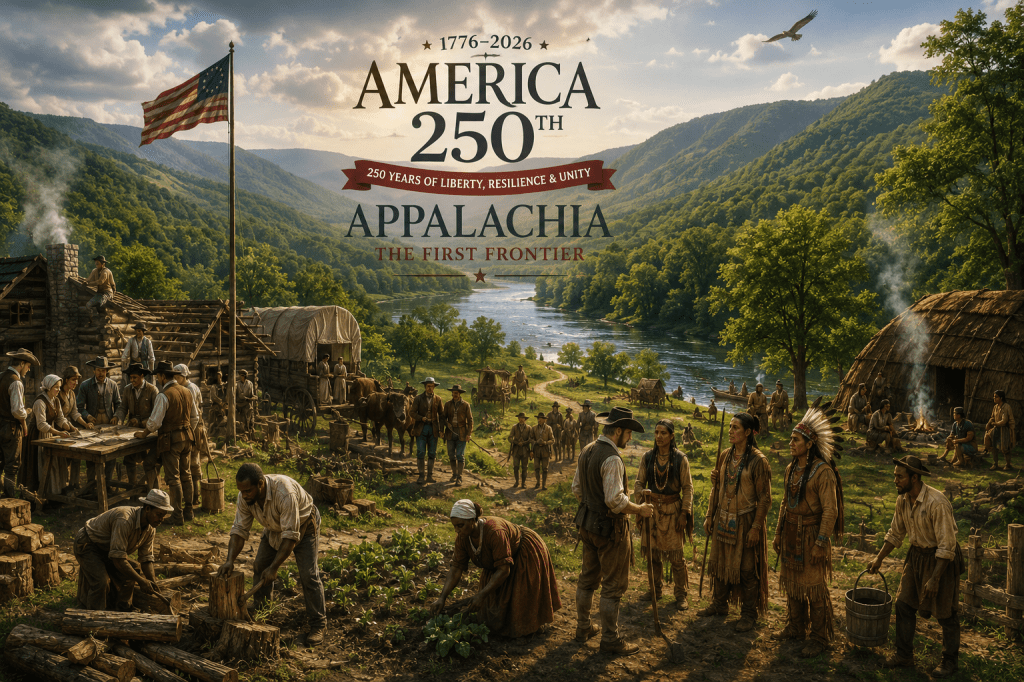
  • Where Liberty Crossed the Mountains: Appalachia and the Making of a Nation at the 250th Anniversary.

    As the United States marks its 250th anniversary in 2026, the nation looks back not only to the signing of the Declaration of Independence in 1776, but to the wider frontier story that helped make that declaration real in the lived experience of ordinary people. Among the most important of these frontier regions was Appalachia, a vast mountain corridor that shaped migration, settlement, conflict, and the expansion of a young republic.

    Long before European settlement, these mountains were the homeland of Indigenous nations, including the Cherokee and Shawnee, who built complex societies rooted in trade, agriculture, diplomacy, and deep knowledge of the land. Their presence defined the Appalachian world for centuries before colonial expansion reshaped it, and their legacy remains inseparable from the region’s history.

    The earliest permanent Euro American settlements in Appalachia emerged in the early 1770s. Among the first were the Watauga Settlements in present-day Elizabethton, Tennessee, and communities in the Holston River Valley established around 1771 and 1772. These frontier settlements were not isolated accidents of migration. They were deliberate communities formed by families seeking land, opportunity, and distance from the crowded and increasingly regulated eastern seaboard colonies.

    But these early Appalachian settlements were not built by one group alone. Alongside European settlers came enslaved Africans, present in the backcountry as early as the mid-18th century. Though Appalachia never developed the large plantation systems of the coastal South, enslaved men, women, and children were still part of frontier life. They cleared forests, built cabins, tended crops, and performed the hard physical labor that made settlement possible in a harsh and unfamiliar landscape.

    As the region developed, East Tennessee became a launching point for continued migration westward. Around 1772, pioneers such as Jacob Brown established settlements in the Nolichucky River Valley. These river systems, including the Holston and its tributaries, became natural corridors of movement and trade, linking frontier communities and enabling further expansion into the interior of the continent.

    In this same era, free Black Americans also became part of the Appalachian frontier. Some gained freedom through service in the American Revolutionary War, while others were emancipated by individual owners or born free. These men and women worked as laborers, farmers, blacksmiths, boatmen, and skilled tradespeople. Their contributions were woven into the daily survival of frontier communities, even as they often lived under restrictive and unequal laws.

    Perhaps no figure is more closely associated with westward migration than Daniel Boone. In 1775, Boone helped blaze the Wilderness Road through the Cumberland Gap, opening a critical passageway into Kentucky. Thousands of settlers followed this route into the western frontier, establishing fortified communities such as Boonesborough. Along the way, many passed through early encampments in what is now northeastern Tennessee, continuing a migration that would reshape the future United States.

    As settlement expanded, the Appalachian frontier became a place where the contradictions of the young republic were already visible. It was a land of opportunity and hardship, freedom and bondage, promise and displacement. Indigenous nations were pushed from ancestral lands. Enslaved people labored to make settlement possible. Free Black families carved out fragile spaces of autonomy. European settlers pursued land and independence. Together, these intertwined lives formed the reality of America’s early expansion.

    By the early 1780s, settlement had pushed deeper into the southern mountains. In western North Carolina, permanent homesteads emerged in the Swannanoa and French Broad River valleys near present-day Asheville, as well as in the high country around Boone. These communities demonstrated extraordinary resilience, as families built homes, cleared fields, and established farms in one of the most geographically challenging regions of North America.

    The Appalachian frontier also played a significant role during the American Revolution. Many frontier settlers supported the revolutionary cause, while others fought in militia campaigns defending their settlements. The mountains were not separate from the struggle for independence. They were part of it, shaping both strategy and survival during the conflict of the American Revolutionary War.

    By the time the Revolution ended, the Appalachian region had become a gateway to the West. Its valleys and mountain passes served as the first great corridors of American expansion, carrying settlers into Kentucky and beyond. But more than that, it had become a mirror of the nation itself: diverse in experience, unequal in power, and driven by competing visions of freedom and survival.

    Two and a half centuries later, as the United States reflects on its founding, Appalachia stands as a reminder that the nation was not built in a single place or by a single people. It was built across mountains and river valleys, through the labor of settlers, the resilience of Indigenous nations, the forced labor of enslaved people, and the perseverance of free Black Americans seeking autonomy in a divided world.

    The story of America’s first frontier is not only a story of westward movement. It is a story of who built the country, under what conditions, and at what cost. And in that story, Appalachia remains one of the clearest and most powerful chapters in the making of the United States.

    -Tim Carmichael

  • The Virginia Big-Eared Bat of Appalachia: A Remarkable Guardian of Mountain Caves

    The Virginia big-eared bat (Corynorhinus townsendii virginianus) stands among the most remarkable mammals found in Appalachia. Native to the southern Appalachian Mountains, this rare species earned recognition as the Virginia State Bat in 2005. Its unusual appearance, specialized lifestyle, and valuable role in healthy ecosystems make it one of the region’s most fascinating wildlife treasures.

    The first feature anyone notices is the bat’s enormous ears. Measuring more than one inch long, they account for nearly one-third of the animal’s total body length. During periods of rest, the ears fold tightly against the head, protecting their delicate structure. The bat measures around four inches from head to tail and weighs less than half an ounce, making it surprisingly lightweight. Two fleshy glands positioned on each side of the snout create another distinctive characteristic, giving the face a unique appearance.

    The Virginia big-eared bat survives almost entirely on flying insects. Small moths make up the largest portion of its diet, although beetles, flies, and wasps also provide nourishment. Every evening, a single bat may consume up to one-third of its body weight in insects, offering tremendous natural pest control that benefits farms throughout the Appalachian region. High-frequency echolocation allows these bats to maneuver through dense forest canopies with exceptional precision while locating prey in complete darkness.

    Unlike many bat species that spend time inside barns, hollow trees, or buildings, the Virginia big-eared bat depends entirely on limestone cave systems throughout the year. These caves provide the stable environmental conditions essential for survival. During winter, the bats gather inside cool, draft-filled chambers where hibernation conserves valuable energy. As temperatures rise during spring, they move into warmer sections of the caves for summer roosting.

    Their reproductive cycle reflects another remarkable adaptation. Mating takes place during autumn or winter. Females store sperm throughout hibernation, then pregnancy begins during spring. Maternity colonies form in early summer, with each female giving birth to a single pup during June. Young bats grow quickly, reaching flight capability within approximately three weeks, allowing them to begin learning the skills needed for independent survival.

    The Virginia big-eared bat has remained federally endangered since 1979 due to its limited range across isolated areas of Virginia, West Virginia, Kentucky, North Carolina, and Tennessee. The primary habitats of this remarkable species lie directly within Appalachia, where suitable limestone cave systems provide the specialized environments required throughout every stage of life.

    Human activity inside roosting caves presents the greatest challenge to long-term survival. Disturbance during winter hibernation forces bats to burn precious fat reserves that sustain them until spring. Activity near maternity colonies creates panic among mothers, leading to accidental drops of young pups or separation from their offspring. Every successful conservation effort depends upon protecting these sensitive cave environments from unnecessary disturbance.

    One encouraging development has emerged in recent years. While many North American bat species continue facing severe population declines from White-nose syndrome, the Virginia big-eared bat has demonstrated an uncommon resilience against the devastating fungus. Scientists continue studying this natural resistance in hopes of gaining valuable insights for broader bat conservation.

    State wildlife agencies have strengthened recovery efforts by installing protective gates across many cave entrances. These gates prevent unauthorized human access while allowing bats to enter and leave freely. Conservation partnerships, habitat protection, scientific research, and public education have all contributed to gradual population growth across portions of the Appalachian Mountains. Every successful recovery milestone highlights the importance of preserving the region’s unique cave ecosystems for future generations.

    The Virginia big-eared bat remains one of Appalachia’s most extraordinary wildlife species. Its oversized ears, remarkable hunting abilities, highly specialized cave lifestyle, and growing conservation success story demonstrate how dedicated stewardship can help endangered animals continue thriving within the mountains they have called home for thousands of years.

    -Tim Carmichael

  • Appalachia’s New Gold Rush: AI Data Centers and the Cost of Digital Expansion

    Big technology companies are turning their attention toward Appalachia as the race to build artificial intelligence infrastructure accelerates. As established technology hubs reach their physical limits, developers are searching for new regions capable of supporting the immense demands of hyperscale data centers. Appalachia has emerged as one of the most attractive destinations due to its combination of affordable land, abundant energy resources, favorable geography, and welcoming local governments.

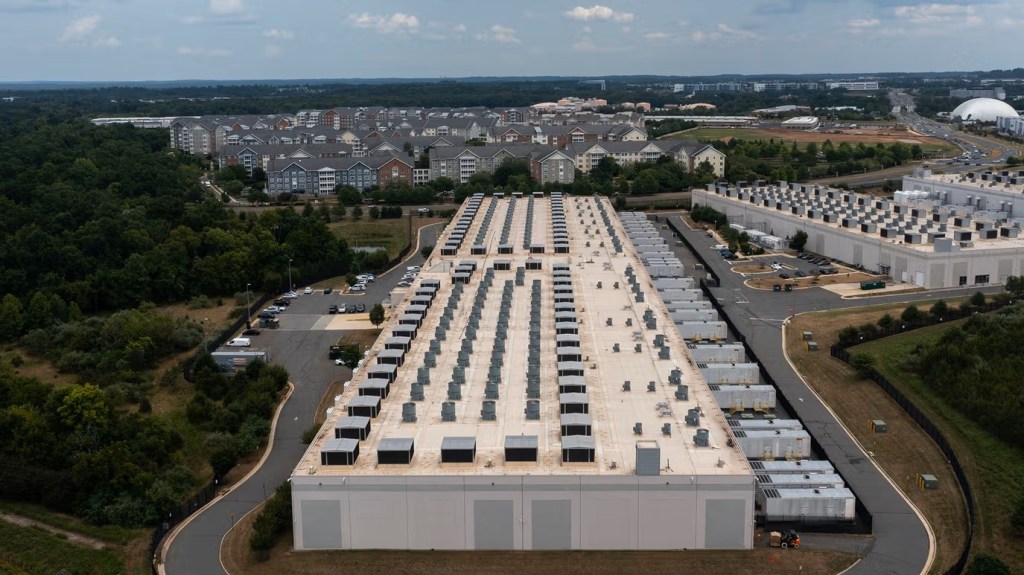
    The shift reflects a broader transformation in the digital economy. Artificial intelligence systems require vast networks of servers operating around the clock. These facilities consume enormous amounts of electricity, occupy hundreds of acres, and require extensive cooling systems. With Northern Virginia’s famous Data Center Alley approaching capacity, developers are expanding deeper into the Appalachian region, where large tracts of land remain available and infrastructure costs are significantly lower.

    Land availability stands at the center of this movement. Hyperscale facilities demand contiguous parcels large enough to accommodate server buildings, substations, cooling equipment, and future expansion. Appalachian communities offer thousands of acres of undeveloped property, reclaimed mining sites, and rural landscapes at prices far below those found in crowded metropolitan markets. For technology companies investing billions of dollars into long term infrastructure, lower land acquisition costs create substantial financial advantages.

    Energy access provides another powerful incentive. Artificial intelligence training systems consume unprecedented levels of electricity, making power availability one of the most critical factors in site selection. Appalachia benefits from established transmission infrastructure, proximity to natural gas resources, and connections to major electrical grids. These advantages allow developers to secure the energy capacity required for facilities that operate continuously throughout the year.

    Geography also strengthens the region’s appeal. Appalachia experiences relatively few hurricanes, major earthquakes, and other large scale natural disasters compared with many coastal regions. For data center operators, reliability remains essential. Every interruption carries financial consequences, making stable environmental conditions highly valuable. The mountains provide a level of operational security that many competing regions struggle to match.

    Economic conditions within many Appalachian communities further encourage development. Areas affected by decades of industrial decline often view data center projects as opportunities for economic growth. Local leaders frequently support construction proposals through tax incentives, favorable utility arrangements, and streamlined permitting processes. Residents are often promised employment opportunities, increased tax revenue, and renewed investment in communities that have faced persistent economic challenges.

    Yet the arrival of massive technology campuses has generated growing debate. Data centers require substantial water resources to cool equipment operating twenty four hours a day. Community members have raised concerns about the strain these facilities place on local water systems, particularly during periods of drought or high demand. Environmental advocates also point to greenhouse gas emissions associated with power generation, especially when facilities rely heavily on fossil fuel sources.

    Noise pollution represents another concern. Large cooling systems, backup generators, and industrial equipment can create continuous sound levels that affect nearby neighborhoods. Residents in several communities have questioned whether the economic benefits outweigh the long term impact on quality of life.

    Recent land acquisitions illustrate the scale of expansion underway. In September 2025, Google acquired 948 acres in Monroe County, Georgia, for $42.6 million. In Botetourt County, Virginia, the company secured 312 acres for a project expected to consume the entire output of a 79.3 megawatt wind facility. In Morgan County, Indiana, more than 500 acres of agricultural land received rezoning approval despite significant opposition from residents. Internationally, Google obtained 588 acres across three villages near Visakhapatnam, India, highlighting the global nature of the company’s infrastructure strategy.

    The financial consequences extend beyond construction sites. Dominion Energy projects that residential electric bills in Virginia could more than double by 2039, with data center growth serving as a primary driver. Rising demand for electricity has already influenced wholesale power markets. PJM capacity prices increased dramatically from $28.92 per megawatt day in 2024 to $329.17 per megawatt day in 2026, reflecting the growing pressure created by large scale data center expansion.

    Questions surrounding economic benefits have become increasingly prominent. Local communities often receive only a fraction of the tax revenue generated by these projects, with approximately 30 percent remaining at the local level while state governments capture the majority. At the same time, technology companies frequently secure incentive packages that remain in place for decades. Supporters argue that any new investment strengthens struggling economies. Critics contend that public subsidies, rising utility costs, and environmental impacts place an unfair burden on residents.

    Strip mining used to throw a few hundred jobs at a county while it hollowed everything else out. Now the ratio is 107 megawatts and 44 workers. The extraction has gotten more efficient. The question is whether anyone is keeping count.

    Across Appalachia, the promise of digital prosperity is colliding with concerns about resource consumption, environmental stewardship, and economic fairness. Technology companies see the region as an ideal location for the infrastructure powering the next generation of artificial intelligence. Local communities see both opportunity and risk. The result resembles many previous resource booms that shaped Appalachian history. Vast outside investment arrives with promises of growth, while residents weigh who ultimately benefits from the transformation of their land, water, and energy resources. The pattern remains strikingly familiar. Now is the time to start speaking up and showing up at city hall meetings. Don’t sit back and let this happen to our beautiful mountains.

    -Tim Carmichael