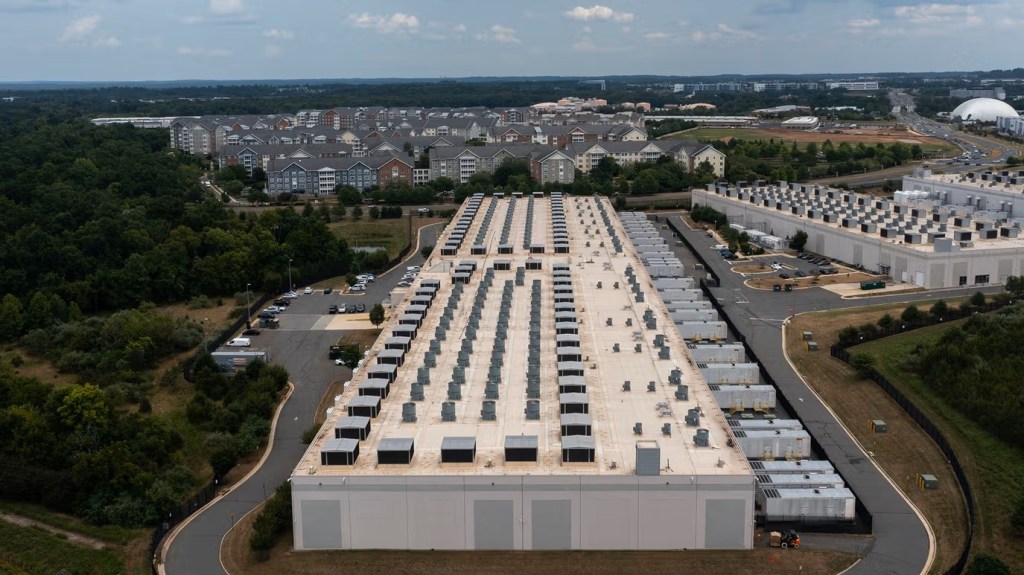
Big technology companies are turning their attention toward Appalachia as the race to build artificial intelligence infrastructure accelerates. As established technology hubs reach their physical limits, developers are searching for new regions capable of supporting the immense demands of hyperscale data centers. Appalachia has emerged as one of the most attractive destinations due to its combination of affordable land, abundant energy resources, favorable geography, and welcoming local governments.
The shift reflects a broader transformation in the digital economy. Artificial intelligence systems require vast networks of servers operating around the clock. These facilities consume enormous amounts of electricity, occupy hundreds of acres, and require extensive cooling systems. With Northern Virginia’s famous Data Center Alley approaching capacity, developers are expanding deeper into the Appalachian region, where large tracts of land remain available and infrastructure costs are significantly lower.
Land availability stands at the center of this movement. Hyperscale facilities demand contiguous parcels large enough to accommodate server buildings, substations, cooling equipment, and future expansion. Appalachian communities offer thousands of acres of undeveloped property, reclaimed mining sites, and rural landscapes at prices far below those found in crowded metropolitan markets. For technology companies investing billions of dollars into long term infrastructure, lower land acquisition costs create substantial financial advantages.
Energy access provides another powerful incentive. Artificial intelligence training systems consume unprecedented levels of electricity, making power availability one of the most critical factors in site selection. Appalachia benefits from established transmission infrastructure, proximity to natural gas resources, and connections to major electrical grids. These advantages allow developers to secure the energy capacity required for facilities that operate continuously throughout the year.
Geography also strengthens the region’s appeal. Appalachia experiences relatively few hurricanes, major earthquakes, and other large scale natural disasters compared with many coastal regions. For data center operators, reliability remains essential. Every interruption carries financial consequences, making stable environmental conditions highly valuable. The mountains provide a level of operational security that many competing regions struggle to match.
Economic conditions within many Appalachian communities further encourage development. Areas affected by decades of industrial decline often view data center projects as opportunities for economic growth. Local leaders frequently support construction proposals through tax incentives, favorable utility arrangements, and streamlined permitting processes. Residents are often promised employment opportunities, increased tax revenue, and renewed investment in communities that have faced persistent economic challenges.
Yet the arrival of massive technology campuses has generated growing debate. Data centers require substantial water resources to cool equipment operating twenty four hours a day. Community members have raised concerns about the strain these facilities place on local water systems, particularly during periods of drought or high demand. Environmental advocates also point to greenhouse gas emissions associated with power generation, especially when facilities rely heavily on fossil fuel sources.
Noise pollution represents another concern. Large cooling systems, backup generators, and industrial equipment can create continuous sound levels that affect nearby neighborhoods. Residents in several communities have questioned whether the economic benefits outweigh the long term impact on quality of life.
Recent land acquisitions illustrate the scale of expansion underway. In September 2025, Google acquired 948 acres in Monroe County, Georgia, for $42.6 million. In Botetourt County, Virginia, the company secured 312 acres for a project expected to consume the entire output of a 79.3 megawatt wind facility. In Morgan County, Indiana, more than 500 acres of agricultural land received rezoning approval despite significant opposition from residents. Internationally, Google obtained 588 acres across three villages near Visakhapatnam, India, highlighting the global nature of the company’s infrastructure strategy.
The financial consequences extend beyond construction sites. Dominion Energy projects that residential electric bills in Virginia could more than double by 2039, with data center growth serving as a primary driver. Rising demand for electricity has already influenced wholesale power markets. PJM capacity prices increased dramatically from $28.92 per megawatt day in 2024 to $329.17 per megawatt day in 2026, reflecting the growing pressure created by large scale data center expansion.
Questions surrounding economic benefits have become increasingly prominent. Local communities often receive only a fraction of the tax revenue generated by these projects, with approximately 30 percent remaining at the local level while state governments capture the majority. At the same time, technology companies frequently secure incentive packages that remain in place for decades. Supporters argue that any new investment strengthens struggling economies. Critics contend that public subsidies, rising utility costs, and environmental impacts place an unfair burden on residents.
Strip mining used to throw a few hundred jobs at a county while it hollowed everything else out. Now the ratio is 107 megawatts and 44 workers. The extraction has gotten more efficient. The question is whether anyone is keeping count.
Across Appalachia, the promise of digital prosperity is colliding with concerns about resource consumption, environmental stewardship, and economic fairness. Technology companies see the region as an ideal location for the infrastructure powering the next generation of artificial intelligence. Local communities see both opportunity and risk. The result resembles many previous resource booms that shaped Appalachian history. Vast outside investment arrives with promises of growth, while residents weigh who ultimately benefits from the transformation of their land, water, and energy resources. The pattern remains strikingly familiar. Now is the time to start speaking up and showing up at city hall meetings. Don’t sit back and let this happen to our beautiful mountains.
-Tim Carmichael
 Echoes of Appalachia
Leave a comment