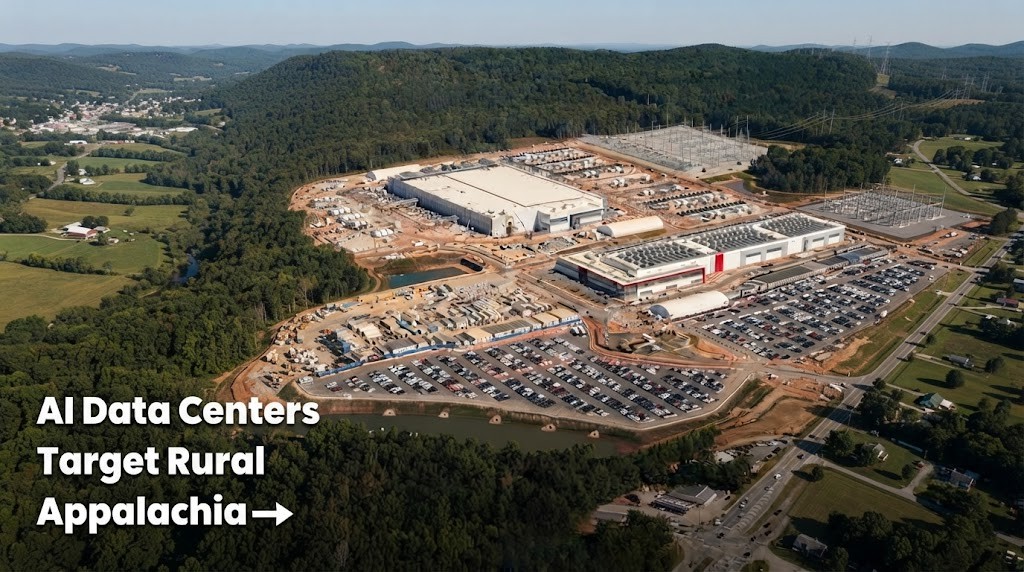
I was born and raised in Appalachia, and the mountains, valleys, farms, rivers, and hollers that I have known my entire life mean far more than scenery. They are home. They are where generations of families have worked the land, raised their children, helped their neighbors, and held onto the traditions that make Appalachia what it is.
I am not writing this to tell you who to vote for, all I am asking is for you to please research who you are voting for. I am deeply concerned about the upcoming governor races across the Appalachian region. The decisions made in state capitals over the next several years will determine whether Appalachia remains a place of working farms, forests, and small communities, or whether more of our land becomes industrial property for massive data centers built to serve the rapid growth of artificial intelligence.
Technology has a place in Appalachia. Economic development matters. Jobs matter. Broadband access matters. The question is whether development will happen responsibly or whether some of the most valuable and irreplaceable land we have will disappear behind, concrete walls, power substations, and enormous server buildings.
Data centers require tremendous amounts of electricity, water, and land. Across the country, communities are beginning to question whether the benefits promised by these projects outweigh the long-term impacts, including pressure on power systems, increased infrastructure demands, environmental concerns, and changes to the character of rural communities. Not to mention the cost of your own electricity sky rocking to the point you can’t afford to even have power for your home.
For many Appalachian residents, the fear is simple. Once farmland disappears, it cannot be brought back.
The governor races across Appalachia matter because governors influence economic incentives, environmental protections, utility policies, and the direction of large scale development across their states.
In Tennessee, one of the most closely watched races involves Senator Marsha Blackburn. Blackburn has entered the 2026 Tennessee governor’s race and is considered one of the leading Republican candidates. Her campaign has focused on conservative priorities, economic growth, energy production, and attracting investment.
The question many Tennesseans are asking is how that vision of growth applies to the expanding data center industry. Blackburn has promoted Tennessee as a strong location for businesses and investment, yet she has not released a detailed statewide plan addressing data center expansion, farmland preservation, energy demands, or limits on industrial development in rural communities.
That uncertainty concerns many residents who believe Tennessee needs a clear plan before outside companies decide the future of the state’s land.
Critics have also raised questions about Blackburn’s campaign contributions connected to technology and data center interests. In the last quarter Data Center interest donated over $100,000 to her campaign. Campaign finance records show significant fundraising activity from a variety of industries and individuals. Many voters believe transparency matters when industries seeking growth opportunities become major political contributors.
Blackburn is not the only Tennessee candidate facing questions about development and corporate influence. Congressman John Rose is also seeking the Republican nomination for governor. Rose has emphasized conservative economic policies and business growth, although he has not presented a detailed public strategy focused specifically on data centers, rural land preservation, or protecting farmland from large industrial projects. he too has accepted money from interest in data centers.
Democratic candidates in Tennessee also face the responsibility of explaining how they would handle the future of technology development. Economic opportunity remains a major concern across the state, yet the growth of data centers creates a larger conversation about what type of development Tennessee wants and what communities are willing to accept.
The concern reaches far beyond Tennessee.
In Virginia, Appalachian communities have watched the growth of the data center industry closely. Virginia has become one of the largest technology hubs in the nation, and debates over electricity use, land requirements, and community impacts have grown louder. Candidates seeking statewide leadership positions must answer whether Virginia will continue rapid expansion or create stronger protections for rural communities.
Western Virginia has a different identity than the technology corridor of Northern Virginia. Mountain communities have farms, forests, and small towns that hold generations of history. A family farm should carry value beyond the amount a developer is willing to pay.
In West Virginia, Kentucky, North Carolina, Pennsylvania, Georgia, Alabama, and other Appalachian states, voters are asking similar questions about the future.
Many candidates speak about bringing jobs, investment, and new industries into struggling communities. Those goals matter. Appalachia has faced generations of economic challenges, from the decline of coal to the loss of manufacturing jobs. Families want opportunities. Young people want reasons to remain close to home.
Opportunity should never require the loss of everything that makes Appalachia special.
A governor who understands Appalachia should understand that farmland is an economic resource. Forests are an economic resource. Clean water is an economic resource. Small towns with strong identities are an economic resource.
Development should be measured by more than tax revenue and construction jobs. It should also be measured by what communities lose when the landscape changes forever.
The next governors of Appalachian states will face difficult decisions. They will decide whether every large technology project that arrives with promises of investment receives approval, or whether states create thoughtful rules that protect communities from uncontrolled industrial expansion.
Residents deserve clear answers before decisions are made.
Will candidates require companies to pay their fair share of infrastructure costs?
Will they protect farmland from large scale industrial development?
Will they demand transparency about energy use and water consumption?
Will local communities have a meaningful voice before massive projects move forward?
These questions come from people who love their homes.
They are not questions against progress. They are questions about responsibility.
For generations, Appalachia has experienced moments when outside interests arrived, took what they needed, and left communities dealing with the consequences. Whether the industry involved timber, coal, or manufacturing, many Appalachian families understand the importance of protecting local voices and local resources.
The data center boom represents another turning point.
The governors elected across Appalachia will influence whether the mountains and valleys remain places where families can farm, hunt, fish, raise children, and build a future, or whether more land becomes dedicated to supporting the digital economy.
Technology will continue to grow. Artificial intelligence will continue to expand. Data centers will continue to be built somewhere.
The question is whether Appalachia will have a say in where and how that growth happens.
For those of us born and raised here, this issue reaches beyond politics. It reaches into our memories, our families, and our love of the land.
The mountains remember the people who worked them. The rivers remember the communities that depended on them. The farmland carries the stories of generations who built their lives here.
The next governors of Appalachia will help determine whether future generations inherit the same beautiful farms, forests, and communities that shaped us, or whether they inherit only memories of what once stood in their place. Do your homework before you cast that ballot. Don’t listen to the ones running research what their plans are for Appalachia.
-Tim Carmichael

 Echoes of Appalachia
Leave a comment