On a cold November day in 1965, a sixty-one-year-old Appalachian widow walked onto a mountainside in Knott County, Kentucky, and faced a line of bulldozers sent to tear apart the land surrounding her home. Ollie “Widow” Combs had no corporation behind her, no political power, and no courtroom victory waiting in her favor. She had only her determination to protect the place where her family lived and where generations of her loved ones were buried. What happened at Honey Gap would become one of the most important acts of resistance in Appalachian history.
The machines waiting above her home belonged to Caperton Coal Company. The company planned to strip-mine the steep hillside, using massive equipment to remove the earth and reach the coal beneath. For Ollie, the threat reached far beyond the loss of trees and soil. The mining operation could send mud sliding toward her home, damage the spring that supplied her water, and disturb the cemetery where members of her family rested.
The land represented generations of Appalachian life. It held the memories of those who came before her, the work of her family, and the place where she expected future generations to remain connected to their roots. Watching it disappear beneath bulldozers was something she refused to accept.
So Ollie Combs did something that few people would have imagined. She walked onto the property with two of her sons and placed herself directly in the path of the machinery. She stretched herself across the ground and forced the operators to stop.
The bulldozers stopped.
For nearly two weeks, Ollie and her sons remained there, blocking the mining operation. News of the grandmother standing against a powerful coal company spread throughout eastern Kentucky. Many mountain families understood her struggle because they had faced similar fears about losing control of their own land.
To understand why Ollie Combs had so little legal protection, it is necessary to look back decades earlier.
During the early twentieth century, coal companies purchased underground mineral rights from thousands of Appalachian landowners through agreements called Broad Form Deeds. These contracts allowed companies to remove coal beneath the surface, and many families accepted small payments during difficult economic times.
At the time, underground mining was the standard practice. Families who signed those agreements could hardly have imagined that future technology would allow companies to remove entire hillsides to reach the coal below.
After World War II, strip-mining transformed the coal industry. Huge machines could tear away forests, soil, and rock in a fraction of the time required for underground mining. Companies began relying on old Broad Form Deeds as legal authority to destroy the surface above the coal seams.
Kentucky courts often ruled in favor of the coal operators. Under those interpretations, companies could damage fields, remove trees, and disturb the land above the minerals they owned. Families who held the deeds to their homes found themselves unable to protect the ground beneath their feet.
Across Appalachia, the results were devastating. Mountainsides were carved apart. Streams became polluted with mining waste. Families watched landscapes that had supported their communities for generations disappear.
For Ollie Combs, that fight came at her own doorstep.
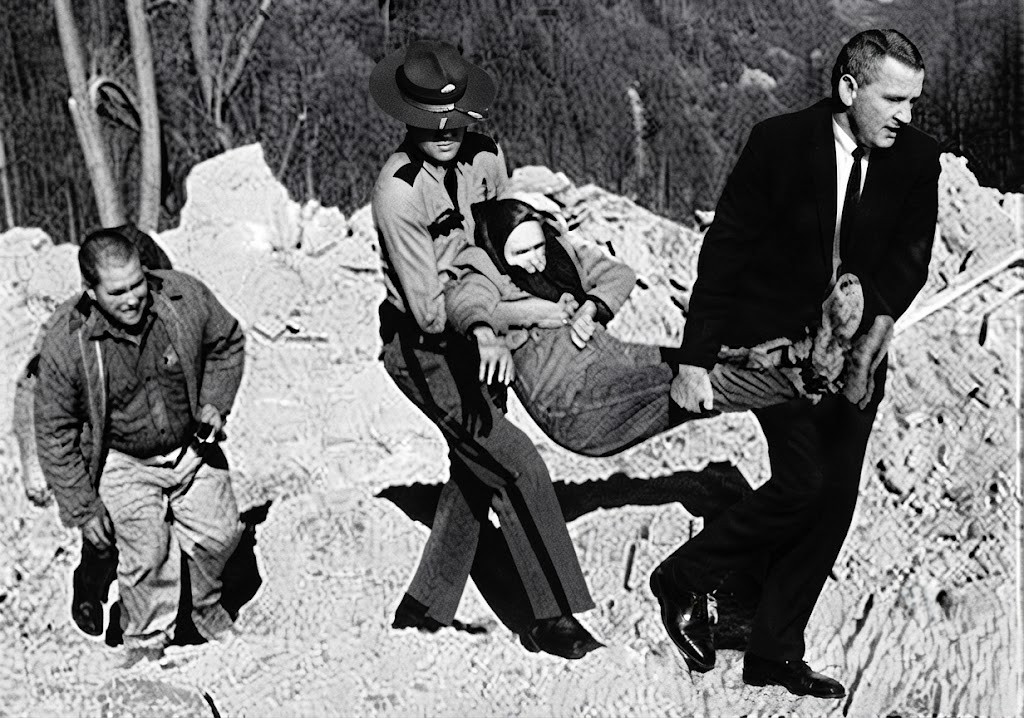
On November 21, 1965, Kentucky State Police came to Honey Gap to remove her from the mining site. Officers ordered Ollie to leave the path of the bulldozers. She refused.
The troopers eventually lifted her from the ground and carried her down the muddy mountainside. During a later interview, Ollie remembered one officer trying to convince her to stand. He told her that if she would get up and walk, he would buy her a cup of coffee.
Her response captured the spirit that made her famous.
“I don’t drink coffee.”
Ollie and her sons were arrested and spent Thanksgiving in jail.
The confrontation might have remained a local protest if not for a photograph taken by Courier-Journal photographer Bill Strode. His camera captured the image of the elderly widow being carried away by state troopers. The photograph showed a woman who appeared powerless against the machinery and authority surrounding her, yet she had created a moment that could not be ignored.
Authorities arrested Strode and attempted to confiscate his camera, yet the film survived and reached the newspaper. The image appeared across the country, placing Appalachian land rights and strip-mining practices before a national audience.
The photograph changed public perception. People who had viewed strip-mining as a debate over industry and economics now saw the impact on families who lived among those mountains. They saw an Appalachian grandmother defending her home against forces much larger than herself.
Ollie’s protest became a rallying point for a growing movement. Throughout Kentucky, residents organized, challenged mining practices, and demanded stronger protections for landowners. Her stand at Honey Gap helped bring attention to the need for reform.
Kentucky lawmakers eventually passed the state’s first meaningful restrictions on strip-mining. The movement continued to grow, leading to the federal Surface Mining Control and Reclamation Act of 1977. That law established national standards for surface mining and required companies to restore land after mining operations ended.
Her fight also played a role in the later battle over Broad Form Deeds in Kentucky. Voters eventually approved a constitutional amendment requiring coal companies to receive permission from surface owners before strip-mining land under those older agreements.
Ollie Combs lived until 1993 and witnessed many of the changes connected to the movement she helped inspire. She never claimed to have fought the battle alone. Countless Appalachian residents worked for reform through organizing, protests, and years of public pressure.
Still, her name remains one of the most recognized symbols of Appalachian resistance.
Ollie Combs showed that a person’s influence does not always come from wealth, education, or a position of authority. Sometimes it comes from standing on a mountainside and refusing to surrender something that carries deep meaning.
The bulldozers at Honey Gap represented the power of a major industry. Ollie represented a family’s connection to the land and the belief that some places are worth defending.
The day Ollie Combs faced the bulldozers became more than a protest against a mining company. It became a moment when one Appalachian widow helped change the conversation about land, rights, and the future of the mountains she called home.
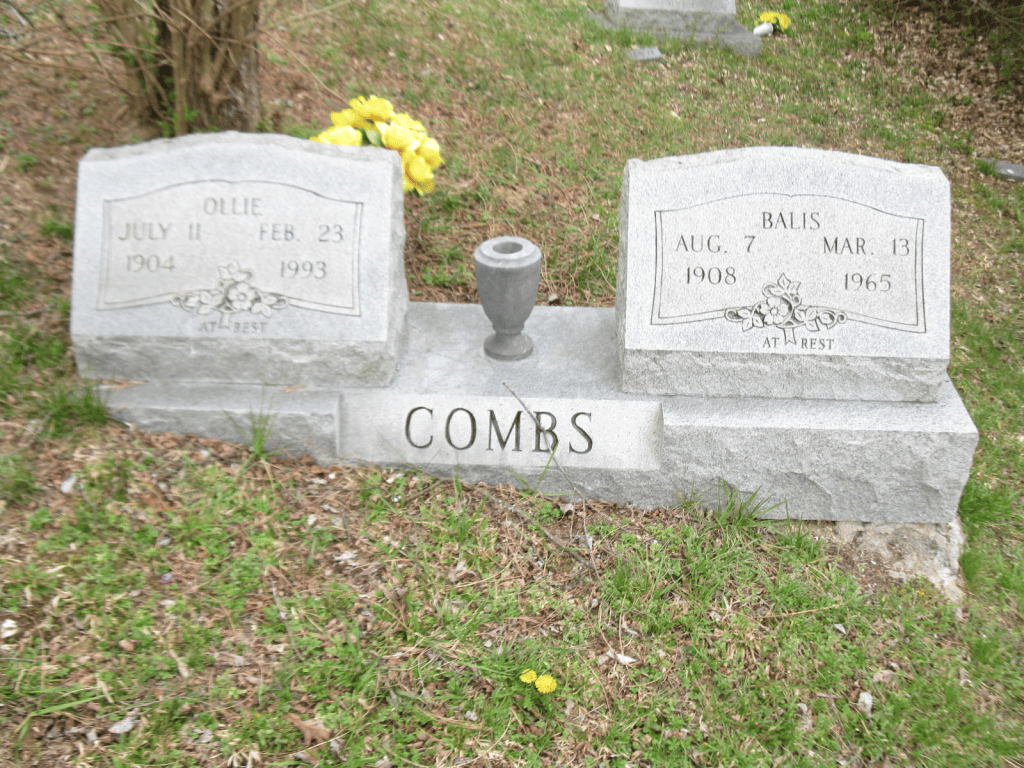
Ollie “Widow” Combs died on February 23, 1993 at the age of 88.
She is buried at the Engle Cemetery in the small community of Fisty, located within Knott County, Kentucky. Her final resting place lies in the exact region and mountains she fought so bravely to protect.
-Tim Carmichael
 Echoes of Appalachia
Leave a comment