
• From Good Ole Appalachian Country Food to Fine Dining

    There was a time when Appalachian food was considered simple fare. It was the food of hardworking families who made the most of what they had. Pinto beans simmered all day on the stove. Cast-iron cornbread baked until golden brown. Fried potatoes, soup beans, chow chow, greens, biscuits, and whatever meat could be hunted, raised, or preserved. It wasn’t fancy, but it was filling, comforting, and deeply connected to the mountains and the people who called them home.

    Today, however, something interesting is happening. Across Appalachia and beyond, chefs are taking traditional country foods and transforming them into fine dining experiences. What was once served in a humble kitchen is now appearing on elegant plates under soft lighting with menu descriptions that sound more like poetry than supper.

    A bowl of pinto beans becomes “slow-braised heritage legumes with smoked pork reduction.” Cornbread arrives stacked into artistic layers with flavored butter and gourmet garnishes. Fried green tomatoes are topped with specialty cheeses and sauces that cost more than the entire meal used to.

    For some diners, this is an exciting celebration of Appalachian heritage. For others, it raises a simple question: Why take perfectly good country food and make it complicated?

    Having tried some of these upscale versions myself, I have often come away with the same thought. It just doesn’t taste like home.

    That doesn’t necessarily mean the food is bad. Many of these chefs are talented and genuinely respect the traditions they are drawing from. Yet there is often something missing. Maybe it’s the seasoning. Maybe it’s the simplicity. Or maybe it’s the fact that some recipes are hard to improve upon because they were already perfected generations ago by grandmothers standing over wood stoves and cast-iron skillets.

    Anyone who grew up in Appalachia knows that some foods carry memories along with flavor. A pot of beans isn’t just a pot of beans. It’s Sunday dinner after church. It’s family gathered around the table. It’s stories being told while biscuits cool on the counter. Those memories become part of the meal.

    Fine dining can recreate the ingredients, but it often struggles to recreate the feeling.

    Still, despite criticism from some traditionalists, these restaurants continue to thrive. In many cases, people flock to them. Reservations are booked weeks in advance. Diners happily pay prices that would have seemed unbelievable to previous generations.

    So what is the appeal?

    Part of it comes down to nostalgia.

    Many people today are searching for connections to their roots. Appalachian culture has gained increased recognition in recent years, and food is one of the most accessible ways to experience that heritage. A restaurant offering elevated country cooking allows people to reconnect with traditions while enjoying a modern dining experience.

    Another reason is presentation.

    Like it or not, people eat with their eyes first. A simple plate of beans and cornbread served at home may taste incredible, but it probably won’t look like something featured in a food magazine. Fine dining chefs understand this. They create visual experiences designed to impress before the first bite is ever taken.

    For many customers, dining out is about more than satisfying hunger. It is entertainment. They want an experience. They want atmosphere. They want something that feels special and different from what they could make at home.

    There is also a growing appreciation for locally sourced ingredients. Many upscale Appalachian restaurants work directly with local farmers, preserving agricultural traditions while introducing them to new audiences. In that sense, these establishments can play an important role in keeping regional food culture alive.

    Perhaps the greatest appeal is that fine dining allows Appalachian cuisine to receive recognition it historically lacked.

    For decades, Appalachian food was often dismissed by outsiders as poor people’s food. It wasn’t celebrated in cookbooks or featured on television shows. Yet the region developed a rich culinary tradition built on resourcefulness, creativity, and deep knowledge of the land.

    When chefs showcase these foods in upscale settings, they challenge old stereotypes. They demonstrate that Appalachian cooking deserves the same respect given to other regional cuisines.

    That is a positive development.

    The challenge comes when chefs become so focused on reinvention that they lose sight of what made the original dishes special in the first place.

    The beauty of traditional country cooking lies in its honesty. It doesn’t pretend to be something it isn’t. Pinto beans are pinto beans. Cornbread is cornbread. They don’t need elaborate descriptions or expensive ingredients to prove their worth.

    A good pot of soup beans cooked low and slow with a piece of salt pork can be every bit as satisfying as a meal that costs ten times as much.

    In fact, many people would argue it is more satisfying.

    That’s because country food was never designed to impress strangers. It was designed to feed families. The focus was flavor, nourishment, and hospitality rather than presentation.

    Yet not every restaurant misses the mark.

    There are still places that understand the difference between honoring tradition and merely reinventing it.

    One excellent example is Jackie’s Dream in Knoxville, Tennessee.

    If you ever find yourself in Knoxville, this is one restaurant that deserves a visit. Unlike some establishments that seem determined to turn every Southern classic into a culinary experiment, Jackie’s Dream understands the importance of getting the fundamentals right.

    The food tastes like it was made by someone who actually knows and respects the traditions behind it. The flavors are authentic, the portions are generous, and the experience feels genuine. It reminds diners that great Southern and Appalachian cooking doesn’t need to be complicated to be memorable.

    Restaurants like Jackie’s Dream succeed because they recognize a simple truth: authenticity matters.

    People can tell when food is made from a recipe and when it is made from experience.

    The best country cooks rarely measure ingredients. They season by instinct. They know exactly when the beans are done and how the cornbread should look coming out of the oven. Those skills are learned through years of practice, observation, and tradition.

    No culinary school can fully replicate that knowledge.

    As Appalachian food continues gaining popularity, there will undoubtedly be more restaurants attempting to elevate traditional dishes. Some will succeed. Others will produce food that looks beautiful but leaves diners wondering why it doesn’t taste like the version they remember growing up.

    There is room for both approaches. Fine dining has its place, and traditional country cooking has its place as well.

    But if you ask many Appalachians what they would choose between a carefully plated gourmet bean dish and a steaming bowl of homemade soup beans with fresh cornbread, the answer is probably not hard to predict.

    Sometimes the greatest meals are not the most expensive or the most artistic.

    Sometimes they are the ones that remind us of home.

    And no amount of fancy presentation can improve on that.

    -Tim Carmichael

  • The Tree Many Appalachians Know Has a Surprising History

    Across the hills, valleys, and backroads of Appalachia, mimosa is a familiar sight. Growing near old homesites, fence lines, creek banks, and roadsides, it has become part of the region’s visual character over generations. Many people recognize it immediately, yet few realize that this common species carries a history stretching across continents and thousands of years. Long before it became established throughout the American South, Albizia julibrissin held a respected place in one of the world’s oldest healing traditions.

    Though often associated with Appalachia today, mimosa originated in Asia and was introduced to North America during the eighteenth century. Favorable growing conditions allowed it to spread throughout much of the Southeast, where it adapted readily to disturbed ground and sunny locations. Over time, it became woven into the landscape of many rural communities.

    Its success has also created controversy. Some conservationists and landowners view mimosa as an invasive species due to its ability to spread rapidly and compete with native vegetation. Young growth is frequently removed from restoration sites, woodland margins, and managed properties where native species are encouraged. Others, however, see value in a plant that has become a familiar part of local history and herbal practice. This difference of opinion has given mimosa a complicated place in the region, admired by some and removed by others.

    What many people never discover is that the medicinal reputation of mimosa began long before it reached American soil.

    In Traditional Chinese Medicine, the bark of Albizia julibrissin is known as Hé Huān Pí, or “collective happiness bark.” The name reflects a long standing belief that the bark supports emotional well being and helps restore balance during periods of distress. Historical texts describe its use for easing sadness, calming agitation, and supporting people who carried emotional burdens for extended periods.

    Traditional Chinese Medicine views emotional and physical health as deeply connected. Practitioners describe Hé Huān Pí as an herb that nourishes the Heart and calms the Shen, a concept associated with consciousness, emotional harmony, and spiritual well being. When the Shen becomes disturbed, a person may experience restlessness, poor sleep, irritability, anxiety, or emotional exhaustion.

    Another important concept in Traditional Chinese Medicine involves the movement of Qi, often described as vital life energy. When Qi becomes constrained, emotional difficulties can emerge. Practitioners frequently identify a pattern known as Liver Qi Stagnation, associated with frustration, chronic stress, resentment, grief, and emotional tension. For centuries, Hé Huān Pí has been prescribed to help disperse this stagnation and encourage emotional balance.

    The flower, known as Hé Huān Huā, developed a reputation of its own. While it travels through many of the same energetic pathways as the bark, it is traditionally used for lighter emotional concerns. Herbal practitioners often select the flower for temporary irritability, occasional sadness, everyday stress, or mild sleep disturbances.

    Many herbal traditions describe the flower as uplifting and emotionally supportive. Someone experiencing a difficult week, temporary grief, or ordinary life pressures might traditionally receive the flower rather than the bark. The bark, by contrast, became associated with deeper and more persistent emotional patterns.

    The distinction between flower and bark remains important among modern herbalists.

    Flower tinctures are generally chosen for acute, situational stress. Users often describe them as emotionally brightening and supportive during temporary periods of tension. They are commonly selected during challenging life events, emotional setbacks, or periods of elevated stress.

    Bark tinctures tend to serve a different role. Many herbal practitioners recommend them for long standing emotional strain, deep rooted anxiety, physical discomfort, or recovery from traumatic experiences. The bark has earned a reputation for being grounding and stabilizing, qualities that have contributed to its popularity among herbalists interested in long term emotional support.

    Combined flower and bark tinctures have become especially popular in contemporary Western herbalism. By bringing both plant parts together, these preparations aim to provide the uplifting qualities associated with the flower alongside the deeper support traditionally linked to the bark. Many herbalists view this combination as a way to capture the broadest range of benefits offered by the species.

    The medicinal history of mimosa extends beyond emotional wellness. Traditional Chinese Medicine has also used the bark to invigorate blood circulation and support recovery following physical injury. Historical records describe its use for bruises, fractures, soreness, and various forms of trauma. This dual role as both an emotional and physical restorative helped secure its place within traditional herbal practice.

    Modern scientific research has begun investigating why Albizia julibrissin earned such a lasting reputation.

    Laboratory analysis has identified several groups of bioactive compounds within the species, including saponins, flavonoids, and tannins. These naturally occurring compounds are responsible for many of the biological activities currently being studied.

    Saponins have attracted attention for their effects on cellular signaling and physiological regulation. Flavonoids are well known for antioxidant activity and potential support for neurological health. Tannins contribute additional properties that researchers believe may play a role in tissue recovery and overall resilience.

    Scientists have shown particular interest in the relationship between Albizia julibrissin and the central nervous system. Preclinical studies suggest that compounds found within the plant may influence neurotransmitter activity linked to mood regulation.

    Research has indicated potential interactions involving serotonin, a neurotransmitter strongly associated with emotional well being, mood stability, and resilience during stressful periods. While researchers continue to explore these mechanisms, the findings have generated significant interest because they parallel some of the traditional uses documented centuries ago.

    Investigators have also examined interactions involving GABAₐ receptors. GABA serves as one of the primary inhibitory neurotransmitters in the nervous system and plays an important role in promoting relaxation and emotional stability. Many modern medications designed to reduce anxiety influence related pathways. Early findings suggest that compounds present in Albizia julibrissin may interact with these same systems, providing a possible explanation for the calming qualities described in traditional herbal literature.

    Another area of research focuses on cognitive health. Animal studies have suggested that extracts derived from Albizia julibrissin possess neuroprotective properties. Some investigations indicate that these extracts may help defend against short term memory impairment associated with sleep deprivation. Although additional human research remains necessary, the results have encouraged further exploration into potential applications involving memory and neurological function.

    Despite growing scientific interest, researchers continue to emphasize the need for larger human studies. Much of the current evidence comes from laboratory and animal research rather than large scale clinical trials. Future studies will help clarify dosage, safety considerations, mechanisms of action, and long term effects.

    Even so, the growing body of research has helped bring renewed attention to a plant whose medicinal reputation spans many centuries. What ancient practitioners observed through generations of experience is now being examined through modern biochemical analysis, creating an intriguing meeting point between traditional knowledge and contemporary science.

    For Appalachians who encounter mimosa along roadsides, near old homesteads, or throughout rural landscapes, the species represents far more than a decorative presence. Behind its familiar appearance lies a story that began in Asia, traveled across oceans, entered one of history’s most influential healing systems, and eventually found a place in the mountains and valleys of the American South.

    Whether viewed as a valued medicinal herb, a controversial newcomer to the landscape, or a subject of scientific curiosity, mimosa continues to spark interest. Its journey from ancient Chinese medicine to modern biochemical research reveals a remarkable history hidden within a plant that many people pass every day, rarely realizing the legacy it carries.

    -Tim Carmichael

  • More Than One Million Leave SNAP Rolls Across Appalachia Following Federal Changes

    An estimated 1.2 to 1.4 million people across Appalachia have lost access to Supplemental Nutrition Assistance Program (SNAP) benefits since Trump took office in January 2025, according to state-level data compiled by the Food Research & Action Center (FRAC) and the Center on Budget and Policy Priorities (CBPP).

    Federal agencies collect SNAP data at the state level rather than along the geographic boundaries of Appalachia. Even so, enrollment figures from the 13 states that contain Appalachian counties reveal a dramatic decline in participation across the region.

    The largest factor behind the drop stems from the federal budget reconciliation package, H.R. 1, known as the One Big Beautiful Bill Act, enacted in July 2025. The legislation introduced expanded work, volunteer, or job-training requirements that require many adults up to age 65 to complete at least 80 hours of qualifying activity each month in order to maintain food assistance eligibility.

    Georgia experienced the steepest loss in total numbers. FRAC data indicates that 505,290 residents lost SNAP benefits, representing a 26 percent decline in participation. That figure stands as the largest absolute reduction reported by any state during the implementation period.

    Tennessee reported a substantial decrease in enrollment, with participation falling between 14 and 16 percent. Virginia experienced a similar trend, recording a decline of nearly 15 percent as new eligibility rules took effect.

    Alabama and North Carolina also reported major reductions. Alabama confirmed that roughly 50,000 residents lost access to SNAP benefits by early 2026.

    Pennsylvania saw major enrollment declines during several months of implementation. State records showed a loss of more than 37,000 recipients during a single month, highlighting the speed of the transition.

    West Virginia, the only state located entirely within Appalachia, recorded a decline of approximately 5 percent. More than 15,000 residents lost food assistance, affecting communities across rural counties where SNAP has long served as a key support for household food security.

    Across Kentucky, Ohio, Maryland, Mississippi, New York, and South Carolina, enrollment generally declined between 8 and 11 percent. The consistency of those reductions suggests a widespread regional impact rather than isolated state-level changes.

    Advocates and policy analysts point to staffing shortages within state agencies, complex reporting requirements, and administrative barriers as major contributors to enrollment losses. Many households eligible for assistance encountered difficulties navigating new procedures and documentation requirements.

    The impact has proven especially severe for rural children throughout Appalachia. Many counties already faced elevated rates of food insecurity before the policy changes took effect. As household SNAP benefits disappeared, schools, churches, and community organizations reported growing concern about children who rely on free or reduced-cost meals during the school year and community feeding programs during summer months.

    At the same time, food banks across the Appalachian region have experienced a surge in demand. Organizations in Tennessee, Kentucky, West Virginia, Virginia, and other states report increasing numbers of families seeking emergency food assistance. Many local food pantries face mounting pressure as they work to meet community needs amid higher operating costs and rising demand for services.

    National estimates also indicate that hundreds of thousands of children have been affected as family benefits ended or applications stalled during the transition period. Food security organizations across Appalachia continue to monitor the effects on working families, seniors, and rural communities that rely heavily on nutrition assistance programs.

    -Tim Carmichael

  • How One Appalachia Outlaw Built a Secret Empire and Became a Folk Hero

    Lewis Redmond rose from brutal poverty in Southern Appalachia into one of the most famous outlaw figures across the late nineteenth century. Federal agents hunted him across ridges, newspapers turned him into a legend, poor farming families praised his generosity, while lawmakers viewed him as a national disgrace. His saga carried every element of frontier drama: violence, survival, fortune, political fury, prison, pardon, then a legal whiskey career during his final era.

    Redmond entered life during 1854 near the Georgia border. Soon afterward, his family settled within Transylvania County, North Carolina, deep inside rugged Appalachian country. Family survival depended upon corn crops, livestock, hunting, plus barter. His parents raised twelve children inside a cramped log dwelling featuring a loft packed with straw bedding. Severe hardship shaped every season.

    Formal education never entered Redmond’s youth. One sister later guided him through basic reading plus writing lessons. Even so, local residents described him as sharp, resourceful, fearless, plus deeply charismatic. During Reconstruction, resentment toward federal revenue collectors spread through many Appalachian communities. Corn whiskey production offered struggling farming clans a rare source of cash.

    Redmond’s father eventually turned toward illicit distilling after crop income collapsed. Federal officers soon raided the family operation, hauled his father into custody, then sent him toward prison. Death followed shortly afterward. Family tragedy transformed young Lewis Redmond into provider, protector, plus future outlaw leader.

    By age twenty-one, Redmond controlled the family still operation. Soon he expanded production across western North Carolina plus neighboring regions. Associates transported whiskey through mountain routes stretching across North Carolina, South Carolina, Georgia, plus eastern Tennessee. Customers praised Redmond whiskey for superior quality, creating enormous demand across the southern highlands.

    Money poured into his operation. Local folklore described sacks filled with cash buried near remote camps. Even greater fame grew through his generosity. Redmond frequently paid overdue property taxes for struggling farming families facing land seizures. Appalachian residents repaid that loyalty through fierce protection. Informants stayed silent. Federal patrols wandered through hostile territory where many citizens viewed revenuers as predators serving distant political power.

    Violence exploded during March 1876. Deputy United States Marshal Alfred Duckworth attempted an arrest linked to illegal distilling charges. Gunfire erupted. Duckworth died during the clash, while Redmond escaped into South Carolina wilderness country. Federal authorities soon placed a massive bounty upon his capture.

    Across several years, Redmond humiliated pursuing officers repeatedly. National newspapers carried dramatic stories describing disguises, hidden stills, daring escapes, plus armed skirmishes among steep ridges. Dime novels transformed him into a frontier folk hero. One publication crowned him “King of the Moonshiners,” a title that followed him through American folklore for generations.

    Federal pressure intensified during 1881. Revenue officers finally captured Redmond after a violent pursuit near present-day Bryson City. Prosecutors secured convictions connected to revenue violations plus conspiracy charges. Auburn Prison in New York became his destination.

    Even prison failed to erase his popularity. Public fascination remained enormous throughout Appalachia plus beyond. Following several years behind bars, President Chester A. Arthur granted Redmond a pardon. During an extraordinary twist, Redmond later entered legal whiskey production through a licensed South Carolina distillery eager to capitalize upon his celebrity status. Bottles carried his image, transforming former outlaw notoriety into commercial success.

    Tuberculosis weakened Redmond during later life. Even so, he maintained respected status among many Appalachian residents. Death came during 1906 at age fifty-four. Family members honored him through a deeply affectionate inscription praising him as “the sunshine of our life.”

    Lewis Redmond represented far more than a moonshiner carrying rifles through Appalachian ridges. His rise reflected fierce poverty, federal conflict after the Civil War, plus mountain resistance against outside control. Through grit, charisma, violence, plus survival instinct, an illiterate farm boy built one of Appalachia’s earliest outlaw empires, then crossed into legal enterprise before his final chapter closed.

    -Tim Carmichael

  • The Digital Strip Mining of Appalachia: How TikTok “Holler Hoppers” Are Rewriting a Region They Do Not Understand

    For generations, Appalachia survived by keeping parts of itself hidden.

    The mountains taught people to guard what mattered. You did not tell strangers where the best ginseng patch grew. You did not advertise secluded swimming holes to outsiders. You did not hand over family stories, burial grounds, or backroad gathering places to people who had not earned the trust to know them. In many Appalachian communities, privacy was never secrecy for the sake of secrecy. It was survival. It was protection.

    Now, many locals say that code is being destroyed one viral TikTok at a time.

    Across Appalachia, a bitter and increasingly personal feud is erupting between residents and a wave of social media creators accused of turning the region into aesthetic content for clicks, sponsorships, and algorithmic fame. Locals have started calling them “Holler Hoppers,” influencers who move from one mountain town to another filming abandoned houses, hidden waterfalls, old churches, moonshine shacks, and “secret” nature spots before geotagging them for millions of viewers.

    But the conflict goes deeper than tourism.

    Many Appalachians argue the biggest problem is that a large portion of these digital creators are not actually from Appalachia at all. Some moved into the region recently. Others visit for weekend content trips while branding themselves online as authentic mountain voices. Critics say they adopt exaggerated accents, perform “hillbilly aesthetics,” and monetize stereotypes while real Appalachian creators struggle to be seen or claim they are actively censored by platforms like TikTok.

    “They want the accent, the poverty aesthetic, the cabins, the overalls, and the trauma,” said one eastern Kentucky resident who asked not to be named because of harassment concerns. “But they do not want actual Appalachian people telling the truth about what life here is really like.”

    That frustration has exploded into one of the most divisive cultural battles in the region’s modern history.

    The war is unfolding almost entirely online.

    TikTok creators regularly post cinematic videos featuring drone footage of fog covered hollers, Appalachian folk music, creek water ASMR, and captions romanticizing “simple mountain living.” Some accounts attract hundreds of thousands, even millions, of followers by packaging Appalachia as a mystical, untouched frontier frozen in time.

    Critics say the content often crosses the line from appreciation into exploitation.

    Local residents accuse influencers of reducing Appalachia into a caricature built for outsiders. They argue many viral creators selectively showcase poverty, decaying homes, and “backwoods” stereotypes because those images perform well online. Others lean heavily into exaggerated dialects or intentionally mispronounced words to create a version of Appalachia that feels entertaining and marketable to non Appalachian audiences.

    “They turn us into a costume,” said a creator from southwest Virginia whose videos discussing labor issues and housing displacement routinely receive lower engagement than lifestyle content. “The algorithm rewards fake Appalachia over real Appalachia.”

    That accusation, that social media platforms suppress authentic Appalachian voices while boosting outsider friendly stereotypes, has become a growing point of anger.

    Several Appalachian creators claim TikTok’s moderation systems disproportionately flag videos discussing poverty, addiction, labor exploitation, environmental destruction, and local political corruption. Meanwhile, creators posting sanitized “mountain core” content often thrive.

    Whether intentional or algorithmic, many locals believe the result is the same. Outsiders are becoming the public face of Appalachian culture while actual residents are pushed to the margins.

    “It feels like digital colonization,” said another Kentucky resident. “People come here, build an audience off our culture, then talk over us.”

    The consequences are no longer limited to social media.

    In parts of Tennessee, Kentucky, West Virginia, and North Carolina, local residents say once hidden natural areas are being overwhelmed after viral exposure online. Secluded waterfalls now see lines of tourists. Gravel roads become blocked with parked cars. Swimming holes once known only to locals are flooded with trash, alcohol cans, and damaged vegetation.

    Foraging communities say the damage is even worse.

    Wild ramps, ginseng, and mushrooms, plants deeply tied to Appalachian food traditions and local economies, have become targets for viral foraging TikTok. Videos showing exact harvesting locations can bring swarms of inexperienced visitors into fragile ecosystems within days.

    Traditional foragers accuse influencers of “digital strip mining.”

    Wild American ginseng can take nearly a decade to mature. Ramps can require years to recover if harvested improperly. Longtime locals say viral exposure has accelerated overharvesting and damaged areas that families protected for generations.

    “This is not just aesthetics to us,” one West Virginia forager said. “This is food. This is medicine. This is income.”

    But influencers and their supporters argue the backlash reflects elitism and gatekeeping.

    Many creators insist public land belongs to everyone, not just people with multi generational roots in the mountains. They argue Appalachia has historically been isolated and misrepresented precisely because locals guarded it so aggressively from outsiders.

    Some say social media is finally allowing Appalachian culture to reach the broader world without Hollywood intermediaries.

    Others reject the idea that only people born in Appalachia should be allowed to document or celebrate the region.

    “You do not own a creek because your grandfather swam there,” one creator wrote in a now viral post responding to criticism. “Public land is public land.”

    That argument infuriates many residents who say outsiders fundamentally misunderstand Appalachian culture.

    To locals, the issue is not ownership in the legal sense. It is stewardship.

    The unwritten rules surrounding hidden locations existed because mountain communities understood how quickly fragile places could be destroyed once exposed. In isolated regions with limited infrastructure, even small tourism surges can overwhelm roads, waterways, and emergency services.

    The tensions have become so intense that locals have started fighting back.

    Some community groups deliberately post fake directions under viral videos to mislead tourists. Others flood comment sections warning about snakes, contaminated water, aggressive landowners, or dangerous terrain in hopes of discouraging visitors.

    In certain areas, trail markers and unofficial parking pull offs have reportedly been removed to make viral spots harder to access.

    Meanwhile, creators often film confrontations with angry residents and upload the footage online, framing locals as hostile, xenophobic, or irrationally territorial. Those videos frequently go viral themselves, bringing even more outsiders into the area.

    The result is a cycle of mutual resentment feeding itself through algorithms designed to maximize outrage and engagement.

    But beneath the arguments over tourism and TikTok lies a deeper fear about cultural erasure.

    For decades, Appalachians fought against national stereotypes portraying the region as ignorant, violent, and backwards. Now many residents believe social media has simply repackaged those same stereotypes into something more aesthetically pleasing.

    Instead of old television depictions of “hillbillies,” critics say platforms now reward curated “Appalachian core” content designed to feel quirky, rustic, and authentic to outsiders.

    The aesthetic changed. The exploitation did not.

    At the center of the debate is a painful question many Appalachians are increasingly asking. Who gets to tell the story of Appalachia?

    For some locals, the answer is obvious. The people who lived through mine closures, floods, opioid deaths, economic collapse, land grabs, and generational poverty should have the loudest voice. They argue the region’s story should belong to the people who stayed, not influencers who discovered Appalachia through social media trends.

    But online, authenticity often matters less than performance.

    Creators who fit audience expectations, the right accent, the right scenery, the right aesthetic, frequently rise fastest. Complex stories about labor exploitation, housing displacement, healthcare collapse, or environmental contamination rarely perform as well as cozy cabin videos and banjo soundtracks.

    That imbalance has convinced many residents the internet is creating a false version of Appalachia optimized for entertainment rather than truth.

    And some fear the consequences could last generations.

    As more hidden places become content, more communities become tourist attractions, and more outsiders become the face of Appalachian culture online, locals worry the real region is disappearing underneath the algorithm.

    Not physically.

    Digitally.

    In the end, the “Holler Hopper” conflict is about far more than TikTok videos or geotags. It is a battle over ownership of identity itself. A fight between people trying to preserve a culture and people trying to consume it.

    And in Appalachia, where outsiders have historically extracted everything from coal to timber to labor, many residents believe social media has simply found a new resource to mine.

    The story.

    And this time, they say, even the storytellers are being replaced.

    -Tim Carmichael

  • Appalachian Residents Draw a Line in Mason County

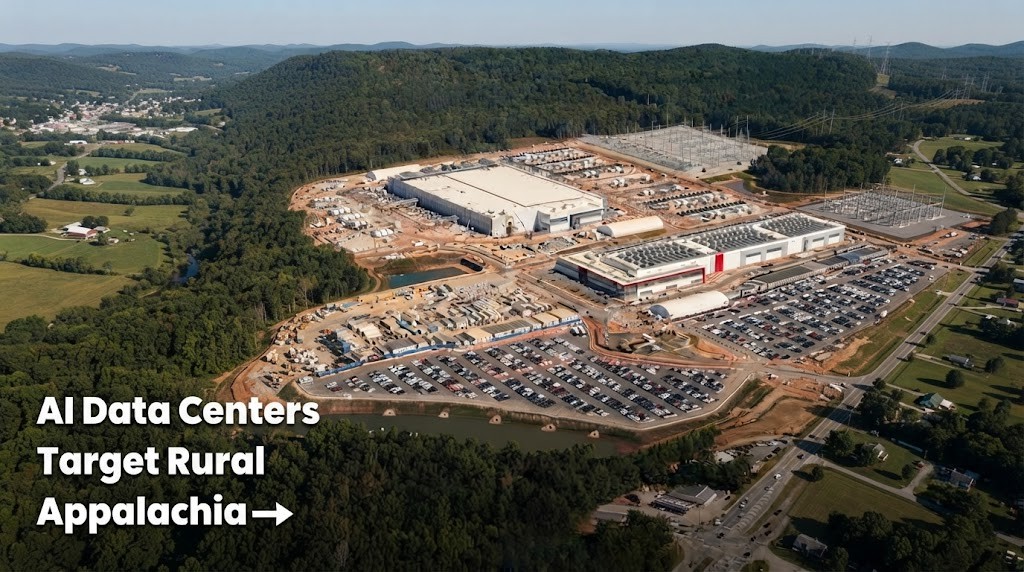
    MASON COUNTY, Ky. — Three survey flags stood beside a cattle fence near Route 8 when news spread across the county that a local farming clan rejected a twenty-six million dollar land offer tied to an artificial intelligence server project. By sunset, diners, church parking lots, feed stores, grain depots, and school ballfields buzzed with argument.

    Corporate planners sought several hundred acres from a 1,200-acre farm held across many families. Company representatives pitched construction work, utility expansion, tax revenue, and national investment prestige. The family declined every proposal.

    That decision turned Mason County into a symbol across Appalachia, where rural communities face mounting pressure from technology corporations hunting cheap land, huge electrical capacity, and mountain water supplies for sprawling server compounds.

    Now the county sits divided between residents chasing economic revival and residents fearing another era where outside wealth reshapes Appalachian land for somebody else’s gain.

    At a recent fiscal court meeting, nearly every seat filled before proceedings began. Farmers leaned against side walls beside electricians, teachers, retired miners, mechanics, pastors, and small business owners. Several residents carried printed zoning maps marked through red ink circles around proposed utility corridors.

    County leadership framed the proposal as a rare economic opportunity.

    Opponents viewed the situation through a far darker lens.

    For decades, Appalachian communities watched coal firms, timber operators, pipeline ventures, chemical processors, and industrial developers extract regional resources while local poverty rates stayed stubbornly high. Older residents across Mason County describe current negotiations as another chapter from that same story.

    One cattle producer speaking outside the courthouse stated that major corporations always promise prosperity during early negotiations. According to him, local citizens hear glowing forecasts regarding growth and modernization. Years later, outside investors move onward while rural counties carry environmental strain and rising utility costs.

    Inside Mason County, debate surrounding the rejected offer reaches nearly every public gathering. Sunday sermons drift toward property rights and stewardship. Restaurant conversations turn hostile. Local radio call-in programs stretch late into evening hours.

    Some residents accuse the farming clan of blocking economic momentum during a period when younger generations continue leaving rural counties searching for reliable income.

    Others praise the refusal as a rare act of defiance during an era when enormous corporations possess immense financial influence over local politics.

    Several county officials continue defending technology expansion aggressively.

    According to planning advocates, major server facilities could increase tax revenue, improve road infrastructure, strengthen regional utility systems, and attract secondary business investment. Construction contractors expect lucrative work tied to grading, excavation, electrical installation, concrete pouring, and equipment transport.

    Critics argue those recruitment campaigns rarely include full public discussion regarding long-term consequences.

    Water consumption remains among the largest concerns.

    Modern server compounds require enormous cooling capacity. Residents across several Appalachian states already fear future pressure upon local wells, creeks, and municipal systems during severe summer drought periods.

    Residents throughout Mason County repeatedly raise another question during public meetings.

    Why should Appalachian communities sacrifice mountain resources so wealthy urban technology hubs can expand digital infrastructure?

    That question sparks fierce applause during nearly every public hearing.

    Critics describe the trend as modern resource colonialism.

    Electricity generated across rural regions powers server systems serving distant metropolitan markets. Water drawn from mountain counties cools equipment processing financial transactions and artificial intelligence systems headquartered far away from Appalachia.

    Meanwhile, local citizens fear rising utility rates linked toward infrastructure upgrades supporting industrial-scale energy demand.

    Political frustration now burns across much of the region.

    Residents accuse elected leadership of serving developers more eagerly than constituents. Several activists claim negotiations surrounding major projects frequently advance long before citizens receive meaningful opportunities for public input.

    That frustration intensified after revelations tied toward another proposed server campus near the Appalachian Trail in Cumberland County, Pennsylvania.

    Planning records circulating online describe a massive eighteen-building server complex valued near fifteen billion dollars. The proposed compound would sit roughly one-third of a mile from the historic hiking corridor.

    Conservation advocates reacted furiously once project details emerged.

    Tourism operators fear industrial infrastructure could reshape mountain scenery treasured through generations of hikers, campers, anglers, church retreat groups, and family vacationers. Residents across Cumberland County accused township leadership of advancing approvals quietly while public awareness remained limited.

    Public meetings soon erupted into shouting matches.

    County leadership defended the proposal through familiar economic language.

    Jobs.

    Growth.

    Revenue.

    Investment.

    Opponents responded through another argument entirely.

    Sacrifice.

    Across Appalachia, many residents increasingly believe political leaders value corporate expansion above local wishes.

    That perception drives much of the fury now gripping Mason County.

    Several residents speaking during recent forums accused state leadership of treating mountain counties like industrial staging grounds for wealthy investors. According toward those critics, lawmakers celebrate billion-dollar agreements during press conferences while ordinary citizens receive little influence over negotiations reshaping local communities.

    The divide stretches deeply through Mason County.

    Some business owners support incoming development enthusiastically. Hotel operators foresee increased bookings tied toward construction crews. Equipment suppliers expect booming demand. Restaurant owners predict heavier traffic.

    Many older residents remain deeply skeptical.

    Several farming families fear industrial expansion could permanently alter regional identity built around agriculture, grazing land, church communities, hunting traditions, and local stewardship.

    Technology corporations view that same territory through a completely different lens.

    Developers see transmission routes, cooling access, utility expansion potential, and industrial acreage.

    That collision between financial ambition and regional identity now defines the broader Appalachian conflict.

    Inside Mason County, the farming clan whose refusal triggered national attention still refuses every proposal.

    Supporters describe that decision as an act of regional self-determination during a period when enormous corporations wield extraordinary political and financial influence.

    Critics continue portraying the refusal as emotional resistance standing against economic revival.

    Following a recent county meeting, residents spilled from the courthouse into steady rain while arguments continued across homes and roadside diners.

    One elderly resident paused beside a livestock trailer before driving home through winding mountain roads.

    According toward him, the struggle consuming Mason County reaches far beyond a single server campus proposal.

    Across Appalachia, rural communities now face a defining question.

    Who controls mountain territory once billion-dollar corporations decide they want it?

    For many residents throughout Mason County, elected leadership already delivered its answer.

    Speak up now before it is too late!

    -Tim Carmichael

  • They Called It a “Good Death”: Inside Appalachia’s Right-to-Die Underground

    Terminally ill elders across central Appalachia are choosing to die on their own terms, and their families are helping them do it. The deaths get recorded as natural causes. The land stays in the family. And nobody talks about it.

    This is happening in West Virginia, Kentucky, Tennessee, Virginia, and North Carolina. It is happening in communities where medical aid in dying is a felony, where the nearest hospice facility may be two hours away, and where a single hospitalization can erase three generations of savings. The people participating know exactly what the law says. They have made a different calculation.

    What the Law Says and What Communities Do

    Medical aid in dying is legal in ten American states. None of them are in Appalachia. Legislative efforts to change that in West Virginia, Kentucky, and Tennessee have died repeatedly in committee, blocked by coalitions of religious organizations, medical industry lobbyists, and elected officials who frame the issue as a bright moral line: the state does not help people die.

    The communities on the receiving end of that policy have drawn their own line.

    What has emerged across the hollers and ridge communities of central Appalachia is a protective network without formal structure or name. It operates through the social infrastructure that already exists: lay midwives and herbal healers who have always worked at the margins of formal medicine, church elders who understand the difference between what they hear in confidence and what requires reporting, neighbors who have known each other across multiple generations and treat that knowledge as a form of mutual obligation.

    Researchers who study end-of-life care in rural communities are carefully documenting the edges of this phenomenon without being able to fully map it. Its participants have strong reasons to remain invisible, and generations of practice in doing exactly that.

    The Economics That Built the Network

    The average American over 65 spends approximately $39,000 out of pocket in the final year of life. In the central Appalachian counties where this network operates, median household incomes routinely fall below $35,000 annually. Medicaid will cover long-term institutional care, the application process requires families to liquidate assets first, including land held across multiple generations. The policy is called “spending down.” Its practical effect is the forced transfer of generational wealth before public assistance will engage.

    Corporate nursing home chains have expanded aggressively into rural Appalachian markets over the past two decades. They have acquired regional facilities, standardized care for efficiency, and produced inspection records in multiple states documenting chronic understaffing, medication errors, and neglect complaints. For communities that already regard institutional authority with deep suspicion grounded in specific historical experience, these facilities represent a compounding grievance.

    Families describe the choice in concrete terms: spend what the family has accumulated across decades keeping an elder alive in an institution that may deliver poor care, or find another way. In many of the cases described to this reporter, the elder is the one who raises the question first.

    The Healers

    Women are at the center of many of these networks. Specifically, the tradition of lay midwifery and plant-based healing that has persisted in Appalachian communities for centuries. These practitioners, sometimes called granny women in the older regional tradition, have historically provided medical services in communities where formal medicine was unavailable, unaffordable, or culturally foreign. They delivered children, managed chronic illness, prepared the dead, and accumulated pharmacological knowledge transmitted through informal apprenticeship across generations.

    Several plant compounds native to Appalachian ecosystems carry sedative or respiratory-depressant properties. The knowledge of their preparation and dosage is old, specific, and held within a tradition that has always operated outside formal documentation systems.

    Law enforcement officials in multiple counties are aware this knowledge exists. Several, speaking on condition of anonymity, indicated they are aware it may be in use in end-of-life situations. The investigative appetite for pursuing it is, by their own account, low.

    The calculus is practical: a terminally ill elder who dies at home with family present, whose physician signs a natural death certificate, whose family files no complaint, and whose community regards the death as a private matter, generates no investigative pressure from any direction. Rural law enforcement agencies are understaffed, underfunded, and making triage decisions every day. This is rarely where they direct resources.

    What the Debate Looks Like From Outside

    Bioethicists, disability rights advocates, and medical aid-in-dying proponents have each begun engaging with reporting on this phenomenon and are reaching different conclusions.

    Disability rights organizations raise the structural coercion argument: when a terminally ill or severely aging person lives in a household experiencing financial distress, and that person knows their continued care is the source of that distress, the voluntariness of their decision to die is compromised in ways that matter morally and legally. The fact that family members love the elder does not eliminate the pressure operating on everyone in that household. This argument has historically animated opposition to assisted dying legislation across the political spectrum, and it does not lose force because the context is sympathetic.

    Proponents of expanded medical aid-in-dying law read the existence of these networks as direct evidence of what happens when legal pathways are foreclosed. The desire to die on one’s own terms does not disappear because the legislature refuses to accommodate it. It goes underground, where it is undocumented, unregulated, and dependent entirely on the judgment of people operating under criminal liability. Legalization, they argue, would replace this with medical oversight, documented consent, and professional accountability. Opponents counter that legalization would normalize and expand a practice that should remain outside the law entirely.

    Legal scholars have noted the position these networks occupy: conduct that the law classifies as homicide and fraud, that the communities involved classify as mercy and loyalty, and that the enforcement apparatus has largely chosen to leave alone. The silence of law enforcement is its own kind of policy, made without accountability, by individual officers in individual counties.

    What Families Say

    The families who participated in these networks and agreed to speak, all under strict anonymity, describe the experience in terms that resist the categories the law provides.

    They describe elders who were clear and specific about what they wanted. They describe their own role as honoring an obligation to someone they loved. They describe the alternative, the institutional pathway, the spend-down, the nursing home, the prolonged medical dying, as something their family member had explicitly refused and that they could see no moral basis for forcing on them.

    They do not describe guilt. Several described something closer to its opposite.

    One family member, a woman from a rural Virginia county whose mother died at home two years ago, said: “She made her choice. We honored it. The land is still in the family. Her grandchildren will grow up on it. She knew that when she went. Tell me what part of that I am supposed to regret.”

    The law has an answer to that. So do the medical debt collectors who operate in these same communities.

    The people in the hollers are holding a different answer, passing it the way they pass everything that matters here: between people who trust each other, across generations, without writing it down.

    -Tim Carmichael

  • Corruption Charges Rock a Small Town in Appalachia as Knox County Officials Face Federal Probe

    A major criminal case unfolding in East Tennessee has placed the Knox County Sheriff’s Office under intense scrutiny after state and federal investigators accused multiple current and former employees of abusing public resources over the course of several years.

    Authorities say the investigation focused heavily on members connected to the department’s narcotics and special investigations divisions. According to findings released by the Tennessee Bureau of Investigation, agents uncovered evidence pointing to repeated personal spending tied to official county accounts.

    Investigators allege department credit cards meant for law enforcement operations were instead used to purchase items unrelated to public service. Records examined during the investigation reportedly showed spending on electronics, outdoor gear, and materials connected to private renovation projects. Officials estimate the total amount exceeded $300,000 between 2010 and 2018.

    The investigation also examined money collected during undercover drug operations. Authorities claim more than $30,000 in seized cash may have been redirected toward personal use rather than remaining within official evidence procedures.

    Agents further accused several employees of using county vehicles, tools, and equipment while on the clock to complete work tied to private interests. Investigators say those activities included vehicle restoration projects, residential improvements, and construction related labor.

    Federal investigators first opened the case in 2019 before the Tennessee Bureau of Investigation later joined the effort. As evidence continued to grow, the case was eventually presented to prosecutors outside the immediate district after conflicts required changes in oversight.

    This week, a Knox County grand jury returned indictments against 11 individuals connected to the sheriff’s office. Charges include conspiracy involving large scale theft along with allegations tied to misuse of county services and property.

    Several of the accused had already entered custody by Wednesday afternoon. Court records show each defendant received bond amounts set at $100,000 while the case proceeds through the Tennessee legal system.

    The investigation has drawn widespread attention across Appalachia, where growing frustration surrounding political scandals and public corruption continues to create conversations about trust in local institutions and leadership.

    -Tim Carmichael

  • A New Fight Is Exploding Across Appalachia: Chickens, Property Values, and Outsiders

    The fight started after somebody called the county over a rooster.

    By the end of the month, code enforcement trucks had driven through the neighborhood three times. One complaint mentioned noise before sunrise. Another focused on flies. A third claimed a compost pile and chicken feed were dragging down nearby property values.

    The subdivision sits outside a small town in Appalachia, surrounded by hills where families have raised livestock, canned vegetables, hunted deer, and burned brush for generations. A decade ago, most of the land nearby held trailers, pasture, and gardens. Current conditions look different. New subdivisions have spread across old farmland. Remote workers and retirees from larger cities have poured into the region searching for cheaper land, mountain views, and a slower pace of life.

    Current tensions reveal what happens when newcomers arrive chasing the image of rural life while rejecting the realities attached to it.

    Across parts of Tennessee, North Carolina, and Kentucky, disputes over backyard chickens, livestock, gardening, burn piles, and farm equipment have become increasingly common as migration into Appalachia continues. County meetings once dominated by road repairs and flooding concerns now regularly erupt into arguments over roosters, goats, manure, and what qualifies as an acceptable use of private property.

    Many longtime residents see the complaints as cultural arrogance carried in from suburban America.

    “They move next to farmland and then act shocked over farm sounds,” said one resident during a recent zoning meeting that drew a standing-room-only crowd. “These mountains fed families long before gated subdivisions showed up.”

    For newer residents, the issue often comes down to expectations. Many bought homes advertised as peaceful mountain properties with scenic views and quiet surroundings. Some now say nearby homesteading operations have changed daily life through noise, odor, smoke, roaming animals, and insect problems.

    One homeowner described sitting through warm evenings while listening to roosters and smelling compost drifting across the fence line. Another said buyers backed out of a home sale after seeing chicken coops and feed barrels on adjacent lots.

    That argument carries little sympathy among many Appalachian residents whose families worked the land for generations.

    In rural communities across the region, chickens scratching through the yard and gardens growing beside the porch never counted as unusual. Livestock trailers parked near the road, dogs barking through the night, smoke drifting from burn barrels, and tractors running before daylight formed part of everyday life long before real estate developers began marketing “mountain living” to out-of-state buyers.

    Current disputes expose a deeper resentment simmering beneath the region’s population boom.

    Housing prices have climbed sharply across many Appalachian counties as outside buyers continue purchasing land and second homes. Local residents increasingly accuse newcomers of trying to reshape rural communities into suburban neighborhoods governed through HOA-style expectations and constant complaints to county officials.

    Local governments now sit directly in the middle of the conflict.

    Many zoning laws across Appalachia were written decades ago, during a time when farming communities and residential developments remained more clearly separated. Current growth has blurred those lines. Small subdivisions now sit beside active farmland and family homesteads, leaving county offices flooded with calls over chickens, livestock fencing, odors, drainage, and noise.

    Some counties have considered tighter restrictions on backyard animals and composting. Those proposals have triggered fierce backlash from residents who see the rules as an attack on rural culture itself.

    To many families in Appalachia, raising food carries meaning far beyond a hobby. It represents survival, tradition, and independence who survived hard winters, layoffs, floods, mine closures, and poverty through whatever they could grow or raise themselves.

    For others arriving in the region, property ownership means something different: peace, cleanliness, quiet, and protection of home value.

    Neither side appears willing to give ground.

    And across Appalachia, a sharper question continues hanging over county meetings and neighborhood disputes: when people move into farming country, should the culture bend for newcomers — or should newcomers accept the place they chose to enter?

    -Tim Carmichael

  • When the Appalachian Dream Starts Costing More Than City Life

    Many families arrive in Appalachia with dreams of living quietly in valleys, forest ridges, small town charm, and lower living expenses. Social media videos, travel blogs, and relocation guides often present the region as a refuge from soaring urban rents and crowded suburbs. Fresh arrivals frequently expect financial relief along with scenic beauty. Reality carries a far heavier price.

    Recent data from the Appalachian Regional Commission shows that Southern Appalachia gained roughly 300,000 net domestic migrants across a recent four year span. That figure equals around 75,000 net new residents each year, or approximately 205 people arriving every day across the growing southern portion of the region. Migration trends continue reshaping local economies, housing markets, and infrastructure systems at a pace many mountain communities struggle to absorb.

    Housing markets across Appalachia changed rapidly during recent years. Remote employees from large metropolitan areas entered rural counties with salaries far above local wage levels. Home prices climbed at a pace many longtime residents could barely follow. Small cabins, farmhouses, and mountain properties that once sold for modest sums suddenly attracted bidding wars. Local buyers faced shrinking opportunities while newcomers paid inflated prices under pressure from intense competition.

    Rental markets present another major strain. Many mountain communities contain very little housing inventory. A single apartment opening may attract dozens of applicants within hours. Lease rates climbed sharply across many counties, especially near tourist regions and outdoor recreation hubs. Families who expected cheap rent often discover monthly costs close to suburban prices from larger cities.

    Older housing stock creates another financial trap. Appalachian homes frequently carry decades of deferred maintenance. Electrical systems, plumbing lines, roofing materials, septic tanks, and foundations may require expensive repairs soon after purchase. Hidden moisture damage and structural decay appear frequently within aging mountain properties. Renovation expenses can drain savings within a few months.

    Property taxes also rose across many counties following reassessments tied to rising real estate values. New arrivals who purchased homes during market peaks often face annual tax bills far beyond earlier expectations. Many counties seek additional revenue for schools, emergency services, and infrastructure upgrades, creating heavier burdens for homeowners.

    Utility expenses shock many newcomers as well. Electric bills surged across several Appalachian regions due to rising demand connected with large data centers and aging power infrastructure. Mountain climates create harsh heating and cooling demands across long winters and humid summers. Older homes with weak insulation trap families inside cycles of massive monthly utility costs.

    Water systems across many towns require urgent repairs after decades of aging infrastructure. Municipalities pass those repair expenses directly onto consumers through rising service fees. Residents often face expensive maintenance charges tied to failing pipes, outdated treatment systems, and reservoir upgrades.

    Propane and heating oil prices add another layer of instability. Many rural households rely upon seasonal fuel deliveries due to limited natural gas access. Winter price swings can devastate household budgets during cold months. Families who arrived expecting low living costs often encounter fuel bills large enough to erase any earlier savings from relocation.

    Transportation creates another major burden. Appalachian geography places steep stress upon vehicles. Curving mountain roads accelerate tire wear, brake damage, suspension problems, and transmission strain. Repair shops across rural counties remain limited, leading toward higher maintenance costs and long waits for service appointments.

    Travel distances also surprise many arrivals. Grocery stores, pharmacies, hospitals, schools, and major retailers may sit an hour away from rural homes. Daily errands consume large amounts of fuel across winding terrain. Public transit remains scarce across much of the region, leaving households dependent upon several reliable vehicles. Car payments, insurance premiums, gasoline costs, and maintenance expenses combine into a heavy financial weight.

    Internet access creates another hidden premium. Reliable connectivity remains inconsistent across many valleys and mountain ridges. Families working remotely often pay high prices for satellite internet, fiber installation, or specialized wireless services. Weak service coverage can threaten employment stability for remote workers who relocated under assumptions shaped by urban broadband standards.

    Everyday living expenses also run higher than many people expect. Food deserts remain common throughout large portions of Appalachia. Limited grocery competition keeps prices elevated while reducing consumer choice. Fresh produce and specialty goods often carry premium costs due to transportation challenges and low regional supply.

    Healthcare scarcity presents another severe burden. Specialized care may require travel across several counties or even across state lines. Gasoline, hotel stays, unpaid leave from work, and repeated travel appointments generate major hidden expenses for families managing chronic illness or medical emergencies.

    Insurance premiums climbed sharply as well. Flooding, landslides, severe storms, and wildfire risks increased across several Appalachian regions. Homeowners face rising insurance costs tied to extreme weather threats and growing repair claims.

    Healthcare coverage also creates severe hardship across several Appalachian states. Several conservative led states declined Medicaid expansion for years, leaving many low income residents trapped within coverage gaps. Families earning very little income may still struggle to qualify for assistance programs. Medical debt can grow rapidly after a single emergency room visit or major illness.

    Many newcomers eventually leave Appalachia within months after arrival. Dreams shaped through online imagery collide with difficult economic realities. Scenic landscapes alone cannot offset rising housing costs, fragile infrastructure, healthcare shortages, expensive utilities, and transportation burdens. The grass often appears greener across a distant state line, though financial pressure follows many people into the mountains with surprising speed.

    -Tim Carmichael