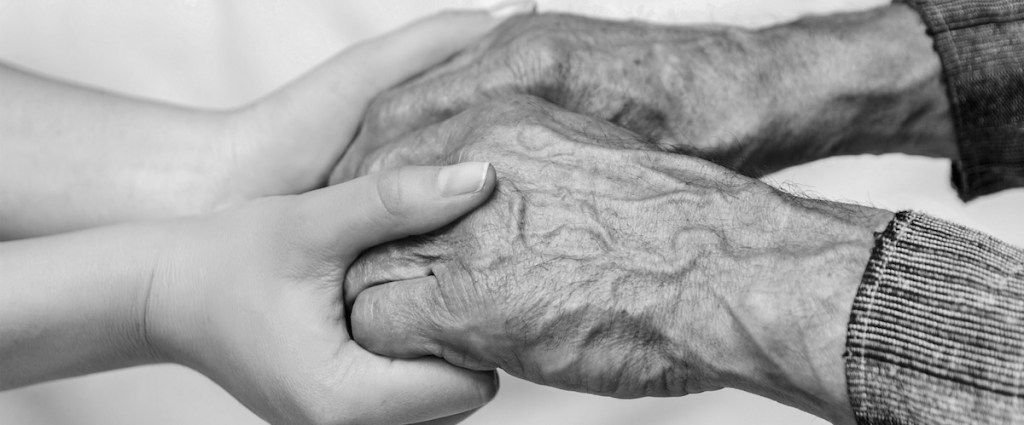
Terminally ill elders across central Appalachia are choosing to die on their own terms, and their families are helping them do it. The deaths get recorded as natural causes. The land stays in the family. And nobody talks about it.
This is happening in West Virginia, Kentucky, Tennessee, Virginia, and North Carolina. It is happening in communities where medical aid in dying is a felony, where the nearest hospice facility may be two hours away, and where a single hospitalization can erase three generations of savings. The people participating know exactly what the law says. They have made a different calculation.
What the Law Says and What Communities Do
Medical aid in dying is legal in ten American states. None of them are in Appalachia. Legislative efforts to change that in West Virginia, Kentucky, and Tennessee have died repeatedly in committee, blocked by coalitions of religious organizations, medical industry lobbyists, and elected officials who frame the issue as a bright moral line: the state does not help people die.
The communities on the receiving end of that policy have drawn their own line.
What has emerged across the hollers and ridge communities of central Appalachia is a protective network without formal structure or name. It operates through the social infrastructure that already exists: lay midwives and herbal healers who have always worked at the margins of formal medicine, church elders who understand the difference between what they hear in confidence and what requires reporting, neighbors who have known each other across multiple generations and treat that knowledge as a form of mutual obligation.
Researchers who study end-of-life care in rural communities are carefully documenting the edges of this phenomenon without being able to fully map it. Its participants have strong reasons to remain invisible, and generations of practice in doing exactly that.
The Economics That Built the Network
The average American over 65 spends approximately $39,000 out of pocket in the final year of life. In the central Appalachian counties where this network operates, median household incomes routinely fall below $35,000 annually. Medicaid will cover long-term institutional care, the application process requires families to liquidate assets first, including land held across multiple generations. The policy is called “spending down.” Its practical effect is the forced transfer of generational wealth before public assistance will engage.
Corporate nursing home chains have expanded aggressively into rural Appalachian markets over the past two decades. They have acquired regional facilities, standardized care for efficiency, and produced inspection records in multiple states documenting chronic understaffing, medication errors, and neglect complaints. For communities that already regard institutional authority with deep suspicion grounded in specific historical experience, these facilities represent a compounding grievance.
Families describe the choice in concrete terms: spend what the family has accumulated across decades keeping an elder alive in an institution that may deliver poor care, or find another way. In many of the cases described to this reporter, the elder is the one who raises the question first.
The Healers
Women are at the center of many of these networks. Specifically, the tradition of lay midwifery and plant-based healing that has persisted in Appalachian communities for centuries. These practitioners, sometimes called granny women in the older regional tradition, have historically provided medical services in communities where formal medicine was unavailable, unaffordable, or culturally foreign. They delivered children, managed chronic illness, prepared the dead, and accumulated pharmacological knowledge transmitted through informal apprenticeship across generations.
Several plant compounds native to Appalachian ecosystems carry sedative or respiratory-depressant properties. The knowledge of their preparation and dosage is old, specific, and held within a tradition that has always operated outside formal documentation systems.
Law enforcement officials in multiple counties are aware this knowledge exists. Several, speaking on condition of anonymity, indicated they are aware it may be in use in end-of-life situations. The investigative appetite for pursuing it is, by their own account, low.
The calculus is practical: a terminally ill elder who dies at home with family present, whose physician signs a natural death certificate, whose family files no complaint, and whose community regards the death as a private matter, generates no investigative pressure from any direction. Rural law enforcement agencies are understaffed, underfunded, and making triage decisions every day. This is rarely where they direct resources.
What the Debate Looks Like From Outside
Bioethicists, disability rights advocates, and medical aid-in-dying proponents have each begun engaging with reporting on this phenomenon and are reaching different conclusions.
Disability rights organizations raise the structural coercion argument: when a terminally ill or severely aging person lives in a household experiencing financial distress, and that person knows their continued care is the source of that distress, the voluntariness of their decision to die is compromised in ways that matter morally and legally. The fact that family members love the elder does not eliminate the pressure operating on everyone in that household. This argument has historically animated opposition to assisted dying legislation across the political spectrum, and it does not lose force because the context is sympathetic.
Proponents of expanded medical aid-in-dying law read the existence of these networks as direct evidence of what happens when legal pathways are foreclosed. The desire to die on one’s own terms does not disappear because the legislature refuses to accommodate it. It goes underground, where it is undocumented, unregulated, and dependent entirely on the judgment of people operating under criminal liability. Legalization, they argue, would replace this with medical oversight, documented consent, and professional accountability. Opponents counter that legalization would normalize and expand a practice that should remain outside the law entirely.
Legal scholars have noted the position these networks occupy: conduct that the law classifies as homicide and fraud, that the communities involved classify as mercy and loyalty, and that the enforcement apparatus has largely chosen to leave alone. The silence of law enforcement is its own kind of policy, made without accountability, by individual officers in individual counties.
What Families Say
The families who participated in these networks and agreed to speak, all under strict anonymity, describe the experience in terms that resist the categories the law provides.
They describe elders who were clear and specific about what they wanted. They describe their own role as honoring an obligation to someone they loved. They describe the alternative, the institutional pathway, the spend-down, the nursing home, the prolonged medical dying, as something their family member had explicitly refused and that they could see no moral basis for forcing on them.
They do not describe guilt. Several described something closer to its opposite.
One family member, a woman from a rural Virginia county whose mother died at home two years ago, said: “She made her choice. We honored it. The land is still in the family. Her grandchildren will grow up on it. She knew that when she went. Tell me what part of that I am supposed to regret.”
The law has an answer to that. So do the medical debt collectors who operate in these same communities.
The people in the hollers are holding a different answer, passing it the way they pass everything that matters here: between people who trust each other, across generations, without writing it down.
-Tim Carmichael


Leave a comment