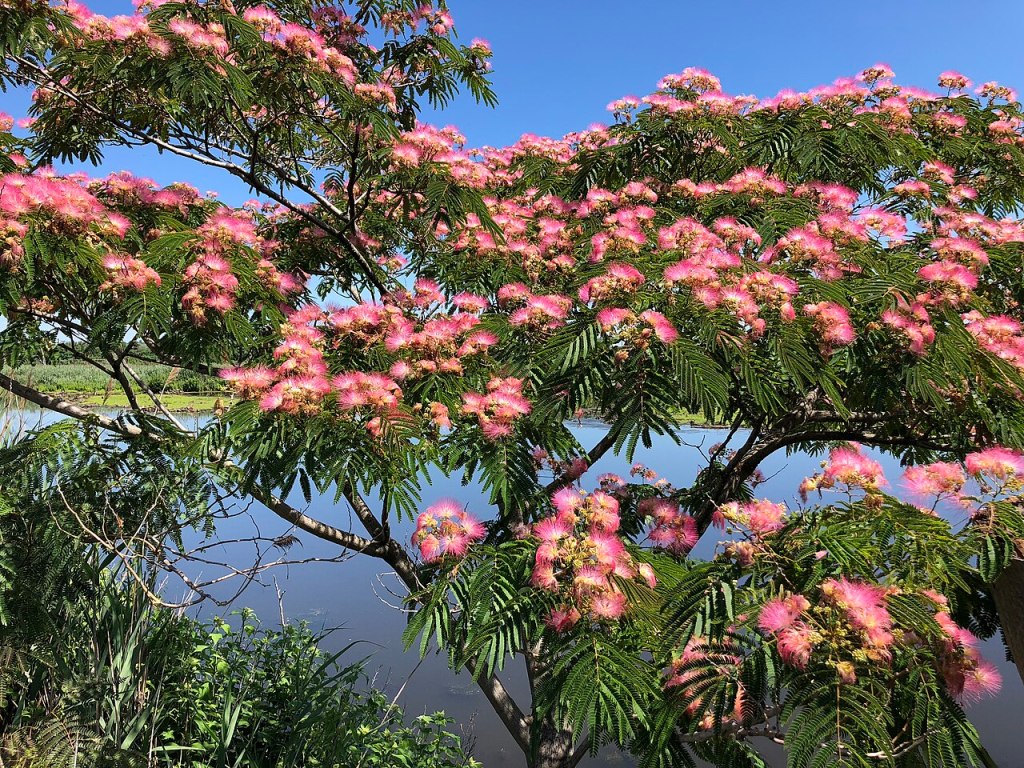
Across the hills, valleys, and backroads of Appalachia, mimosa is a familiar sight. Growing near old homesites, fence lines, creek banks, and roadsides, it has become part of the region’s visual character over generations. Many people recognize it immediately, yet few realize that this common species carries a history stretching across continents and thousands of years. Long before it became established throughout the American South, Albizia julibrissin held a respected place in one of the world’s oldest healing traditions.
Though often associated with Appalachia today, mimosa originated in Asia and was introduced to North America during the eighteenth century. Favorable growing conditions allowed it to spread throughout much of the Southeast, where it adapted readily to disturbed ground and sunny locations. Over time, it became woven into the landscape of many rural communities.
Its success has also created controversy. Some conservationists and landowners view mimosa as an invasive species due to its ability to spread rapidly and compete with native vegetation. Young growth is frequently removed from restoration sites, woodland margins, and managed properties where native species are encouraged. Others, however, see value in a plant that has become a familiar part of local history and herbal practice. This difference of opinion has given mimosa a complicated place in the region, admired by some and removed by others.
What many people never discover is that the medicinal reputation of mimosa began long before it reached American soil.
In Traditional Chinese Medicine, the bark of Albizia julibrissin is known as Hé Huān Pí, or “collective happiness bark.” The name reflects a long standing belief that the bark supports emotional well being and helps restore balance during periods of distress. Historical texts describe its use for easing sadness, calming agitation, and supporting people who carried emotional burdens for extended periods.
Traditional Chinese Medicine views emotional and physical health as deeply connected. Practitioners describe Hé Huān Pí as an herb that nourishes the Heart and calms the Shen, a concept associated with consciousness, emotional harmony, and spiritual well being. When the Shen becomes disturbed, a person may experience restlessness, poor sleep, irritability, anxiety, or emotional exhaustion.
Another important concept in Traditional Chinese Medicine involves the movement of Qi, often described as vital life energy. When Qi becomes constrained, emotional difficulties can emerge. Practitioners frequently identify a pattern known as Liver Qi Stagnation, associated with frustration, chronic stress, resentment, grief, and emotional tension. For centuries, Hé Huān Pí has been prescribed to help disperse this stagnation and encourage emotional balance.
The flower, known as Hé Huān Huā, developed a reputation of its own. While it travels through many of the same energetic pathways as the bark, it is traditionally used for lighter emotional concerns. Herbal practitioners often select the flower for temporary irritability, occasional sadness, everyday stress, or mild sleep disturbances.
Many herbal traditions describe the flower as uplifting and emotionally supportive. Someone experiencing a difficult week, temporary grief, or ordinary life pressures might traditionally receive the flower rather than the bark. The bark, by contrast, became associated with deeper and more persistent emotional patterns.
The distinction between flower and bark remains important among modern herbalists.
Flower tinctures are generally chosen for acute, situational stress. Users often describe them as emotionally brightening and supportive during temporary periods of tension. They are commonly selected during challenging life events, emotional setbacks, or periods of elevated stress.
Bark tinctures tend to serve a different role. Many herbal practitioners recommend them for long standing emotional strain, deep rooted anxiety, physical discomfort, or recovery from traumatic experiences. The bark has earned a reputation for being grounding and stabilizing, qualities that have contributed to its popularity among herbalists interested in long term emotional support.
Combined flower and bark tinctures have become especially popular in contemporary Western herbalism. By bringing both plant parts together, these preparations aim to provide the uplifting qualities associated with the flower alongside the deeper support traditionally linked to the bark. Many herbalists view this combination as a way to capture the broadest range of benefits offered by the species.
The medicinal history of mimosa extends beyond emotional wellness. Traditional Chinese Medicine has also used the bark to invigorate blood circulation and support recovery following physical injury. Historical records describe its use for bruises, fractures, soreness, and various forms of trauma. This dual role as both an emotional and physical restorative helped secure its place within traditional herbal practice.
Modern scientific research has begun investigating why Albizia julibrissin earned such a lasting reputation.
Laboratory analysis has identified several groups of bioactive compounds within the species, including saponins, flavonoids, and tannins. These naturally occurring compounds are responsible for many of the biological activities currently being studied.
Saponins have attracted attention for their effects on cellular signaling and physiological regulation. Flavonoids are well known for antioxidant activity and potential support for neurological health. Tannins contribute additional properties that researchers believe may play a role in tissue recovery and overall resilience.
Scientists have shown particular interest in the relationship between Albizia julibrissin and the central nervous system. Preclinical studies suggest that compounds found within the plant may influence neurotransmitter activity linked to mood regulation.
Research has indicated potential interactions involving serotonin, a neurotransmitter strongly associated with emotional well being, mood stability, and resilience during stressful periods. While researchers continue to explore these mechanisms, the findings have generated significant interest because they parallel some of the traditional uses documented centuries ago.
Investigators have also examined interactions involving GABAₐ receptors. GABA serves as one of the primary inhibitory neurotransmitters in the nervous system and plays an important role in promoting relaxation and emotional stability. Many modern medications designed to reduce anxiety influence related pathways. Early findings suggest that compounds present in Albizia julibrissin may interact with these same systems, providing a possible explanation for the calming qualities described in traditional herbal literature.
Another area of research focuses on cognitive health. Animal studies have suggested that extracts derived from Albizia julibrissin possess neuroprotective properties. Some investigations indicate that these extracts may help defend against short term memory impairment associated with sleep deprivation. Although additional human research remains necessary, the results have encouraged further exploration into potential applications involving memory and neurological function.
Despite growing scientific interest, researchers continue to emphasize the need for larger human studies. Much of the current evidence comes from laboratory and animal research rather than large scale clinical trials. Future studies will help clarify dosage, safety considerations, mechanisms of action, and long term effects.
Even so, the growing body of research has helped bring renewed attention to a plant whose medicinal reputation spans many centuries. What ancient practitioners observed through generations of experience is now being examined through modern biochemical analysis, creating an intriguing meeting point between traditional knowledge and contemporary science.
For Appalachians who encounter mimosa along roadsides, near old homesteads, or throughout rural landscapes, the species represents far more than a decorative presence. Behind its familiar appearance lies a story that began in Asia, traveled across oceans, entered one of history’s most influential healing systems, and eventually found a place in the mountains and valleys of the American South.
Whether viewed as a valued medicinal herb, a controversial newcomer to the landscape, or a subject of scientific curiosity, mimosa continues to spark interest. Its journey from ancient Chinese medicine to modern biochemical research reveals a remarkable history hidden within a plant that many people pass every day, rarely realizing the legacy it carries.
-Tim Carmichael


Leave a Reply