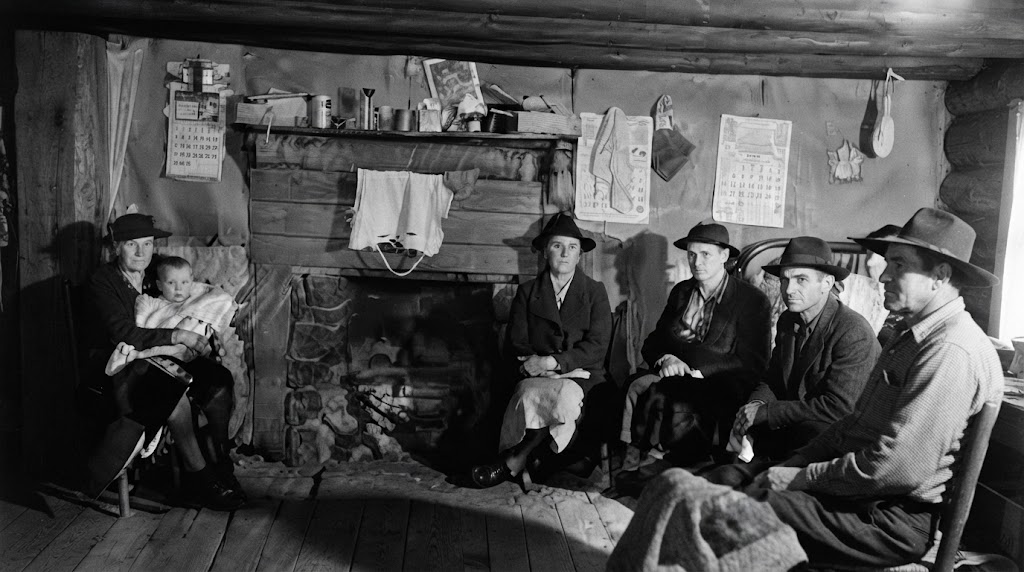
Before funeral homes became common in the mountains, families brought their dead home, kept watch through the night, and fed the people who came through the door.
I grew up in the rural mountains of Western North Carolina, and some of my earliest memories of death happened inside family homes. In the 1970s, both of my grandfathers were brought home after they died, and I remember where they were placed and how the houses changed when somebody in the family died. Those memories are part of why the old Appalachian custom of sitting up with the dead has always felt like something real to me rather than something I read about in a history book.
My mother’s father was brought to my Granny and Papaw’s house and set up in their living room. Family members gathered around him there, and people came through the house to pay their respects. My father’s father was taken to my uncle’s house and set up at the bottom of the stairs, where I could see him from the bedroom doorway lying in his coffin beneath a rose-colored glow.
My mother’s father had his funeral on the front porch of my Granny and Papaw’s house. I remember the yard being full of neighbors and friends, and I remember the food people brought to the house for everyone who came. Those details have stayed clear in my memory because a funeral in those days could involve an entire community, with people bringing what they had and helping the family get through those difficult days.
What “Sitting Up” Meant
In older Appalachian communities, sitting up with the dead meant staying with the body before burial. Family members and neighbors took turns keeping watch, sometimes through the entire night, while relatives gathered in the house. The practice developed from practical needs surrounding death, yet it also carried older spiritual beliefs and a strong sense of responsibility toward family and neighbors.
Before modern funeral homes became common, families often cared for their dead at home. The body could be washed, dressed, and laid out for people to see, while relatives made arrangements for the funeral and burial. In warm weather, families had to move quickly because there were fewer ways to preserve a body, and somebody needed to remain nearby until burial.
James K. Crissman documented Appalachian death customs in his 1994 book Death and Dying in Central Appalachia: Changing Attitudes and Practices. His research included more than 400 Appalachian residents from Kentucky, Tennessee, Virginia, West Virginia, and North Carolina, giving him firsthand accounts of how families handled death and how those practices changed over time.
The custom of sitting up also gave people time to make certain arrangements before the burial. Relatives might live several miles away, and word of a death could take time to reach them. People came when they could, and the family kept the deceased at home while everyone gathered.
The Dead Were Prepared at Home
Preparing someone for burial could become a family responsibility. Older accounts describe families washing the body, dressing the deceased, arranging the body for viewing, and preparing the room where family and neighbors would gather. In some communities, a cooling board was used to keep the body as cool as possible before burial, while other families used household furniture or a wooden door as a place to lay out the deceased.
There were also practical concerns that modern families rarely have to consider. Before refrigeration and widespread embalming, warm temperatures could make the time between death and burial difficult. Families sometimes used ice when it was available, kept rooms cool, and watched over the deceased until the funeral.
That watch was one reason people sat up through the night. Someone remained nearby because the body required attention, relatives were coming and going, and the family wanted somebody present at all times. The death watch also reflected older fears about premature burial, which were common in earlier generations when doctors had fewer reliable methods for determining death.
Neighbors Brought Food
Food was one of the clearest ways neighbors helped a grieving family. When someone died, people came through the door carrying whatever they could contribute, including ham, biscuits, pies, cakes, fried chicken, preserves, casseroles, and other dishes that could feed a crowd.
A family dealing with a death had plenty to handle, so neighbors took care of practical needs. Someone might bring food while another person helped clean the house, another helped with children, and others worked on arrangements for the funeral or burial. The support could continue for days because Appalachian communities understood that a death affected the entire household.
I remember that from my own family. When my mother’s father died, his funeral was held on the front porch of my Granny and Papaw’s house, and the yard filled with neighbors and friends who came to see him and support our family. I remember the food people brought to the house, and I remember how many people gathered there because his death had become something the whole community shared with us.
People Stayed Through the Night
Sitting up with the dead was not always a solemn gathering from beginning to end. People grieved, prayed, talked, remembered the person who had died, and sometimes laughed while telling stories about things that had happened years earlier. A person could be mourned deeply while family members still found themselves smiling at some memory that belonged to that person’s life.
Children were part of these gatherings too. They heard adults talking about the deceased, watched relatives come and go, and learned what happened when somebody in the family died. Death was something they saw up close rather than something kept away from them.
That is one reason my own memories are so vivid. I was young when both of my grandfathers died, yet I saw them after death and understood that they had become part of a family gathering centered around their passing. One was in my Granny and Papaw’s living room, and the other was at my uncle’s house at the bottom of the stairs.
The Old Beliefs
Appalachian death customs also carried many beliefs about what happened after a person died. Some families covered mirrors because they believed a spirit could become trapped in a reflection, while others believed a mirror could bring another death into the household. These beliefs varied from family to family, and people followed them with different degrees of seriousness.
Stopping a clock at the time of death was another custom found in older American funeral traditions. Some families believed the clock should be stopped because the person’s life had ended at that moment, while others simply followed the practice because their parents and grandparents had done the same.
There was also a belief about carrying a coffin out of the house feet first. According to the old belief, the deceased should leave the house facing outward so the dead person could not look back toward the family, catch someone’s eye, or beckon another person to follow.
These customs were mixed together with Christian beliefs, older folk traditions, and practical habits that had developed over generations. Different Appalachian families had different rules, and what one family considered necessary could seem strange to another.
The Community Was Part of the Funeral
An Appalachian funeral could involve far more people than the immediate family. Neighbors came to the house, relatives traveled in, food was prepared, graves were dug, children were cared for, and people found ways to help the family carry the responsibilities that came with a death.
That kind of help mattered because families often depended heavily on one another. A person who helped dig somebody else’s grave might need help from those same neighbors years later. Someone who carried food into a grieving family’s house could eventually find those same neighbors standing in their own doorway after a death.
The relationship worked both ways. Helping was part of being a neighbor, and people understood that the day could come when they would need that same help themselves.
Bringing the Dead Home Did Not Completely Disappear
Funeral homes eventually became the usual place for visitations and services across much of Appalachia. Embalming, refrigeration, professional funeral directors, and changing laws all altered the way families handled death, and the old home wake became far less common than it once had been.
Still, the practice never completely disappeared. Some rural Appalachian families continue to bring loved ones home or hold home vigils, giving relatives time to gather around the deceased before the funeral and burial. Home funerals and family-led death care also continue in other rural communities, where families choose to keep some of the responsibility for death within the household.
For people who grew up with funeral homes, the idea of bringing someone home can seem unusual. For people who remember older Appalachian customs, it can feel like something that never completely left.
I remember my mother’s father in my Granny and Papaw’s living room, and I remember his funeral on their front porch with the yard full of neighbors and friends. I remember the food people brought to the house, because feeding people was part of helping a grieving family. I remember my father’s father at my uncle’s house at the bottom of the stairs, where I could see him from the bedroom doorway in his coffin beneath that rose-colored glow.
Those memories belong to my childhood in Western North Carolina, but they also belong to a much larger Appalachian story. Families cared for their dead at home, neighbors came through the door, food appeared, people sat through the night, and the community helped carry a family through one of the hardest times it would ever face.
Sitting up with the dead was never about staying awake beside a coffin. It was about making sure the person who had died remained among family until burial and they were never alone, while the living gathered around one another and did what needed to be done.
For many Appalachian families, that meant opening the house to neighbors, relatives, stories, prayers, food, and grief. In some rural mountain communities, families still choose to bring their loved one’s home, proving that an old Appalachian way of saying goodbye has not disappeared completely.
-Tim Carmichael
 Echoes of Appalachia
Leave a comment