How Appalachian food went from necessity to something a fancy restaurant might charge you to discover
Some of the foods that tell you the most about where you come from are the ones you never thought twice about eating. For me, squirrel gravy belongs near the top of that list. I grew up in western North Carolina eating squirrel at home, and the meal carried none of the novelty it might have for somebody seeing it on a menu today. It was supper, plain and simple, served with biscuits, pinto beans, fried potatoes, and whatever else could stretch across the table.
The funny thing about squirrel is that most people already have an opinion about it before they ever taste it. They have watched squirrels scamper through yards and parks, seen them in cartoons, or watched children stop to admire one sitting high in a tree. I grew up seeing the same animals in the woods around our home, yet I also knew that one could end up in a skillet. Those two facts lived comfortably together for me.
Squirrel hunting was part of the rhythm of life where I grew up. A man could head into the woods early in the day and return with several squirrels tucked away for supper. Once the hunting was finished, there was work to do before the cooking began. The squirrels had to be cleaned, prepared, and divided into pieces that would fit nicely into the skillet.
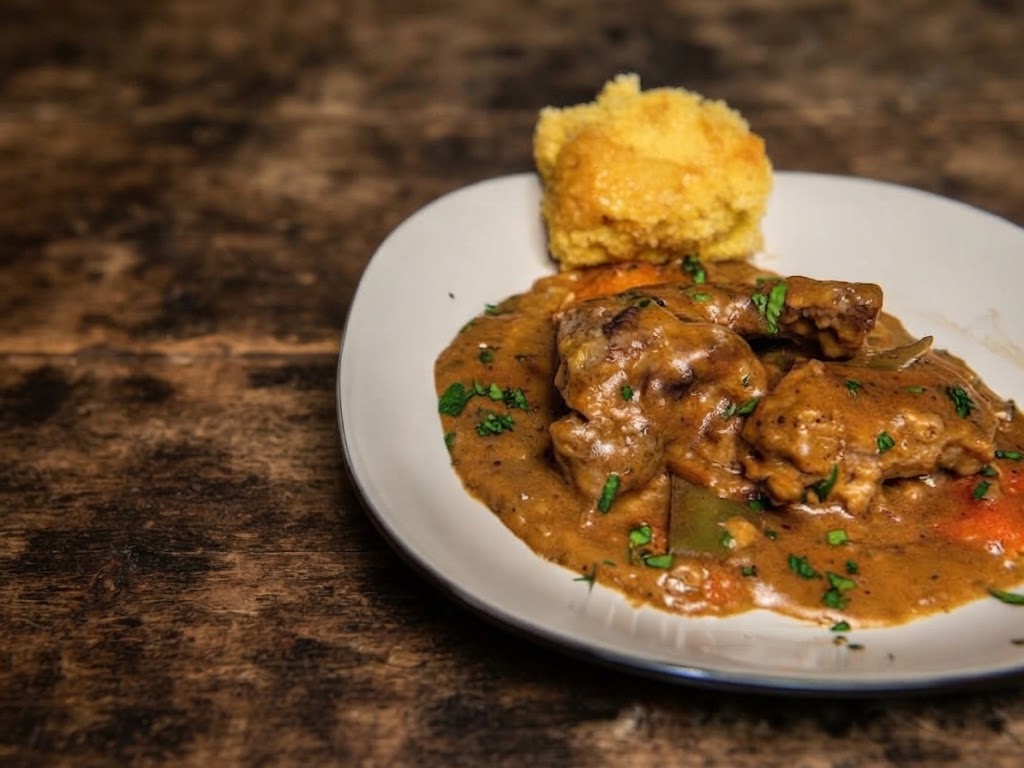
The cooking itself was simple, though good squirrel gravy depended on knowing what you were doing. The meat browned in hot grease until the outside developed a deep color and the inside stayed tender. After the squirrel came out, the drippings remained in the skillet, ready for flour and liquid. The gravy came together with a little stirring and a cook who knew when it looked right.
That last part was important because the cooks I grew up around rarely followed written recipes for food like this. They cooked by sight, taste, and experience. A little flour went into the skillet, followed by enough broth or water to bring the gravy together. If it needed salt, salt went in. If it needed more stirring, the spoon kept moving until the gravy was ready for the biscuits.
I learned plenty of cooking that way. I watched people who had made the same dishes many times, and I paid attention to what happened in the skillet. Measurements were often little more than estimates. A good cook could look at a pan and know what it needed, which is a skill that can be harder to learn from a recipe than from standing nearby while somebody cooks supper.
Squirrel also had one advantage when it came to feeding a family. It could make a small amount of meat go a long way. There were plenty of bones, and each piece offered less meat than a piece of chicken, yet squirrel gravy surrounded by biscuits, beans, and potatoes made a full meal. You took your time with the meat and let the rest of supper do its part.
I remember doing exactly that as a boy. I would work my way through the squirrel while the grown-ups talked around the table. Somebody reached for another biscuit. Somebody spooned more gravy onto a plate. The conversation continued while everybody ate, and I paid attention to my plate.
Those meals are still among the clearest food memories I have.
I also remember the first time I understood that squirrel could sound strange to people who grew up somewhere else. Mention it in the wrong company and the conversation tends to stop for a moment. People want to make certain you are talking about the animal they have seen running through a park, rather than some dish with an unusual Southern name.
That reaction has always amused me.
Squirrels have excellent public relations. They are cute enough to become characters in children’s books and cartoons. People put peanuts out for them. Families watch them run through parks. They can spend an entire lifetime being treated as little woodland celebrities.
Where I grew up, squirrels had another job.
They could feed you.
That practical side of Southern cooking is something I appreciate more now than I did when I was young. When money is tight, you learn how to make a little go a long way. A few squirrels could become a supper with biscuits and gravy. Potatoes filled out the plates. Pinto beans gave everybody something else to spoon onto the plate. The whole meal depended on knowing how to make each ingredient count.
There was also something satisfying about knowing exactly where the meat came from. The story began in the woods, continued at home, and ended around the supper table. There was a straight line from the hunt to the meal, and everybody sitting there understood it.
As I got older, I started eating in restaurants and encountered a very different approach to food. I’ve had expensive meals with elaborate descriptions and ingredients that would have sounded completely foreign around my family’s table. I’ve eaten dishes prepared by talented chefs and served in places where the presentation received nearly as much attention as the food itself.
Squirrel gravy still wins when it comes to memory.
I sometimes imagine what would happen if a chef decided to put it on a modern Southern restaurant menu. The dish would probably receive a name several lines long, something along the lines of Pan-Fried Appalachian Squirrel with Country Gravy and House Biscuits. The description might explain the history of the dish, the cooking method, and the regional tradition behind it.
The diner would probably read the description twice.
Then the plate would come out.
I can picture somebody looking down at that squirrel, taking a bite, and realizing that the strange-sounding dish tastes pretty good. That person might even wonder why squirrel ever seemed so unusual in the first place.
The price would be the funniest part.
A restaurant could probably charge forty dollars for a carefully prepared plate of squirrel with gravy and biscuits. The people I grew up around would have found that hilarious. They knew squirrel as something a person could bring home from the woods. The expense came in the time spent hunting, cleaning, and cooking it. The idea of paying forty dollars for something that once became supper after an afternoon hunt would have made a good story around our table.
I’ve eaten enough restaurant food over the years to understand why people enjoy a beautifully prepared meal. Still, some of the best food memories I have came from meals that looked nothing like something you’d see in a fine dining room. Squirrel gravy belongs firmly in that category.
The taste is part of the memory, but it is only part of it. I remember the browned meat and the gravy. I remember biscuits beside the plate and the slow work of picking the meat from the bones. More than anything, I remember sitting there while the grown-ups talked and eating my way through supper.
That is what makes a meal memorable long after the food itself is gone.
Squirrel also reminds me of a time when cooking was less concerned with measurements and more concerned with knowing your food. The people I watched could take a skillet, a little flour, some drippings, and enough liquid to make gravy that tasted right. They knew how to stretch a meal. They knew how to make something modest feel like plenty.
That kind of cooking rarely needed a fancy name.
It needed a hungry family and somebody who knew how to feed them.
Today, I can understand why squirrel would make somebody hesitate. Most people have grown accustomed to seeing it in parks and yards rather than on a dinner plate. For me, though, that little animal still brings back western North Carolina, Saturday hunting, biscuits, gravy, and a family meal.
I’ve eaten plenty of dishes since then that would cost far more than squirrel gravy ever did. Some were memorable for the chef. Some were memorable for the setting. Some were memorable because I could never have imagined the ingredients working together.
Squirrel is memorable for a different reason.
It takes me straight back home.
If I ever see squirrel gravy on a restaurant menu, I will order it. I will probably smile when I see the price, too. The chef can give it a polished Southern name and serve it on the nicest plate in the dining room. I will still recognize the meal I grew up eating in western North Carolina.
Squirrel, gravy, biscuits, and a table full of people.
That was supper where I came from, and it remains one of the meals I would never expect to see on a restaurant menu.
-Tim Carmichael
 Echoes of Appalachia
Leave a comment