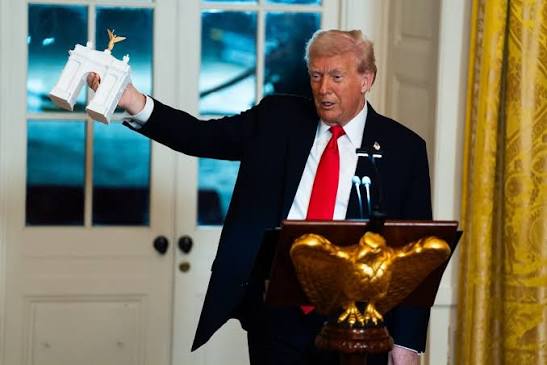
Washington can spend lavishly on presidential grandeur while asking poor Americans to accept cuts to the programs that help them survive.
In Appalachia and across the country, people understand a hard winter. Especially these days. They understand what it means to watch the temperature drop while an electric meter keeps turning and a monthly check stays the same. For families already living close to the edge, heating a house can become one of the biggest expenses of the season.
That is why the Trump administration’s proposed elimination of the Low Income Home Energy Assistance Program, or LIHEAP, deserves attention across the mountains. The administration also proposed cutting $646 million from FEMA’s non-disaster programs, which help communities prepare for floods and other disasters before they strike.
Appalachian Voices has warned that these proposals could hit the region especially hard. Many low-income Appalachian households depend on assistance with utility bills, and older homes often cost more to heat, leaving families with fewer dollars for groceries, medicine and other necessities.
The arithmetic can become brutal. A family can turn down the thermostat, switch off lights, skip a trip into town and cut every expense it can find, yet the heating bill still has to be paid.
For an older person living on a fixed income, that can mean choosing between keeping the house warm and buying something else that month. For a working family, it can mean putting groceries on a credit card or delaying a repair that the family already needed.
People in Appalachia have spent generations learning how to stretch what they have. They repair things, reuse things, grow gardens, preserve food and find ways to make an old house last another year because replacing what breaks often costs more than they can afford.
There is a limit to that kind of thrift. Once every dollar already has a job, cutting another dollar means taking it from somewhere else.
The same budget proposal raises another concern for a region where floods can turn a mountain road into a river. Steep slopes, narrow valleys and fast-moving streams can leave communities vulnerable when heavy rain falls across the mountains.
Hurricane Helene offered a painful demonstration of that reality. Western North Carolina and eastern Tennessee saw homes destroyed, businesses damaged, roads washed away and families left dealing with the aftermath long after the television crews moved on.
FEMA’s non-disaster programs help communities prepare for events like these. Cutting those resources means local governments could have fewer tools available before the next storm, when preparation can make the difference between manageable damage and a much larger disaster.
There is an uncomfortable contradiction running through all of this. Washington says the country cannot afford enough help for poor families with heating bills, food and health care, yet the administration continues pursuing expensive projects and highly visible displays of presidential grandeur.
The list is long. There is the enormous ballroom planned for the White House, the new helicopter pad, the transformation of the Rose Garden, gilded decorations and statues, plans for a triumphal arch, banners carrying Trump’s image on federal buildings, his name placed on government properties and a minted $1 coin bearing his likeness.
His image has also appeared on passports, while his name and likeness have been incorporated into an expanding collection of government and commemorative projects. Keeping track of every example has become difficult because the list keeps growing.
The issue here is larger than whether someone likes a ballroom or thinks the White House grounds should be changed. The question is what Washington says it can afford when the people asking for help are poor.
If there is money for grand construction, gilding, monuments, statues, banners, presidential branding and other projects carrying Trump’s name and image, people struggling to pay for heat have a reasonable question to ask. Why does the government suddenly become careful about spending when the person asking for assistance is trying to keep an apartment or house warm?
The same question applies to food and health care. Medicaid, Medicare, SNAP and health insurance subsidies affect millions of Americans, and changes to those programs can reach families who already have little financial room.
Congressional budget estimates have projected substantial reductions in federal Medicaid and SNAP spending under legislation enacted in 2025, along with millions fewer people receiving Medicaid coverage in the years ahead. Those figures represent real households, real medical appointments and real grocery carts rather than distant accounting exercises.
For someone living in a mountain community, losing assistance can create a chain reaction. A higher medical bill can consume money that had been set aside for groceries, while a higher grocery bill can leave less money for electricity.
That is where the argument about federal spending becomes personal.
It also raises a question about priorities. If the government can spend hundreds of millions on a ballroom, find money for elaborate White House renovations and devote resources to monuments and presidential displays, why should a poor family be told there is insufficient money to help keep its home heated?
The answer cannot simply be that the country has to save money. Someone has to explain why saving money applies so aggressively to programs serving poor families while lavish projects associated with the president continue moving forward.
That contrast will be especially sharp in Appalachia.
The region has plenty of people who work hard and still struggle. It has retirees living on fixed incomes, families working hourly jobs, people living in aging houses and communities where one washed-out road can create problems for an entire neighborhood.
These people are also voters.
Many Appalachian voters supported Donald Trump. They voted for him because they believed he would stand up for people like them, reduce government waste, strengthen the economy and change a federal government they had grown tired of watching from a distance.
They had every right to make that choice.
They also have every right to look at what is happening now and ask whether the government they helped elect is serving their interests.
A Trump voter can believe in smaller government and still want LIHEAP preserved. A Trump voter can support fiscal restraint and still believe an elderly neighbor should have enough assistance to heat her home during a bitter January.
Political loyalty cannot pay an electric bill. It cannot replace a washed-out bridge, buy groceries or cover a medical bill.
That is why this conversation belongs outside the usual partisan shouting. The people facing these decisions live on both sides of the political divide, and many of the people who could feel the cuts are people who voted for the administration proposing them.
Congress will ultimately decide which budget proposals become law. The president can request cuts, while Congress controls the appropriations process and has the power to change those requests.
That leaves Appalachian voters with a simple responsibility. They can ask their representatives what they intend to do about LIHEAP, Medicaid, SNAP, Medicare, health care subsidies and FEMA preparedness funding.
They can ask how communities recovering from Helene are supposed to prepare for another major flood with fewer resources. They can ask how families already struggling with utility bills are supposed to manage if heating assistance disappears.
Those questions belong to Republicans, Democrats and independents. They belong especially to voters who supported Trump because they believed he would put their interests first.
There is nothing wrong with changing your mind after an election. There is also nothing wrong with remaining satisfied with your choice.
What people cannot escape is the result of the choices made by those they put into office.
Voting has consequences.
This coming winter, some Appalachian families are about to learn exactly what those consequences mean. They will sit down with heating bills, grocery bills and medical expenses and have to decide where the money will come from.
Meanwhile, Washington will still have its ballroom. The statues will still stand, the gilding will still shine, the banners will still carry the president’s face, and the $1 coins will still carry his likeness.
The list of projects and displays is already too long to name in full. The question is whether the people who were told there was too little money for them will look toward Washington and wonder why the money always seems to appear when the project has the president’s name on it.
They voted for him, and voting has consequences. This winter, some of those voters are about to discover those consequences in the most personal way possible, when they have to choose between keeping the heat on, buying food, paying for medicine and finding enough money to get through another month.
-Tim Carmichael
 Echoes of Appalachia
Leave a comment