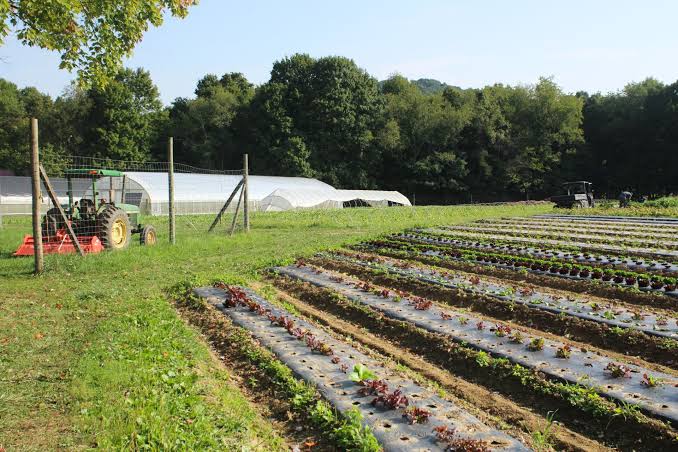
A federal grant program meant to help farmers gain access to land, equipment and markets was cut in the spring. A court ruling has restored some of the money, yet many Appalachian farmers are still waiting to see what comes next.
Farming in Appalachia has never been an easy way to make a living.
The mountains leave farmers with smaller pieces of workable ground. Land prices have risen. Equipment costs more than many small operations can afford. Finding a place to sell what a farm produces can be as difficult as growing it in the first place.
For beginning farmers, getting started can feel even harder.
That is where the federal Increasing Land, Capital, and Market Access Program was supposed to help. The U.S. Department of Agriculture created the program to help farmers and other producers who face barriers to land, financing, markets and technical assistance. The program included support for beginning farmers, veterans, limited-resource producers and people living in high-poverty areas.
For communities across Appalachia, programs like that can reach far beyond the farm itself.
A farmer who gains access to land can produce food for nearby communities. A farmer who gets help purchasing equipment can expand production. A small farm with a dependable market can keep money circulating in a rural community where there may be few other sources of income.
Those connections are especially important in parts of Appalachia where family farms have survived through generations of economic change.
The USDA selected 50 projects for the program, with roughly $300 million in funding. The projects were designed to help producers overcome some of the barriers that keep people from owning land or building viable agricultural businesses.
Then the money began disappearing.
In March, USDA terminated 49 of the 50 projects. Letters sent to grant recipients cited what the agency described as discriminatory preferences connected to diversity, equity and inclusion, along with concerns about wasteful spending.
The decision reached into West Virginia, where West Virginia University was administering an $8.5 million, five-year agreement through its Nourish West Virginia initiative. The project had been working toward a statewide network connecting farmers, food producers and health care providers.
The idea was straightforward. More local farmers producing healthy food could mean more local food reaching people who need it.
For Appalachia, that connection carries particular weight.
Many mountain communities have limited access to grocery stores, while small farms often struggle to find enough customers to keep their operations going. A farmer may have good soil, a good crop and years of experience and still lack the money, equipment or market needed to turn that work into a sustainable business.
That is the part of the debate that can get lost when federal programs are reduced to numbers on a budget sheet.
A grant can mean a processing machine sitting in a farm building instead of an order being turned away. It can mean training for somebody trying to start a farm for the first time. It can mean help dealing with land that has been divided among heirs for decades. It can mean a producer finally reaching a market that was previously out of reach.
These are small pieces of infrastructure, yet rural communities depend on them.
The cancellation also came during the growing season, when farmers already had plans in motion.
Some had been preparing to expand. Others had been working with partners, customers and community organizations based on funding they had been told was coming.
Changing course after those plans are underway can leave a farm or agricultural organization with more than a financial problem. It can leave people wondering whether they can make commitments to their communities when federal support can disappear halfway through the process.
There was a legal challenge.
Organizations whose grants had been terminated went to federal court, arguing that USDA had acted unlawfully. In late June, U.S. District Judge Beryl Howell ordered the restoration of grants held by 24 organizations and local governments. The order covered $127 million and found that the plaintiffs had shown the terminations were likely contrary to law while the case continues.
The ruling gave some farmers and agricultural organizations a reason to breathe again.
It did not settle everything.
West Virginia University was among the organizations whose grant had been terminated, yet its $8.5 million award was not among the grants restored by the June order. West Virginia Public Broadcasting reported that the ruling could still provide a path toward restoration.
That uncertainty leaves farmers in Appalachia facing a familiar problem.
They have work to do while waiting on decisions made far away.
The growing season keeps moving. Animals still need to be fed. Crops still need to be planted and harvested. Customers still need food. Bills still arrive.
A small farm cannot put all of that on hold while Washington decides what rural agriculture should look like.
Appalachian farmers have always had to make do with what they have. That resourcefulness has kept farms going through floods, droughts, changing markets, rising costs and generations of economic hardship.
Still, making do has limits.
If Appalachia wants more young people to farm, they need a way to get onto the land. If small farms are expected to feed their communities, they need ways to reach customers. If rural communities want to keep their money closer to home, they need local businesses and farms that can survive.
Federal programs are only one part of that picture.
They can, however, make the difference between somebody having a chance to start and somebody deciding the mountain is too steep to climb.
For farmers across Appalachia, the question now is what happens next.
Some funding has been restored by the courts. Other projects remain in limbo. The legal fight continues, and the farmers who depend on these programs are still trying to plan for another season.
They will keep planting.
They always have.
The harder question is whether the support meant to help Appalachian agriculture grow will still be there when those farmers are ready to harvest what they planted. I will leave you with one question to think about. Why do these same farmers keep voting against their own interests? Not all of them but most of them.
-Tim Carmichael
 Echoes of Appalachia
Leave a comment