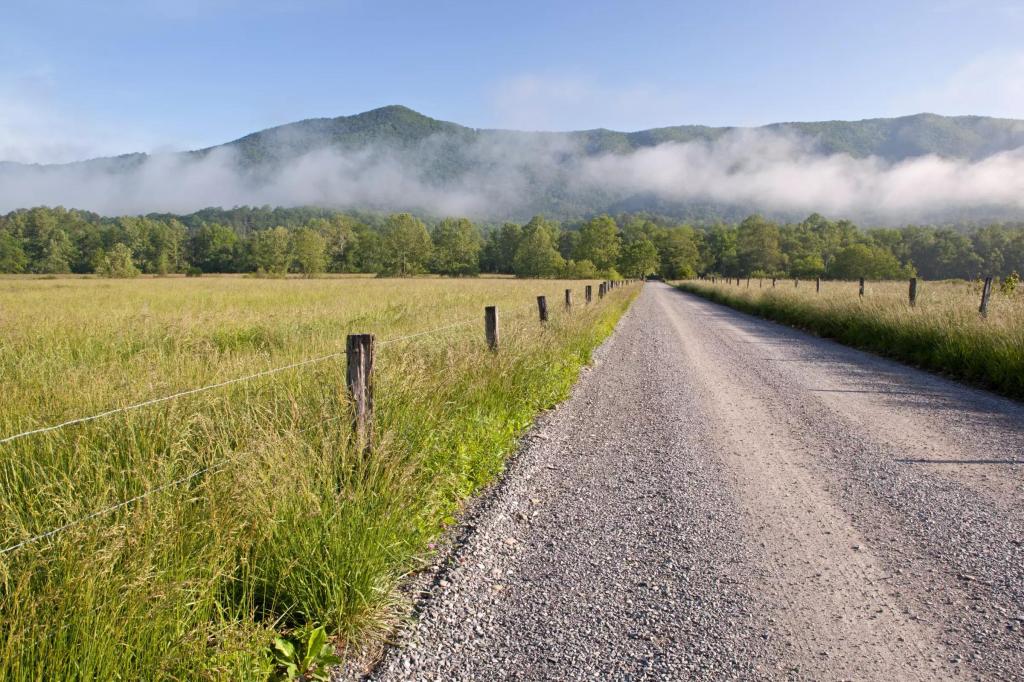
September comes to Appalachia with a change in the air. The change begins high along the ridges, where the first nights of cold reach the trees before the valleys feel them, and by dawn the hollers hold a thin white fog that drifts above the pastures and settles along the creek bottoms. Summer remains in the gardens and along the roadsides, where goldenrod still crowds the fences and late blackberries darken beneath their leaves, yet something has already shifted in the air. The mornings carry a sharpness that disappears after the sun rises, and anyone who has lived long enough in these mountains learns to feel that change before seeing it. A jacket comes out of a closet, the windows stay closed a little longer, and the first fire of the season becomes something a person thinks about before there is any reason to light it.
For generations, people across Appalachia watched September because the month seemed to reveal what the coming winter had been preparing in secret. Long before weather radar showed a storm moving across the mountains, people searched the woods and fields for evidence, reading the thickness of an animal’s coat, the shape hidden inside a seed, the height of a hornet nest, and the behavior of smoke rising from a chimney. These signs belonged to a world in which weather could determine whether a household had enough wood, whether livestock survived, whether a road remained passable, and whether a roof carried too much snow. A forecast was never merely something to talk about; it could become the difference between comfort and hardship when January came down hard across the ridges.
The old predictions begin before September has even opened its door. During August, some Appalachian families watched the morning fog and kept a jar nearby, dropping a dried bean into it whenever fog settled over the fields. Thirty-one August mornings offered thirty-one opportunities to count, and the finished number was believed to give some indication of the winter ahead. Each bean represented a foggy morning, and each morning carried its place in the months to come, with the first beans speaking toward the beginning of winter and those counted later reaching farther into the season. The practice had the simplicity of many mountain customs, requiring little more than a jar, a handful of beans, and the willingness to stand outside before the day had warmed enough to make the question comfortable.
The bean count belonged to a larger way of paying attention. Nothing in the mountains existed entirely by itself, and weather could be read through things that appeared to have little connection to snow or cold. A rabbit moving farther from cover might mean one thing while a rabbit staying buried deep among the briars might mean another. The thickness of its coat became a subject of inspection as summer weakened, and an early heavy coat was taken as evidence that the animal sensed a difficult winter coming. Such observations carried their own uncertainty, though uncertainty had always been part of mountain knowledge. People watched, remembered, compared one year with another, and kept what seemed useful.
By September, the woolly bears begin crossing roads and trails with their strange determination, each small body carrying a pattern that has inspired generations of predictions. The caterpillar is handled carefully when someone stops to study it, its black ends and brown middle examined for proportion. A broad brown band has long been taken as a sign of a milder winter, while heavier black bands suggest greater cold. The caterpillar itself offers no explanation, and it cannot know what people hope to discover in its coloring, yet there is something compelling about the sight of one moving through fallen leaves while the mountains around it begin their slow change. It seems to be going somewhere, though the destination remains hidden from anyone who kneels beside the road.
The persimmon carries a stranger promise. When the seed is split lengthwise, the pale shape inside may resemble a spoon, a fork, or a knife, and each shape has been given its own prediction. The spoon has long been associated with heavy snow, the fork with lighter snowfall, and the knife with a winter whose cold will be severe enough to cut through the mountains. The ritual requires patience because the fruit must first be opened, the seed cleaned, and the pale kernel divided without destroying what lies inside. For a moment, the smallest thing in the world can become a weather map.
Persimmons have another meaning in September because they arrive when the landscape is beginning to withdraw from summer. Their sweetness comes late, after much of the green world has begun turning toward brown and gold, and their fruit hangs beneath leaves already losing color. To walk beneath them in September is to see the season gathering itself, and the seed becomes one more reminder that the future has already begun forming inside what appears to be an ending.
The trees offer their own warnings through abundance. Hickories and oaks heavy with nuts early in the month have long been regarded as signs that squirrels are preparing for difficult months ahead. A heavy mast crop may have its own causes understood by science, though the old interpretation remains powerful because it places the observer inside a relationship with the landscape. The squirrel gathers, the tree produces, and the person watches while winter waits somewhere beyond the ridge, invisible and already present in the imagination.
Hornet nests are studied for another reason. A nest high in the branches has traditionally been read as a sign of easier winter weather, while one built low among bushes or near the ground has been taken as evidence of heavy snow. The nest itself can look like a small gray world hanging above the forest floor, papery and intricate, its entrance busy during the warm hours and still when evening comes. Whether the insects possess some instinct for the coming weather or whether people have simply given their architecture a meaning handed down through generations matters less than the act of stopping beneath the tree and looking upward.
Even the garden can become part of the forecast. Onion skins are examined after harvest, and thick layers are taken as evidence of a winter that will demand preparation. Such signs once mattered because preparation was tangible. Wood had to be cut before the ground froze, corn had to be brought in, animals needed shelter, and roofs needed attention. A prediction that proved wrong could cost labor, while a prediction that proved right could mean warmth when the snow covered the road.
September frost carries one of the older warnings. The saying that every September frost brings a snow in March survives because mountain weather has always been understood as a long conversation rather than a series of separate days. Frost arrives before most people are ready for it, whitening grass beneath the fading green of summer, and the sight can make March seem strangely close. The pumpkins may still be growing, the garden may still offer beans and peppers, yet winter has already touched the ground once and left its signature there.
Smoke gives another indication when the weather turns gray. On a September afternoon, chimney smoke rising straight into cold air can climb above the roofs and disappear, while on another day it may sink toward the hollers and spread between the houses. The old belief holds that falling smoke can mean snow within twenty-six days, a prediction that carries the peculiar precision of Appalachian lore. Twenty-six days is specific enough to invite belief and distant enough to survive a great many exceptions.
Thunder after summer has begun its retreat carries a darker warning. Late September storms can roll along the ridges after the evenings have already grown cold, and the sound travels strangely through the hollers, sometimes seeming close enough to touch and sometimes fading toward another valley. The old saying that thunder in the fall means a cold winter has survived because people remember such storms. A single September thunderclap may be forgotten, while a winter that follows a late storm can make the memory of it grow sharper with every telling.
Yet the deepest power of these signs comes from what they reveal about the people who watched them. They belonged to a time when the future could rarely be seen beyond the next ridge, when a person might know the weather by the feel of the air against his face and still have little idea what January would bring. The signs offered a way to live with that uncertainty. They turned fog into information, a caterpillar into a warning, a persimmon seed into a question, and smoke into evidence. They gave shape to something that otherwise remained invisible.
Modern forecasting has changed the distance between the present and the future. A storm can be watched forming hundreds of miles away, its direction revised hour by hour as new information arrives, and snowfall can be measured with instruments capable of seeing what a person standing on a porch could never see. Yet September still brings people outside before breakfast to look at the fog. Someone still stops beside a road to turn a woolly bear away from passing tires, while someone else cuts open a persimmon and studies the seed before tossing the fruit into a basket.
Perhaps that is why these old signs have endured. They ask for something the machines cannot provide: attention. They require a person to stand still long enough to see the season changing in front of him, to notice the frost before the sun takes it, to watch smoke sink through a holler, and to recognize that the trees have begun releasing their leaves one at a time. The mountain has always been changing, though September makes the change easier to see.
By the final days of the month, the first yellow leaves have gathered along the roads, the high ridges carry more color each morning, and the gardens have begun giving up what remains. The fog still settles in the valleys before sunrise, though it feels colder now, and the first wood smoke of autumn may drift through the evening air. Somewhere a woolly bear crosses a road beneath trees beginning to turn, carrying its black and brown bands toward whatever winter has already chosen.
The old signs cannot tell us with certainty what waits ahead, and they never could. What they offer is something older than certainty, a reason to look closely at the world while it is still changing. September gives us the fog, the frost, the persimmon, the caterpillar, the smoke, the hornet nest, and the heavy branches bending beneath their nuts, then asks us to decide what they mean. Winter will come whether we read them correctly or misunderstand them entirely, and perhaps that has always been the truth beneath the old Appalachian forecasts: the future remains hidden while the signs of its coming are already around us.
-Tim Carmichael
 Echoes of Appalachia
Leave a comment