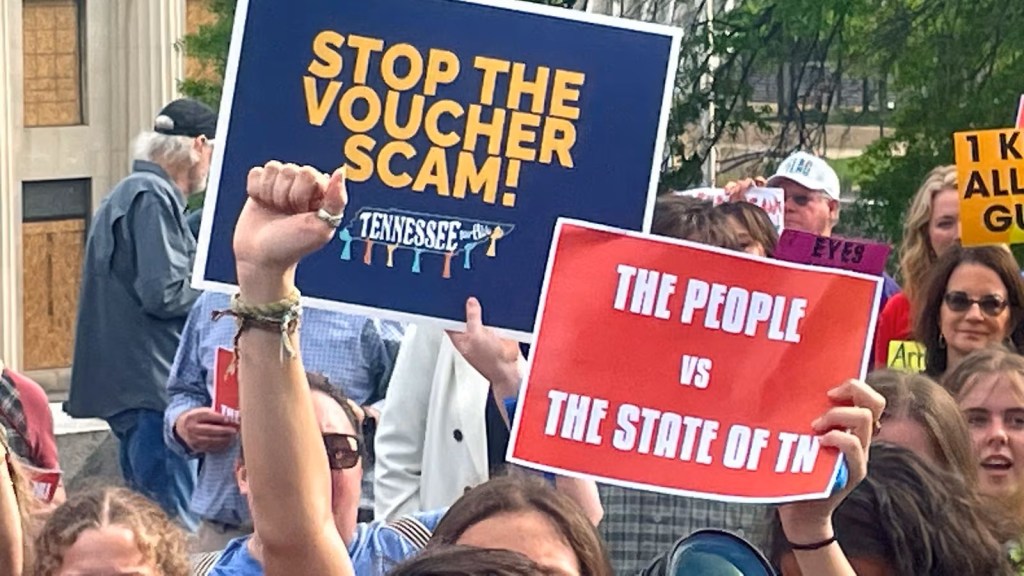
Rural communities across Appalachia are confronting a growing challenge as school voucher programs expand across states such as Tennessee. While advocates frame vouchers as a pathway to greater educational freedom, critics argue that the policy creates a structural imbalance that leaves rural families paying the price for options they rarely can access.
At the heart of the issue lies a fundamental mismatch between policy design and geographic reality. Voucher programs allow public education funding to follow individual students to private institutions. In urban and suburban regions, families may find a range of private schools within reasonable distance. In rural Appalachia, that same infrastructure largely does not exist. The result creates what education researchers describe as an “unusable benefit,” where funding leaves public systems even as families remain reliant on them.
Funding Leaves, Students Stay
Public schools in rural areas operate as lifelines, serving as educational centers, major employers, and gathering places for community life. When voucher programs redirect state funding, the impact on these schools can be immediate and severe.
Each student who opts into a voucher program triggers a reduction in per-pupil funding allocated to their local public school. Even when only a small percentage of students participate, the financial consequences ripple through the entire system. Fixed costs such as building maintenance, transportation routes, and staffing requirements remain largely unchanged, yet available resources shrink.
For rural districts already operating on tight budgets, this dynamic often forces difficult decisions. Teacher layoffs become more likely. Advanced placement courses, arts programs, and extracurricular activities face elimination. In extreme cases, schools consider consolidation or closure.
The paradox stands out clearly: families who cannot access private schools still experience diminished public school resources due to voucher-related funding shifts.
Limited Access Defines Rural Reality
Access remains one of the most significant barriers. Nationwide data shows that only about one-third of rural families live within five miles of a private school. In Tennessee, the situation appears even more stark, with nearly half of rural districts lacking any private school at all.
Distance alone presents a major hurdle. Many private institutions do not offer transportation services, leaving families responsible for daily travel logistics. For households already managing long commutes, work schedules, and limited infrastructure, this challenge can become insurmountable.
Even when a private school exists within driving distance, additional barriers emerge. Tuition costs frequently exceed voucher amounts. Fees, uniforms, and transportation expenses add further strain. For low-income families, these combined costs place private education out of reach, even with state assistance.
The Economic Ripple Effect
Beyond individual families, voucher programs generate broader fiscal consequences for rural communities. Research from the Economic Policy Institute suggests that even a modest five percent decline in public school enrollment could create hundreds of millions of dollars in financial strain for rural districts in states such as Ohio.
These losses do not occur in isolation. Public schools often rank among the largest employers in rural counties. Budget reductions can lead to job cuts affecting teachers, support staff, and administrative personnel. Local economies feel the impact through decreased spending and reduced stability.
Communities may attempt to offset funding losses through higher local property taxes. This approach places additional pressure on residents, many of whom already face economic challenges. In effect, taxpayers contribute more to sustain a system receiving fewer state resources.
Schools as Community Anchors
In rural Appalachia, schools represent far more than places of instruction. They serve as cultural and social hubs where residents gather for sports events, performances, and civic activities. Alumni networks, school traditions, and shared experiences help define community identity.
When funding cuts lead to program reductions or school closures, the loss extends beyond academics. Residents describe a sense of erosion in community cohesion. A closed school building often signals broader decline, affecting local morale and long-term viability.
Educators emphasize that preserving these institutions plays a critical role in sustaining rural life. The removal of resources through voucher programs can weaken that foundation over time.
Educational Quality Under Pressure
As budgets tighten, rural schools face increasing difficulty maintaining a diverse range of educational offerings. Specialized programs in science, technology, arts, and vocational training often require additional funding and staff expertise.
Cuts to these programs limit opportunities for students who remain in public schools. Reduced course variety can affect college readiness and career pathways. Extracurricular activities, which contribute to student engagement and social development, may also disappear.
The cumulative effect creates a widening gap in educational quality. Students in rural public schools encounter fewer resources even as voucher programs promise expanded choice elsewhere.
Financial Disparities Persist
Voucher amounts themselves present another challenge. In Tennessee, proposals have suggested figures around $7,075 per student. While this sum represents a significant investment, it often falls short of covering full private school tuition, along with associated costs.
Families with higher incomes may supplement vouchers with personal funds, making private education accessible. Lower-income households, by contrast, face financial barriers that vouchers alone cannot overcome.
Critics argue that this dynamic shifts public resources toward families already positioned to take advantage of private options. The phrase “a way for poor people to pay for the rich kids to go to school” has emerged in public debate, reflecting concerns about equity and distribution of taxpayer funds.
Policy Momentum Continues
Despite these concerns, voucher initiatives continue to gain traction in state legislatures. Supporters argue that school choice empowers parents and fosters competition that can improve educational outcomes. They point to families who benefit from access to alternative schooling environments.
Opponents counter that the policy framework fails to account for regional disparities. In rural Appalachia, where private school networks remain sparse, the promise of choice often rings hollow. Instead, communities experience the downsides of reduced public investment.
The debate has grown increasingly prominent as more states consider expanding voucher eligibility and funding levels. Lawmakers face pressure from advocacy groups on both sides, each presenting sharply different visions for the future of education.
A Question of Balance
The situation in rural Appalachia highlights a broader question about how education policy should balance choice, equity, and community stability. Voucher programs offer clear benefits in areas with diverse schooling options. In regions lacking that infrastructure, the same programs can produce unintended consequences.
For rural families, the issue often comes down to practical realities. Access, affordability, and transportation shape daily decisions more than policy rhetoric. When vouchers fail to translate into usable opportunities, their impact shifts from empowerment to strain.
Public schools remain central to these communities, providing education, employment, and social connection. Ensuring their sustainability represents a critical challenge as states continue to explore new approaches to funding and choice.
As the conversation evolves, rural voices are becoming more prominent in shaping the narrative. Their experiences underscore the importance of tailoring education policy to reflect geographic and economic diversity across the country.
The future of school vouchers in Appalachia may ultimately depend on whether policymakers can reconcile the promise of choice with the realities faced by communities where that choice remains out of reach.
-Tim Carmichael
 Echoes of Appalachia
Leave a comment