• The True Story of Nance Dude Kerley: A Murder Mystery from Appalachia

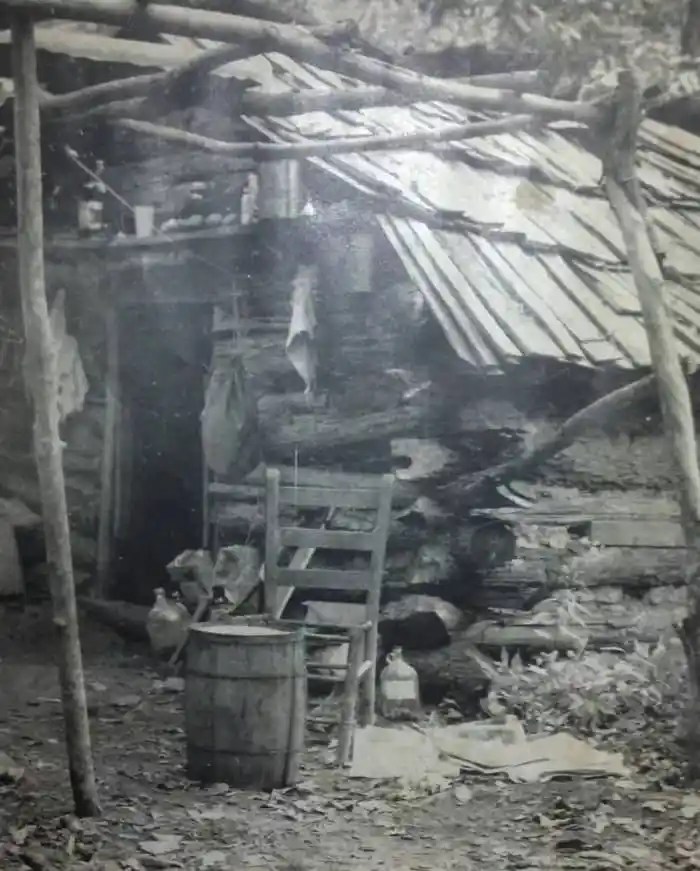
    Next month marks the 107th anniversary of a chilling tragedy that still haunts the quiet hills of the Smoky Mountains. In February 1913, the small community of Jonathan Creek was shaken by the disappearance of a two-year-old girl, Roberta Putnam, and the subsequent discovery of her body in a remote rock crevice. The story of Nance Dude, the woman at the heart of this dark chapter, is one that’s hard to forget, even after all these years.
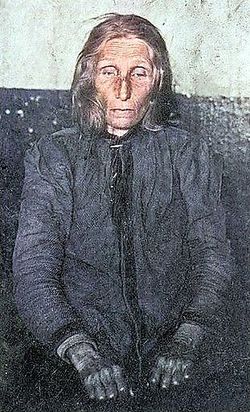
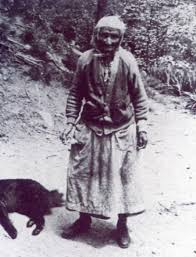
    In 1913, a child’s body was discovered in a rock crevice on Adtate Knob—a small, isolated spot in the mountains of western North Carolina. The child was two-and-a-half-year-old Roberta Putnam, and the discovery sent shockwaves through the tight-knit mountain community. It was the kind of tragedy that raised immediate questions: how did she end up there, and who was responsible for her death?

    The story that followed would become one of North Carolina’s most chilling and enduring mysteries.

    Nance Dude, a 64-year-old woman found herself at the center of the investigation. The cold winter morning in February 1913 had started like any other, but this day would be different. Nance had taken her granddaughter, Roberta, up the mountainside near their home, but she returned alone. Roberta was gone, and no one knew where. Days later, her body was discovered, hidden away in the rocks.

    What happened on that mountain, and why would Nance have taken her granddaughter’s life? The answers, it seemed, were not as straightforward as they appeared.

    In the months that followed, Nance was arrested, tried, and ultimately convicted of second-degree murder for Roberta’s death. She pled guilty. Her sentence was harsh: 15 years of hard labor. At 65, she entered prison, her face etched with age and hardship, but that was not the end of the story. In 1929, when Nance was 80 years old, she was paroled—her health and frailty perhaps a factor in the decision. She would go on to live another 24 years, dying at the age of 104.

    Yet, despite the conviction and the years of punishment, something about the story of Nance Dude never quite sat right with the people who lived through it.

    The folklore surrounding her crime began to spread, and like many legends, it took on a life of its own. Over time, details became distorted, and the truth became clouded by speculation. Some whispered that Nance was simply a poor, mentally unstable woman from the mountains, driven to madness. Others claimed that she had committed the unthinkable out of cold, calculated malice. But those closest to the case never fully believed it.

    As it turns out, there may have been more to Nance’s story than what met the eye.

    Throughout her trial, Nance had maintained a consistent account of events. She claimed that she had given Roberta to a traveling preacher—one who had apparently known Nance from her earlier days working with him, though the details are hazy. This preacher, she said, had brought her a child, one bitten by a rattlesnake. He was desperate for her to heal the child using her knowledge of mountain remedies, but despite her best efforts, the child died. As the story goes, the preacher, having no other choice, decided to leave Roberta with Nance. At that time, Roberta’s parents were reportedly struggling financially and had sent their daughter to Nance, instructing her to take the child to a state home.

    But in the most curious twist of all, Nance said she convinced the preacher to switch the dead child with Roberta. The dead child was left behind, hidden in the cave, where it was later found two weeks after Roberta’s disappearance. Some believe that the preacher had simply abandoned both children, leaving Nance to handle the aftermath, while others argue that Nance was trying to cover up a grave mistake.

    The truth remains uncertain. No one can ever know for sure what happened in the depths of Nance Dude’s mind or what led her to make the decisions she did on that fateful day. Was it an act of mercy gone tragically wrong, or was it something far darker? The complexities of her life and the story surrounding her crime defy easy explanation. In the end, it’s a tale that raises more questions than it answers.

    The mystery of Nance Dude continues to haunt the Smoky Mountains. While she lived a long life after her release from prison, her name is forever associated with one of the most chilling tales to come out of early 20th-century North Carolina. Perhaps in time, as more details are unearthed, the truth will emerge—until then, we’re left with the strange and tragic story of a woman whose actions, whether born of desperation or something darker, will never be forgotten.

    -Tim Carmichael

  • The Hermit of Iron Mountain: A True Story from Appalachia

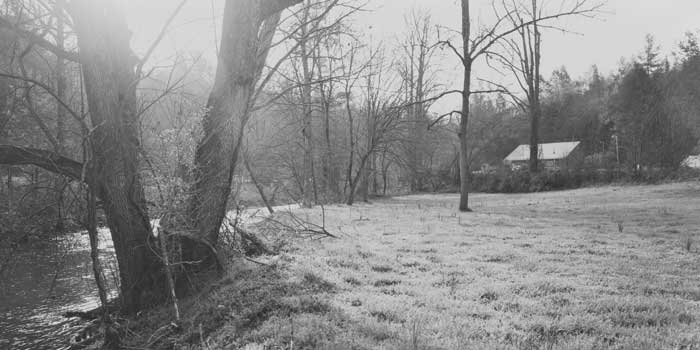
    Atop Iron Mountain rests Nick Grindstaff, born December 26, 1851, and passing away quietly on July 22, 1923. For forty years, he lived alone on a secluded ridge, nestled between Stoney Creek and Doe Valley, at the border of Carter and Johnson Counties.

    The reasons behind his isolation are unclear. Orphaned as a child, Nick was raised by relatives and became known for his intelligence, hard work, and reputation as a model young man. As an adult, he inherited the family farm, tending to it for a few years, but eventually, something changed. He sold the farm and headed west to Missouri. What happened there is lost to time—some say he married, only to lose his wife soon after; others claim his love married another. There are even stories that he was robbed, beaten, and left with nothing. Whatever the truth, the man who left Tennessee returned broken, choosing the solitude of Iron Mountain as his refuge.

    For the next four decades, Nick Grindstaff lived alone, far removed from the life he once knew. Twice a year, he would come down to the local general store, seeking only a few essentials—bacon, flour, and sometimes a haircut. His companions were few: a loyal dog named Panter, a cow that helped carry what little he needed, and a rattlesnake that he had somehow come to treat as a pet.

    In July of 1923, a friend, Baxter McEwen, stopped by Nick’s cabin to check in on him, only to find his body cold. Panter, ever protective, wouldn’t let anyone near his master. The legend says the dog stood guard, unwavering, until Nick was finally taken for burial. He was laid to rest with family and friends in attendance, and Panter was buried nearby.

    Two years later, the locals returned to build a monument to Nick, not out of pity, but out of respect for the quiet, mysterious man who had lived so long among them. They erected a chimney-shaped monument, crafted from mountain granite, which included some of Nick’s own pots and pans as part of its construction. The shopkeeper from the general store in Shady Valley, Tennessee, who had known Nick well enough to know what he bought twice a year, was the one who wrote the epitaph. Somebody had to, after all. Nick Grindstaff was a man who had lived a life no one could fully understand—a man with a story that, like the mountain itself, remained half-hidden, untold.

    And so the monument stands, silent but steady, a lasting tribute to a man who chose isolation, but was not forgotten. His story, simple yet poignant, remains etched in the stone for those who venture up the mountain to pause, reflect, and wonder at the life of Nick Grindstaff.

    “He lived alone, suffered alone, and died alone.”

    -Tim Carmichael

  • The Shelton Laurel Massacre: A Tragic Chapter in North Carolina’s History

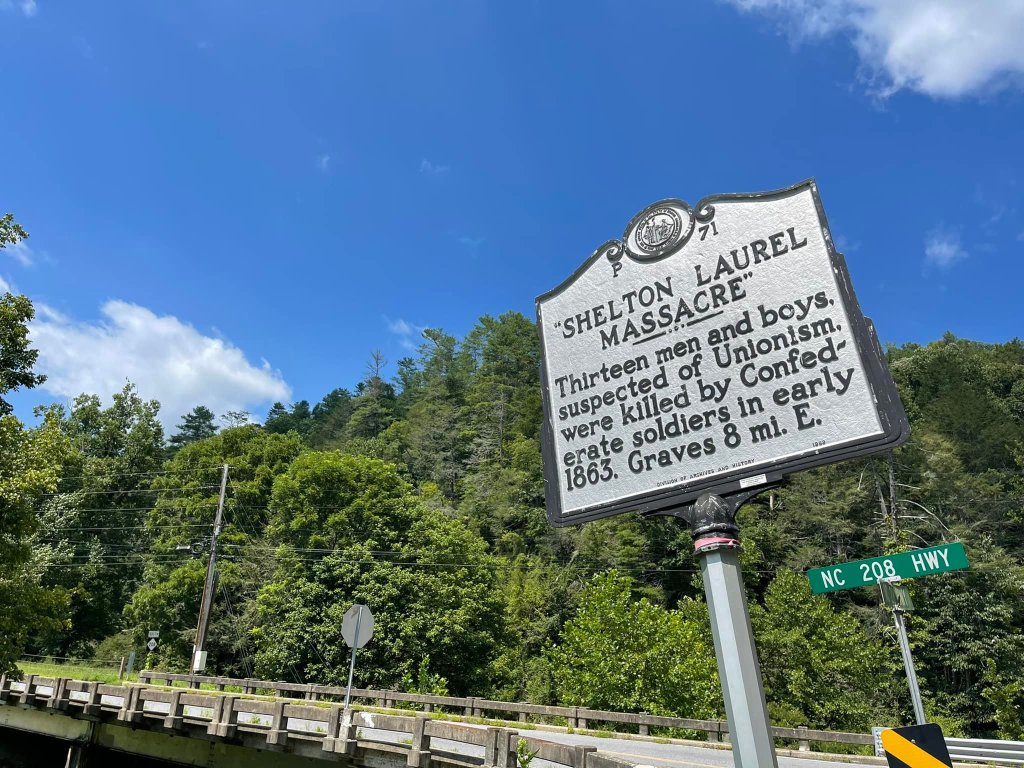
    The Shelton Laurel Massacre, which took place in January 1863 in the Appalachian mountains of Western North Carolina, is one of the darkest moments in the state’s Civil War history. Thirteen men and boys were killed by Confederate soldiers, and though this tragic event happened more than 160 years ago, the story has stayed with me my whole life. I grew up just a short distance from where the massacre occurred, and as a kid, I often heard about it from my parents, grandparents, and even at school.

    The massacre happened after a group of Union sympathizers, frustrated by the Confederate government’s refusal to provide them with salt, raided the town of Marshall. In retaliation, Confederate officers sent Lieutenant Colonel James A. Keith and his men into the Shelton Laurel area. There, they rounded up thirteen men and boys, ages ranging from 13 to 56, and marched them into the woods. They were forced to kneel, and after a brief hesitation, the soldiers executed them.

    The news of the killings spread quickly, and the event shocked not just the local community but the entire state. Governor Zebulon B. Vance condemned the massacre, calling it “shocking and outrageous in the extreme.” Yet, despite the widespread outrage, no one was ever held accountable for the deaths. The massacre became a part of Madison County’s painful history, and the term “Bloody Madison” has stuck ever since, reflecting the violence that the county would become known for in the years that followed.

    Granny Judy, the aunt of two of the victims, was left to carry out the heartbreaking task of transporting her nephews’ remains. Along with her children, she carefully loaded the damaged bodies onto an ox sled and set out on a two-mile journey up the valley. They made their way to a small Shelton family cemetery, where the remains were laid to rest in a mass grave on a lonely hilltop. Today, a granite marker stands at the site, memorializing those who were lost that fateful day.

    Growing up, I always felt a deep connection to this history. My grandparents would tell me stories about it, and at school, we learned about the massacre as part of our local history. It felt personal, like it wasn’t just something that happened in the past but something that still hung in the air. The massacre was a shadow that loomed over the community, shaping the way people thought about the Civil War and its impact on the region.

    Today, the graves of the victims are still there, though they’re on private land, and you need permission to visit. The site is quiet and peaceful, a far cry from the violent past it represents. I’ve been there a few times, and each visit is a reminder of the pain that these families endured. Six of the thirteen killed were members of the Shelton family, and in 1968, their descendants, William and Bud Shelton, placed new gravestones at the site, making sure their family’s story would not be forgotten.

    The massacre is more than just a piece of history—it’s something that still affects the people of Madison County today. The pain of that day is still felt by those of us who grew up hearing about it, and visiting the gravesite, though difficult to access, is a way to honor those who were lost. It’s a reminder of the costs of war and how those costs ripple through generations, shaping the community long after the battles have ended.

    -Tim Carmichael

  • Do Appalachian Seniors Vote Against Their Own Well-Being?

    In a region where many seniors live on a fixed income, the question of how political decisions affect their daily lives is more pressing than ever. With a population already struggling to make ends meet, many in Appalachia are finding that their voices at the ballot box might be working against their best interests.

    On January 21st, a new executive order was signed by the current president that removes a critical safeguard for lower prescription drug costs for seniors. For those living in Appalachia—where poverty rates are high, and many seniors are on a strict budget—this change could have devastating consequences.

    A Struggle to Make Ends Meet

    Many seniors in Appalachia live on a fixed income, such as Social Security benefits or pensions that may have been frozen for years. With costs of living rising, especially for essential items like food and utilities, these seniors often find it difficult to stretch their monthly income far enough to cover basic needs. The cost of prescription medications is another enormous burden.

    For seniors in rural areas, access to healthcare providers is already limited. Prescription medications, especially for chronic conditions like diabetes, heart disease, and high blood pressure, are not optional—they are necessary for survival. Unfortunately, the rising cost of these medications has made them out of reach for too many, forcing seniors to make painful choices between filling prescriptions and paying for other essentials.

    For those in Appalachia, where the average income is lower than the national average, these decisions can feel impossible. The recent executive order, which removes protections that help lower prescription drug costs, could mean that many seniors will have to pay significantly more for the medication they need to stay healthy.

    The Impact of Cuts to Social Safety Nets

    As if the situation wasn’t dire enough, recent statements from the newly established Department of Government Efficacy (DOGE) are only adding to the uncertainty. DOGE, a new department tasked with reviewing and reducing government expenditures, has proposed cutting Supplemental Nutrition Assistance Program (SNAP) benefits. For many seniors in Appalachia, SNAP is the lifeline that helps them put food on the table.

    With food prices rising, especially in rural areas, the loss of SNAP benefits would disproportionately affect those who are already scraping by. For seniors living on fixed incomes, this could force them to choose between buying food or paying for prescription medications and other necessary expenses. The result could be disastrous for health and well-being, as poor nutrition can exacerbate chronic health conditions that many seniors face.

    While the department argues that these cuts are necessary for fiscal responsibility, the reality is that reducing safety net programs like SNAP doesn’t just affect the economy—it impacts real people who are already vulnerable. Seniors in Appalachia, already struggling with high healthcare costs and limited access to services, will be hit hardest by these changes.

    Voting Patterns and the Consequences

    Many seniors in the region have voted for candidates who promised lower taxes, fewer regulations, and, in some cases, a reduction in government spending. However, these policies often have unintended consequences for the very people they are meant to help. While the idea of lower taxes or fewer regulations might seem appealing to some, it often comes at the cost of public services, healthcare programs, and social safety nets that are crucial for the most vulnerable populations, like the elderly.

    Many seniors in Appalachia have been voting based on these broader promises, but they may not fully grasp the long-term impact on their healthcare and economic well-being. By backing candidates who prioritize cutting government spending or limiting healthcare protections, they may be inadvertently voting against policies that would help them maintain their health and financial stability.

    The Impact of Rising Prescription Costs

    For those living on a fixed income, even small increases in prescription costs can have a major impact. A medication that previously cost $10 a month could suddenly jump to $50 or more. When a senior is already scraping by to pay for food, housing, and utilities, an extra $40 a month for medication is a huge burden. It may even force them to skip doses or forgo treatment altogether.

    In rural Appalachian communities, where the healthcare infrastructure is already fragile, this can lead to more serious health consequences down the road. Untreated conditions worsen, leading to emergency room visits or hospitalization, which in turn drives up medical costs for everyone.

    The executive order signed yesterday takes away a critical safeguard for those who rely on Medicare or Medicaid to help cover the cost of prescriptions. For many, this change means a future where their healthcare costs are even more unpredictable, and their ability to manage their health is further out of reach.

    A Growing Divide

    As the political landscape continues to shift, it’s clear that the interests of Appalachian seniors often get lost in the larger conversation. In a region where economic challenges already make daily life a struggle, it’s crucial that those in power take a more careful look at the long-term effects of their policies on vulnerable communities.

    For seniors in Appalachia, the issue isn’t about party lines—it’s about survival. Policies that promise tax cuts or leaner government programs often miss the mark when it comes to addressing the real, everyday needs of seniors. And without a serious rethinking of how these decisions are made, more and more Appalachian seniors will find themselves left behind, struggling to afford the basic care they need to live with dignity.

    The combined effects of the executive order on prescription drug costs and the proposed cuts to SNAP benefits highlight a stark reality: the policies designed to “save money” often place the greatest burden on those who can least afford it. For seniors in Appalachia, it’s a constant battle to make ends meet, and without immediate changes, that struggle is only going to get harder.

    -Tim Carmichael

  • Appalachia, A Hiker’s Paradise

    If you’re someone who loves the great outdoors, there’s no better place to lace up your boots than the Appalachian Mountains. Stretching all the way from Georgia to Maine, this stunning region is a hiker’s dream with miles and miles of trails that’ll take you through everything from lush forests to breathtaking mountain views. Let’s take a closer look at some of the best spots to explore in this beautiful corner of the world.

    The Appalachian Trail: A Classic Adventure

    No discussion of Appalachian hiking would be complete without mentioning the Appalachian Trail (AT). This iconic path stretches over 2,100 miles, and while not everyone is going to hike the entire thing (though some do!), it offers tons of options for day hikes or longer treks.

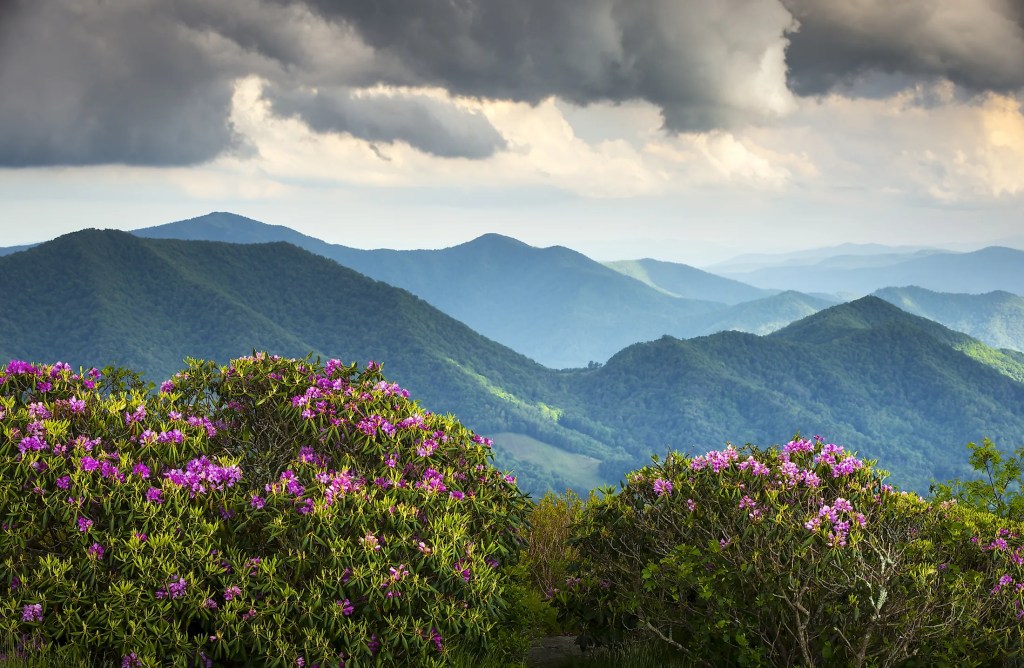
    I’ve hiked from Springer Mountain, Georgia, all the way to Hot Springs, North Carolina, and let me tell you, it was an adventure like no other. The AT takes you through some of the most beautiful stretches of wilderness in the entire Appalachian range. You’ll find yourself surrounded by thick forests, wildflowers, and maybe even a bear or two (don’t worry, they’re usually shy). One of the highlights is the view from Clingmans Dome, the highest point on the AT in the Smokies—standing above the clouds, with mountains stretching out as far as the eye can see, is something you won’t forget.

    The Blue Ridge Parkway: Scenic and Serene

    For a less intense but equally stunning adventure, consider the Blue Ridge Parkway. It’s often called “America’s Favorite Drive,” and it’s easy to see why. While it’s a drivable road, there are plenty of stops for short hikes that’ll give you a taste of the beauty the Appalachian region has to offer.

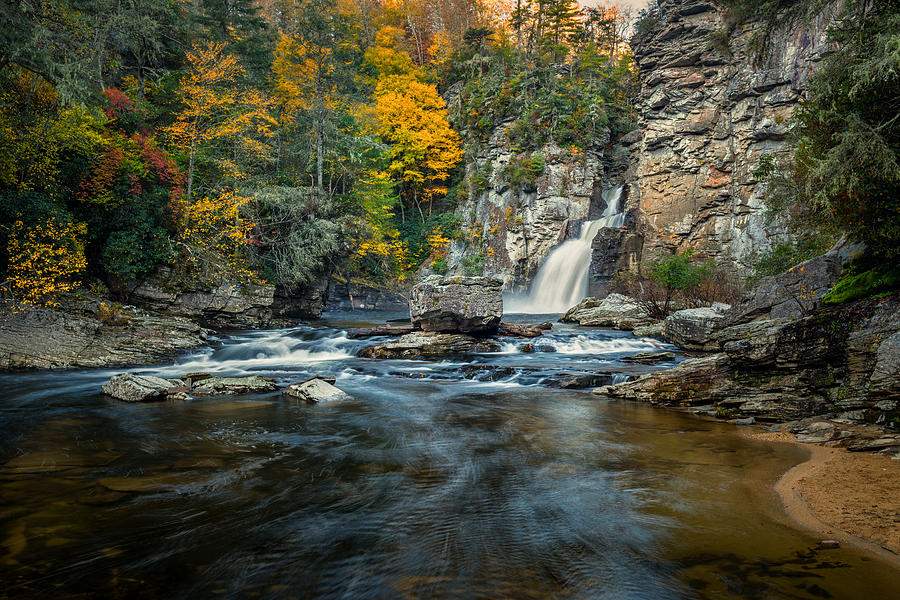
    Take a stroll on the Linville Falls Trail or check out the Humpback Rocks Trail for some great views without having to tackle a major trek. The Parkway is also a perfect spot for spotting wildlife, so keep your eyes peeled for deer, wild turkeys, and even the occasional bobcat.

    Roan Highlands: A High-Elevation Gem

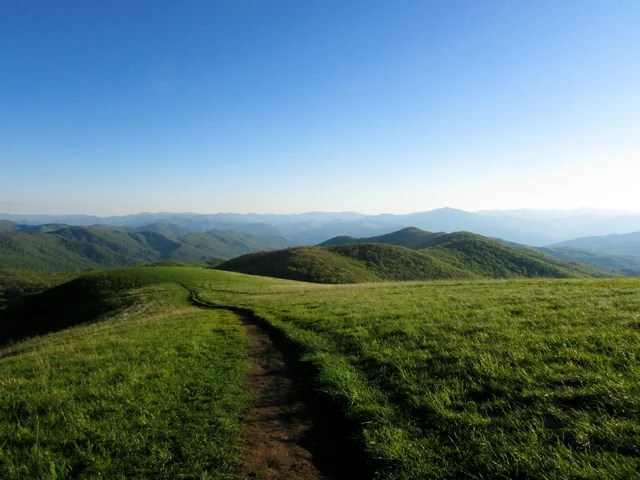
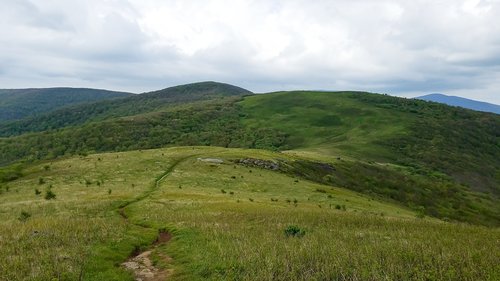
    For a hike that’ll make you feel like you’re on top of the world, head to the Roan Highlands, which are part of the Appalachian Trail. The Balds—mountaintop meadows—here are famous for their wide-open vistas, and during the summer, they’re bursting with colorful wildflowers. The views of the surrounding valleys and ridgelines are beyond words.

    One of the best hikes here is the 6.6-mile round trip on the Appalachian Trail, which takes you over the Balds and offers panoramic views of the surrounding mountains. The hike is tough but totally worth it for the views at the top.

    The Dolly Sods Wilderness: A Unique Experience

    If you’re looking for something a little different, the Dolly Sods Wilderness in West Virginia offers a truly unique landscape. Instead of the usual dense forests, you’ll find open, rocky meadows and boggy areas that give the place a wild, almost otherworldly feel. The trails here vary in difficulty, but all of them lead you through a landscape unlike any other.

    One of the best hikes in Dolly Sods is the 7.4-mile Blackbird Knob Trail, which takes you through dense forests, open meadows, and scenic overlooks. It’s a peaceful spot to escape the hustle and bustle of daily life.

    The Great Smoky Mountains: A Nature Lover’s Dream

    Last but certainly not least, we’ve got the Great Smoky Mountains, one of the most visited national parks in the country, and for good reason. The Smokies offer an almost endless supply of hiking trails—over 900 miles of them! Whether you’re looking for an easy day hike or a more challenging multi-day trek, there’s something for everyone here.

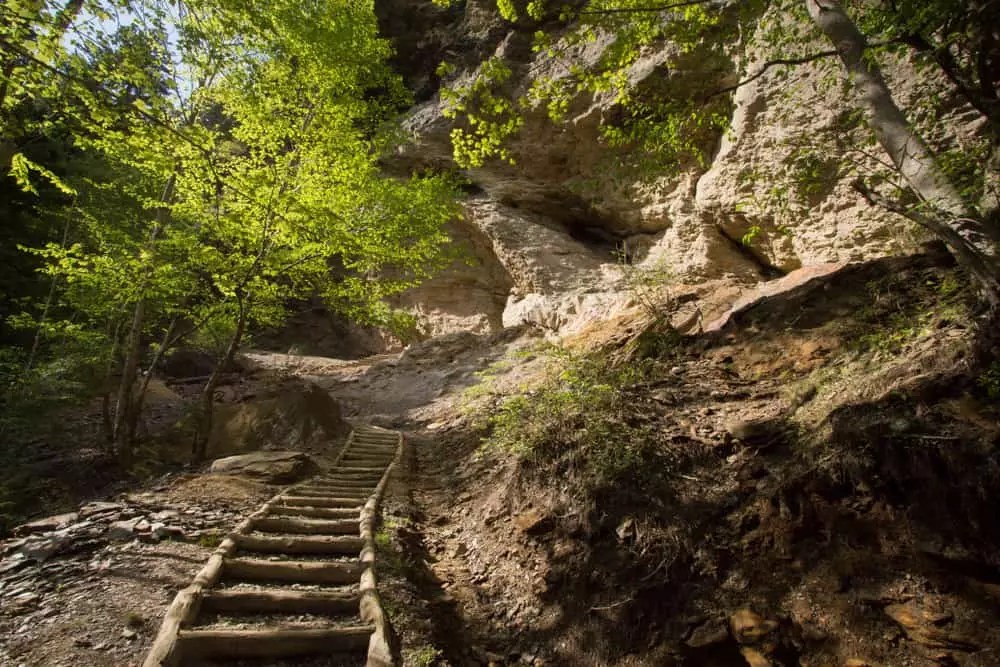
    I’ve hiked over 500 miles of trails in the Smokies myself, and every single mile has been worth it. One of the most popular trails in the park is the Alum Cave Trail. It’s about 5 miles round trip, and it gives you incredible views along the way, plus a cool rock formation at the top. If you’re feeling up for a more difficult challenge, the hike to Mount LeConte will push you, but the panoramic views from the summit make it completely worth it.


    Why Hike in Appalachia?

    What makes hiking in Appalachia so special? It’s not just the trails themselves but the sense of adventure and discovery. There’s something about these mountains that feels timeless—like you’re walking through history, breathing in the fresh air, and getting a glimpse of the world as it once was. Whether you’re in it for the views, the wildlife, or just a peaceful escape, the Appalachian region has something for every kind of adventurer.

    So, if you’ve been thinking about hitting the trails, the Appalachian Mountains should definitely be on your radar. Whether you’re hiking for a few hours or planning a multi-day trek, you’ll be surrounded by some of the most stunning natural beauty the U.S. has to offer.

    -Tim Carmichael

  • Blood of the Appalachian Mountains

    In these mountains, my blood runs wild,
    A fierce river that can’t be tamed or mild.
    Generations carved their names in stone,
    Their sweat and tears in this land alone.

    Through the hollers where the shadows fall,
    I hear their voices; I feel their call.
    A mother’s cry, a father’s prayer,
    Their hands still grip this earth, still there.

    They fought the storms and lived the pain,
    Under skies that poured like endless rain.
    They built from nothing, with love and grit,
    Their blood, their sweat, their bones, they lit.

    In every rock and in every tree,
    I find their spirits calling me.
    The earth they tread, I walk today,
    Their whispers guide me, lead my way.

    The fire they built burns in my chest,
    A flame that will never find its rest.
    Through nights too cold and days too long,
    Their strength flows in me, fierce and strong.

    I feel them in every breath I take,
    In every promise that I make.
    My Appalachian blood, it bleeds, it cries,
    In these mountains, beneath these skies.

    And though the years may come and go,
    Their love, their pain, it always grows.
    In every heartbeat, in every sigh,
    They live within me and will never die.

    In these mountains, my soul is bound,
    In the blood, the earth, the sacred ground.
    The past, the present, forever entwined—
    My family’s love is in my mind.

    -Tim Carmichael
  • The Handcrafted Quilts of Appalachia: A Stitch in Time, a Legacy of Women

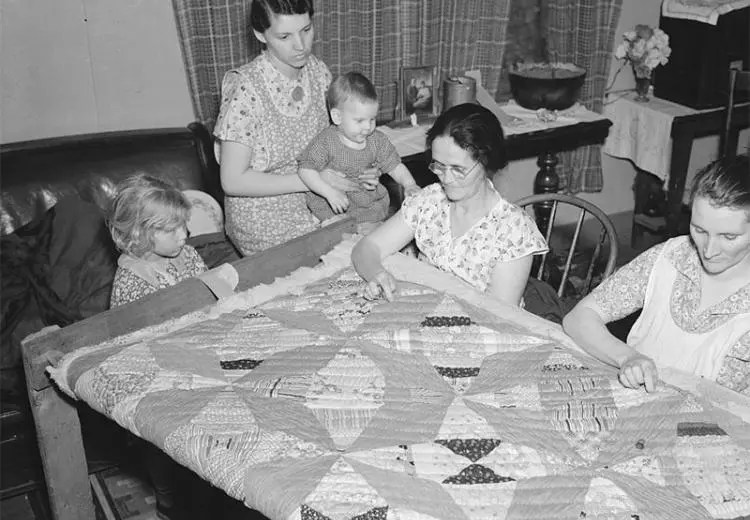
    For the women of Appalachia, quilting is more than just a skill—it’s a way to keep the past alive, hold on to family memories, and create something both beautiful and practical. In the mountain communities, quilts weren’t just blankets; they were pieces of a larger story.

    From an early age, girls sat with their grandmothers, mothers, and aunts, learning how to stitch, tie knots, and select fabrics for quilts that would be passed down through the years. It wasn’t just about making something to cover the bed—it was about learning the art of crafting something from nothing, of making do with what you had, and of carrying forward a practice that had been a part of Appalachian life for generations.

    Learning the Craft Early

    Quilting in these mountain homes was not something that could be picked up overnight. By the time girls were old enough to sit at their grandmothers’ feet, they were already threading needles and helping with simple tasks like picking out fabric scraps or tying off loose threads. Quilting wasn’t seen as a chore but as an essential part of growing up, a way to join the ranks of the women who had stitched their lives into these beautiful creations.

    The process wasn’t quick. Quilting took time—weeks, months, sometimes longer—but the women didn’t mind. There were no fancy tools or machines involved, just steady hands working with what was available. Scraps of old shirts, faded dresses, and worn sheets became the building blocks of something that would last. Nothing was wasted. Even the smallest scrap of fabric had its place in the quilt’s design.

    The patterns, too, held significance. Some were passed down through the years, while others were born from the imagination of the quilter. Popular designs like “Grandma’s Garden” and “Log Cabin” became staples of many homes, each square telling a piece of a larger story.

    Quilting as a Social Event

    While quilting was about skill, it was also about bringing people together. In the mountains, women would gather in each other’s homes to stitch together, sometimes working on the same quilt, other times starting new projects. These quilting bees weren’t just about making progress on the quilts; they were about community. As the needles moved in unison, the room filled with laughter, stories, and sometimes even tears. The younger girls listened intently, learning not just about quilting but about life and family.

    The slow pace of quilting gave space for conversation. There was no rush to finish. A quilt could take as long as it needed, and in that time, bonds were made, advice was shared, and memories were relived. Women worked together without hurry, knowing that the end result would be worth the time invested.

    A Tradition That Lives On

    Today, many of the quilts crafted in these Appalachian homes have become family treasures. Some are displayed in museums or preserved in heirloom boxes, but the tradition of quilting continues. Women of all ages still gather to sew, sharing the same stories and skills that have been passed down. The quilts that are made today are as much about honoring the past as they are about creating something new.

    These quilts are more than just blankets. They are reminders of the women who made them, of the patience and care that went into every stitch, and of the stories told while working. They reflect a time when creativity grew from necessity, and when women worked together to make their homes a little warmer, a little more inviting.

    In Appalachia, quilting is not just a skill; it’s a living practice, shaped by the hands of women who have kept it alive for generations. It’s a legacy woven together in every stitch, preserving the memories of the past while creating new ones for the future.

    -Tim Carmichael

  • The Real Cost of Tobacco Farming in Appalachia

    For generations, tobacco has been the backbone of Appalachian farming communities. For many families, it was more than just a job—it was a source of survival. But it was also incredibly hard work, with little reward.

    My family grew tobacco. It was grueling labor that spanned almost the entire year, and the payoff, when it came, was often underwhelming. From the backbreaking days of planting in the spring to the sweltering heat of the summer and the endless hours of curing and stripping in the fall, tobacco farming was a cycle of exhaustion. And after all that effort, the money you received from the tobacco warehouse was often a slap in the face.

    The story of tobacco farming in Appalachia is also one of exploitation. It’s easy to imagine the life of early mornings, wide-open fields, but for those who lived it, tobacco farming was far from idyllic.

    The Early Days: Planting and Growing

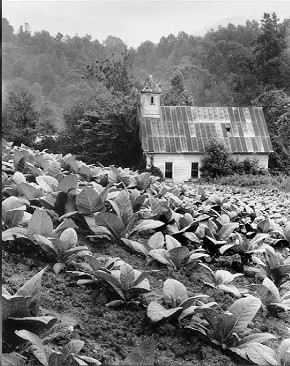
    It started in the spring, when we planted the young tobacco plants, known as “sets.” Each plant had to be carefully set in the soil, spaced just right so it had room to grow. The fields had to be tended to constantly: weeds needed to be pulled, irrigation checked, and pests managed. It wasn’t easy work. Tobacco is a delicate plant that demands constant attention, and even a slight misstep could result in ruined crops.

    The Fall Harvest: A Long Wait

    By fall, the tobacco plants had matured, and it was time for the most physically demanding part of the process: the harvest. Tobacco leaves had to be stripped by hand, a process that could take hours. Workers would carefully select the largest leaves and peel them off the stalk. After harvesting, the tobacco would be hung on rafters to cure in the barn. The entire process required long hours.

    Farmers weren’t just tending to crops; they were battling the weather—dealing with relentless heat, occasional heavy rainstorms, and sometimes even hail that could ruin the season’s work. Tobacco was unforgiving, and so were the days when it came time to sell.

    The Warehouse and the Bitter Payoff

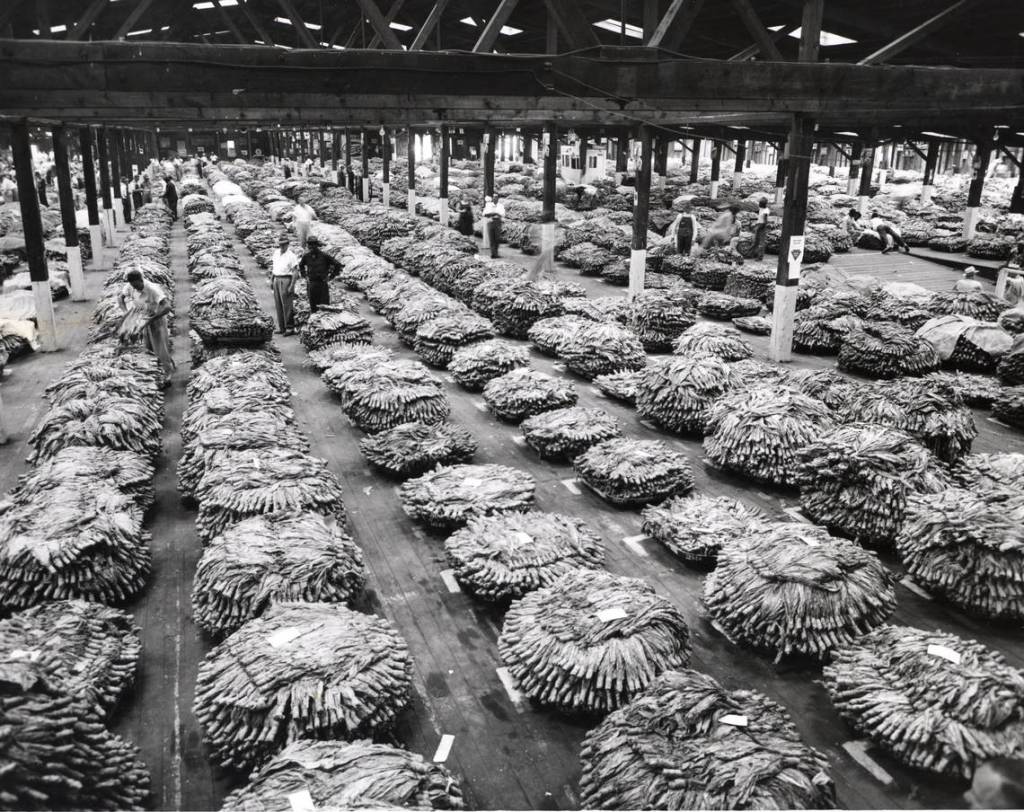
    After weeks of labor, the next step was hauling the tobacco to the warehouse. This was where the reality of tobacco farming hit hardest. You’d walk into the warehouse with your carefully cultivated crop packed onto tobacco baskets, only to find that the prices set by the tobacco companies were rarely enough to cover the costs of all that labor.

    The auction system at the warehouse was stacked against the farmers. Big buyers held the power. Small family farms didn’t stand a chance when the warehouses set their prices, and after paying for supplies, labor, and the transportation of the crop, there was often little money left over. For all the sweat and sacrifice, the final check rarely reflected the effort that went into the crop. You worked so hard, and yet it never felt like enough.

    Farmers would leave the warehouse frustrated, knowing the price they received for their tobacco didn’t come close to what it was worth.

    The Future of Tobacco Farming

    Tobacco farming in Appalachia is a tough and often thankless endeavor, but it’s also an integral part of the region’s history and culture. For many families, it provided a living. Yet, the cycle of exploitation continues, and with it, questions about the sustainability of tobacco farming in the 21st century.

    For farmers like my family, tobacco was always more than just a crop. It was a way to survive, to carve out a life in a place where opportunities were few. But as the years went by and the price of tobacco dropped, the reality set in. Farming tobacco became less and less viable. It’s a painful transition for many—watching a piece of the past slip away as larger forces outside their control reshape the landscape.

    Tobacco’s grip on Appalachia may be loosening, but for those of us who grew it, its memory lingers.

    -Tim Carmichael

  • Growing Up in Appalachia: A Life of Hard Work, Pride, and Natural Beauty

    Growing up in Appalachia, people often misunderstood us. To some, we were seen as backwoods, uneducated, or just plain strange. They called us “hillbillies” and other names, thinking they knew who we were. But they didn’t know what life was really like. Sure, we didn’t have the modern conveniences that many people take for granted, but what we had was something different — something that made us strong, close-knit, and proud of who we were.

    Every morning, we woke up to the sun rising over the mountains, and there was nothing like it. The view from our porch stretched for miles — green hills, endless sky, and a peace that you can’t find in the city. In the evenings, we’d sit outside and watch fireflies light up the fields below. Those tiny flashes of light in the dark were like magic, a simple beauty that people who live fast often miss.

    Life in the hills wasn’t easy, but it was good. We didn’t have fancy stores or the latest gadgets. We didn’t have running water inside the house, either. Instead, we carried it from the creek or the well, bucket by bucket. It wasn’t always convenient, but it kept us busy, and it taught us to appreciate the little things. There was a certain satisfaction in having that water after a long day of work, even if it was just to wash up or cook dinner. You never really think about water until you have to get it yourself, and once you’ve had to carry it, you don’t take it for granted.

    We didn’t get our food from the store. We grew it ourselves — beans, corn, tomatoes, potatoes. We spent hours in the garden, tending to what we’d planted. We raised our own meat — chickens, pigs, cows. It took time, sure, but it was worth it. We knew where our food came from. We saw it grow from seed, or we helped raise it ourselves. It wasn’t just about putting food on the table. It was about being able to provide for ourselves, about knowing we could take care of what we needed.

    farm view from where I grew up

    As kids, we didn’t have video games or the internet to entertain us. Our playground was the outdoors — climbing trees, swimming in creeks, building forts from rocks and logs. We had the freedom to run and explore without worrying about a screen or a schedule. We spent our days outside, living in the moment. And when we were tired from playing, we went home to a hot meal and a bed where we could rest and do it all again tomorrow. That kind of freedom, that kind of joy — it’s hard to find today, and we didn’t even realize how lucky we were to have it.

    Sure, we worked hard. But there was something special about it. It wasn’t the kind of work that made you feel drained at the end of the day. It was the kind of work that gave you pride. When you spent a day in the fields, you didn’t feel like you were working for someone else. You were working for yourself, for your family. Every task — whether it was hauling firewood, picking beans, or fixing a fence — had a purpose. There was always a goal, and when that goal was met, you could sit back and know you had done it with your own hands.

    And we took care of each other. If someone needed help, we were there. Whether it was a neighbor who needed help with their crops or a friend who was having a tough time, we all pitched in. There was a sense of community that you don’t always find in other places. People looked out for each other, not because they had to, but because that’s what you did. We shared what we had, and we made sure that no one was left behind.

    View from where I grew up

    People who call us names don’t see that. They don’t understand the strength it takes to live this way, to make do with what you have and still find joy in it. They don’t see that there’s a freedom in this kind of life — a freedom that’s rare. We didn’t have everything the world tells us we need to be happy. But we had what mattered. We had each other, we had our mountains, and we had the satisfaction of knowing that we worked for what we had.

    They can call us hillbillies, but to us, it’s just a word. It doesn’t define us. It’s part of who we are, but it doesn’t tell the full story. We’re proud of where we come from, proud of the lessons we learned and the life we had. It was a life that was simple, but it was also full of meaning.

    If you want to call us names, call us lucky. We were lucky to grow up in a place that gave us a life most people can’t even imagine. We may not have had all the luxuries, but we had something more — our mountains, our families, and a life that shaped us into who we are today. And that’s something no one can take away.

    -Tim Carmichael

  • Daniel Boone: The Appalachian Pioneer Who Became a Legend

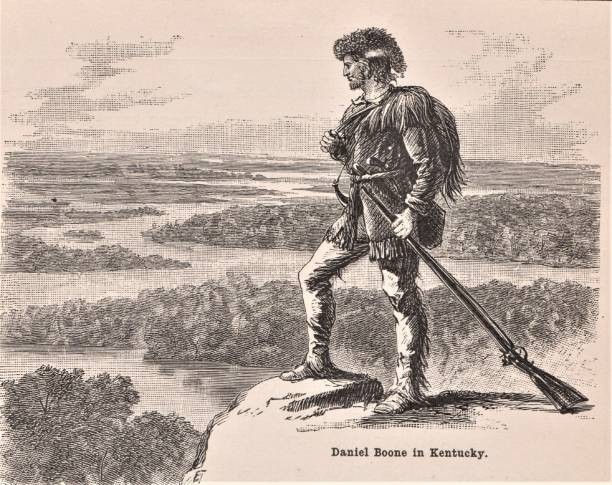
    When you think of the early pioneers who shaped America, Daniel Boone’s name is one that rises above the rest. His life story has become synonymous with adventure, exploration, and the rugged spirit of the Appalachian wilderness. While some of the tales about Boone have been stretched into legends, his true life is just as remarkable—and perhaps even more impressive.

    Born in 1734 in Pennsylvania, Daniel Boone grew up on the edge of the frontier, where his family was no stranger to the challenges of life in the wilderness. From a young age, Boone learned how to hunt, trap, and survive in the forests, skills that would serve him well in his later adventures. His family had been involved in settling new lands for generations, and Boone embraced this heritage, setting his sights on the vast, unexplored territories beyond the familiar.

    In the 1750s, Boone moved to North Carolina, but it was in the late 1760s that his most famous feat took place. Boone became one of the first people to blaze a trail through the Cumberland Gap—a natural passage in the Appalachian Mountains that would eventually become the main route for settlers moving westward. Kentucky, a vast and largely unknown territory at the time, was now accessible to thousands of settlers, all thanks to Boone’s persistence and resourcefulness.

    This path, known as the Wilderness Road, marked a turning point in American history. It opened up the land to new opportunities for settlers looking to make a life on the frontier. For Boone, it was a personal triumph—a testament to his skill as a woodsman and his determination to carve a place in the unknown.

    But Boone’s story wasn’t just about making trails through the mountains. His life was filled with hardships, dangers, and moments of great courage. He faced conflicts with Native American tribes, was captured and nearly killed by them, and was caught in the middle of the American Revolution. Throughout it all, Boone continued to push forward, helping establish communities and settlements in what would eventually become the state of Kentucky.

    As time passed, Boone’s adventures became the stuff of legend. Some stories of his life were exaggerated, turning him into an almost mythical figure. The man who once walked the forests and mountains of Kentucky was now the star of countless tales, each one grander than the last. Boone’s exploits—his escapes, his survival against the odds, his leadership—blended with the imagination of storytellers, cementing his place as one of the most famous frontiersmen in American folklore.

    Today, we still remember Daniel Boone as a symbol of the American frontier. His name has become a shorthand for the spirit of exploration and the drive to push beyond the known world. Whether or not all the stories about him are entirely true, it’s clear that Boone’s real life was just as remarkable as the legends that have been built around him. His journey across the wilderness is a testament to the courage and determination that helped build the early foundations of the United States.

    -Tim Carmichael