• My new book “Bloodroot and Coal Dust” was just published

    Some places get into your bones. Appalachia is like that—and Bloodroot and Coal Dust is a book that knows it by heart.

    This collection of poems doesn’t just talk about the mountains, the coal, the people—it lives there. These are poems that come from red dirt and long shifts underground, from porches where stories get passed down in quiet voices and strong coffee. They’re about the ones who stay, who remember, who carry the weight of the past and still manage to sing.

    There’s beauty here, but it’s not polished or perfect. It’s the kind of beauty that grows in rough ground—like bloodroot pushing up through frost, or a song hummed at the end of a hard day. These poems aren’t trying to impress anyone. They’re just telling it how it is.

    You’ll hear voices in this book—miners, mothers, old folks with good stories, lovers who’ve seen too much but still hope for more. There’s grit, yes. There’s grief. But there’s also tenderness, memory, and a deep, steady love for a place that doesn’t always love you back.

    Bloodroot and Coal Dust isn’t trying to explain Appalachia to the world. It’s just telling the truth for the ones who already know it in their bones—and maybe for the ones who want to understand it a little better.

    If you come from the hills, or if you’ve ever felt the pull of home in your chest, this book might feel like someone sitting down beside you and saying, “Let me tell you a story.” And it’s one worth hearing.

    -Tim Carmichael

  • New Appalachian Voices Challenge Stereotypes

    A growing number of writers, poets, musicians, and filmmakers from Appalachia are pushing back against long-held stereotypes about their home—one story, song, or frame at a time.

    Their work doesn’t dwell in nostalgia or frame the region as broken. Instead, it brings nuance, complexity, and contradiction to a place often reduced to caricature.

    “We’re not here to romanticize poverty or beg for attention,” one author said at a recent reading in Berea. “We’re here to be heard on our own terms.”

    The tradition isn’t new. Decades ago, writers like Breece D’J Pancake and bell hooks gave voice to Appalachian experience with raw, unsentimental truth. hooks, from Hopkinsville, Kentucky, wrote about race, feminism, and place with clarity that echoed across the country. Pancake’s short stories, filled with loneliness and grit, became cult classics.

    Today, the baton is being carried forward by a new generation.

    Silas House, Kentucky’s current poet laureate, writes fiction rooted in small-town life that explores climate, identity, and queerness. His latest novels have earned national acclaim—and pushed back on the idea that rural equals conservative.

    Crystal Wilkinson, a Black Appalachian writer and former poet laureate, has gained attention for her work spotlighting Black life in the region—a history often erased. Her poetry and fiction blend place, history, and voice in ways that are both intimate and political.

    Musicians like Tyler Childers and Rhiannon Giddens are reaching national audiences while singing about addiction, poverty, and resistance without glorifying any of it. Giddens, a Grammy-winning artist, uses her platform to talk about the overlooked contributions of Black and Indigenous people in Southern music.

    Independent filmmakers are telling their own stories too. In Whitesburg, a media collective is helping young people document everything from flooding to family life. Their short films have played at festivals from Louisville to New York.

    “This region isn’t a museum or a problem to solve,” said a filmmaker whose documentary on opioid recovery recently won a regional award. “It’s full of artists, thinkers, and builders who’ve been ignored too long.”

    At a time when Appalachia is often politicized in national media, these creators are offering something more honest. Their work doesn’t deny the region’s struggles—but it refuses to let those struggles define it entirely.

    “We’ve been written about for a hundred years,” the poet said. “It’s time we write ourselves.”

    A Quiet Glory

    This place don’t ask for much,
    just that you notice—
    how the fog holds the holler like a mother,
    how the creek keeps talking even when nobody listens.
    There’s holiness in a woodstove’s hum,
    in the porch light left on just in case.

    You won’t find the mountains braggin’.
    They stand quiet, like old folks
    who’ve seen too much to speak quick.
    They know sorrow’s just another kind of knowing.
    And that beauty don’t need ceremony.

    My uncle used to say
    every ridge has a memory tucked inside it,
    a coal seam that whispers names
    no one writes down anymore.
    But I still hear them—
    in the hush between whip-poor-wills,
    in the tobacco barn’s sigh.

    We make do.
    We hold fast.
    We carry our dead with us—
    not in grief, but in gratitude.
    Their songs come out in the way
    we stir the soup pot
    or hum low while hanging clothes.

    There is no polished ending here.
    No neat bow on the story.
    Just morning glories crawling up the porch rail,
    a half-split stack of wood,
    and a road that bends,
    always out of sight.

    Poem and story written by Tim Carmichael

  • The Spirit in the Appalachian Mountains, Modern Mysticism, Mountain Buddhism, and the Return to Ancestral Knowing

    In the hills and cities, something is shifting. Fewer people are walking through church doors. More are turning toward what feels real — not louder, not newer, but closer to the bone.

    A growing number are leaving organized religion behind, not because they’ve lost belief, but because the church stopped feeling like home. In too many places, pulpits turned into podiums. Sermons turned political. The sacred got tangled in party lines and power grabs. Some churches now echo more with culture war rhetoric than with compassion. People looking for peace are finding the door instead.

    New laws shaped around narrow interpretations of Christianity are adding to the fracture. Policies meant to enforce “biblical values” have started to push people out rather than pull them in. When government and religion blur, trust erodes. Many who once sat in pews now feel they’re being told how to live, who to love, and what to believe — not by spirit, but by statute. That weight sends people searching elsewhere.

    In Appalachian towns, meditation circles meet in barns or backyards. Folks call it Appalachian Buddhism. No sermons, no pressure. People sit in silence, breathing with the land around them. This way of practice doesn’t try to erase old traditions. It walks beside them. Many who show up still carry hymns in their heads. Now they carry chants too.

    Ancestral healing has come forward again. People want to know who they come from. They’re asking for names, cooking old dishes, digging into family histories that were boxed up or forgotten. Healing doesn’t always come from books or professionals. Sometimes it’s in knowing what your grandmother survived. Sometimes it’s in keeping her photo near your bed.

    Spiritualism, once a drawing-room curiosity, is finding space again. Mediums now go by different names — intuitive, energy reader, guide — but the heart of the work remains. People want to speak with the ones who’ve passed on. They want to believe those voices haven’t gone completely quiet. They gather in small rooms or over video calls. They light candles and pay attention to the air.

    In city neighborhoods, mysticism has taken new forms. Tarot decks sit on kitchen counters. Smoke from incense winds around charging phones. Birth charts get read at parties. Sound baths fill up faster than concerts. Some are skeptical. Many are sincere. People are seeking meaning wherever they can find it — and more importantly, where it speaks back.

    The old ways — church pews, creeds, one-size-fits-all belief — no longer hold everyone. So people build their own paths. They piece together bits of story, intuition, nature, memory. A little from the stars, a little from the earth. They light candles without waiting for someone else to say it matters.

    Younger generations are leading much of this. They look for truth, even when it’s messy. They want practices that hold up under pressure. Some find it through ritual, some through music, some in silence. They build altars from what they have — thrift store trays, matches, dried flowers, a photo or two.

    This shift has nothing to do with trends. It’s about meaning, about spirit. Not the kind written down for someone else, but the kind that rises up when everything else falls flat. What’s growing now doesn’t ask for permission. It moves on its own.

    -Tim Carmichael

  • Blood Between the Ridges the True Appalachian Story of the Hatfields and McCoys

    The trouble started over a hog. That’s what they’ll tell you, and that’s what’s written down in most places. But what started before the hog was land, pride, and the kind of family loyalty that don’t bend even when it ought to. The Hatfields were from West Virginia, over on the Tug Fork of the Big Sandy River. The McCoys were on the Kentucky side. Back then, being from one side or the other meant something. It meant everything.

    Randolph McCoy, they called him “Ole Ran’l,” had himself a hog, and he swore it had been taken by Floyd Hatfield. Floyd said it was his hog, had the notches in the ear to prove it. So, they went to court—justice of the peace, local kind of court. The man who ruled in favor of the Hatfields was a Hatfield himself by blood, which didn’t help the McCoys feel any better about losing. It didn’t help that a McCoy who testified for the Hatfields was later found shot dead in the woods. Some say the hog didn’t matter at all. But it was enough to let things roll downhill.

    Devil Anse Hatfield was the head of his clan. Tall, hard, smart. He made money off timber and knew how to use a rifle. He wasn’t the devil they made him out to be, but he wasn’t the kind of man to take a slight. Not from a McCoy. Randolph had his pride too. A Bible man, he’d pray with the same hands he’d use to pull a trigger. When one of his boys was found courting a Hatfield girl, there was no soft music. There was hate.

    In 1882, it broke open. Ellison Hatfield, Devil Anse’s brother, was stabbed and shot during an Election Day fight with three of Randolph’s sons. Ellison lingered for a few days before dying. Then the Hatfields took justice into their own hands. They tied the McCoy boys to pawpaw bushes and shot them dead by the river. It wasn’t law—it was revenge. And the law, when it did come, came like a storm.

    For years, the feud dragged on. The families burned each other’s homes. Shot each other in the dark. Children died. Women too. In 1888, Frank Phillips rode in with a posse, hunting Hatfields. Some were hanged, others imprisoned. The courts got involved across state lines, and that just made things worse. Governors argued. The country started watching.

    When it was done, the war had claimed more than a dozen lives. Maybe more, depending on who you ask. Devil Anse had a statue made of himself before he died. He found the Lord in his last years, got baptized in a creek he used to fish. Randolph lived quiet and broken. His wife lost her mind after two of her kids were murdered in their sleep. You don’t come back from that.

    People like to laugh about the Hatfields and the McCoys now, like it was some cartoon hillbilly thing. But it was blood. It was grief that didn’t leave. It was boys killed before they could be men. It was mothers burying sons with no peace to be found. And it was a lesson, if anybody was looking for one: family can lift you, but it can also drown you if you don’t know when to let go.

    They had a truce in 2003, the descendants of both families. Signed it up formal. Smiles and handshakes. But the real peace came long before that, when the fighting stopped because there was nothing left to burn.

    -Tim Carmichael

  • Mother’s Day, Without Her

    Today, the world hands out flowers,

    wraps pink ribbon around the pain.

    But none of it feels made for me—

    not with you gone, not with this ache.

    I walked past the card aisle,

    eyes blurring at words you’ll never read.

    “Best Mom,” they said.

    But how do I write that

    when you’re no longer here to hold the page?

    The house is too quiet,

    no smell of your cooking,

    no soft scolding when I forget to eat.

    I keep looking for signs—

    a bird on the sill,

    your laugh in a stranger,

    the scent of cinnamon and old roses.

    Grief is loud in a silent room.

    I want to call—just to hear the ring.

    I want to press my face into your sweater,

    to say “thank you” better than I ever did.

    You were my map.

    Now I’m walking through May,

    barefoot in broken glass,

    I am still learning how to miss you

    in a world that keeps moving

    like you were never the center of it.

    But you were.

    And you still are.

    And this day will never not be yours.

    -Tim

  • Grace Moore: The Tennessee Nightingale

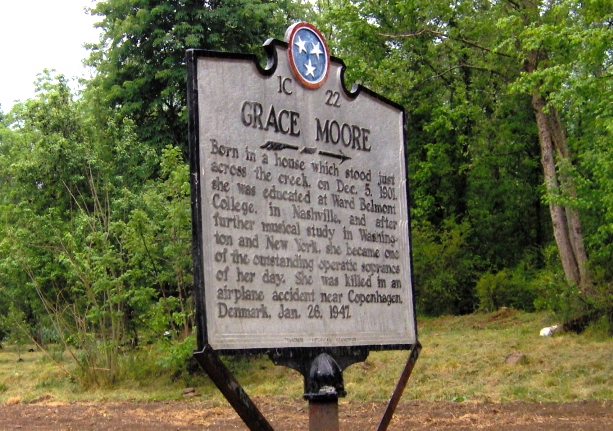
    Grace Moore was born Mary Willie Grace Moore on December 5, 1898, in a small settlement called Slabtown, near Del Rio in Cocke County, Tennessee. Her family moved when she was very young, and she grew up in Jellico, a coal-mining town in the Cumberland Mountains near the Kentucky border. Life there was hard, and the music people made was often their only luxury — church hymns, fiddle tunes, and the ballads passed down through generations.

    Grace showed an early interest in singing, and her family encouraged her. After finishing high school, she studied music briefly in Nashville, then moved on to Washington, D.C., and finally to New York City. To support herself, she sang in cafés and clubs while taking voice lessons. Her early performances weren’t glamorous, but they got her noticed.

    By the 1920s, Grace was appearing in musical revues on Broadway. She had charm and presence, but what set her apart was her voice — a full lyric soprano that could carry emotion as easily as it carried a note. She wasn’t content with Broadway. She wanted opera.

    So, she went to Paris to study. That move changed her life. She trained intensively and soon began performing in European opera houses. Critics noted not only her technical skill but her dramatic ability — she didn’t just sing roles, she inhabited them.

    In 1928, she made her debut at the Metropolitan Opera in New York in Puccini’s La Bohème. It was a major breakthrough. Over the next several years, she became a regular presence there, singing roles in Tosca, Manon, and Louise, among others. She earned respect in a field not known for welcoming outsiders — especially not women from small Appalachian towns.

    Hollywood came calling in the 1930s. Grace made several films, including One Night of Love, which earned her an Academy Award nomination for Best Actress — a rare honor for an opera singer. She managed to balance her opera career and film work, something few could do well. She also recorded extensively and toured internationally.

    Despite her success, she stayed connected to her roots. She visited Tennessee often, spoke fondly of her upbringing, and used her influence to bring classical music to wider audiences. During World War II, she performed for American troops and participated in USO tours. She believed music should lift people up, not just entertain them.

    Grace Moore was awarded several international honors during her life, including France’s Légion d’honneur. She was also given ceremonial titles by the state of Tennessee and received recognition from arts organizations across Europe and America.

    She married Spanish actor Valentín Parera in 1931. They divided their time between the United States and Europe, maintaining homes in places like Connecticut, Cannes, and Los Angeles.

    On January 26, 1947, Grace Moore was killed in a plane crash outside Copenhagen, Denmark. She was 48 years old. She had just performed in the city the night before. Among those who died in the crash was Prince Gustaf Adolf of Sweden. Her remains were returned to Tennessee, and she was buried in Chattanooga.

    Today, a historical marker stands at her birthplace in Del Rio. It’s a quiet tribute to a woman whose voice traveled farther than most people from her part of the world could ever dream. She was known as “The Tennessee Nightingale,” and for good reason: she never stopped singing, and she never stopped representing the place that made her.

    Grace Moore proved that you don’t have to be born in a palace to belong on a grand stage. Sometimes, you just need a voice — and the will to use it.

    -Tim Carmichael

  • Appalachia: Coal to Cosmos, the True Story of Katherine Johnson

    Long before rockets ever pierced the sky, the town of White Sulphur Springs, West Virginia, raised a girl who would help put a man on the moon. Katherine Johnson, quiet and quick, was a child of the Allegheny Mountains and a daughter of segregation. She had a gift for numbers—sharp, instinctive, and relentless—and a determination that no locked door or closed mind could keep out.

    She graduated college by eighteen. By the 1950s, she was working at NASA’s predecessor, surrounded by engineers and mathematicians, most of them white men. They called her a “computer,” back when the term meant a person who computed figures by hand. But when the stakes rose—when astronauts’ lives depended on a margin of error no wider than a strand of hair—it was Johnson they turned to. John Glenn asked for her by name. He didn’t trust the machine until Katherine Johnson checked it.

    Her story isn’t just one of exceptional talent. It’s a reminder of what Appalachia has offered the country, beyond coal and music and hardship. Johnson was one of many who quietly built the future from the back rooms of a region that’s often been overlooked.

    Just south of where Johnson grew up, across state lines in northern Alabama, engineers at Huntsville’s Marshall Space Flight Center were shaping the giant Saturn V rocket that would carry the Apollo missions skyward. Appalachia’s hills and valleys, once carved up for their coal seams, were now shaping something new: the architecture of spaceflight. From Tennessee to western Pennsylvania, Appalachian labor fed into NASA’s supply lines—machine shops, tech schools, and mineral mines all played their part.

    Even the landscape itself got involved. In Green Bank, West Virginia, far from highways and cell towers, scientists built one of the most powerful radio telescopes on Earth. The mountains there act as a natural shield, blocking out interference. It’s one of the quietest places in the country, on purpose. In that stillness, astronomers listen for signals from deep space, hunting for answers to questions older than any mine or machine.

    Appalachia’s connection to space isn’t something you’ll find in textbooks. It’s tucked into archives and oral histories, remembered by families whose parents or grandparents worked on components they didn’t fully understand, for missions they watched on black-and-white televisions. It’s in the voice of a retired machinist from Charleston who recalls shaping parts for propulsion systems but never quite grasping what they were for until he saw the news.

    Today, space looks different. The rockets are private, the missions commercial, and the headlines don’t come as often. But the region’s role hasn’t disappeared. Rare earth minerals, tucked into the mountains like veins of old coal, are once again drawing interest. Data centers are quietly opening in old industrial towns where the power grid is strong and the land is cheap. And in classrooms from eastern Kentucky to southern Ohio, young students—many of them first-generation college hopefuls—are studying aerospace engineering, computer science, physics.

    They know the name Katherine Johnson now. Her portrait hangs in libraries and STEM centers. She made it possible for others to imagine a path out of the hollers and into orbit.

    Appalachia is still a region shaped by labor. The work has changed, but the hands haven’t. And somewhere between the coal and the cosmos, the country is starting to notice. Not just what the region has endured, but what it’s given.

    -Tim Carmichael

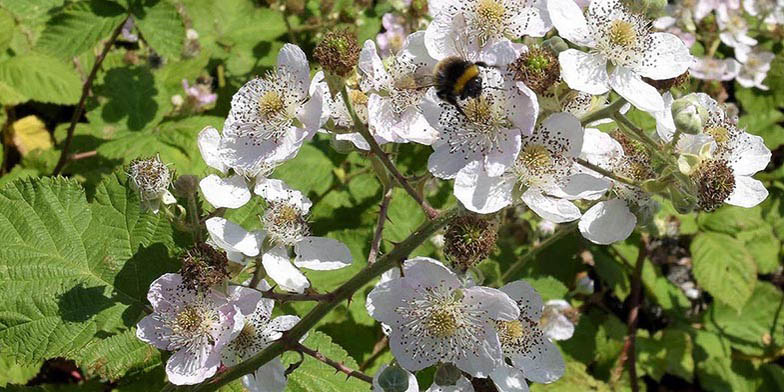
  • Blackberry Winter: A Cold Snap with Deep Roots in Appalachian Life

    In the Appalachian Mountains, spring doesn’t arrive in a straight line. It comes in fits and starts, with warm days followed by sudden drops in temperature. Just when it seems safe to put the winter coats away and start planting the garden, the cold creeps back in. One of the most well-known of these spring cold snaps is called Blackberry Winter.

    This late-season chill usually shows up in May, right around the time wild blackberry bushes start to bloom. It’s not a full return to winter, but it’s cold enough to slow things down—sometimes cold enough for frost. For generations, people in the mountains have watched for it and planned around it.

    Old-timers knew that Blackberry Winter was just one of several “little winters” that happen after the first real warmth of spring. There’s Redbud Winter, Dogwood Winter, Locust Winter—each named for what’s blooming when the chill rolls through. These names weren’t just poetic. They were part of how people kept track of the seasons before weather forecasts and climate charts. You didn’t need a calendar—you needed to know your land.

    Blackberry Winter served as a kind of warning: hold off a little longer before planting tender crops. If you put beans in the ground too early, you might lose them to a late frost. Many folks would wait until after Blackberry Winter passed before setting out tomatoes or corn. It was a way of paying attention to what the world around you was saying.

    This pattern hasn’t changed much, even if fewer people now grow their own food. The blackberries still bloom, and the cold still shows up for a few days. In some years it’s barely noticeable; in others, it can send a strong shiver through the valleys and up the hollers. Farmers still mention it, gardeners still respect it, and people who grew up here still remember it.

    There’s something grounding about it, too. In a world that moves faster every year, Blackberry Winter is a reminder that some things don’t change. The hills keep their own rhythm. The land doesn’t care about what month it is—it moves when it’s ready.

    And so, when the blackberries start to flower and the wind picks up again, people in Appalachia take note. It’s time to hold off a little longer. Time to keep the extra blanket on the bed. Blackberry Winter has arrived, just like it always does.

    -Tim Carmichael

  • Coopering in Appalachia: A Dying Craft

    Coopering—the making of wooden barrels, buckets, tubs, and casks—was once a common and essential trade throughout Appalachia. For centuries, it was part of daily life. If a household needed to carry water, store food, churn butter, or age liquor, it relied on the work of a cooper.

    The process is exact. Staves, usually of white oak, are split, shaped, and fitted together without nails or glue. They are bound with iron or wooden hoops and tightened through heat and pressure until watertight. Every piece must be precise. If the grain is wrong or the cut is off, the barrel leaks. Coopering isn’t decorative. It’s functional, demanding, and built on repetition, muscle memory, and judgment.

    Tools are specific to the trade: drawknives, hollowing planes, crozes, sun planes, and hoop drivers. Most are hand tools, often passed down or made by the coopers themselves. Modern machinery can produce barrels faster, but not with the same understanding of the wood’s behavior or the purpose behind the object.

    For a long time, Appalachian families depended on the cooper’s work. General stores sold dry goods in barrels. Farmers stored apples, salt pork, or beans in them. Liquor was transported in charred oak casks, and butter was made in hand-crafted churns. Each of these required slightly different construction, and the cooper had to know how to adjust the shape, size, and seal for the job.

    Today, the trade is nearly extinct in the region. Plastic and metal replaced wood in nearly every setting. Skills that once passed from father to son, or neighbor to apprentice, were interrupted by changes in industry and economy. Few people still make these objects by hand, and fewer still make a living doing it.

    There is interest from hobbyists and historical interpreters, but learning the craft takes more than weekend workshops. It demands time, mistakes, and patience. Without new apprentices willing to commit years—not months—the knowledge will vanish when the last working hands are gone.

    What disappears with coopering isn’t just a method of building containers. It’s a way of working with wood that understands function over form. It’s a connection to land, resourcefulness, and community. Coopering was never about art for art’s sake. It was about need. And for generations, it filled that need with skill and quiet pride.

    Now, it hangs by a thread.

    -Tim Carmichael

  • God, Guns, and Ghosts: The Complicated Soul of Appalachia

    There’s a version of Appalachia you’ve seen on postcards and documentaries—the “poor but proud” caricature with bluegrass on the breeze and old folks rocking on porches. That version is a lie, or at best, a half-truth. The real Appalachia is harder, deeper, wilder. It’s a place full of contradictions that don’t resolve cleanly into slogans. It’s where you’ll find radical hospitality next to hardened suspicion, where church sermons hit like punk shows, and where America’s myths run straight into its consequences.

    Ask anyone who’s really from the hills, and they’ll tell you: Appalachia is not a monolith. It stretches from southern New York to northern Mississippi, cutting through thirteen states, but its cultural heart beats in eastern Kentucky, West Virginia, western North Carolina, and parts of Tennessee. That’s coal country. That’s holler country. That’s where generations have lived and died working the seams of the earth.

    The first lie outsiders tell about Appalachia is that it’s ignorant. That’s the national shorthand—”hillbillies,” “inbreds,” the butt of jokes by people who wouldn’t last a week on a ridge without cell service. But ignorance doesn’t look like someone who didn’t go to college. Ignorance looks like the think tanker who talks about “uplifting” Appalachia without ever having spent a night in a trailer with roaches and a hole in the floor. It looks like the foundation that funds a literacy program but ignores the strip mine that’s poisoning the town’s only water source.

    Appalachians know they’re being watched. They’ve been studied like insects since the 1960s, when Lyndon B. Johnson declared a War on Poverty from the front porch of a Kentucky shack. That porch is still famous; the poverty is still there. Turns out, poverty doesn’t end with a photo op. It mutates. Coal left, and with it went pensions, jobs, dignity. What’s left? A thousand versions of the same story: Walmart, opioids, Dollar General, meth labs, and preachers promising deliverance from a God that doesn’t always seem to listen.

    But don’t pity Appalachia. That’s the second mistake.

    Because for every boarded-up downtown, there’s a family raising hell and kids and chickens on the same land their grandparents owned. For every overdose, there’s a recovery group meeting in a church basement, passing the hat and telling the truth. For every politician who came through kissing babies and left nothing behind, there’s a community organizer patching together something that works—a harm reduction van, a homegrown newspaper, a soup kitchen that serves hot meals with no strings.

    Appalachia is not a place without resistance. It is a place of resistance. Go back far enough and you’ll find the coal wars—the Battle of Blair Mountain, the largest armed uprising in American labor history. Miners shot at hired guns with stolen rifles and homemade bombs. They wore red bandanas, the original “rednecks,” demanding a fair shake from companies that saw them as disposable. You think resistance is new? Appalachia invented it.

    And then there’s religion, and here’s where things get complicated. Faith in Appalachia is not soft-focus, stained glass stuff. It’s blood, fire, and prophecy. It’s snake-handlers and foot-washers. It’s holy rollers and doom-preachers. And for all its excesses and scars, faith is one of the only things in this region that has truly built community. It’s the church that pays your light bill when you’re down. It’s the old lady who bakes cornbread for your cousin’s funeral even though she hasn’t spoken to your family in ten years.

    But faith can also be a bludgeon. It’s been used to chase queer kids into the closet or out of town. To tell women to keep silent and submissive. To condemn the very people Jesus would’ve dined with. And yet, those same queer kids often still love the gospel music. They still know the scriptures by heart. That’s Appalachia, too. You can’t box it in. You can’t sanitize it for your nonprofit grant application.

    What makes it all harder is that most of the country only notices Appalachia when it can use it. Media outlets trot it out when they need a morality play—Trump’s win in 2016, for example, was endlessly pinned on “angry white Appalachia,” as if Black and brown folks weren’t also part of this region. As if 80% of the counties that flipped red hadn’t already been abandoned long ago by both parties. The coal miners were useful until the coal ran out. Now they’re a punchline. The opioid crisis didn’t matter until it spread to suburban white kids.

    If you’re from here, the feeling you live with is betrayal. Not drama—fact. Betrayed by the coal companies that poisoned the streams and then left. Betrayed by the government that took everything and returned little. Betrayed by media that either romanticize or ridicule, never understand.

    But the reason people stay—or come back—isn’t because they’re trapped. It’s because they love this place. They love the land: the woods that feel sacred, the kind of quiet you can hear in your bones, the smell of honeysuckle and woodsmoke. They love the people: rough-talking, sharp-humored, stubborn as sin. Love in Appalachia isn’t sentimental—it’s earned. You prove it by showing up, hauling wood, sharing tomatoes, helping someone dig a new well when the last one went dry.

    Love here is practical. It’s painful. It’s political. It’s not polite, but it’s fierce.

    So no, don’t come to Appalachia looking for a “simpler time.” Don’t come looking for redemption or ruin. Come to listen. Come with respect. Come knowing this place owes you nothing. And maybe then, if you’re lucky, it’ll offer you something rare: the kind of honesty that burns and heals all at once.

    Because that’s Appalachia.

    And it remembers everything.

    -Tim Carmichael