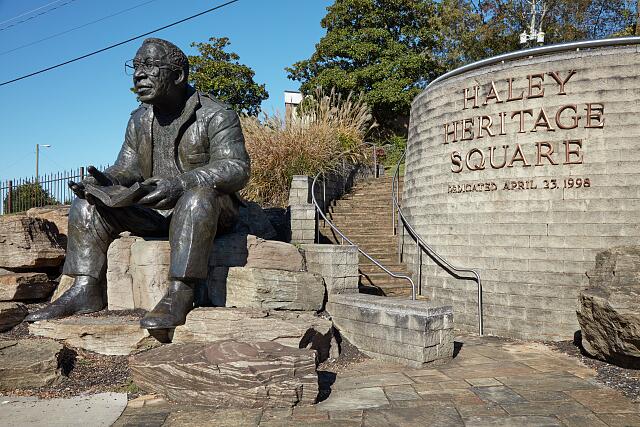
In Knox County, a decision about a single book set off a chain reaction that moved quickly from library shelves to school board meetings and then into a wider regional conversation stretching across Appalachia.
The book at the center of it all, Alex Haley’s Roots: The Saga of an American Family, had been part of Knox County Schools’ library collections when it was pulled under Tennessee’s Age Appropriate Materials Act. For a brief period, the removal stood as an administrative compliance step with state law. Within days, the decision was reversed and the book returned to circulation.
That reversal did not silence the matter. Instead, it shifted attention toward how the decision had been made in the first place and what it revealed about how schools interpret state guidelines when literature intersects with history.
Roots carries a particular weight in Tennessee. Alex Haley, born in Ithaca and raised in Henning, traced his family lineage through generations and continents, producing a work that became both literary landmark and cultural touchstone. In Knox County, that legacy added an additional layer of sensitivity to the decision, especially given the book’s focus on slavery, ancestry, and survival.
When the removal became public, reactions formed quickly across the community. Some residents supported strict adherence to state law, while others argued that applying those standards to Roots risked stripping context from a work built around slavery and historical memory. Several community members also raised concern about perception, saying the decision carried implications beyond policy and risked signaling something about which histories were being prioritized in public education.
At public meetings, the discussion often returned to a shared concern about how students encounter difficult history and who determines where the boundaries lie. The disagreement reflected less a single book than a system of review shaped by state legislation, local interpretation, and political pressure.
Superintendent Jon Rysewyk reinstated the book following public response, restoring it to school shelves. The move reflected an effort to stabilize the situation while the district reviewed how the original decision had been carried out.
The school board soon began discussing possible amendments to the Age Appropriate Materials Act, pointing to concerns that the law’s language leaves too much room for inconsistent interpretation. Critics of the current framework argue that such systems can produce uneven outcomes in practice, especially when applied to literature dealing with slavery, race, and historical trauma.
Within Tennessee, the episode became part of a larger pattern. School districts across the state have faced growing pressure over library content, with decisions often shifting rapidly as laws, enforcement, and public response collide. In that environment, even temporary removals carry weight far beyond their duration.
In Appalachia, the conversation took on another dimension. The region’s storytelling tradition, built on oral history, family memory, and lived experience, has long treated narrative as a form of preservation. In that context, Roots aligns closely with a cultural instinct to preserve difficult history rather than filter it.
Across East Tennessee and surrounding Appalachian communities, that tradition has included a wide range of voices and experiences, including African American communities whose histories are deeply woven into the region’s development. The debate over what belongs in school libraries therefore intersects with broader questions about which histories are centered in public education and which are minimized through process.
Educators describe the challenge as navigating between instructional standards and historical complexity. The impact of those standards depends heavily on how they are written and enforced and on who has authority to interpret them at the district level.
In Knox County, what began as a compliance action became a public controversy, then a policy review, and finally a reminder of how quickly educational governance can shape access to historical literature.
Even after Roots returned to shelves, the procedures behind that decision remain under scrutiny. The system itself, how materials are flagged, reviewed, and reinstated, has become part of the story.
What remains is a community still working through how policy translates into practice and how those decisions shape the historical narratives available to students across Appalachia.
-Tim Carmichael
 Echoes of Appalachia
Leave a comment