• The Twelve Days of Christmas in Old Appalachia

    In the mountain communities of old Appalachia, Christmas unfolded across twelve days rather than a single date circled on a calendar. Time moved differently in the hollows and along the ridgelines, shaped by weather, distance, and human need. The season began quietly and lingered into the new year, allowing families and neighbors to gather when roads allowed and storms eased. These twelve days carried meaning rooted in faith, survival, and the deep desire for connection during the darkest part of winter.

    Life in the mountains demanded patience. Homes sat scattered across valleys and hillsides, separated by creeks, forests, and steep climbs. A visit that looked short on a map could require days of walking or riding, especially in December when snow and ice transformed trails into hazards. Because travel proved uncertain, the Christmas season stretched outward, making room for late arrivals and unplanned gatherings. Celebration adapted itself to the land rather than forcing the land to bend.

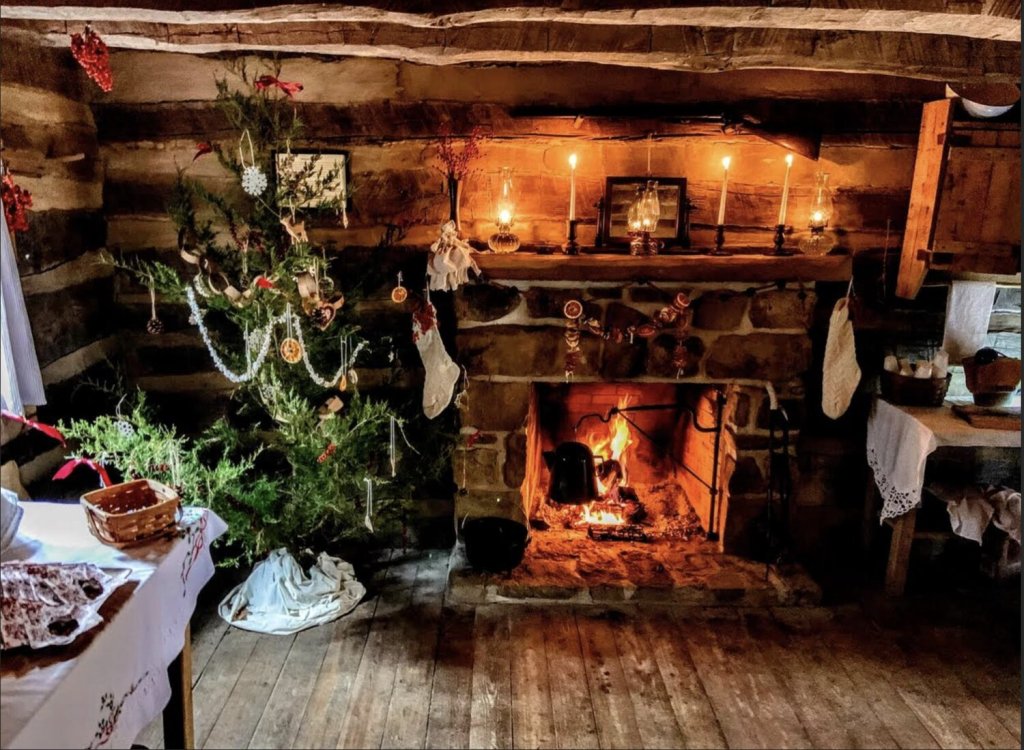
    The first day of Christmas arrived with careful preparation inside each household. Families readied their homes with what the mountains provided. Evergreen branches lined doorways. Holly and berries added color against rough wooden walls. A tree might stand in the corner, trimmed with handmade decorations or left plain, valued for its presence rather than ornament. Everything served a purpose, nothing wasted.

    As evening settled, a candle often appeared in the window. Its flame shone softly through the cold night, visible from the road or trail below. That light carried a clear message. Anyone traveling after dark could find rest here. The door remained open. Food and warmth waited inside. The candle represented faith, renewal, and welcome all at once, offering guidance through both physical and spiritual darkness.

    Across the next days, visitors came when weather allowed. Some arrived from nearby farms, others from miles away. Snow slowed progress, swollen creeks delayed crossings, and steep paths tested endurance. Each arrival felt meaningful, earned through effort. People greeted one another with embraces, laughter, and relief. Stories flowed easily, warmed by firelight and shared hardship.

    Singing formed the heart of these gatherings. Carols flowed through cabins and spilled into the night air. Songs passed from generation to generation, sometimes altered by memory or shaped by local experience. Voices blended without concern for polish. Music filled the space between people, reinforcing bonds and lifting spirits during long winter nights.

    Hospitality defined the season. Guests never arrived empty handed, though offerings remained simple. A jar of preserved fruit, a small sack of cornmeal, or a carved trinket expressed care rather than wealth. Hosts responded in kind, sharing what they had without calculation. Food stretched to feed all present, stews simmered slowly, bread baked fresh, and plates passed freely.

    During these days, doors opened often. Travelers sometimes announced themselves with playful calls, expecting laughter and small tokens of welcome. Children joined in the excitement, learning generosity through experience rather than instruction. Gifts held symbolic value. An orange tasted like sunlight. A piece of candy brightened the day. A pine cone decorated with care carried the beauty of the surrounding forest indoors.

    The exchange of gifts broke down distance between households. No one stood apart. Every visitor became part of the gathering. Humor and lighthearted tricks added surprise, reminding everyone that joy thrived even during hardship. Rules remained flexible, shaped by circumstance rather than tradition written in stone. What mattered most was participation.

    Faith wove silently through the twelve days. Prayer occurred around tables and firesides. Scriptures might be read aloud when someone able to read was present. Religious leaders visited when possible, though many families spent years without such visits. Christmas therefore held added weight, marking sacred time within isolated lives. Belief centered less on ceremony and more on shared understanding.

    Church gatherings took place when weather cooperated. People traveled long distances to attend, sometimes staying overnight with nearby families. These meetings strengthened community ties and renewed spiritual commitment. When travel proved impossible, worship continued at home through song and reflection. Faith adapted itself to circumstance, remaining present even when formal structures fell away.

    As the days passed, work paused when possible. Fields lay dormant under frost. Livestock still required care, wood still needed cutting, yet rhythms slowed. Evenings lengthened, inviting conversation and storytelling. Elders shared memories of earlier winters, of journeys made and storms survived. Children listened wide eyed, absorbing lessons without realizing it.

    The extended season allowed relationships to deepen. Visits stretched across hours or days. People lingered rather than rushing onward. Meals blended into one another, punctuated by laughter and quiet moments alike. The pace reflected the understanding that connection required time, especially in a land where survival depended on cooperation.

    Nature played an active role throughout the twelve days. Winter pressed close, reminding everyone of vulnerability. Snow muffled sound, ice glittered on branches, and wind moved through gaps in the mountains. Inside, fires burned steadily, tended with care. The contrast between cold outdoors and warmth within reinforced gratitude for shelter and companionship.

    As the calendar turned toward the new year, celebration continued. The final days carried a sense of transition. The season acknowledged both ending and beginning. People reflected on losses endured and hopes carried forward. The promise of renewal felt tangible, grounded in the cycle of seasons and the resilience of the land.

    The twelfth day arrived without finality. Rather than marking an abrupt end, it gently closed the season. Gatherings grew smaller as people returned home, carrying memories and renewed bonds with them. Candles still burned in windows, though visits slowed. The world outside remained cold, yet something within felt sustained.

    These twelve days shaped identity. They reinforced values of welcome, patience, and shared responsibility. Life in old Appalachia offered little room for excess, though it allowed space for meaning. Celebration grew from necessity and choice, woven into daily existence rather than set apart from it.

    Long after the season ended, its influence lingered. Neighbors remembered kindness shown during winter nights. Songs echoed in memory. The candle in the window remained a symbol even when unlit, representing the assurance that help waited within reach. The twelve days taught lessons carried forward into the rest of the year.

    In old Appalachia, Christmas existed as an experience rather than an event. It unfolded slowly, shaped by a labor of love, faith and fellowship. The twelve days offered room for people to arrive, to belong, and to find warmth together. Through simplicity and openness, the season revealed its enduring power, lighting the long winter with shared humanity.

    -Tim Carmichael

  • Appalachian Christmas Traditions That Still Shape Appalachia Today

    Across the hills and hollers of Appalachia, Christmas has long carried a spirit shaped by self reliance, deep faith, and a fierce devotion to community. Long before store bought decorations and electric lights reached many mountain homes, families created their own celebrations using what the land and their hands could provide. These Appalachian Christmas traditions grew from isolation, hardship, and shared joy, forming customs that feel timeless and deeply human. Even today, many of these practices continue to define the season in Appalachia, offering a window into a culture that values memory, storytelling, and togetherness above all else.

    One of the most distinctive elements of an Appalachian Christmas is the observance of Old Christmas, celebrated on January 6th. This tradition traces back to calendar changes that shifted Christmas Day forward, leaving many mountain communities holding onto the earlier date tied to the Feast of Epiphany. For generations, families gathered again after December 25th had passed, sharing food and fellowship as though Christmas lingered longer in the mountains. Stories passed down speak of animals bowing in prayer at midnight on Old Christmas, a belief rooted in folklore and reverence for the natural world. Children listened closely, hoping to glimpse a quiet miracle in the barn or pasture as the night deepened.

    The decorations of an Appalachian Christmas tell their own story. Instead of glittering ornaments from distant factories, homes were adorned with greenery gathered from nearby woods. Holly branches brightened doorways, pinecones lined mantels, and strings of popcorn were carefully threaded by hand, often with children sitting near the hearth. These decorations carried more than beauty. They reflected a way of life centered on using what was available and finding joy in simple materials. Candles placed in windows glowed against the winter dark, offering warmth, welcome, and guidance to travelers crossing mountain roads after sunset. The light symbolized hospitality and hope, a quiet promise that shelter and kindness waited inside.

    Handmade gifts formed the heart of Christmas giving in Appalachia. Woodworkers carved toys from scraps of timber, shaping whistles, animals, and small wagons. Corn husk dolls dressed in bits of cloth became treasured keepsakes for children. Knitted socks, mittens, and scarves warmed loved ones through harsh winters. These gifts held meaning far beyond their appearance. Each stitch and carving carried time, care, and skill, strengthening family bonds and reinforcing the value of self sufficiency that defined mountain life.

    Food stood at the center of every Appalachian Christmas gathering, filling kitchens with rich aromas and anticipation. Among the most beloved dishes was apple stack cake, a towering dessert made by stacking thin layers of apple filling between tender cakes. Often prepared communally, neighbors brought layers to be assembled together, turning baking into a shared celebration. Folklore credited the cake with healing powers, a sweet symbol of nourishment for body and spirit. Fruitcake, corn pudding, mincemeat pie, and homemade candies rounded out the table, alongside hearty meals of country ham, turkey, biscuits, and gravies that reflected both abundance and gratitude.

    Music filled Appalachian homes throughout the season, echoing traditions passed down through generations. Carols rang out in familiar harmonies, often sung without instruments or accompanied by fiddles and banjos. Singing was communal and participatory, drawing everyone into the moment. Alongside these gentle melodies existed a more raucous custom known as serenading. Groups of friends traveled from house to house after dark, singing loudly and sometimes creating a joyful clamor meant to drive away evil spirits. Gunshots or fireworks might punctuate the songs, startling sleepers and announcing the presence of visitors. Hosts responded with laughter, food, or drink, welcoming the noise as part of the celebration.

    One of the most dramatic Appalachian Christmas customs was anvil shooting. This practice involved placing gunpowder between two anvils and igniting it, sending the top anvil skyward with a thunderous boom. The sound rolled through valleys, announcing Christmas and chasing away unwanted spirits from the old year. While dangerous and rare today, anvil shooting remains a powerful symbol of Appalachian boldness and belief in marking sacred moments with unforgettable spectacle.

    Drinks also played a role in warming bodies and spirits during the season. Boilo, a spiced whiskey punch infused with citrus, honey, and spices, became a hallmark of holiday gatherings in certain Appalachian regions. Shared among friends and neighbors, it fostered conversation and laughter, reinforcing bonds that carried families through winter months. These communal moments mattered deeply in a landscape where survival often depended on cooperation and trust.

    Superstitions and lore wove through every aspect of an Appalachian Christmas. The Christmas fire held special importance, believed to protect the home and bring good fortune in the coming year. Some families cast lots or observed signs in the weather, seeking hints of what the future might hold. These beliefs reflected a worldview shaped by uncertainty and respect for forces beyond human control. They also added mystery and depth to the season, inviting reflection and storytelling by firelight.

    Storytelling itself formed one of the richest Appalachian Christmas traditions. Elders shared tales of past winters, ancestral hardships, and moments of unexpected grace. Ghost stories and legends mingled with accounts of faith and resilience, captivating listeners young and old. Through these stories, history lived on, ensuring that lessons and values endured even as times changed.

    Community remained the foundation of every celebration. Large feasts welcomed extended family, neighbors, and travelers alike. Doors stayed open, and hospitality flowed freely. In regions where distances were great and winters harsh, Christmas offered a rare chance to gather, share resources, and reaffirm connections. Candles glowing in windows symbolized this openness, guiding anyone who might need warmth or company toward a friendly hearth.

    Today, many Appalachian families continue to honor these traditions, adapting them to modern life while preserving their essence. Handmade decorations still appear beside electric lights, and apple stack cakes still rise on holiday tables. Old Christmas remains a cherished observance in some communities, reminding people that time moves differently in the mountains. Music, storytelling, and shared meals continue to bind generations together, carrying the spirit of Appalachia forward.

    An Appalachian Christmas reflects more than seasonal celebration. It reveals a culture shaped by history, and an enduring commitment to one another. Through handmade gifts, shared food, spirited music, and deep-rooted beliefs, the people of Appalachia created a holiday rich with meaning and resilience. These traditions continue to shine as a testament to the power of community and the beauty found in living close to the earth, offering inspiration far beyond the mountain ridges where they were born.

    -Tim Carmichael

  • Christmas Secrets of Appalachia and Mountain Traditions That Refuse to Go Away

    Appalachia carries a reputation shaped by misty ridges, stubborn independence, deep faith, plus stories passed mouth to ear across generations. Nowhere does that heritage shine brighter than during Christmas. In mountain hollers, river towns, coal camps, plus farm valleys, the season arrives heavy with memory, ritual, plus meaning. These customs grew from hardship, faith, humor, plus community bonds strong enough to endure isolation, poverty, plus time itself. Christmas in Appalachia tells a story far richer than tinsel or store-bought cheer.

    The culture of the region formed through a meeting of peoples whose lives intertwined across centuries. Scots-Irish settlers brought ballads, Bible-centered worship, plus a fierce loyalty to kin. Cherokee traditions shaped respect for the natural world, seasons, plus spiritual signs. Pennsylvania Dutch neighbors added foodways, preservation skills, plus folk beliefs that slipped easily into mountain life. Christmas became a mirror of this blended heritage, reflecting survival, generosity, plus shared joy.

    Small churches sit at the heart of many Appalachian communities. On Christmas Eve, these buildings glow with warmth even during bitter cold. Families arrive early, boots crunching gravel, coats smelling of wood smoke. Inside, hymns echo off plain walls. Toward the close of service, a familiar ritual unfolds. Children line up to receive treat bags, usually folded from brown school lunch sacks. Inside sit oranges, apples, mixed nuts, sometimes chocolate or a candy cane. The contents feel simple, though the meaning runs deep.

    This practice traces back to the Great Depression, when money ran thin across the mountains. Church members wanted every child to feel remembered during Christmas. Fruit counted as a luxury during winter months. Nuts carried protein plus energy. A small sweet offered delight beyond daily fare. That bag symbolized care from the whole community. Many adults still recall the weight of that sack in small hands, plus the quiet pride of carrying it home.

    Apples hold a special place within Appalachian kitchens. Orchards thrived across hillsides where soil permitted. Drying apples allowed families to store fruit through winter months. From this practice came a dessert woven tightly into regional lore: the apple stack cake. Thin cake layers pile high, separated by spiced apple butter made from dried apples soaked plus cooked down slowly. The cake rests for days, allowing moisture to travel through each layer, transforming a humble stack into something rich.

    Folklore calls this dessert the poor man’s fruitcake. Stories claim it once appeared mainly at weddings. Guests arrived carrying a single layer, baked at home. The bride assembled them into one towering cake. A tall stack hinted at popularity, hospitality, plus strong community ties. Christmas tables later welcomed this cake as a symbol of abundance born from cooperation.

    Christmas timing itself followed a different rhythm in Appalachia. For many families, January sixth held greater importance than December twenty-fifth. This date, known as Old Christmas or the Feast of Epiphany, aligned with the older Julian calendar. When calendars changed, many mountain residents kept the earlier date. Over time, celebration stretched across twelve days, beginning December twenty-fifth plus ending January sixth.

    These days brought music, storytelling, dancing, plus visits from house to house. Groups traveled roads after dark, singing loudly, ringing cowbells, beating buckets, firing guns into the air to announce arrival. The noise startled residents, though laughter usually followed. Hosts offered food, drink, plus warmth. This tradition carried echoes of ancient European customs, reshaped for mountain life. Rowdiness came with good humor rather than malice.

    Old Christmas Eve held special power within folk belief. Stories collected by regional writers describe animals gaining speech at midnight. This moment followed the Holy Spirit’s arrival upon Earth, marked by elder bushes blooming out of season. Curious listeners sometimes slipped into barns or pastures, hoping to overhear wisdom from livestock. Elders warned against it, hinting that such knowledge carried danger for human ears.

    Moving through Appalachian towns during December, one sight stands out to newcomers: candles glowing in nearly every window. This custom served practical purposes long ago. Travelers relied upon candlelight to navigate dark roads during winter nights. A lit window signaled welcome, shelter, plus food for weary visitors. Over time, the candle became a symbol of hospitality, faith, plus remembrance. Today, electric versions often replace flame, though the meaning remains.

    Food preservation shapes mountain Christmas as much as worship or song. Jarring plus canning remain common across the region. Cellars fill with jewel-toned jars holding fruit butter, jelly, pickles, plus relishes. On Christmas Day, families often open a gifted jar before the main meal. A block of cream cheese joins crackers on the table. Sweet spreads like pear butter, elderberry jam, huckleberry preserves, grape ghost pepper jelly offer a preview of supper while stories flow.

    Superstitions weave through Appalachian Christmas like threads in a quilt. Some families believe a cat meowing on Christmas Day invites evil spirits throughout the coming year. A rooster crowing on Christmas Eve promises protection. Keeping the hearth fire burning throughout Christmas Day guards against misfortune. Children once burned letters to Santa within those flames, trusting unseen fairies to carry wishes skyward through the chimney.

    These beliefs reflect a worldview where spiritual forces mingle freely with daily life. Nature, animals, fire, plus seasons carry meaning beyond surface appearances. Christmas magnifies that awareness, placing families within a larger story shaped by ancestors, faith, plus land.

    Across Appalachia, Christmas traditions vary from hollow to hollow, ridge to ridge, household to household. Some families emphasize church services, others favor music or food. Many blend all three. What unites them lies deeper than any single custom. These practices strengthen bonds, pass identity forward, plus offer continuity amid change.

    Modern life brings faster roads, digital screens, plus shifting values. Still, many Appalachian Christmas traditions endure. Treat bags appear in church basements. Apple stack cakes rest beneath foil. Candles glow against winter dusk. Jars of jelly open beside cream cheese. Stories of Old Christmas travel across dinner tables. Through these rituals, Appalachia remembers who it has been, who it remains, plus why community matters.

    Christmas within these mountains carries grit plus grace in equal measure. It honors scarcity transformed into generosity, isolation reshaped into belonging, hardship softened by humor plus faith. Appalachia holds tight to these traditions, carrying them forward year after year, lighting the dark with memory, warmth, plus shared celebration.

    -Tim Carmichael

  • Appalachia Is Reaching a Breaking Point and Washington Acts Like Everything Is Fine

    Daily life through the Appalachian Mountains brings rewards as well as a series of trials that widen during periods of rising expenses. Many communities face employment shifts aging infrastructure inconsistent access to medical care and economic isolation that intensifies every time prices rise for supplies that households require each week. A fuller view of present hardship reaches beyond a few categories and reveals a landscape shaped by decades of uneven investment. The region displays a spirit of endurance that guides families through each season although endurance alone rarely eases the financial weight many households experience.

    Heating oil presents one clear challenge. A rise of eleven percent affects every winter budget. Mountain cold lingers for long stretches and older dwellings lose warmth through thin walls and outdated windows. Families extend blankets over doorframes and seal gaps with plastic film while hoping each degree of indoor warmth holds through the night. A delivery of heating fuel that once carried families through a full month now lasts a shorter span. Savings shrink while fear grows each time meteorologists warn of approaching cold. Elders living alone depend on deliveries arranged by children who may live several counties away. People gather firewood when possible although many dwellings depend solely on heating oil systems installed decades ago. These older systems require regular service and replacement parts that may rise in price well beyond a household’s capacity to pay.

    Gasoline for vehicles reveals a contrasting trend. Over recent months pump prices have eased somewhat delivering short term relief that carries real value across these hills. Communities remain widely spaced. Clinics schools grocery stores and job sites sit miles away from many dwellings. A drop in vehicle fuel expenses improves access. Parents can travel farther for employment opportunities that lie outside their home county. Families can visit medical offices that were once inaccessible due to fuel expenses. Youth can reach activities that enrich their experience and build confidence. While this decline provides relief it rarely offsets the cumulative effect of rising prices in other areas. Still the region welcomes any measure that eases the daily travel required by mountain living.

    Grocery expenses shape daily choices as well. Coffee prices rise twelve percent. Bags that once fell easily within the weekly budget now require careful planning. Coffee carries a long heritage across these hills. Many families gather around a kitchen table each morning for a cup before beginning chores. Workers drink it before drives along winding roads to construction sites sawmills and service roles. Rising prices push families toward cheaper blends or smaller bags. Flavor changes and lower quality mark these choices. The increase affects not only morning routines but also the comfort that shared cups bring during gatherings among friends and kin.

    Egg prices show a decline which helps families shape affordable meals. Eggs support households through breakfast lunch and dinner. A pan of scrambled eggs serves as a quick option when time and money run thin. While this decline offers comfort it remains only one item in a larger grocery picture marked by rising expenses across bread dairy produce and meat. Families revive older food traditions by canning vegetables and fruits from small gardens. Shelves fill with jars of beans tomatoes and peaches. Exchanges at churches and community centers supply produce for households hit hardest by rising costs. This culture of sharing softens the impact although it cannot fully relieve the pressures that grow each month.

    Employment across Appalachia remains fragile. Coal once fueled strong wages but the industry shifts continually leaving workers uncertain about future income. Sawmills and small factories still operate though many rely on thin margins that leave employees vulnerable during economic swings. Service roles often pay modest wages and fewer hours than families require for stability. Income fails to match rising expenses. Households combine multiple roles with long commutes between counties. Travel time consumes energy and reduces opportunities for rest. Workers find themselves exhausted yet still unable to meet monthly expenses due to increases across housing fuel groceries and medical care.

    Medical access presents another layer of hardship. Hospitals across the region struggle with limited staff aging facilities and rising supply costs. Clinics serve wide territories and require long drives. A family already stretched thin by heating fuel expenses may postpone appointments. Small conditions escalate into serious health challenges. Pharmacies in isolated areas close earlier than those in larger cities making it difficult for workers to pick up prescriptions after long shifts. Ambulances traverse winding roads that slow travel during emergencies. When a hospital closes in a rural county families must travel even farther. Rising costs within the healthcare system exert pressure on households and providers alike.

    Housing presents similar strain. Many dwellings pass through generations. These homes carry sentimental value although they require repairs that exceed the income of many families. Roofing materials climb in price. Lumber rises. Skilled labor remains scarce in some counties. Landlords struggle to maintain older rentals while raising rates to cover repairs. Families searching for rental housing face limited choices because properties that once served working residents now shift toward short term vacation rentals along scenic areas. Reduced availability lifts prices further. Young adults struggle to find a place to begin independent lives. This fuels migration outward which further weakens local communities.

    Internet access limits economic advancement as well. Many hollows lie beyond reach of modern broadband systems. Job seekers experience frustration when roles require online applications and digital interviews. Students complete homework in parking lots near libraries and fast food restaurants where wireless access is available. The region’s aspiration for new technology firms falters when high speed connections remain unreliable. Without broad digital access Appalachia faces barriers that compound financial strain across generations.

    These challenges unfold during the first year of the current administration. Public leaders continue framing inflation and supply disruptions as consequences of earlier policy periods. Residents across the region question how long this framing can continue. Families acknowledge that global patterns influence prices. They also feel that nearly a full year of leadership should produce clearer action that improves daily life. Citizens hear elected officials highlight macroeconomic trends while people in mountain communities experience immediate consequences each time prices climb for heating fuel groceries housing repairs and healthcare supplies. A sense of disconnect shapes conversations in diners community halls and church gatherings.

    Many residents wish for a steadier partnership between federal leaders and local organizations that understand on the ground realities. Appalachian communities thrive through cooperation. Churches operate food pantries and support groups for families facing eviction or utility shutoffs. Volunteer firefighters coordinate relief when floods wash through creek valleys. Local non profits pursue grants for housing repairs and digital expansion. These efforts build resilience although they require greater support from leaders who set national priorities. People in the region desire investment in broadband workforce training medical infrastructure and small business development. The belief runs strong that strategic investment would amplify local strengths and reduce dependency on outside assistance.

    Migration patterns illustrate another trend. Young adults leave the region seeking stability income and educational opportunity in cities across the South and Midwest. Families encourage these departures because local employment options fall short of long term needs. Communities feel the absence. Schools shrink. Churches lose young families. Local traditions fade as older generations carry them forward with few successors. Rising expenses accelerate this outward flow because families cannot support young people through college or advanced trade programs while also meeting rising living costs. Without retention of youth the region faces difficulty sustaining civic institutions that anchor communities.

    Agriculture provides a modest income base yet remains sensitive to fuel feed and fertilizer prices. Farmers across Appalachian valleys raise cattle poultry hogs and small produce crops. Rising supply costs press families who already operate on narrow margins. Floods droughts and seasonal storms strike valleys with increasing frequency. When soil washes away during storms fields require costly recovery work. Insurance supplies partial support although many families still experience steep losses. Local markets offer some revenue although inconsistent tourist traffic leaves sales unpredictable.

    Timber operations face similar hurdles. Equipment repairs climb in price. Fuel for chainsaws trucks and loaders consumes a greater share of business expenses. Independent haulers travel significant distances to reach mills that remain operational. Under these conditions many harvesters reduce output which decreases household income and affects mills that rely on steady deliveries. This intertwining of local industries means that small shifts in one area spread across the region creating ripple effects felt by families in multiple sectors.

    Water systems and sewer systems across older towns require extensive upgrades. Aging pipes burst during deep winter weather. Repairs require skilled crews that local governments struggle to pay. Rate increases burden households already facing rising expenses. Federal grants help one project at a time although many more remain unfunded. These infrastructure complications reveal how economic strain reaches beyond household budgets into essential public services.

    Education systems face similar challenges. Teachers purchase classroom supplies out of their own pockets while districts strain under transportation costs. Buses travel long distances through mountain roads consuming fuel and requiring frequent maintenance. Rising prices strain district budgets leading to program cuts. Students feel the loss of extracurricular activities science equipment and art programs that enrich learning. Parents also face difficulty supporting activities outside school because fuel grocery and housing expenses leave little left for travel to tournaments or purchase of uniforms.

    Even with these hardships Appalachia continues to carry a spirit that binds communities. Residents share tools seedlings and labor. Families gather for community meals. Local musicians perform at festivals that lift spirits. These cultural strengths act as a foundation for economic recovery. With strategic investment supported by leaders who understand regional realities the region could expand tourism outdoor recreation small farm production craft industries and remote work hubs. Residents simply desire actions that match their effort commitment and resilience.

    As the current administration approaches its first yearly mark families across the region observe continued public attempts to direct blame toward earlier leadership. People weigh these statements while facing ongoing increases across heating fuel groceries housing repairs healthcare travel and farm supplies. Residents seek measurable progress rather than extended explanations. They want partnership with leaders who recognize the full spectrum of economic pressure carried by families in mountain communities.

    Appalachia stands at a crossroads shaped by endurance family heritage community pride and rising expenses. The region confronts each challenge with strength although families require support that reflects the scale of present pressures. With continued resilience and coordinated investment Appalachia can move through these trials toward a future filled with opportunity while retaining the culture that makes the region unique.

    -Tim Carmichael

  • The Future Forest: Science Guiding the Appalachian Landscape Toward Renewal

    Across the Appalachian range, an air of ancient vitality flows through every ridge, hollow, and mist-covered slope. Immense variety fills these mountains, shaped through eons of shifting climates and evolving ecological rhythms. Visitors often sense a deep memory woven into leaf, bark, and soil. Though this landscape carries extraordinary strength, the surrounding world advances through rapid transformation, pressing species that once evolved within slower cycles. Scientists across many fields now explore creative strategies that enhance adaptability within these storied forests, helping them adjust to emerging conditions that would overwhelm systems lacking support.

    Across hundreds of millions of years, the Appalachian system developed into a sanctuary for remarkable arrays of trees, understory plants, amphibians, mammals, birds, and insects. Shifting climates during ancient eras encouraged life to travel along corridors of cooler elevations or move into warm valleys. This structure enabled countless species to rearrange themselves repeatedly, creating the genetic wealth present today. Earlier climatic swings unfolded over vast stretches of time, allowing species far greater opportunity for gradual adjustment. Current pressures rise with a pace far quicker than the cycles that shaped earlier ages, placing heavy strain on intricate ecological networks.

    Scientists working throughout the mountains seek ways to elevate long-term vitality as these challenges accelerate. Their mission rests on a guiding principle: variety, genetic flexibility, and wide ecological connections create strong foundations for enduring future conditions. Research teams study every layer of life, from microbial communities within soil to mature canopy giants. They analyze how energy flows through the system and how forests reorganize during periods of stress.

    Climate patterns continue to shift. Temperature swings grow more extreme, and seasonal transitions arrive earlier or later than long-established cues. These changes influence flowering cycles, migration timing, and growth rhythms. Warm winters alter pest activity, enabling certain insects to feed longer and spread farther. Scientists track these influences through long-term monitoring stations spread across elevations and watersheds. Growth rings, seedling emergence, and canopy vigor provide valuable indicators of shifting conditions.

    Hydrology represents another crucial frontier. Rainfall arrives in erratic bursts, sometimes intense enough to reshape entire slopes. Dry stretches lengthen, followed by heavy downpours that erode soil and surge through streams. Wetlands once filled with steady seasonal water now fluctuate unpredictably, influencing salamander breeding pools and riparian plant communities. Specialists explore strategies that restore wetlands, rebuild streambanks, and reestablish woody vegetation capable of absorbing and holding water. Through these measures, the landscape increases its capacity to respond gracefully during swings between drought and saturation.

    Invasive species form an additional challenge. Insects, fungi, and plants arriving from distant regions spread quickly across the Appalachian corridor, disrupting finely balanced systems. Research teams analyze which tree genotypes resist advancing threats most effectively. They map zones of vulnerability, propagate resistant individuals, and assist with seedling placement across elevation bands suited for future climates. This approach draws from genetic variety already present within the range. Through careful propagation, scientists help safeguard species that face steep declines without intervention.

    Soil health also commands significant attention. Beneath each forest lies an unseen universe of fungi, microbes, and invertebrates that fuel nutrient exchange and support root systems. Disturbances such as erosion, compaction, or contamination weaken this vital foundation. Soil ecologists pursue methods for rejuvenation, including reintroducing fungi that form mutually beneficial relationships with tree roots. These relationships strengthen water absorption, nutrient flow, and overall vigor. With richer soil networks, young trees develop stronger foundations that heighten adaptability during rapid environmental change.

    Restoration specialists examine how mixed-species plantings can reinforce long-term stability. Earlier Appalachian forests featured dynamic mosaics of hardwoods arranged across diverse slopes. Historical clearing, disease outbreaks, and large-scale logging shifted many of these mosaics toward simplified stands that lack the functional richness once found across the region. Restoration efforts now emphasize blended plantings of oaks, hickories, birches, pines, hemlocks, maples, and a broad array of understory shrubs. Each species contributes qualities that enrich the whole. Some excel during extended dry periods, others withstand heavy rainfall, while still others shelter wildlife or improve soil structure. By weaving these varied strengths together, restored forests become far more responsive to future environmental challenges.

    Wildlife conservation scientists play a central role as well. Species that migrate along elevation gradients rely on seasonal timing aligned with food availability. Birds arrive expecting an abundance of insects that sometimes emerge earlier than before. Salamanders sensitive to moisture retreat deeper into soil or leaf litter during stretches of unusual dryness. Conservation teams create detailed habitat maps, safeguard breeding zones, and strengthen ecological corridors that allow species to travel toward suitable environments when conditions shift. This connectivity forms a crucial lifeline across rugged terrain.

    Community involvement amplifies every scientific achievement. Local landowners, tribal communities, hikers, farmers, and volunteers contribute through seed collection, invasive removal, wildlife monitoring, and public education. Their observations help fill gaps in scientific data, and their stewardship advances restoration across private and public lands. Collaborative engagement blends knowledge, experience, and cultural heritage. In this way, scientific insights become part of a shared regional effort rather than remaining confined to research institutions.

    Forest managers also study the role of fire across Appalachian ecosystems. Some regions historically experienced low-intensity fires that cleared dense understory layers, supported nutrient cycling, and encouraged fire-adapted species. Decades of fire suppression allowed fuel to accumulate, raising the risk of high-intensity events. With warming seasons influencing drying trends, unmanaged fuel buildup increases concern across many valleys and ridges. Scientists and land managers work together to plan prescribed burns that reflect ecological history while protecting communities. Controlled fire reestablishes natural cycles, promotes new growth, and reduces the potential severity of unplanned events.

    Adaptive silviculture offers another promising pathway. Rather than managing forests based strictly on present-day conditions, this approach anticipates future climates by planting species suited for projected temperature and moisture levels. It encourages managers to treat forests as dynamic systems capable of evolving with thoughtful guidance. This method aims to cultivate woodlands that hold strong through shifting rainfall patterns, warmer winters, and altered growing seasons. By planning for decades ahead, managers help ensure that future forests retain both diversity and vitality.

    Educational programs across Appalachian universities and research stations train the next generation of scientists to think beyond single disciplines. Students learn how geology shapes hydrology, how hydrology influences vegetation, and how vegetation sustains wildlife. This perspective mirrors the interwoven reality of mountain ecosystems. Emerging specialists carry this holistic understanding into conservation organizations, land agencies, and academic institutions, strengthening long-term ecological care.

    Communities situated near the foothills increasingly recognize their connection with mountain health. Clean water supplies, moderated temperatures, cultural heritage, recreation opportunities, and flood protection all depend on thriving forests. Partnerships between towns and conservation groups promote watershed preservation, green corridors, and sustainable outdoor access. These collaborations reflect the growing awareness that regional well-being rises from ecological stability.

    Public awareness campaigns emphasize the importance of pollinators, migratory birds, and keystone species that maintain balance across food webs. Gardeners and farmers contribute through native plant cultivation, reduced chemical use, and habitat protection. Each action taken at the household or community level strengthens the larger ecological fabric stretching across the range. With these contributions, people become essential allies in the broader scientific effort.

    As researchers continue their work throughout the Appalachian expanse, they remain guided by deep respect for the landscape’s long memory and future promise. Their studies reveal a forest that can rise to meet emerging challenges through careful support, restored diversity, strong genetic foundations, and broad ecological connections. Through strategic restoration, soil revival, corridor preservation, community partnership, and ongoing scientific discovery, the mountains gain renewed strength.

    The Appalachian range stands as a living archive of natural history, shaped by ancient seas, shifting glaciers, and endless cycles of renewal. Today’s accelerated changes arrive with unprecedented speed, creating uncertainties that challenge long-established rhythms. Even so, the region holds extraordinary capacity for adaptation. The combined energy of science, community engagement, and thoughtful stewardship forms a powerful alliance. Together, these efforts guide the forests toward a future filled with growth, variety, and enduring vitality across the vast mountain horizon.

    -Tim Carmichael

  • The Harsh Truth About Poverty in Appalachia at Christmas That No One Wants to Talk About

    For many low income families across Appalachia, winter has become a season of trade offs rather than traditions. Rising prices for basic necessities have turned what should be a joyful time of year into a series of painful calculations. Home heating costs are expected to rise by an estimated 7.6 percent nationally this winter, with some rural regions seeing electricity prices climb by more than 20 percent. In older Appalachian homes where insulation is thin and cold winds push through every crack, these increases land with particular force. Families already stretched to their limit now face bills that feel impossible to manage.

    Food has also become a heavier burden. With grocery prices still rising and food banks paying roughly 30 percent more to keep their shelves stocked, many families confront the stark question so many ask: heat, eat, or Christmas? The idea of a holiday meal often fades beneath the cost of basic groceries. For parents who want nothing more than to provide warmth, nourishment, and a small sense of celebration, the rising prices erode both hope and stability.

    Gift giving brings its own pressures. Historically, Appalachian families embraced traditions rooted in simplicity and care. Handmade gifts such as rag dolls sewn from scraps, carved wooden toys, fruitcakes wrapped in wax paper, and knitted scarves or hats once filled Christmas mornings with heartfelt joy. These gifts carried the kind of meaning that comes from time, not money. Today, however, consumer driven expectations push many families toward commercial presents that have grown more expensive due to inflation and supply chain strain. The desire to give children the same experiences others have can weigh heavily on parents already struggling to afford essentials.

    The enduring strength of Appalachian communities remains a guiding light during these difficult times. In small mountain towns and rural hollers, neighbors step in where formal support often falls short. Local food pantries and nonprofits such as Americans Helping Americans work tirelessly to provide holiday meals, warm clothing, and gifts for thousands of families. Volunteers who understand hardship firsthand bring compassion to their work, offering not just supplies but dignity, warmth, and reassurance. The kindness of strangers becomes a steady thread in the fabric of the season.

    The holidays also revive memories of the poverty Christmas, when an apple or orange in a stocking was a treasured gift. These fruits were once rare winter treats, symbols of care rather than scarcity. Today, similar stories appear in families who rely on homemade gifts, pick a person exchanges, or careful use of buy now pay later services as they try to keep holiday traditions alive. Online communities overflow with honest accounts of parents doing everything possible to give their children at least a moment of magic despite rising bills and lingering debts.

    For me, these pressures bring memories from my own childhood. When I was growing up, we did not receive any Christmas presents except for a stocking with oranges and apples and a few Brocks candies. We were excited just to receive that. The scent of the fruit, the glow of a simple treat on a cold morning, and the rare sweetness of the candy made the day feel magical in its own humble way. It was proof that joy could still bloom even in scarcity.

    Rising costs affect families across the nation, but the burden weighs especially heavy in Appalachia, where long standing economic challenges and geographic isolation amplify every increase in the price of food, housing, and energy. Many households have been forced to spend significantly more each year since early 2021 just to maintain basic living standards. Each additional cost tightens the squeeze, turning winter into a season of endurance rather than celebration.

    Yet even in hardship, the heart of an Appalachian Christmas persists. It lives in the resilience of families, in neighbors who extend helping hands, and in the enduring belief that hope can still take root in the coldest months of the year. If you have a few dollars to spare, reach out and help people who have less than you. And do not forget about those who live in nursing homes without family or friends, because it does not take much to bring a little happiness into their lives.

    -Tim Carmichael

  • Appalachia Wildlife Mystery: Vulture Deaths in Rocky Mount Creek Raise Concerns Across Virginia

    The Appalachian region holds a long tradition of close ties between communities and the natural world. When wildlife experiences a sudden crisis, residents often sense the shift quickly. A recent discovery in Rocky Mount, Virginia created exactly that kind of jarring moment. Numerous vultures were found lifeless in a shallow creek bed and a nearby wooded area at the corner of Dent and Franklin streets. The scene triggered swift action from wildlife officials, raised pressing questions among residents and highlighted a growing statewide pattern tied to highly pathogenic avian influenza, often called bird flu.

    The incident began when town staff discovered several motionless birds scattered along the waterway. The location held two clusters. One lay directly within the creek bed and the other extended into the adjacent woods. Early assumptions included the possibility that these birds might have been crows since that species frequently gathers in sizable groups. A closer assessment revealed that the birds were vultures. This distinction holds significance because vultures across the region have recently shown heightened vulnerability to avian flu strains that circulate in wild populations.

    Officials from the Virginia Department of Wildlife Resources moved forward with a response plan that treats the event as a suspected avian flu outbreak. Teams collected samples from several carcasses and transferred them to laboratories for further examination. Results will clarify the precise strain involved as well as any contributing environmental factors. Early indicators align with ongoing challenges that the agency has documented throughout late 2025 in Southwest Virginia where several vulture groups tested positive for HPAI.

    Rocky Mount leaders responded quickly regarding community safety. Residents expressed deep concern about the proximity of the deaths to a working waterway. Many individuals who rely on local streams for recreation or observe wildlife in the area wondered about potential impacts on the broader watershed. Town officials addressed these concerns by explaining that the municipal water system receives supply from sources far removed from the Dent and Franklin creek corridor. Treatment processes rely on protected collection points rather than this small tributary. This separation eliminates risk for the drinking water supply, a fact that officials emphasized during initial communications.

    Although the public water system remains secure, local leaders urged residents to avoid the affected waterways. The request serves as a temporary precaution intended to reduce any chance of contact with viral residue that may linger on surfaces or within the shallow creek environment. Avian influenza carries limited risk for humans under most circumstances. Even so, wildlife specialists recommend physical distance from infected birds, carcasses or materials that may have come into contact with contaminated fluids. This approach aligns with federal and state guidelines designed to safeguard people, pets and livestock.

    The unusual circumstances surrounding the Rocky Mount discovery captured attention from residents partly due to the creek’s involvement. Water holds powerful symbolic value in Appalachian communities. Streams serve as gathering spots, fishing areas, scenic refuges and historical landmarks. When a wildlife incident intersects with these waterways, questions surface quickly. Some community members wondered whether the water itself played a role in the deaths. Others speculated about environmental stress, seasonal shifts or food source issues. As authorities continue their analysis, they have explained that avian flu spreads primarily through direct contact among birds rather than through drinking water systems used by people. Viral particles can enter shallow water when infected birds congregate or die near a waterway, although that condition does not necessarily signal long term contamination across the broader watershed.

    The broader picture across Virginia reveals a worrisome trend. The DWR has received an increasing number of reports involving sick or deceased wild birds throughout the year. Several species show evidence of exposure, although vultures remain especially susceptible due to their feeding habits. As scavengers, they encounter carcasses more frequently than many other birds. If a single infected animal dies in an accessible location, vultures that arrive to feed may experience heavy viral exposure. This feeding pattern allows the virus to move through a local group with surprising speed.

    Late 2025 brought confirmation of HPAI cases in multiple vulture populations across Southwest Virginia. These confirmations made the Rocky Mount discovery feel less isolated and more interconnected with a statewide wave of infections. Wildlife officials face the challenge of tracking outbreaks that shift rapidly through landscapes. Migratory birds can introduce new strains during seasonal movement. Resident birds such as vultures can amplify transmission within specific areas. Changing weather patterns may also influence how long viral particles remain viable in the environment.

    Understanding this complex interplay becomes crucial for community response. Wildlife managers encourage residents to remain observant. Anyone who encounters sick or dead birds, particularly multiple vultures, waterfowl or raptors in the same location, can assist the monitoring process by reporting the sighting. The DWR maintains a hotline at 855-571-9003 where residents can share details that support statewide mapping of potential outbreaks. These reports help agencies identify emerging clusters, gather diagnostic samples and deliver updates to both the public and conservation partners.

    The Rocky Mount event also highlights the importance of maintaining a balance between respecting nature and observing caution during a wildlife health crisis. Communities thrive when they understand how to coexist with the animal populations that surround them. With avian flu cases rising, simple protective measures carry substantial value. Avoiding direct contact with dead birds, keeping pets away from carcasses and observing guidance from wildlife experts form the foundation of community safety.

    While the incident raised concern about the creek’s role, specialists have explained that shallow streams often serve as resting places for injured or ill birds. Weakened vultures may follow natural drainage paths because these paths offer easier terrain during physical decline. A bird battling a severe infection may reach the edge of a waterway simply because gravity and sloping ground draw it there. A narrow creek bed creates a natural collection point where multiple birds might end up during the late stages of illness. These patterns occur in many regions where HPAI outbreaks affect scavenger species.

    Residents who observed the scene described a quiet, eerie atmosphere around the creek. Environmental crews moved with care as they removed carcasses, wearing protective gear and securing the area to prevent disturbance from pets or curious onlookers. That sense of caution remains vital throughout the investigative phase. Even though avian flu rarely causes widespread human illness, health agencies agree that strong hygiene practices reduce the already low chance of transmission.

    As test results progress through laboratory analysis, wildlife officials intend to share updates with the public. Data from these tests will contribute to statewide tracking efforts that allow scientists to compare strains, identify mutation patterns and predict future movement of the virus. These insights directly influence management strategies that protect both wildlife populations and community environments.

    The Appalachian region has weathered many ecological challenges through history. From forest health concerns to white nose syndrome in bats, communities often respond with resilience rooted in deep appreciation for native species. The vulture deaths in Rocky Mount add a new chapter to that ongoing story. Although vultures seldom receive the same admiration as songbirds or birds of prey, they play a crucial role in maintaining ecological balance. Their scavenging reduces the spread of disease by removing carcasses that could otherwise attract pests or promote bacterial growth.

    The loss of numerous vultures in one event therefore carries ecological consequences beyond the immediate emotional impact. Reduced scavenger activity can influence how long animal remains persist in an area. This shift may alter local predator dynamics or increase opportunities for secondary infections among other wildlife. These cascading effects underscore the importance of understanding the root cause of the Rocky Mount incident and responding with strategies grounded in science.

    Community engagement plays a key role in the path forward. Residents can support wildlife health by securing garbage, monitoring outdoor pets, reporting unusual wildlife behavior and sharing educational materials with neighbors. Schools, nature groups and local conservation organizations may choose to highlight this event in upcoming programs that teach students about avian diseases, ecological networks and environmental stewardship.

    Local leaders in Rocky Mount have expressed appreciation for the patience and cooperation shown by residents. They continue to reassure the community that the municipal water system remains safe and unaffected due to the separation between the treated water sources and the impacted creek. This distinction remains central to maintaining public confidence during wildlife disease events. Drinking water infrastructure operates with multiple treatment layers that shield residents from environmental occurrences in nearby streams.

    The narrative that unfolds from the Rocky Mount creek reflects a moment when community awareness intersects with ecological science. The discovery of the vultures created waves of concern that traveled quickly through households, workplaces and social networks. Those reactions, while emotional, also lead to constructive steps that support effective monitoring and responsible wildlife management. The collaboration between residents, town officials and the DWR forms a foundation for informed decision making as new information becomes available.

    In time, laboratory results will determine the precise cause of the Rocky Mount vulture deaths. Current evidence strongly suggests a connection to the broader HPAI activity observed across Southwest Virginia. If confirmed, these results will deepen scientific understanding of how avian flu spreads through scavenger populations in Appalachian landscapes. The incident may also motivate renewed attention to regional strategies that support early detection, rapid response and long term ecological resilience.

    For now, the creek at Dent and Franklin streets remains a reminder of the delicate balance between wildlife health and community environments. Rocky Mount residents continue to look for answers with a blend of concern, curiosity and commitment to the region they call home. The events have encouraged thoughtful discussions about how diseases move through natural systems, how people can assist in monitoring and how communities can approach environmental surprises with calm preparation rather than fear.

    Through every phase of this investigation, one guiding principle remains clear. Awareness empowers communities to respond effectively. When residents report unusual wildlife behavior, follow safety recommendations and stay informed through official updates, they help shape a resilient Appalachian region able to navigate challenges that emerge at the intersection of environment, wildlife and public health.

    -Tim Carmichael

  • Is Appalachia Helping Itself or Blaming Outsiders?

    Conversations about Appalachia often swing between two poles. One pole highlights predatory external forces: absentee landholders, federal extraction policies, media caricatures, corporate exploitation, and political strategies that treat the mountains like a stage backdrop. The other pole focuses on agency within the region: cultural choices, community structures, local leadership, and patterns of resistance or resignation. Each pole tries to claim the dominant explanation for every hardship, every triumph, every setback. The truth, as always, lives in the space where these currents collide. The question “Is Appalachia helping itself or blaming outsiders?” presses directly into that tension, and the intensity of responses shows how sensitive the issue feels across the mountains.

    Observers often describe Appalachia as a territory shaped by forces far beyond its borders. Coal operators secured mineral deeds through deceptive contracts. Rail lines and extraction corridors gave corporations immense leverage over local life. Political figures treated the region as either an electoral pawn or a symbolic cautionary tale. News outlets elevated stories of hardship while ignoring stories of ingenuity. All of that created a perception that Appalachia lived under an external thumb for generations. Many argue that the region still moves through the world with that heavy pressure on its back.

    Yet the region carries its own forms of agency. That agency flows through town councils, church communities, revival circles, hunting clubs, kin networks, informal economies, and patterns of local governance that feel distinct from the rest of the country. This agency does not always manifest through unified vision. Sometimes it leads to community renewal. Sometimes it maintains social structures that weaken collective progress. Other times it fuels deep skepticism toward partnerships or reforms. People debate whether that skepticism acts as a shield or a cage.

    When the conversation turns toward accountability, each side feels attacked. Those who emphasize internal agency often hear accusations that Appalachians “cannot take care of themselves.” Those who emphasize external forces often hear claims that Appalachians “refuse to own their problems.” Both framings carry a sharp edge. The truth requires nuance that public debate rarely rewards.

    Many mountain counties experienced a century of extraction that drained tax bases, disrupted ecosystems, and weakened avenues for long-term planning. Entire landscapes changed to serve industries headquartered far away. Schools, roads, and healthcare networks developed under conditions shaped by those industries. This legacy created a kind of historical momentum, an inherited structure that influences decision-making even today. Communities that live within those structures often describe a feeling of constraint: limited resources, limited options, limited leverage.

    At the same time, the region includes communities that demonstrate extraordinary resilience. Cooperative farms, volunteer fire departments, mutual aid networks, cultural preservation projects, small-scale enterprises, and creative arts collectives show how mountain communities adapt when external support fails. These efforts challenge the idea that the region lives solely at the mercy of outside influences. They reveal layers of initiative that shine through hardship.

    One challenge arises when local agency shifts into patterns that shield individuals or institutions from scrutiny. This can happen in many ways. Loyalty to kin networks may obstruct accountability for public decisions. A culture of privacy may discourage residents from reporting corruption or abuse. Suspicion toward outside expertise may hinder educational advancement or economic diversification. A deep desire to preserve tradition may conflict with efforts to improve civic infrastructure. These patterns do not define every community, yet they appear often enough to influence regional reputation.

    Media portrayals play their own role in shaping perceptions. Stories that highlight individual responsibility create narratives that appeal to a national audience seeking moral clarity. Stories that highlight external oppression appeal to audiences seeking evidence of structural injustice. Each narrative omits something important. Each narrative reinforces stereotypes. Mountain residents watch these portrayals with frustration, since the reality of daily life rarely fits into tidy storylines.

    When people ask whether Appalachia helps itself, the question sometimes carries an implicit expectation that the region must follow a single roadmap. Yet no region with millions of residents and hundreds of counties moves as a unified body. Decisions made in a courthouse in Hazard might diverge from decisions made in a community center in Boone. Leadership in a coal-dependent county may prioritize survival strategies that differ from leadership in a university town. The variety across the region challenges every simplistic explanation.

    The question takes on another layer when young people leave for cities elsewhere. Some view this migration as a sign of individual ambition and an extension of Appalachian adaptability. Others see it as evidence that communities failed to create conditions that encourage people to remain. External opportunity acts as a magnet. Internal limitations act as a push. These forces interact in ways that complicate narratives of choice.

    Economic strategies often place the region at a crossroads. For years, reliance on extractive industries shaped work rhythms, political allegiance, and landscape transformation. Communities that built their identity around those industries face a painful transition. When advocates encourage diversification, some residents interpret the message as an attack on heritage. When economic developers propose new industries, residents fear repeating the mistakes of earlier extractive eras. The region grapples with an ongoing question: how to achieve prosperity without surrendering autonomy.

    Cultural factors also influence the debate. Mountain communities cultivate powerful traditions of self-reliance. Families and neighbors help one another through crisis with extraordinary commitment. That ethic offers strength and continuity, though it can also create pressure to handle every hardship privately. When residents hesitate to seek outside assistance, agencies view the region as resistant. When agencies fail to understand local values, communities view them as condescending. Each side interprets the other through lenses shaped by history.

    Religious life adds another dimension. Churches act as centers of social cohesion, emotional support, and civic organization. They fill roles that government institutions fail to fill. They also influence attitudes toward social welfare, reform, and change. In some counties, political leadership emerges directly from church networks. This connection shapes how residents view responsibility, whether local or external. It can foster unity or division, progress or stagnation.

    Education remains a sensitive frontier of the accountability debate. Teachers and administrators work with limited budgets, aging facilities, and students who face intergenerational trauma. Some policymakers argue that schools fail to prepare students for modern careers. Many educators argue that structural deprivation creates challenges that schools alone cannot overcome. Communities wrestle with questions about curriculum, culture, heritage, and opportunity. These debates reveal underlying tensions about where responsibility begins and ends.

    A related issue involves trust. Appalachian communities carry long memories of broken promises: railroad barons who drained resources, philanthropists who vanished after photo ops, politicians who campaigned on hope and delivered little. This memory shapes interaction with every newcomer, program, and proposal. When residents express caution, outsiders often mislabel the caution as apathy or hostility. The region holds a deep awareness that outside aid often arrives with conditions that sacrifice local control. This awareness influences every decision.

    The conversation grows even more complex when examining internal divisions within Appalachia. Wealthier enclaves within the region sometimes adopt attitudes that mirror national stereotypes about poorer counties. College towns may distance themselves from neighboring rural communities. Suburban developments may treat mountain traditions as curiosities rather than living cultures. These internal dynamics show that Appalachia contains its own hierarchies and prejudices.

    So, is the region helping itself? Absolutely, in countless ways that rarely reach headlines. Communities clean cemeteries, rebuild playgrounds, rescue neighbors during floods, preserve dialects, support elders, and create new arts scenes. Residents form cooperatives, advocate for environmental recovery, establish local businesses, write novels, build recording studios, and fight for democratic reforms. These examples show a region filled with determination.

    Is the region blaming outsiders? At times, yes. When historic exploitation leaves a long shadow, people understandably interpret new challenges through old wounds. When outside criticism arrives without understanding, communities respond defensively. When federal agencies impose solutions without listening, residents recoil. These reactions reflect both trauma and pride.

    The tension arises because both forces operate simultaneously. External pressure shapes the environment. Internal choices shape the response. The region exists within a long continuum of interaction between those currents. The most productive framing acknowledges that Appalachia carries profound capability alongside genuine constraint.

    Asking whether Appalachia helps itself or blames outsiders reveals something deeper: the region seeks dignity, agency, and respect. Communities want acknowledgment of their strength without dismissal of their struggle. They want accountability from leaders without erasure of cultural identity. They want opportunity without sacrificing sovereignty.

    The path forward lies in embracing complexity rather than seeking a single cause. Appalachia thrives when residents claim agency while also demanding equitable treatment from external institutions. Progress emerges through partnerships rooted in mutual respect, where neither side speaks over the other. Mountain communities elevate their future through a blend of heritage and innovation, tradition and transformation.

    The debate will continue, since identity, pride, history, and hope collide in every conversation. Yet the question itself shows something important: the region continues to wrestle with its own story. That ongoing struggle reflects a deep desire for a future shaped through action rather than stereotype, through courage rather than resignation, and through collective insight rather than a cycle of blame.

    -Tim Carmicahel

  • Appalachia at a Crossroads as Health Insurance Premiums Rise

    Families across Kentucky and Tennessee face a period of deep uncertainty as health insurance premiums rise at a pace many find alarming. Residents in counties across Appalachia feel the impact in their household budgets as they prepare for the coming open enrollment cycle. Premiums that once felt manageable now surge to levels that create anxiety and confusion. Many people who believed their coverage was secure now confront a new landscape shaped by federal policy shifts, medical inflation, and market forces that place even greater strain on communities that have long struggled with limited access to care.

    The primary force behind these steep increases is the expiration of the enhanced premium tax credits created through the American Rescue Plan Act. Those credits lowered the amount marketplace enrollees paid every month for coverage. They expanded financial help for many households with modest incomes and allowed even middle-income families to secure comprehensive plans at prices they could afford. The credits also opened the door to coverage for many who had never before enrolled in a marketplace plan because of cost barriers. Their end removes a powerful stabilizer in the region’s insurance markets.

    When the enhanced credits disappear, the portion of the premium paid directly by consumers rises sharply. This sudden shift happens at the same time insurers forecast higher base premiums driven by medical inflation. Health systems report higher costs for labor, equipment, hospital stays, and prescription drugs. Insurers reflect those costs in the prices they file for the upcoming year. Families in Appalachia therefore experience two waves of financial pressure. The amount they owe grows because financial assistance shrinks, and the original cost of coverage grows at the same time.

    This combination hits Kentucky and Tennessee especially hard. Many residents in both states rely heavily on marketplace coverage due to limited access to employer plans and the absence of Medicaid expansion in Tennessee. With the expiration of the enhanced credits, Kentucky families who once paid moderate amounts each month now report increases of several hundred dollars. Tennessee families face similar jumps. Some individuals describe increases large enough to force them to rethink coverage entirely. The sticker shock lands hardest in rural counties where incomes remain modest and medical access has always been fragile.

    The question many residents ask is why this moment arrived. The answer lies in policy decisions made when the enhanced credits were created. Lawmakers designed the expanded financial assistance as a temporary measure meant to provide relief during a period of economic upheaval. When the time came for Congress to decide whether to extend them, disagreement emerged. Supporters argued that the temporary credits had become essential for millions who depended on them for basic access to coverage. They pushed for an extension that would support families facing rising costs for food, utilities, and medicine. They warned that ending the credits would place families throughout Appalachia in financial jeopardy at a time when wages struggle to keep pace with inflation.

    Opponents pointed to the original structure of the program. They argued that temporary measures have an end point and expressed concern about the long-term fiscal impact of extending large subsidy programs indefinitely. They also raised questions about the appropriate role of federal assistance in markets that evolve year by year. With neither side willing to concede ground, Congress failed to reach agreement. As a result, the credits expire, leaving consumers to face the consequences in real time.

    The premium increases produce a cascade of unintended outcomes that extend far beyond the marketplace itself. One of the most significant effects is a rise in the number of uninsured residents. Analysts forecast increases of hundreds of thousands in Kentucky and Tennessee combined. These numbers represent families who must choose between health insurance and essential household costs. Many will go without coverage simply because they cannot absorb the new premiums.

    The rise in the uninsured population produces another consequence. Hospitals and clinics across Appalachia already carry a heavy burden of uncompensated care. When more patients arrive without coverage, the pressure grows. In rural communities where hospitals operate with narrow margins, increases in uncompensated care can threaten the survival of entire facilities. When a hospital in a small-town closes or reduces services, the surrounding region experiences deep and lasting harm. Emergency care becomes more distant. Routine care becomes harder to access. Health outcomes decline. The premium increases therefore reach far beyond household budgets and touch the entire healthcare ecosystem.

    Another ripple effect occurs within the insurance market itself. When premiums rise sharply, healthier individuals often choose to leave the marketplace. They feel confident they can go without coverage for a period and use the money saved for other expenses. When healthier individuals exit, the risk pool becomes older and sicker on average. Insurers then face higher expected claims and raise premiums again. This cycle can destabilize the market over time and make insurance even more expensive for those who remain. Appalachia already struggles with higher rates of chronic illness, which increases the chance that premiums will continue to climb as the risk pool shifts.

    For individuals and families navigating this environment, practical steps can ease some of the pressure. One of the most important pieces of guidance is to engage actively with the open enrollment process. Many people allow their plans to renew automatically, believing this saves time. In a year with steep increases, this choice can lead to unwanted surprises. Comparing plans across multiple insurers can reveal options with lower premiums or more favorable cost structures.

    Some consumers may consider moving from a silver plan to a bronze plan. Bronze plans carry lower monthly premiums in exchange for higher deductibles and out of pocket costs. This approach can help households with few medical needs maintain coverage while keeping monthly expenses controlled. It also creates eligibility for a Health Savings Account if the plan meets the required deductible level. An HSA provides a way to set aside money for medical expenses while lowering taxable income. Families who can contribute to an HSA may reduce their overall financial burden even if their plan carries higher deductibles.

    Consulting with a licensed insurance agent can also provide value. Agents’ familiar with Kentucky and Tennessee marketplaces understand how plans differ by county, which networks include local hospitals, and which insurers offer strong customer service. They can help families weigh tradeoffs between premium levels, deductibles, prescription coverage, and provider access.

    The story of rising premiums in Appalachia also presents a powerful opportunity for reporters. Clear and empathetic storytelling can bring attention to the challenges of families in the region. Beginning with a vivid account of a household facing a sudden premium jump can draw readers into a broader exploration of the issue. Reporters can then explain the policy changes that created the situation, followed by an examination of community wide consequences. Concluding with guidance for residents and a call for continued public discussion gives readers a path forward.

    Because the numbers involved can feel abstract, visual elements can play an important role. Charts that translate percentage increases into actual monthly costs help readers understand how premiums rise for different ages, incomes, and household sizes. Maps comparing counties across Appalachia illuminate the uneven impact. Interactive tools help households estimate their own potential costs. When combined with clear explanations of terms like enhanced premium tax credits, subsidies, ACA marketplace, and benchmark plans, these visuals bring clarity to a complex topic.

    Balanced reporting also matters greatly. While the political disagreement in Congress contributes directly to the current crisis, journalists can present the arguments from each side with care and accuracy. This approach ensures credibility while still highlighting the real-world implications of policy decisions. Strong language that conveys the severity of the situation can coexist with objectivity. Words such as sticker shock or skyrocket describe the experience of families while still maintaining a factual tone.

    For communities across Appalachia, the coming months carry immense significance. The premium increases will affect health, finances, and access to care. The region stands at a moment that could reshape its insurance landscape for years to come. Whether families can maintain coverage, whether hospitals can continue delivering essential services, and whether policymakers can find common ground will all influence the future of health care in Kentucky and Tennessee.

    -Tim Carmichael

  • Santa on the Rails: Why the CSX Santa Train Keeps the Spirit of Appalachian Holidays Alive

    The hills of central Appalachia welcomed a yearly burst of color, sound, and cheer as the CSX Santa Train made its celebrated run through the region on Saturday and was it ever something to see. Crowds lined the tracks from early morning, eager for a glimpse of Santa, the sparkle of holiday lights gliding across the rails, and the sense of unity that this train sparks every year. For many families, this rolling celebration marks the official start of the season, a moment filled with anticipation and heartfelt joy.

    The CSX Santa Train has traveled its 110-mile route for more than eight decades. With each run, it reinforces the bond between communities that dot the mountain landscape. Generations have gathered along the tracks, waving from the same spots where parents, grandparents, and even great grandparents once stood. Santa himself summed it up warmly while speaking with riders, describing the powerful mix of ages that gather for this longtime family event. Families bring tiny infants wrapped in blankets, while elders in chairs or blankets of their own settle in to greet the train as it rumbles down the line. Every age group arrives with equal excitement, each person ready to welcome a tradition that feels both timeless and refreshingly vibrant every year.

    Reporter Natalea Hillen rode aboard the train this weekend, witnessing scene after scene of delight. She described children sprinting toward the tracks with gloved hands raised high, hoping to catch toys tossed by Santa. Parents held little ones close and watched with shining eyes as characters in bright costumes waved from railcars. Each stop along the route erupted with applause and cheers, carrying across frosty valleys in bursts of festive energy.

    The train’s origins stretch back to 1943, during a period when families across Appalachia faced hardship. Rail companies and community leaders partnered to deliver gifts to children in remote mountain towns, offering holiday cheer during a difficult era. Over time, the event grew from a simple distribution of presents into a cherished tradition. Today, the train remains a symbol of generosity, care, and enduring regional pride. Many who come to greet it express a profound sense of belonging. The train’s whistle echoes through valleys, awakening memories for older generations and creating fresh ones for children who will someday tell their own families about the year they first saw the Santa Train.

    This year’s turnout reached into the hundreds at each stop. Families traveled from miles away, packing vehicles with blankets, thermoses, and eager children who could hardly contain their anticipation. Many waited for hours in chilly mountain air. Though the cold settled heavily across the ridges, warmth filled every gathering spot as neighbors shared stories, offered coffee or cocoa, and laughed together while they waited.

    When the bright engines finally came into view, the atmosphere shifted in an instant. Children clapped and hopped in place. Adults raised their phones to capture the moment. Train workers leaned from railings with wide grins, waving and calling out greetings. As Santa stepped forward, cheers rose even higher. Toys flew through the crisp air into waiting hands, and laughter rippled across the crowds.

    This event means more than toys or holiday lights. For many communities along the route, the Santa Train represents a bridge that connects remote mountain towns with a larger regional identity. Life in Appalachia carries a rhythm shaped by family ties, hard work, and close-knit neighborhoods. Though economic changes have affected the region over the decades, the spirit of unity remains powerful. The Santa Train amplifies that unity in a rare and memorable way. People from small hollows and ridge-top homes gather in groups, bringing their voices together in celebration.

    Parents often describe the train as a gift of memory as much as a gift of toys. Many recount experiences from childhood when they stood in the same spots their children stand now. The continuity of the tradition strengthens family bonds. Each generation has something to pass down. Children grow up hearing stories about past Santa Trains, eventually adding their own stories to the growing tapestry of shared recollection.

    Hillen noted that the sparkle in children’s eyes seemed to grow with each passing mile. Younger children pressed their faces to the railcar windows as they watched crowds unfold below. Older children engaged in excited commentary, arguing cheerfully about who might catch specific toys or which stop might have the biggest gathering. At several points, the train slowed so families could wave or call out messages of holiday cheer. The sense of connection traveled both directions. Riders felt the crowds’ energy, and the crowds felt the presence of the riders.

    Volunteers and organizers work for months to prepare for this single day. Their efforts include selecting toys, packing them securely, coordinating stops, and partnering with local leaders across multiple counties. Volunteers often view the event as a highlight of their service year. Many have participated for decades. They speak with pride about the privilege of delivering happiness directly into children’s hands. The logistical challenges of running a 110-mile celebration never outweigh the emotional value they witness.

    Santa himself offered reflections during the trip. He spoke warmly about the vast range of ages represented along the route. Tiny infants nestled in their parents’ arms, while elders wrapped in blankets waved from folding chairs. Families lined up along fences, near old rail stations, and on hillside clearings where the train could be seen from afar. Santa described the emotion he felt while tossing toys and greetings toward each cluster of people. He expressed gratitude for the longevity of the event, and for the families who return year after year.

    That longevity stems from a deep respect for regional culture. Appalachia treasures traditions that emphasize family, storytelling, and shared experiences. The landscape itself encourages gatherings, with mountainsides and valleys forming natural spaces for people to come together. When the Santa Train winds through these spaces, it brings a sense of celebration that blends perfectly with the rhythm of the land. Each stop becomes a small festival, filled with smiles and anticipation.

    Community leaders often emphasize the train’s influence on regional morale. The holiday season can bring challenges for families facing economic strain, health concerns, or seasonal hardships. Seeing a train filled with cheerful faces, gifts, and music can lift spirits profoundly. Many attendees speak of renewed hope during the event. They describe feeling valued and remembered, as though the train acknowledges the strength and resilience of their communities.

    Children were the brightest stars of this year’s journey. Their excitement carried across each stop. Parents helped them climb small embankments or stand behind safety lines while they waited. As toys landed in their hands, children squealed with delight. Some hugged their new treasures instantly. Others turned to show siblings or cousins, eager to compare what each had received. These moments unfolded again and again along the entire route, forming a long ribbon of joy stretched across the mountains.

    Conversations with families revealed deep appreciation for the event. One mother said she planned to bring her children every year as long as she could. An elderly grandfather recalled his first memory of the Santa Train in the 1950s, describing how he and his siblings ran through snow to reach the tracks in time. A local teacher explained how many of her students counted down the days each fall until the train arrived. Their excitement carried into classrooms, where children recounted stories from past years.

    Each of these stories contributes to a larger regional narrative. The Santa Train reveals the heart of Appalachia through shared experience. It celebrates kindness, connection, and a holiday spirit that reaches far beyond presents. The journey highlights how traditions can uplift communities across generations. As the train moves along its route, it carries more than toys. It carries the memory of hundreds of past journeys, the laughter of families that have come and gone, and the hope of families that will continue to gather along the tracks.

    As the final miles of this year’s route approached, riders reflected on the scenes they had witnessed. Hillen described feeling moved by the scale of the celebration. Each wave, shout, and smile reminded her of the influence of this yearly event. When the train ultimately slowed for its final stop, there was a sense of quiet accomplishment among the volunteers and staff. They had delivered holiday cheer across an entire region once again.

    As long as families continue to gather and children continue to watch the horizon for the first sign of holiday colors on the rails, the CSX Santa Train will remain an enduring symbol of Appalachian spirit. It speaks to the power of continuity, generosity, and shared joy. Through changing times and shifting landscapes, one thing remains steady. When the Santa Train whistles through the mountains, Appalachia gathers with open arms, eager to celebrate together.

    This year proved that the magic of the Santa Train continues to shine. Families arrived in large numbers. Volunteers worked with passion. Santa greeted thousands. Cheer traveled across 110 miles of rails, carried by laughter, music, and the resilient heart of a region that values tradition above all.

    The CSX Santa Train will roll again next year, and families will be waiting on hillsides, along tracks, and near small stations with hearts filled with expectation. The holiday season in Appalachia would feel incomplete without this bright and cherished moment on the rails, and many already look forward to welcoming it once more.

    -Tim Carmichael