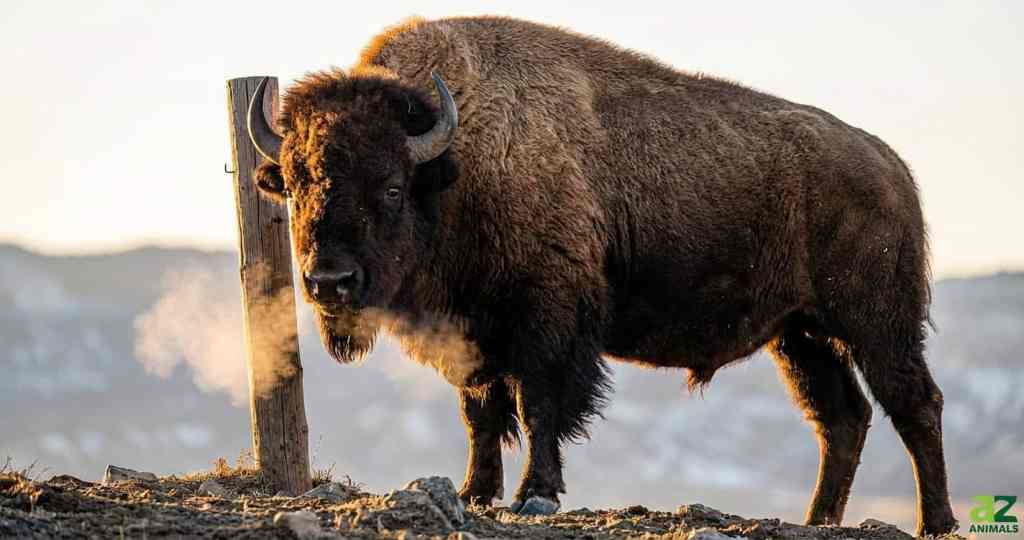
An Indigenous led effort aims to return bison to eastern Kentucky on land reclaimed from mountaintop removal coal mining.
Bison are large, powerful animals that often seem slow and gentle at first glance. In reality, they move with remarkable speed and agility, running up to 35 miles per hour and jumping as high as six feet. They are wild creatures built for life on open land, with strength and instincts that make them far from domestic animals.
Many assume bison lived only in Yellowstone or in the wide western landscapes shown in films. Indigenous knowledge and archaeological evidence show a far broader history. Bison once ranged across nearly the entire continent, excluding Hawaii, with a long presence in Appalachia.
In Letcher County, Kentucky, an Indigenous women led organization plans to bring bison back to a 63 acre site that once served as a mountaintop removal mine. The land has since been reclaimed and now offers an opportunity for ecological renewal. The plan includes the arrival of four bison during the summer along with the restoration of native grasses such as big bluestem to support grazing.
Bison once lived in eastern Kentucky, and their removal occurred alongside the displacement of Indigenous communities. Their absence disrupted local ecosystems. Restoring the species supports many forms of life, including human communities, since the land evolved with these animals as active participants.
Bison adapt to many environments. Grasslands and prairies support large herds, though bison also occupy other ecosystems where grasses grow. The animal commonly referenced is the Plains bison, one of two subspecies in North America. The second subspecies, the Wood bison, lives farther northwest in regions such as western Canada and Alaska.
As settlers expanded westward, bison retreated toward the Great Plains. Overharvesting, land loss, and agricultural expansion driven by European settlement caused severe population decline and eliminated wild bison from the eastern United States.
The disappearance of bison connects deeply with the forced removal and destruction of Indigenous cultures. Reviving relationships with bison supports cultural renewal as well as ecological repair. Indigenous land stewardship historically shaped landscapes through practices such as controlled burning, plant movement, and habitat enrichment. These actions created pastures and predictable grazing areas that supported both people and wildlife.
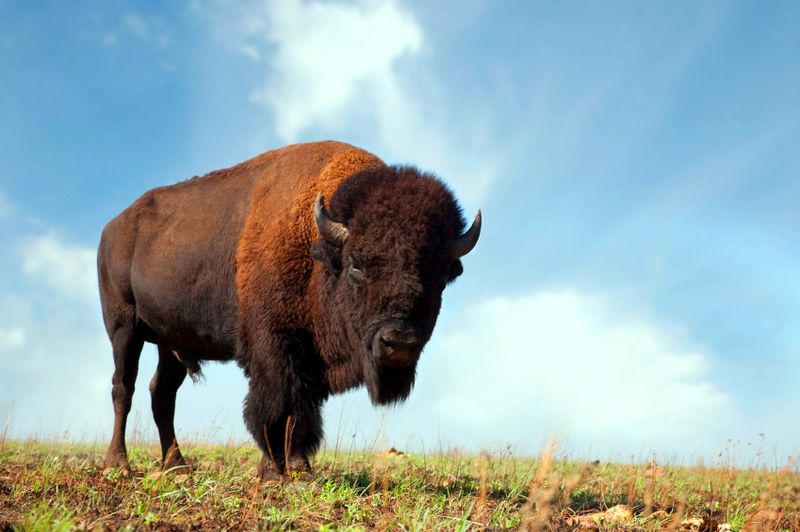
Modern efforts draw on this knowledge. Indigenous communities across the Great Plains began restoring bison relationships during the 1990s, offering valuable experience for newer projects. Learning from established herds guides planning and care.
The Kentucky project draws inspiration from several bison programs, including herds on western reservations and conservation grasslands in the Midwest. A particularly useful comparison comes from a mountainous region in Romania, where European bison returned to the landscape in 2014. A 2024 study showed that a herd of 170 animals captured about 54,000 tons of carbon each year, comparable to removing roughly 84,000 gas powered vehicles from the road.
Evidence like this strengthens confidence in restoration work. Scientific outcomes align with ancestral knowledge, showing healthier forests and improved land conditions following reintroduction.
Bison function as ecosystem engineers. Their hooves break up compacted soil, their fur carries seeds across the land, and their grazing patterns encourage plant diversity. Successful reintroduction requires a holistic approach rather than placing animals onto disturbed ground and expecting rapid recovery.
The herd in Kentucky will graze in rotation. The organization plans extensive planting of native species, including aronia, persimmon, plum, Kentucky coffee tree, spicebush, bundleflower, false indigo, hazel, and senna. Hay grown on another property will supplement their diet.
Testing revealed that plants on site remain safe for consumption, while water contains elevated aluminum levels. Clean water will arrive by truck during the first three years as restoration work improves local water conditions.
The goal centers on maintaining wild behavior. A recently completed fence protects the animals by limiting human access rather than confining movement. With adequate food, water, and space, bison tend to remain within their range.
The project begins with four animals due to limited acreage. An ideal ratio suggests about 20 acres per bison, making careful management essential. As the herd grows over time, future plans include sharing animals with other Indigenous led groups seeking similar restoration.
The guiding belief remains simple. The land deserves care, balance, and the return of species that shaped it for thousands of years.
-Tim Carmichael


 Echoes of Appalachia
Leave a reply to Mark E Banks Cancel reply