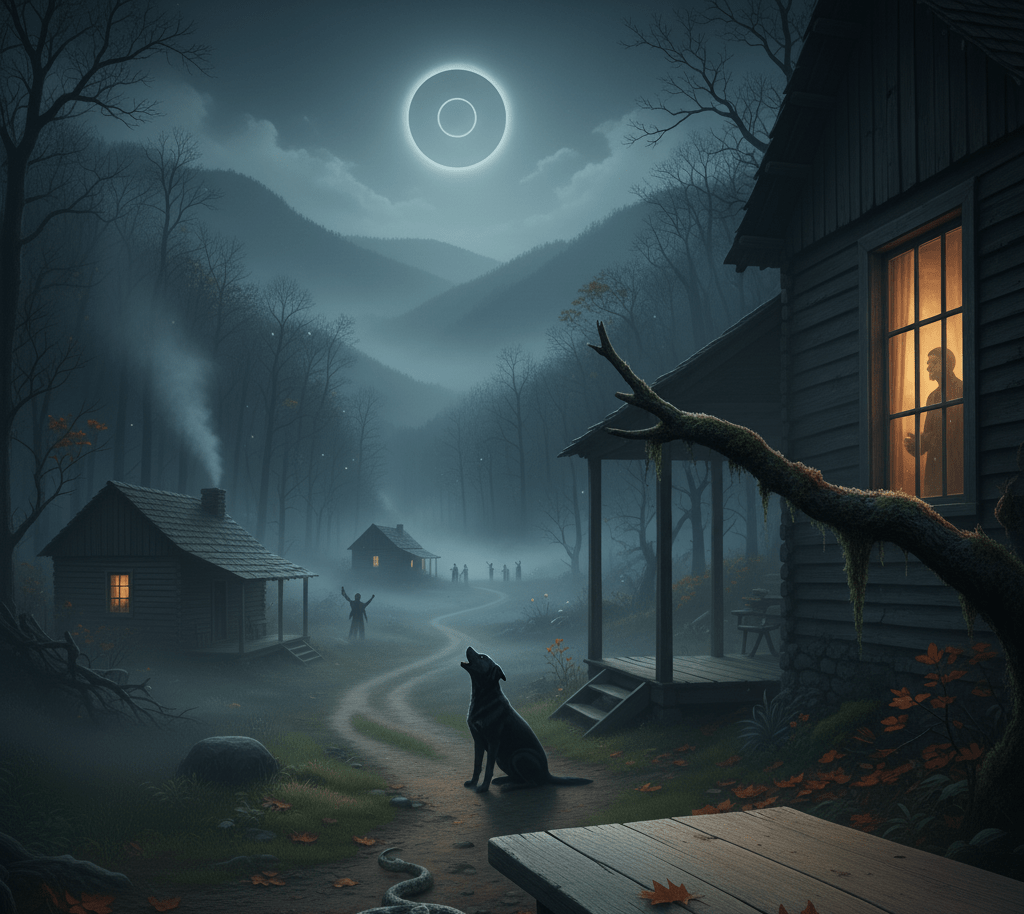
In the foggy hollers and ridges of the Appalachian Mountains, folklore lingers like smoke from an old woodstove. Stories echo through hollows, warnings are whispered along front porches, and traditions are carried from one generation to the next. Many who grow up in this region hear sayings and practices that sound curious to outsiders. Some of these beliefs involve signs from nature, others connect to death or fortune, and many revolve around respect for forces that feel greater than human understanding. The question that arises is whether these superstitions carry any real truth or if they stem only from imagination and fear. Exploring the roots of Appalachian culture reveals why so many of these superstitions endure and whether they can be considered real in any meaningful sense.
The Appalachian Mountains hold a unique cultural heritage shaped by isolation, migration, and survival. Families who settled in these valleys and slopes often lived far from towns, churches, and doctors. With distance came a need to rely on intuition and wisdom passed down orally. Folklore filled the gaps where formal knowledge could not reach. For early settlers, a crow calling at dawn or a dog howling at midnight might serve as an omen, warning of something that ordinary senses failed to detect. To label these beliefs as inventions dismisses the conditions that gave rise to them. In many cases, superstition was less about irrational fear and more about navigating an unpredictable world.
One famous Appalachian superstition involves signs of death. For instance, if a whip-poor-will sings near a home at night, many believe it signals that someone close will pass away. Another common belief states that dreaming of teeth falling out foretells death in the family. Skeptics argue that these associations exist only because people remember when the coincidence happens and forget when nothing follows. Yet for those who grew up in the region, these signs carry emotional weight. They act as reminders of mortality and community bonds. Whether or not a whip-poor-will has any real connection to death, the effect it has on people is undeniable.
Another area where Appalachian superstition thrives is in the realm of health and healing. Old-time remedies often intertwine with signs and rituals. For example, some believe that carrying a buckeye in the pocket wards off rheumatism. Others claim that warts can be cured by rubbing them with a penny and then burying the coin in the ground. While modern medicine may dismiss such practices, the psychological effect of believing in a cure can produce real improvement. Placebo effects are recognized even by science, which complicates the notion of what it means for something to be “real.” A superstition that eases pain or provides comfort accomplishes a genuine purpose, even if the mechanism is not biological.
The natural environment of Appalachia also shaped many superstitions. The mountains create a sense of mystery, with sudden fogs, dense forests, and eerie sounds echoing across valleys. People came to see nature as alive with signs. A ring around the moon might predict rain. The way smoke rises from a chimney might hint at fair or stormy weather. Before access to meteorological reports, such observations carried great value. Over generations, these weather signs blended with mystical thinking, forming superstitions that still circulate today. While not every sign holds accuracy, some derive from careful observation. For example, animal behavior can indeed change with approaching storms, and rings around the moon do result from ice crystals that form before certain weather systems. This suggests that many so-called superstitions evolved from kernels of practical knowledge.
Dreams also play a large role in Appalachian folklore. Many believe that dreams contain warnings or messages from beyond. Dreaming of snakes might indicate betrayal, while dreaming of water could signal an upcoming birth. In communities where communication with the spiritual world was woven into daily life, dreams became a bridge between the seen and unseen. The science of dreams remains an open field, and while no definitive evidence proves they predict the future, their influence on decision-making is real. Families who interpret dreams as guidance often live with a heightened sense of meaning in their experiences. For them, dreams function as tools for understanding life’s mysteries.
A question worth exploring is why these superstitions continue in modern times, long after science has explained many natural events. One reason lies in identity. Appalachia has long been portrayed by outsiders in ways that feel dismissive or mocking. Holding on to traditions, including superstitions, becomes an act of cultural preservation. To pass down sayings about owls, cats, or moon phases is to honor ancestors who survived hardship with little beyond their wits and faith. Even when younger generations may laugh at some of these beliefs, repeating them keeps alive a thread of continuity with the past.
Another reason for persistence is that superstitions provide comfort in uncertain situations. Life in the mountains has never been easy. Work in coal mines, fields, or timber carried risks. Illness could strike when medical care remained distant. Superstitions offered a sense of control, however small. Believing that turning a broom upside down keeps unwanted guests from staying too long or that carrying a rabbit’s foot brings good fortune provides psychological security. While modern science may classify these actions as meaningless, the emotional relief they provide is undeniably real.
Skeptics often frame superstition as an enemy of rational thought. From this perspective, belief in omens or charms hinders progress. Yet this viewpoint overlooks the broader role of storytelling in human life. Myths, legends, and superstitions all serve to encode cultural memory. They offer explanations when none seem available and guide behavior when choices feel unclear. In Appalachia, superstition merges with storytelling to produce a distinct way of interpreting the world. Whether a crow signals death or a penny cures a wart matters less than the fact that these beliefs foster a shared narrative. Through them, communities strengthen bonds and maintain resilience.
There is also the question of whether modern science fully displaces older systems of thought. Even outside Appalachia, millions follow traditions such as horoscopes, lucky numbers, or charms for protection. While many admit they hold no literal power, they continue to use them. In this sense, superstition is not limited to mountain culture. It represents a universal human tendency to search for meaning and to see connections between events. The difference lies only in the details shaped by geography and history. Appalachian superstitions are expressions of this universal impulse, filtered through the experiences of isolated mountain life.
Some researchers have noted that Appalachian superstitions also reveal the blending of cultural influences. Scotch-Irish settlers brought beliefs rooted in European folklore. African traditions, carried by enslaved people, contributed practices such as charms and rootwork. Native American knowledge of plants and spirits left a lasting mark as well. The result is a tapestry of superstition that cannot be dismissed as random invention. Instead, it represents centuries of cultural exchange, survival, and adaptation. Each saying, charm, or ritual carries echoes of distant homelands and hard-earned wisdom.
So, are Appalachian superstitions real? The answer depends on how one defines reality. If reality is measured only by scientific evidence, then many of these beliefs fail the test. Owls calling at night do not cause death, pennies do not chemically dissolve warts, and carrying a rabbit’s foot has no direct impact on fortune. Yet if reality includes psychological influence, cultural continuity, and social bonding, then these superstitions hold tremendous truth. They affect behavior, shape communities, and give meaning to events that might otherwise feel random. In that sense, they are as real as any ritual, tradition, or symbol in human history.
Furthermore, labeling these superstitions as made up oversimplifies their origins. They grew from observation, necessity, and creativity. They adapted to landscapes and hardships. They reflected human attempts to explain mysteries of life, death, and weather. Even when proven inaccurate by modern knowledge, they remain part of the fabric of Appalachian identity. To dismiss them as mere invention erases the ingenuity and resilience of those who carried them forward.
In conclusion, Appalachian superstitions stand at the intersection of myth, culture, and survival. Whether predicting weather, guiding health, or warning of death, they reveal how humans interpret the unknown. To ask whether they are real or made up may be the wrong question. They are real in the sense that they shape lives and endure through generations. They are made up only in the sense that all cultural symbols are created by human imagination. In the end, Appalachian superstitions remind us that reality extends beyond scientific proof. It includes the stories we tell, the rituals we keep, and the meanings we pass on. Within that broader view, they remain as real as the mountains themselves, standing timeless against the horizon.
-Tim Carmichael


 Echoes of Appalachia
Leave a comment