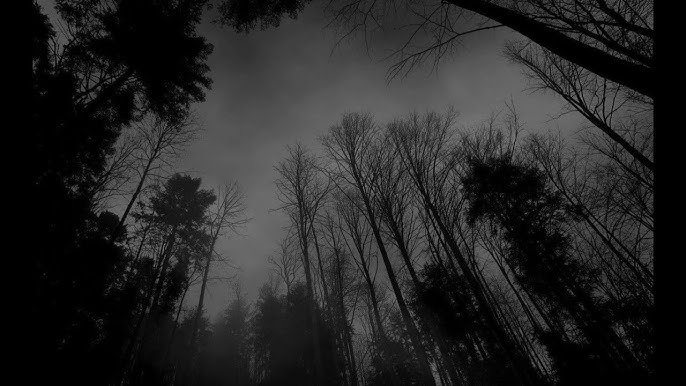
For generations, the rugged mountains of Appalachia have been home to folklore that blends eerie warnings with the wonders of nature. One of the most peculiar pieces of Appalachian wisdom is the saying, “Don’t look in the trees.” This chilling warning is part of a broader collection of stories meant to keep people wary of the deep, shadowy forests that surround them. Alongside this warning are other well-known Appalachian beliefs, such as:
- “If you hear your name called in the woods, you didn’t.”
- “If you hear whistling at night, you didn’t.”
Having lived in these mountains for nearly 60 years, I’ve never personally seen or heard anything that would validate these warnings. But that doesn’t mean they don’t hold deep cultural and psychological significance. To understand why such folklore exists, it’s essential to explore both the practical and mystical elements that have shaped these stories over the centuries.
The Meaning Behind “Don’t Look in the Trees”
The admonition “Don’t look in the trees” is one of those phrases that, at first glance, may seem like simple superstition. But when we look deeper into the heart of Appalachian folklore, we begin to see a pattern of cautionary tales designed to protect people from danger. The forests in these mountains are dense and full of shadows, with towering trees and thick underbrush that can easily obscure dangers, whether natural or supernatural.
For centuries, these mountains have been home to a close-knit community of people who made their living from the land. Early settlers in the region were isolated, living in small cabins far from towns, and they relied on the forests for food, shelter, and medicine. However, the wilderness was also home to many dangers: venomous snakes, wild animals, and harsh elements could quickly turn a peaceful walk in the woods into a life-or-death situation. The warning to not “look in the trees” may have been a way to keep people alert, reminding them that the forest was full of unknowns, and it was best not to let curiosity put them at risk.
It’s possible that this warning was also linked to old superstitions or local legends. In a region rich with spiritual beliefs and a history of folk magic, it’s not hard to imagine that the warning stemmed from stories of things hidden in the trees—whether it was ghosts, spirits, or otherworldly creatures lurking just out of sight. It’s a reminder that the woods are not a place to be recklessly explored without caution.
“If You Hear Your Name Called in the Woods, You Didn’t”
This piece of folklore might strike a chord with anyone who has ever been alone in the woods or on a quiet trail. It is an eerie piece of advice that warns people against responding when they hear their name called in the wilderness, particularly in isolated areas. The belief is that if you hear your name, it isn’t actually someone calling you; instead, it’s a trick or an illusion, often attributed to spirits, mischievous creatures, or the unknown forces that roam the woods.
The psychological explanation for this belief might lie in the deep-rooted human instinct to be aware of potential threats. Our ancestors lived in an environment where hearing a voice calling your name could have meant danger, whether it was a predator, an enemy, or some other kind of threat. The idea that the sound is a trick could be a psychological defense mechanism—an instinctive way of telling yourself that if it seems too good to be true, it probably is. It was likely a protective tale meant to keep people on guard, warning them not to trust their senses when out in the woods, especially at night.
“If You Hear Whistling at Night, You Didn’t”
Similar to the previous saying, the warning about whistling at night speaks to the eerie quality of sound in the Appalachian mountains. Whistling, particularly at night, has long been associated with supernatural activity. In many cultures, whistling is seen as a way to summon spirits, or worse, to attract evil entities. In Appalachia, hearing a whistle at night could be considered an omen of danger or mischief, often linked to the folklore of the “haints” (restless spirits) or mysterious creatures in the woods.
The idea that “you didn’t” hear the whistle—meaning, don’t acknowledge it or act on it—serves as a reminder that not everything is as it seems. Just like the call of your name, the whistle could be an illusion meant to mislead or disorient. It could be the wind, the sound of a creature moving through the trees, or even just your imagination at play. But in the context of the folklore, it serves as another warning to stay cautious and not let curiosity or fear drive you to investigate further. In a time before reliable modern communication, hearing strange sounds could indicate something truly harmful, such as a person or animal lurking nearby.
Why Does This Folklore Exist?
The existence of such strange and unsettling folklore likely has roots in the physical and psychological challenges of living in a remote, wilderness-filled region like Appalachia. The forests of these mountains are not just places of beauty and tranquility; they are unpredictable, mysterious, and potentially dangerous. The folklore that developed around these natural surroundings served as a guide for survival, offering advice and wisdom to help people navigate the land safely.
However, these tales also reflect something deeper—our need to make sense of the unknown. When people live in isolation, surrounded by the eerie quiet of the woods, it’s natural for the imagination to run wild. The rustle of trees, the shift in the wind, the crack of a twig breaking—these sounds could be interpreted as the work of spirits or supernatural beings. The folklore reflects the way people have tried to explain and cope with the mysterious forces they couldn’t fully understand.
As the years go by, it’s easy to dismiss these old stories as mere superstition. But even today, when we venture into the Appalachian wilderness, there’s still something haunting about the woods. The silence, the towering trees, and the long shadows cast by the setting sun all contribute to a sense of mystery. Whether we believe in spirits or not, these folktales endure because they tap into our deep-seated need for caution, respect, and connection with the natural world.
In the end, Appalachian folklore, like the forest itself, holds more than just a warning. It is a testament to the creativity, resilience, and rich cultural history of the people who have lived in these mountains for centuries. The stories may not always be true in the literal sense, but they continue to shape the way we view the world around us—and sometimes, that’s all we need to feel both protected and connected to the land.
-Tim Carmichael

 Echoes of Appalachia
Leave a reply to The Dark History and Spooky Stories Behind the Wood We Work Cancel reply