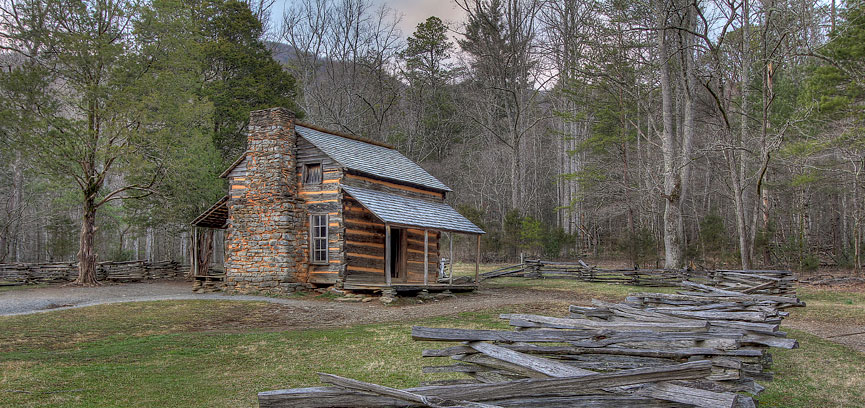
William “Fighting Billy” Tipton, renowned for his service in the War of 1812, is often associated with the early history of Cades Cove, though there is no record of him ever actually living there. In 1821, Tipton received a land grant and combined this 1,280-acre plot with previous holdings, helping to shape the region’s early settlement. Tipton’s influence in the area is clear through the success of his brothers, Abraham and Thomas, who, alongside him, came to control much of the best agricultural land in Cades Cove’s fertile valley. By 1850, the population of Cades Cove had grown to 671 residents, reflecting the area’s increasing settlement.
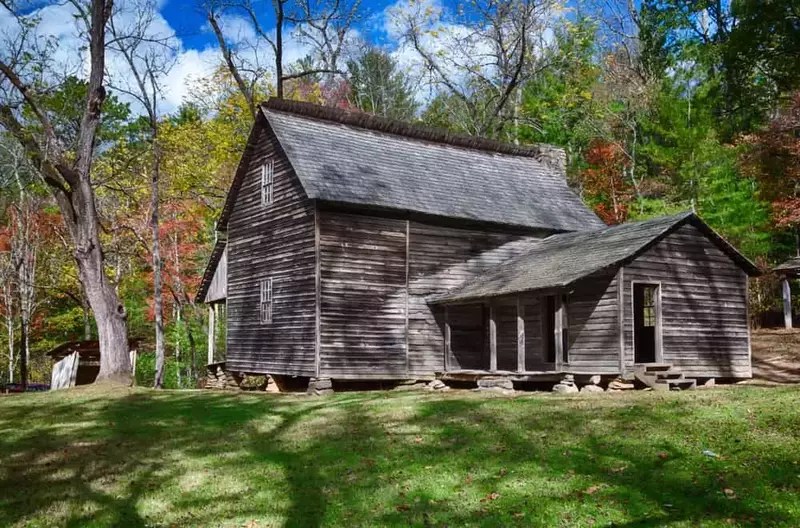
The first permanent European settlers in Cades Cove were John Oliver (1793–1863), a veteran of the War of 1812, and his wife Lurena Frazier (1795–1888). They arrived in the cove in the early 1820s and laid the foundation for what would become a thriving community. The Olivers played a significant role in establishing the cove, and their descendants would remain a part of the area’s history for generations.
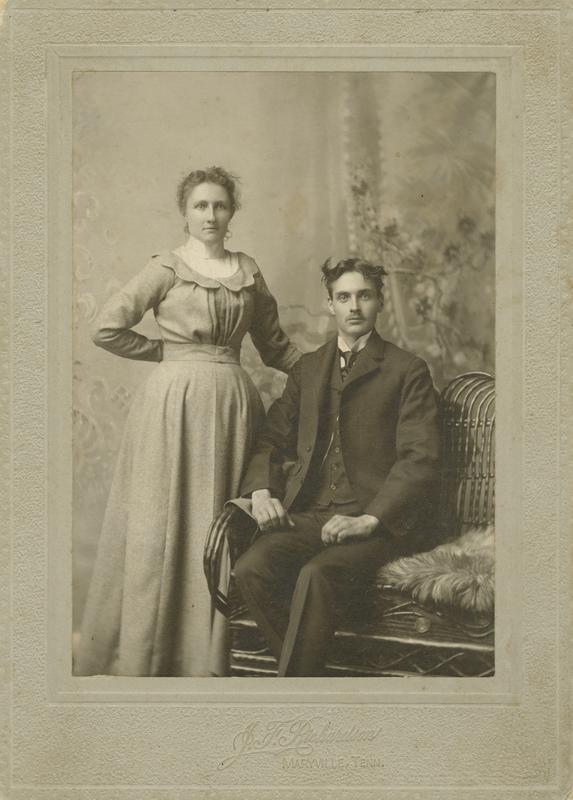
The people of Cades Cove were hardworking pioneers, primarily farmers and blacksmiths. They cleared the land for crops, mainly corn, and constructed barns for their harvests and grist mills for processing grain. The residents also hunted the plentiful deer and raised pigs for meat, building essential structures like smokehouses, barns, and spring houses to support their rural way of life. Despite the challenges of living in relative isolation, the community thrived.
However, the Civil War brought division to Cades Cove. Local legend holds that the cove was an Underground Railroad stop before the war, and many residents held pro-Union sentiments. This created a rift, with some families supporting the Confederacy. Tensions escalated as Confederate bushwhackers from North Carolina raided the area, killing Union sympathizers and stealing supplies. Elijah Oliver, the son of local leader John Oliver, sought refuge in the mountains, returning only after the war ended. Many others chose not to return at all.
In the aftermath of the Civil War, the population of Cades Cove began to decline, and the community’s economy suffered from isolation. However, the early 1900s saw a shift as residents moved away from agriculture and began logging. During this time, another industry emerged: the production of corn liquor. With an abundance of corn, distilling alcohol became a key economic activity. The production of homemade brandy from locally grown fruit also flourished.
Prohibition in the 1920s opened new opportunities for the illicit distillation of moonshine. Despite the law’s restrictions, the Cades Cove community continued to thrive through its underground alcohol production. But change loomed. In the late 1920s, the U.S. government, with $5 million donated by the Rockefeller family and another $2 million in taxpayer funds, embarked on creating a national park by purchasing land in the Smoky Mountains.
The people of Cades Cove fiercely opposed selling their land, and there was considerable resistance to the idea of relocating. The government initially promised that residents could remain on their land, separate from the park, but ultimately reneged on the agreement. Using eminent domain, the government forcibly seized the land. Legal battles followed, and while John W. Oliver, a descendant of the cove’s first settler, won the first lawsuit, he was ultimately forced to accept the government’s decision. On Christmas Day 1937, he left his home in Cades Cove, marking the end of an era.
John W. Oliver was one of the last residents to leave the cove. Kermit and Lois Caughron would be the final inhabitants, remaining until Kermit’s death in 1999. The Primitive Baptist Church, a vital institution in the cove, continued to hold services in defiance of the government until 1960, preserving a piece of the area’s rich history.
-Tim Carmichael


 Echoes of Appalachia
Leave a reply to ecstatic6967e0df41 Cancel reply