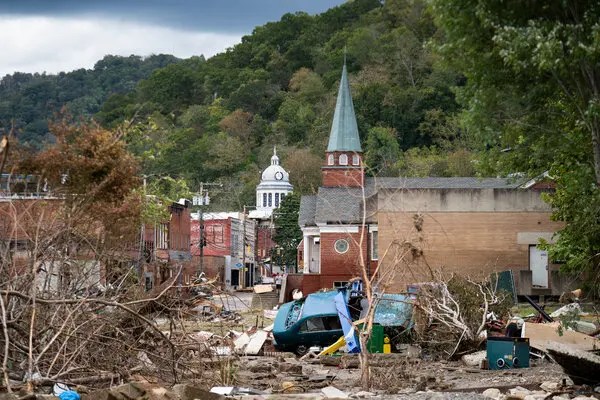
It’s been two months since the devastating floods hit Marshall, North Carolina, transforming the picturesque town into a scene of destruction. Homes were submerged, businesses lost, and countless residents found themselves displaced. As the floodwaters receded, the real work began — the arduous task of cleanup, rebuilding, and recovery. While volunteers, local officials, and residents are working tirelessly, there’s a looming question hanging over the recovery effort: Where is all the money going?
The Flood’s Impact on Marshall, NC
Marshall, a small town nestled in the mountains of western North Carolina, is no stranger to the occasional storm, but nothing could prepare the community for the scale of this flood. Torrential rains overwhelmed the French Broad River, sending water cascading through the heart of the town. Roads washed away, entire blocks were submerged, and residents were forced to seek shelter in makeshift homes.
The flood left scars that will take years to heal. Businesses that once thrived on Main Street are now boarded up. Families, many of whom had never seen disaster of this magnitude, are faced with the overwhelming task of rebuilding their lives from scratch.
A Flood of Financial Aid
The federal government, recognizing the scale of the disaster, has poured millions of dollars into Marshall to assist with both immediate relief efforts and long-term rebuilding. Additionally, private donations from individuals, corporations, and nonprofit organizations have been flowing in, with an outpouring of generosity aimed at helping the people recover.
As of the latest reports, over $344 million in federal aid has been allocated to Marshall and other communities in NC and TN, and private donations have surpassed $20 million. One of the largest recipients of these donations is the United Way, which has raised over $14 million to support recovery efforts. The United Way has only funded grants totaling $841,606 to 86 organizations working in 29 storm-impacted counties. These funds are meant to support a wide range of recovery efforts, from emergency housing to long-term rebuilding projects.
However, with so much money on the table, one important question remains: How is all this funding being utilized?
The Role of Nonprofits in Disaster Recovery
In any large-scale disaster, nonprofit organizations play a crucial role in coordinating the distribution of aid, providing shelter, food, and water to those in need, and overseeing long-term rebuilding efforts. In Marshall, several well-established national and local nonprofits have mobilized to provide assistance.
Yet, as the months drag on and the cleanup continues, many residents and local officials are starting to ask difficult questions about accountability. Where exactly is all the money going? Is it being allocated efficiently and effectively? Or is it getting lost in the bureaucracy?
The Growing Concern About Transparency
One of the key concerns voiced by Marshall residents is the lack of transparency from some of the large nonprofit organizations involved in the recovery efforts. These organizations have been the recipients of millions in donations, but there is little public information about how these funds are being spent.
For example, while many donations have been designated for rebuilding infrastructure, local businesses report that very few resources have reached the ground level. Some residents have expressed frustration that instead of funding directly aiding recovery, the money seems to be funneled into administrative costs and overhead fees.
“We’ve seen people come in with big promises and big checks, but it feels like the help is going to the wrong places,” said one local business owner, whose store was devastated by the flood. “We need the money to get to the people who need it most, not just to the organizations that are already well-funded.”
Why Are People Still Living in Tents?
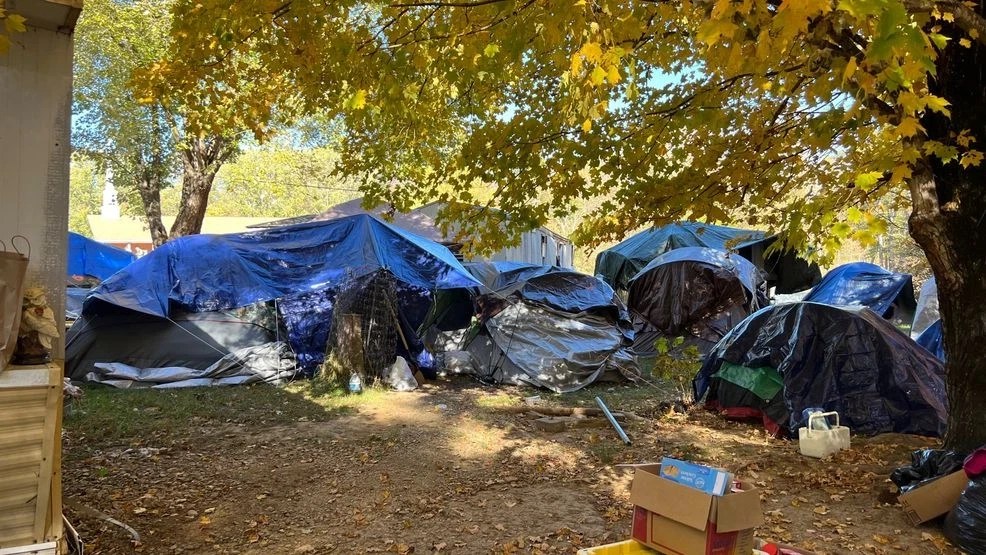
While millions of dollars have poured into the area, one thing is clear: the recovery is far from over. As we approach the two-month mark since the flood, one glaring issue persists — the lack of permanent housing solutions for displaced families. Instead of rebuilding homes, many residents are still living in tents in areas like Swannanoa, Asheville, Marshall, and Burnsville.
This raises an even more pressing question: Why are these homes not being rebuilt or remodeled with the millions that have been raised?
Given the enormous funds being raised by nonprofits and the federal government, the expectation was that rebuilding efforts would be swift and efficient. Yet, many homes remain in ruins, while families are left living in substandard conditions.
These displaced residents have shared their concerns that, despite the generous donations, they feel they’ve been left in limbo, waiting for help that has not materialized in the form of real, lasting solutions. Some have been forced to live in tents for months due to a lack of housing options.
“It’s hard to understand,” says one Marshall resident who has been living in a tent in a community encampment. “We see so many resources coming into the area, and yet we’re still stuck here. Our homes could be rebuilt — why hasn’t that happened?”
Holding Nonprofits Accountable
The fact is, many people are holding the federal government accountable for its role in disaster recovery. And rightfully so — federal aid is crucial in disaster relief, and there’s no question that the government should be transparent about how those funds are being allocated and spent. But what about the nonprofit organizations receiving millions in private donations? Why is there no comparable level of scrutiny on these groups, which have been entrusted with the resources to rebuild lives in places like Marshall?
In the wake of this flood, as with any disaster, it’s essential that the nonprofit organizations receiving donations and government funds are held accountable for how they spend that money. While many nonprofits are doing invaluable work, the scale of the disaster requires a level of oversight and transparency that has been lacking in some cases.
“We’re holding the federal government responsible, so why aren’t we holding the nonprofits who are receiving millions of dollars in donations accountable?” asks a concerned local resident. “If these organizations are getting millions of dollars in donations, where is the money going? It’s time for those who are collecting funds to be more transparent about how they’re spending it, and why it’s taking so long to rebuild.”
Moving Forward: A Community’s Determination
As Marshall continues its long road to recovery, the community remains resilient. Local volunteers, churches, and smaller, grassroots organizations have been the backbone of recovery efforts, often working with limited resources but with immense dedication. Despite the frustrations about the distribution of funds, the people of Marshall have refused to give up.
But the road ahead is still long, and the battle for transparency and fairness in the distribution of aid is just beginning. It is critical that everyone involved in the recovery efforts – from the federal government to the nonprofit organizations – is held accountable, ensuring that the funds meant to help rebuild Marshall are used to support those who need it most.
Marshall has always been a town built on community, and now, more than ever, the town is proving that it is stronger than any flood. But as the cleanup continues, we must ask the important question: When it comes to the millions of dollars being poured into the town, will the help be there where it’s most needed? The time for answers is now. The community is ready for the homes to be rebuilt, and for families to return to permanent housing instead of tents.
And if nonprofits can raise millions for disaster relief, then the question remains: Why can’t homes be rebuilt and repaired with all these millions being collected? We’ve seen organizations like Beloved Asheville using their funds to actually rebuild and repair homes for those in need, so why aren’t other big nonprofits doing the same? It’s time for the funds to be used where they are most needed — in rebuilding lives and restoring homes. The people of Marshall and the other 28 counties deserve nothing less.
-Tim Carmichael


 Echoes of Appalachia
Leave a reply to Tim Carmichael Cancel reply