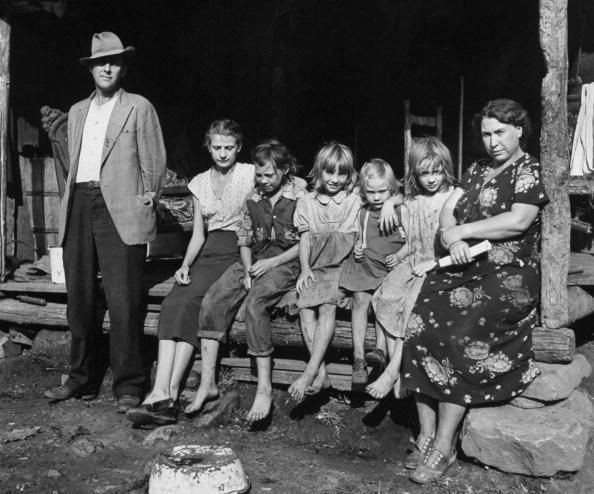
When most people think of the Great Depression, they picture a nation reeling from mass unemployment, economic collapse, and widespread poverty. Breadlines, factory closures, and the dust bowl loom large in the collective memory of this time. However, for those living in the Appalachian Mountains, the reality of the Great Depression wasn’t much different from the way they had always lived. In fact, many people in the region didn’t even recognize it as a distinct event. To them, it was just another chapter in a long history of struggle and survival.
For generations, Appalachians had lived off the land in a world of isolation, with few connections to the industrialized economy that was crumbling in the cities. The rugged, mountainous terrain made it difficult to build large-scale industry, and as a result, the region’s economy had always been subsistence-based. Families grew their own food, hunted for their meat, and built or repaired their own homes. Most had learned to rely on each other, finding creative ways to survive in a place where cash was scarce, and jobs were few.
“We Were Poor Before It Started”
This is how many people in Appalachia summed up their experience during the Great Depression. The notion that the Depression changed their way of life didn’t entirely resonate. For many, the harsh economic realities of the 1930s were simply an extension of the struggle they had always known. They were poor before the Depression, and they were poor during it—so in some ways, the national crisis that consumed much of the country felt distant and irrelevant.
Many Appalachian communities were already accustomed to living without the benefits of a booming industrial economy. The Depression’s shockwaves hit hardest in places that were already disconnected from the world of factory jobs, Wall Street crashes, and urban wealth. For these communities, the worst hardship wasn’t the onset of economic collapse, but the deepening isolation and lack of access to the relief programs and federal assistance that other parts of the country received. Yet, their cultural resilience helped them weather the storm in ways that many urban centers couldn’t.
Self-Sufficiency: A Way of Life
In the mountains of Appalachia, where grocery stores and banks were few and far between, families had learned how to grow, hunt, and make do with what the land provided. By the time the Depression rolled around, most households were already living in what might seem like “survival mode” to outsiders, but was simply the everyday norm for many Appalachian families. A garden wasn’t just a hobby—it was a necessity. People grew everything from beans to corn to sweet potatoes, with the seasonal rhythm of planting, tending, and harvesting being an integral part of life.
Hunting also played a vital role in ensuring that there was enough food to eat. Deer, wild turkey, rabbits, and other game filled the larder when the crops were lean or when money was too tight to afford store-bought meat. Fishing in the region’s rivers and streams was another common practice that provided sustenance.
This lifestyle of subsistence farming and hunting was not without its challenges. Soil erosion, poor harvests, and unpredictable weather could make things tough even under the best of circumstances. But for many Appalachian families, these were the same struggles they’d always dealt with. They were accustomed to scarcity, to doing without, and to finding ways to make the most of what they had.
Community and Mutual Aid
One of the greatest strengths of Appalachian culture during the Depression was the tight-knit nature of the communities. In the mountains, people didn’t just rely on individual grit and self-sufficiency—they also relied on each other. Mutual aid networks existed in nearly every town, with neighbors helping one another through hard times.
The system of bartering was widespread, and it allowed people to exchange goods and services without needing cash. A neighbor might trade fresh eggs for firewood, or a farmer might swap a few chickens for a new pair of boots. This system kept people from going without basic needs, even when cash was completely out of reach.
Churches, too, played an important role in sustaining communities during the Depression. Religious gatherings provided a sense of normalcy, and many churches became centers of charity and support. Elders often took on the role of not just spiritual guides, but community leaders, helping to coordinate assistance for those in need.
In some ways, this sense of community solidarity made life in Appalachia less vulnerable to the shocks of the Depression. People had learned long ago that survival was a group effort, and those bonds were particularly important during a time of national crisis.
Cultural Traditions: Music, Storytelling, and Craftsmanship
While the Great Depression may have changed the world outside of Appalachia, it had little effect on the region’s cultural heart. Music, storytelling, and craftsmanship were ways to endure hardship, preserve traditions, and stay connected with one another.
Music, especially, served as a lifeline during the Depression years. While radio shows like the Grand Ole Opry brought Appalachian music to a national audience, the real soul of the region’s music remained in the living rooms, porches, and hollows of rural Appalachia. Families would gather to play instruments—fiddles, banjos, guitars, and dulcimers—sometimes for hours. Songs of heartbreak, survival, and longing resonated deeply with the people who sang them. But these songs were also songs of resilience, telling the stories of those who had endured hardship and come out the other side with their spirits intact.
Storytelling was equally important. Elders would pass down folk tales, personal stories, and lessons learned from generations of mountain living. These stories not only entertained, but also helped people make sense of the world around them. They connected the younger generation to the past, while offering wisdom and comfort during trying times.
Artisan crafts like quilting, woodworking, and pottery also flourished during the Depression. These crafts were more than just hobbies—they were a way of life. They allowed people to create the things they needed without relying on outside sources. A quilt, woven from scraps of fabric, might be more than a blanket—it might be a symbol of endurance, a patchwork of survival.
The Enduring Legacy of Appalachian Resilience
By the time the Great Depression reached its depths, many in Appalachia had already learned how to live without the modern comforts that most Americans took for granted. The region’s cultural resilience—its ability to survive without relying on the broader economy—allowed people to endure the hardships of the 1930s with a quiet dignity.
Even as the federal government began to roll out New Deal programs and other aid efforts, life in Appalachia often remained unchanged. There was no dramatic shift, no sudden revelation of the Depression’s depths because, for so many, it was just another chapter in a long history of scarcity.
Appalachians learned to adapt, to preserve, and to keep moving forward—often with little more than each other and the land they loved. In this sense, the Great Depression didn’t change Appalachia so much as it reaffirmed what had always been true: when it comes to survival, the people of the Appalachian Mountains are among the most resourceful and resilient in the country.
Today, the legacy of this resilience endures. The songs, stories, and traditions of the past remain a testament to the strength of a culture that, no matter how hard the times, always finds a way to survive. The people of Appalachia may have been poor during the Depression, but they were never defeated.
-Tim Carmichael


 Echoes of Appalachia
Leave a reply to powerfulbrieflyff3117aa3d Cancel reply