• How Do We Heal This Country? I Don’t Even Recognize America Anymore

    America feels like a shadow of its former self. The country I once knew, where neighbors cared for neighbors and communities lifted each other up, feels fractured. Anger spreads across the nation, fueled by divisions that grow with each passing day. Hate shows up in conversations, online forums, and even in the streets. People argue over rights, freedoms, beliefs, and lifestyles, forgetting that every citizen deserves dignity and respect.

    Families, friends, and colleagues often find themselves on opposing sides of issues that in the past might have been approached with empathy and compromise. Energy that once went into building a better society now goes into defending positions and attacking others. Greedy politicians and billionaires thrive behind closed doors while ordinary people expend their energy fighting each other. The very leaders who claim to serve the public capitalize on this chaos, advancing agendas that benefit few while harming many.

    America was once united through collective effort and mutual care. People extended helping hands to those in need. Communities supported families struggling through hardship. Strangers smiled at each other on the street. Patriotism meant lifting the collective good above personal gain. Now, these values are overshadowed by self-interest, divisive rhetoric, and the relentless influence of social media, which amplifies fear, anger, and misinformation.

    Social media has become a powerful tool for manipulation. Algorithms reward outrage and extremism, promoting content designed to provoke emotional reactions rather than thoughtful reflection. People retreat into echo chambers that validate anger and isolate them from alternative perspectives. Tribalism flourishes, and civility disappears. A healthy society cannot grow from constant outrage. Empathy, reason, and understanding struggle to survive when every conversation becomes a battleground.

    Meanwhile, real crises face Americans every day. The cost of living has reached unimaginable heights. Groceries, fuel, housing, and healthcare place relentless pressure on households. Rent prices soar, forcing families into temporary shelters or onto the streets. Homelessness has increased dramatically, yet public discourse rarely addresses this tragedy with urgency. Farmland is being purchased by billionaires at alarming rates, threatening food security and local economies. Ordinary citizens who work tirelessly cannot keep up with rising expenses, while wealth inequality widens and power concentrates in the hands of a few.

    Political leaders profit from division. They manipulate fears and prejudices, distracting the public from systemic problems that affect everyone. By fostering resentment between groups, they divert attention from policies and practices that harm ordinary citizens. Division thrives only when people allow it. Awareness of manipulation becomes the first step toward reclaiming unity.

    Fear has become a tool of control. People worry about identities, beliefs, or choices that have no impact on collective survival or prosperity. Conversations revolve around who belongs where, who loves whom, and which religion or ideology is correct. Meanwhile, inflation, corporate monopolies, predatory lending, and political corruption continue unchecked. Citizens fight over symbols and cultural disagreements, losing sight of shared interests. Fear paralyzes, while action inspires change. Removing fear empowers individuals to engage in civic and social efforts that rebuild communities.

    Healing America requires action. Collective effort must replace divisiveness. Citizens must prioritize empathy, understanding, and respect. People need to return to the roots of community, where helping neighbors and supporting each other took precedence over tearing each other down. Civic engagement, volunteering, and grassroots movements can rebuild trust and demonstrate that positive change is possible when citizens unite around shared values.

    Grassroots movements have historically reshaped America. Social progress emerged when ordinary people worked together, refusing to allow fear or division to dictate their actions. Communities organized, marched, educated, and demanded accountability. Today’s crises require the same courage and determination. Americans must engage in collective action to address homelessness, inequality, corporate exploitation, and political corruption. Solutions emerge from cooperation, not competition. True power resides in the hands of citizens, not the wealthy elite or politicians seeking short-term advantage.

    Education plays a crucial role in national healing. People must seek knowledge from reliable sources and encourage critical thinking. The ability to distinguish fact from misinformation strengthens communities and protects democracy. Informed citizens can challenge harmful policies, advocate for equitable practices, and resist manipulation. Education also fosters empathy, exposing individuals to diverse experiences and perspectives, nurturing understanding rather than suspicion. Knowledge empowers citizens to act with clarity and purpose.

    Courage must accompany education. Speaking truth, standing up for others, and participating in civic life requires bravery. Fear can be contagious, but courage inspires collective action. Acts of kindness, engagement in local government, and advocacy for vulnerable populations create momentum that counters apathy. Courageous citizens refuse to accept exploitation, rising above manufactured divisions to pursue shared prosperity.

    Community rebuilding must embrace inclusivity. Healing cannot occur if certain groups dominate discourse while others are silenced. Every citizen brings unique experience and insight, and progress requires honoring those contributions. Policies and initiatives must reflect diversity, ensuring that everyone benefits from solutions. Empathy and understanding create networks of mutual support that strengthen resilience. A united society emerges from collaboration rather than exclusion.

    Media consumption should focus on substance rather than spectacle. Citizens must hold outlets accountable, demanding reporting that illuminates systemic issues instead of amplifying division. Social media use can become intentional, serving as a tool for education and mobilization rather than emotional manipulation. Communities can reclaim discourse by emphasizing truth, fairness, and constructive engagement. Shared understanding strengthens solidarity, creating conditions for meaningful change.

    Economic reform forms a cornerstone of national healing. Policies that address income inequality, housing affordability, healthcare access, and food security directly impact citizens’ quality of life. Collective advocacy for these reforms empowers individuals to shape the economic landscape rather than remain passive observers. Strengthening the middle class, supporting small businesses, and resisting monopolistic practices ensure that wealth circulates fairly. When citizens thrive, communities become stronger and more resilient.

    Public dialogue must evolve. Conversations can shift from accusations to solutions. Listening, questioning, and seeking common ground rebuild trust across ideological lines. A culture of accountability should replace one of blame, emphasizing constructive action over recrimination. Informed, respectful dialogue fosters cooperation, transforming tension into problem-solving energy.

    Personal responsibility complements collective action. Citizens influence national direction through daily choices, including engagement in elections, community service, and conscious media consumption. Individuals who prioritize unity, empathy, and action model behavior that others emulate. By refusing to engage in divisive practices, citizens reclaim agency over influence, weakening manipulative forces that thrive on discord.

    Spiritual, emotional, and mental well-being underpins national resilience. Communities that nurture hope, compassion, and purpose demonstrate resistance to fear-driven division. Citizens can cultivate wellness through mindfulness, support networks, and shared experiences. Emotional stability fosters rational decision-making and constructive engagement, strengthening the foundation for a healthier society.

    Healing America requires imagination. Citizens must envision a country where everyone benefits from opportunity and prosperity. Solutions to homelessness, food insecurity, and inequity exist, and imagination fuels the creativity necessary to implement them. Grassroots innovation, civic engagement, and cross-community collaboration generate practical approaches that transform communities. Citizens who envision a better future create momentum for tangible change.

    Historical perspective offers guidance. America has faced profound challenges before, from economic collapse to social upheaval. Resilience emerged when citizens refused to succumb to fear, division, or complacency. Lessons from history demonstrate that unity, empathy, and courage drive meaningful progress. Learning from past successes and failures equips citizens with strategies for contemporary crises.

    Citizens must refuse complacency. Silence allows exploitation, inequality, and manipulation to flourish. Standing together, acting collectively, and prioritizing shared well-being empowers citizens to reclaim control. Division thrives only when individuals permit it. Unity strengthens communities and amplifies the power of ordinary people. True transformation emerges when Americans reject fear and anger as primary motivators, choosing collaboration and care instead.

    Healing America begins with individual and collective responsibility. Citizens must recognize manipulation, educate themselves, engage with communities, and advocate for fairness and equity. Fear loses power when courage replaces it. Anger transforms into action when guided by empathy. Solidarity emerges when people prioritize shared humanity over superficial differences.

    The nation faces daunting challenges, from economic inequality to political corruption, social fragmentation to environmental threats. Overcoming these challenges requires united action, strategic thinking, and unwavering commitment to justice. Citizens possess the power to shape policy, influence public discourse, and support each other through organized, compassionate effort. The road to healing demands persistence, patience, and vision, but the destination offers renewed strength, unity, and purpose.

    America can heal through collective effort. Citizens must rise above manufactured divisions, refuse fear-driven manipulation, and commit to unity, empathy, and action. Every individual can contribute, every voice can matter, and every act of courage can spark meaningful change. History demonstrates that ordinary people can achieve extraordinary outcomes when they act together, guided by principle rather than passion alone.

    The country of tomorrow depends on the citizens of today. By reclaiming empathy, accountability, courage, and collaboration, Americans can restore community, trust, and opportunity. Through informed dialogue, economic reform, civic engagement, and personal responsibility, healing can become reality. The nation that once thrived on mutual care, collective effort, and shared prosperity can rise again, stronger, wiser, and more united than ever.

    The path forward requires vigilance, action, and unwavering belief in shared humanity. Citizens must stand together, reject manufactured divisions, and reclaim control over the nation’s destiny. Fear, anger, and manipulation will fade in the face of unity, courage, and empathy. Healing America will require sustained effort, but the reward is a nation restored to its highest ideals, where every citizen can thrive, communities flourish, and freedom and justice endure. Think back to the day 9-11 hit and how we all came together, black, white, gay, straight, it didn’t matter, we all stood together as one.

    -Tim Carmichael

  • Budget Cuts by the Trump Administration in 2025 Leave Appalachian Farmers Facing Financial Strain

    The year 2025 has brought a wave of financial hardship to farmers across Appalachia, driven by federal budget cuts proposed and enacted by the Trump administration. Many of these farmers, already operating within fragile margins, have long relied on programs designed to strengthen regional food systems, expand market access, and support local economies. Now, the elimination or reduction of funding from both the U.S. Department of Agriculture and the Appalachian Regional Commission has left families and communities uncertain about their futures. These cuts are reshaping the agricultural landscape of the region, forcing farmers to adapt quickly while contending with growing national pressures that complicate their survival.

    The most immediate impact has stemmed from a series of cancelled grants through the USDA. Several initiatives that once provided essential resources for food system development were frozen and later cancelled outright, wiping away millions in anticipated support. These grants had targeted the very heart of Appalachian agriculture, focusing on small and medium-sized farmers who depend on access to local supply chains. Without this lifeline, many producers are now scrambling to cover the gap.

    A particularly painful blow has been the termination of the Regional Food Business Centers. This program was conceived as a means to strengthen food networks by coordinating distribution and linking producers with buyers in schools, hospitals, and food banks. One such center in Central Appalachia was preparing to distribute more than $16 million to farmers across the region. The elimination of this funding cut off an essential channel for growth, particularly in areas where markets are limited and transportation costs remain high. Farmers who had planned for expanded sales or upgraded equipment through these funds now face a stalled future with no clear substitute for the lost support.

    The cancellation of local food initiatives has added another layer of difficulty. Programs such as the Local Food for Schools and the Local Food Purchase Assistance initiative had created dependable contracts between farmers and institutions. In Tennessee, the end of these contracts represents millions in lost revenue. For many growers, supplying food to schools and food banks provided a stable, long-term outlet for produce and livestock. That stability has disappeared, replaced by the uncertainty of competing in volatile markets where prices fluctuate and supply chains favor large-scale operations. Farmers who had designed their planting schedules or production cycles around these contracts now confront surplus goods, wasted investments, and financial stress that echoes across entire communities.

    At the same time, the Appalachian Regional Commission faces one of the steepest funding cuts in its history. The Trump administration has proposed slashing the ARC’s budget by an extraordinary 93 percent, reducing its allocation from $200 million to only $14 million for Fiscal Year 2026. The ARC has long been a cornerstone of development in Appalachian communities, channeling funds into infrastructure, business support, workforce training, and agricultural projects. Such a dramatic cut would dismantle much of the progress that has been made in diversifying regional economies and supporting small enterprises, including farms.

    While an amendment has been introduced in the House to restore the ARC’s funding, the mere proposal of such a drastic cut has already created shockwaves throughout the region. Advocacy groups, local officials, and farm organizations have spoken out forcefully, warning that the reduction would derail decades of work to bring Appalachia into greater economic parity with the rest of the country. Farmers, in particular, have voiced concerns that without the ARC’s support, many of the partnerships and programs that sustain rural communities will collapse, leaving them even more isolated and vulnerable.

    These region-specific setbacks come at a time when agriculture nationwide is facing a storm of economic pressures. In 2025, farmers across the country are contending with escalating production costs for seed, fertilizer, fuel, and equipment. These costs continue to climb faster than the prices farmers receive for their goods, eroding profit margins to razor-thin levels. Row crop producers are especially strained, as global markets remain volatile and competition from large agribusiness operations grows more intense.

    The lending climate has also grown harsher. Banks and financial institutions are applying tighter standards to agricultural loans, making it more difficult for young farmers or those with limited collateral to secure credit. This shift has amplified the financial stress many farmers experience, particularly those trying to expand operations or invest in new equipment. Farm bankruptcy filings, already elevated in recent years, have increased further compared to 2024 levels, underscoring the fragility of the sector.

    For farmers in Appalachia, these national challenges intersect with the loss of critical USDA and ARC programs, creating a compounded crisis. Without federal support, they must navigate higher costs, reduced market access, and diminishing opportunities for growth. The result is an environment where family farms that once had a chance to thrive are now fighting to survive.

    In the face of these challenges, Appalachian farmers are searching for creative solutions. Many have turned to cooperative models, pooling resources to share equipment, purchase inputs in bulk, and access new markets collectively. By banding together, farmers can reduce expenses and strengthen bargaining power, though such approaches require coordination and trust that take time to develop. Cooperatives cannot fully replace federal funding, yet they represent one of the few viable paths for resilience.

    Some farmers are diversifying their businesses in order to adapt. In West Virginia, one producer has shifted part of his operation into catering, using farm-raised ingredients to supply local events and restaurants. By finding alternative revenue streams, farmers can create buffers against the volatility of traditional crop and livestock markets. Others are experimenting with value-added products, agritourism, and direct-to-consumer sales. These strategies often demand significant investment in marketing, infrastructure, and labor, challenges that are magnified without grant support or affordable credit.

    Local governments and nonprofits are also working to fill the void left by federal cuts. Regional food banks, community foundations, and advocacy groups are attempting to mobilize private funding and philanthropic resources to support farmers, though these efforts cannot match the scale of USDA or ARC programs. Still, they provide an essential safety net, offering micro-grants, training, and emergency relief where possible. Farmers emphasize the importance of these networks, describing them as lifelines in times of escalating uncertainty.

    The broader significance of these developments extends beyond agriculture. Farming in Appalachia is not only an economic activity but also a cultural cornerstone and community anchor. When farms suffer, local economies contract, young people migrate away, and entire communities weaken. School systems, healthcare providers, and small businesses feel the ripple effects when farmers lose income. For many residents, the current cuts signal a retreat by the federal government from its role in supporting rural development, leaving communities to fend for themselves in a difficult landscape.

    As debates in Washington continue, the voices of Appalachian farmers and their allies are pressing for recognition. They argue that farming in the region is not merely about producing food but about sustaining a way of life that has endured despite economic hardship and geographic isolation. With so many programs now eliminated or facing historic cuts, the resilience of farmers is being tested as never before.

    The coming months will reveal whether advocacy efforts succeed in restoring funding for the ARC and whether alternative policies emerge to support struggling farmers. Until then, Appalachian farmers remain in a precarious position, navigating a storm of rising costs, shrinking margins, and vanishing federal assistance. They continue to innovate and collaborate, drawing on the strength of community ties and generations of resourcefulness. Yet without significant changes at the federal level, the survival of many family farms in Appalachia hangs in the balance, carrying with it the fate of the communities that depend on them.

    -Tim Carmichael

  • Appalachia’s Rural Hospital Crisis Deepens in 2025

    As the autumn of 2025 unfolds, Appalachia finds itself facing an escalating rural health crisis. Across this vast region, stretching from New York through Pennsylvania and down to Mississippi, hospitals and clinics continue to shutter or scale back services. While national media has covered hospital closures broadly, no official, comprehensive tally exists specifically for the Appalachian region this year. Advocacy groups, local journalists, and nonprofit organizations have pieced together the most visible losses, yet the true scope remains unclear. Even without a formal total, evidence shows that closures and service cuts have intensified in Appalachia throughout 2025.

    Communities throughout the region are confronting harsh realities tied directly to financial pressure. Federal Medicaid reductions, compounded by long-standing structural disadvantages, have accelerated the decline of rural hospitals. For residents of Appalachia, the consequences are measured in longer drives to seek care, dwindling access to essential services, and rising fear about what the future holds for their families and towns.

    Tennessee provides a sobering illustration of the problem. Already recognized as the state with the highest rate of rural hospital closures per capita in the United States, Tennessee remains on the front lines of this worsening trend. In 2025, reports indicate that nine rural hospitals in Tennessee are considered “at risk” of either shutting their doors entirely or slashing services. The threat looms large due to potential Medicaid reductions linked to the federal legislation passed earlier this year. For communities in places like west Tennessee or the Cumberland Plateau, the prospect of losing the only nearby emergency room raises concerns about life-threatening delays in urgent care.

    Pennsylvania, often thought of as better resourced than southern Appalachian states, is facing its own acute challenges. The Appalachia Funders Network reported in August that nine rural hospitals in Pennsylvania are at immediate risk of closure. Of these, five were specifically named as vulnerable to Medicaid funding shifts. Such closures would have profound consequences for rural counties already struggling with physician shortages and limited specialty care. For residents of central and northern Pennsylvania, where mountainous terrain and winter storms can make travel treacherous, the loss of a hospital can mean far more than inconvenience. It can be a matter of survival.

    The crisis is not confined to Tennessee and Pennsylvania. States including Kentucky, North Carolina, Virginia, Ohio, and West Virginia are also under threat. These states, all deeply rooted in the Appalachian region, face the same financial pressures that undermine sustainability for small rural hospitals. Federal Medicaid funding reductions, introduced through the One Big Beautiful Bill Act passed in 2025, are expected to cut billions of dollars in support for rural areas. Analysts have warned that the legislation will devastate Appalachia’s health care system, striking at the hospitals and clinics that sustain countless communities. Importantly, the cuts are structured so that they do not take effect until after the mid-term elections, which means many voters will only feel the full impact once they have already cast their ballots.

    Financial instability is not a new issue for rural hospitals, yet the scale of distress in 2025 is striking. In February, the health care consulting firm Chartis released a report showing that a high percentage of rural hospitals across the country were operating on negative margins. In Appalachian states, the number of hospitals categorized as vulnerable was especially pronounced. The report warned that absent significant policy intervention, closures would continue at an alarming pace. For communities, negative margins mean hospitals struggle to cover even basic operating costs, leaving them unable to invest in upgrades, retain skilled staff, or expand services.

    The closure crisis is not limited to complete shutdowns. Across Appalachia, many hospitals are responding to financial strain by reducing or eliminating critical services. Obstetric care is frequently among the first to go. Women in rural areas are increasingly forced to travel great distances for prenatal and delivery services, placing them at higher risk of complications. Pediatric care is another casualty, leaving families scrambling to find specialists for their children. Emergency departments may remain open in some facilities, yet without comprehensive inpatient support, their capacity to handle serious cases diminishes. The pattern represents a quiet erosion of access that does not always appear in closure tallies yet carries life-altering consequences for residents.

    Tracking the true scope of closures in Appalachia is a complex undertaking. Hospitals and health systems often announce decisions on their own schedules, meaning there is no centralized real-time accounting of closures. Advocacy groups and journalists compile reports as they emerge, though these accounts can lag behind events on the ground. The absence of a unified, official tally makes it difficult for policymakers and communities to fully grasp the magnitude of the crisis as it unfolds. Frequently, the most authoritative figures are released retrospectively, long after closures have already reshaped access to care.

    Further complicating matters is the distinction between full closure and conversion. Some hospitals do not shut down entirely, yet they discontinue inpatient care, transitioning instead to outpatient or emergency-only models. While these conversions technically preserve a facility’s presence in a community, they represent a profound reduction in available services. A hospital that no longer offers inpatient care cannot provide the same level of support for serious conditions, extended recovery, or specialized procedures. These conversions can be difficult to track, and while they may not appear in closure statistics, they represent a significant loss of capacity across Appalachia.

    The consequences of these closures ripple far beyond the walls of the hospitals themselves. Local economies feel the blow immediately. Rural hospitals are often among the largest employers in their counties, and when they close, jobs vanish. The departure of skilled health professionals further accelerates population decline, as families seek opportunities and services elsewhere. For small towns already struggling with shrinking tax bases and aging populations, the loss of a hospital can push communities closer to economic collapse.

    Health outcomes also reflect the toll. Rural residents already face higher rates of chronic illnesses such as diabetes, heart disease, and respiratory conditions. Reduced access to care compounds these challenges. When hospitals close or reduce services, preventive care often becomes harder to access, leading to worsening health over time. Delays in emergency care can mean the difference between recovery and tragedy. In this sense, the closure crisis in Appalachia is not only a matter of economics but also a question of life and death.

    Advocacy organizations across the region continue to call for urgent policy action. They argue that rural hospitals should be supported as critical infrastructure, on par with roads and schools. In their view, sustaining health care access in rural America requires recognizing its role in community survival and development. The Appalachia Funders Network and similar groups emphasize that Medicaid funding serves as a lifeline for many hospitals. Reductions in this lifeline, they contend, risk devastating consequences for millions of residents. The One Big Beautiful Bill Act stands at the center of these concerns, as many see it as the single greatest threat to the survival of Appalachian hospitals in the modern era.

    Community leaders, too, are sounding alarms. In many Appalachian towns, citizens are mobilizing to defend their local hospitals, organizing petitions, contacting legislators, and holding public forums. While such efforts sometimes succeed in delaying closures, they rarely reverse financial realities. Without structural changes to funding models, many hospitals remain in precarious positions. Grassroots action demonstrates the determination of residents to preserve their health care, yet it also underscores the desperation of communities left to fight for survival.

    Looking ahead, the future of rural health care in Appalachia remains uncertain. Policymakers continue to debate the balance between controlling federal spending and ensuring equitable access to medical care. For communities across Appalachia, the stakes could not be higher. The trajectory of closures and service reductions in 2025 highlights the urgent need for solutions that stabilize rural hospitals, protect vulnerable populations, and recognize the unique challenges of serving geographically dispersed communities.

    The crisis also forces a broader conversation about equity in American health care. Appalachia’s struggles mirror those in other rural regions, yet the depth of poverty and the scale of geographic isolation amplify the impact. As the nation considers its priorities, the question arises: what responsibility does society have to ensure that residents of rural areas receive timely, quality care? The answer will shape not only the future of Appalachia but also the broader fabric of American health care.

    For now, residents across the Appalachian region continue to adapt to a shifting landscape of access. Families travel farther for care, hospitals cut vital services, and communities fight to keep their facilities afloat. Without immediate intervention, the crisis is likely to deepen, further isolating rural populations and straining already fragile systems. Appalachia’s story in 2025 is one of resilience amid decline, of communities striving to maintain their health care lifelines even as financial forces threaten to sever them. The outcome of this struggle will define the region’s health and vitality for decades to come.

    -Tim Carmichael

  • Jane Hicks Gentry: The Voice of Appalachia

    On December 18, 1863, in the high ridges of western North Carolina, Jane Hicks was born into a family where stories, riddles, and old songs were treasured. These were not performances in the formal sense; they were part of the fabric of life in the mountains. Her family, like many who had settled in the region, carried with them ballads that had crossed the Atlantic generations earlier. Growing up in that environment, Jane absorbed the language, rhythms, and stories that would later make her famous as one of the greatest tradition bearers of the Southern Appalachians.

    She later married Jasper Newton Gentry, and together they raised nine children. Through all the labor of mountain life, Jane continued to sing. She was never far from a song, whether she was rocking a child, preparing meals, or passing an evening with neighbors. Her voice carried ancient stories, and those who heard her knew she was preserving something rare.

    Jane came to be known as “a singer among singers,” and this was no idle phrase. Her gift was not simply that she knew a great many songs but that she gave them life in a way that compelled attention. Listeners spoke of her presence, her manner, and her ability to hold an audience in the spell of words and melody.

    In 1916, her fame extended beyond the mountain valleys when the English folk song collector Cecil Sharp arrived in Madison County. Sharp had traveled to America in search of old British ballads that might still be alive in the Appalachian range. He had heard from Lucy Shafer, principal of the Dorland Institute in Hot Springs, that a woman named Gentry had an extraordinary repertoire. When Sharp finally met Jane, he realized the truth of Shafer’s description. From Jane alone, Sharp recorded seventy songs—more than from any other single singer he encountered. These ballads later appeared in his influential book English Folk Songs from the Southern Appalachians, ensuring Jane’s voice reached far beyond her community.

    Sharp was familiar with singers from the nearby Laurel country, but Jane’s songs were distinct. Her versions held turns of phrase and melodies shaped by her family’s traditions, demonstrating how oral culture had preserved and transformed these ballads across centuries. She did not simply repeat what had been handed down; she carried the songs with a vitality that made them her own.

    Jane’s talents extended beyond ballads. She was also a storyteller, a teller of riddles, and a guardian of folk narratives. For people in her community, these forms of expression were more than entertainment. They were teaching tools, a way to pass wisdom, and a method of holding history close. Through her, the old ways continued to breathe.

    Her life, though devoted to family and work, was also a life of cultural preservation. In the Gentry home in Hot Springs, songs from Britain and Ireland mingled with uniquely American stories. Children grew up surrounded by this living tradition. Jane’s descendants and relatives carried the songs further. One of her extended family members, Frank Proffitt, would later be linked to the survival of the ballad that became known as “Tom Dooley.” That tragic story, passed through generations, eventually gained international fame when the Kingston Trio recorded it in the 1960s. The fact that both Jane and Frank stand as key figures in the preservation of Appalachian music speaks to the depth of the Hicks family’s cultural legacy.

    Though Jane lived her entire life in the mountain country, her songs traveled farther than she ever did. Scholars, musicians, and collectors have continued to cite her as one of the most important sources of traditional ballads in America. The versions she gave Sharp preserved both the language of Elizabethan England and the shaping influence of Appalachian life. In every stanza she sang, one can hear both the echoes of Europe and the mark of the New World.

    Today, those who visit Hot Springs, North Carolina, can still see the Gentry house, standing as a testament to her life. A historical marker placed in front of it honors her memory, acknowledging the role she played in safeguarding a treasure of cultural heritage. Though the town lies only a few miles from the Laurel country, Jane’s music was unlike that of her neighbors, and this distinction continues to be remembered.

    When she passed away on May 29, 1925, Jane was laid to rest in the Odd Fellows Cemetery in Hot Springs. Her grave rests among the same hills where she had lived, sung, and raised her children. It is a fitting resting place, for the mountains had always been both her home and the wellspring of her art.

    The story of Jane Hicks Gentry is not only the story of a remarkable individual but also the story of Appalachia itself. In her songs, we hear the persistence of tradition in a land shaped by hardship and beauty. Her voice reminds us that culture is not preserved by books or institutions alone; it survives in families, in evenings spent around the hearth, and in the voices of those who care enough to remember.

    Her legacy continues in the work of scholars, in the performances of folk singers who keep her ballads alive, and in the recognition that Appalachian culture has a richness deserving of respect. For those who hear recordings or read transcriptions of the songs she gave Sharp, there is the sense of entering a world both familiar and distant, where words hold memory and music carries history.

    Jane Hicks Gentry never sought fame. Her singing grew from the life she lived and the traditions of her family. Yet through her, an entire cultural inheritance was carried forward. She is remembered as one of the greatest voices of Appalachia, a singer whose songs bridge centuries and continents, a woman whose life in the mountains gave the world a gift that continues to resonate.

    -Tim Carmichael

  • McCarthy, Wheeling, and the Roots of Anti-Communist Hysteria in Appalachia

    On February 9, 1950, in the Appalachian city of Wheeling, West Virginia, Joseph McCarthy delivered a speech that changed the direction of American politics. At the time, he was a relatively unknown senator from Wisconsin, a politician with little national recognition. The venue was the McClure Hotel, where the Ohio County Women’s Republican Club had gathered for their annual Lincoln Day celebration. In front of this local audience, McCarthy claimed to hold in his hand a list of 205 individuals working in the U.S. State Department who he said were known members of the Communist Party. The exact number would shift repeatedly over time, yet the claim itself was explosive. Without offering evidence or producing the supposed list, McCarthy catapulted himself from obscurity to national prominence, triggering a period of paranoia and suspicion remembered as the Red Scare.

    The Wheeling speech holds symbolic importance not only because it marks the beginning of McCarthy’s meteoric rise, but also because of its location. Wheeling was not a capital city, nor was it a major industrial hub like Pittsburgh or Chicago. It was a smaller Appalachian community, geographically distant from the centers of power. Yet the fact that McCarthy launched his campaign of fear there demonstrates how anti-communist sentiment could penetrate every corner of the United States. This was not limited to urban elites or Washington insiders. Anxiety about communism reached into towns, counties, and mining regions where the rhythms of daily life were shaped by coal, industry, and community ties. Appalachia became a stage, however briefly, for the drama of national politics, illustrating how local spaces could be used to magnify national fears.

    At the time of his speech, McCarthy had little to lose. He had been given the assignment to speak in Wheeling largely because his colleagues viewed him as unremarkable, a senator with limited influence. His decision to make sweeping accusations was a gamble. Rather than addressing Republican policy priorities or offering a standard Lincoln Day address, he chose to ignite controversy. His goal was to stand out in a crowded political field and to transform himself into a household name. In this sense, the Wheeling speech was less about truth and more about spectacle. It was a performance designed to exploit fear and uncertainty during a period of Cold War anxiety.

    The timing mattered. In 1950, the Cold War was intensifying. The Soviet Union had tested its first atomic bomb in 1949. China had undergone a revolution that brought the Communist Party to power. Americans were absorbing news of espionage cases such as Alger Hiss and the conviction of leaders accused of passing secrets to Moscow. Against this backdrop, McCarthy’s unverified claims sounded plausible to many. Even in Appalachian communities, where day-to-day concerns often centered on wages, mining safety, and economic survival, the language of communist infiltration resonated. The idea that the enemy might be hidden within the government itself, influencing foreign policy and threatening the nation, struck a chord.

    Appalachia’s own history of labor unrest also played a role in shaping how McCarthy’s claims were received. During the early twentieth century, coal miners and industrial workers across the region had built powerful labor movements. Some organizers drew inspiration from socialist and syndicalist traditions, pushing for collective bargaining, fair wages, and improved working conditions. By the mid-century, however, these earlier associations with left-wing politics came under suspicion. In the climate of the Red Scare, even distant echoes of radical labor activity were recast as potential threats. McCarthy’s message found fertile ground among those who feared that organized labor could be linked to communist influence.

    This climate of suspicion created deep divisions. Communities that had once rallied around solidarity in the mines or in industrial plants now found themselves polarized. Neighbors questioned one another’s loyalties. Political figures who sought to criticize McCarthy’s tactics risked being labeled as sympathizers. The chilling effect extended into churches, schools, and local organizations, where silence often became a safer choice than open disagreement. McCarthy’s rise demonstrated how fear could be weaponized to undermine trust in democratic institutions. His methods discredited legitimate investigations into espionage by drowning them in a sea of baseless accusations.

    The unraveling of McCarthy’s power came only after he overreached. In 1954, the Army-McCarthy hearings were broadcast on national television. Viewers across the country witnessed his aggressive and bullying style. Rather than appearing as a protector of American values, he appeared reckless, vindictive, and unprincipled. Public opinion turned, and later that year the U.S. Senate voted to censure him. Although he remained in office until his death in 1957, his influence collapsed. The Wheeling speech, which had once elevated him to the heights of political power, came to symbolize the dangers of demagoguery.

    For Wheeling and for West Virginia, McCarthy’s appearance left a lasting mark. The city became permanently tied to the story of the Red Scare. Even though McCarthy’s career ended in disgrace, his choice to use Wheeling as the launching pad for his campaign shows how local communities can become unwitting participants in national hysteria. The McClure Hotel remains a landmark, remembered less for its hospitality than for its role in ushering in a dark chapter of American politics. Appalachia, often portrayed as isolated or disconnected, was drawn directly into the orbit of Cold War politics.

    The echoes of McCarthy’s tactics reverberate into the present. Today, the United States faces new waves of political polarization, with movements that thrive on populist rhetoric and appeals to fear. The MAGA movement, led by Donald Trump and his allies, shares striking similarities with McCarthyism. Both rely on framing politics as a battle between patriotic citizens and hidden enemies. Both capitalize on national anxieties, whether those concerns involve communism during the Cold War or immigration, cultural change, and perceived threats to national identity in the present day. Both employ accusations that often lack evidence, yet gain traction through repetition and spectacle.

    Much like McCarthy’s Wheeling speech, Trump’s rallies function as performances. They are designed not primarily to inform, but to galvanize. At these events, enemies are named and vilified, whether they are political opponents, journalists, or entire institutions. The underlying message is one of suspicion: that powerful forces are secretly working against the people. The strength of this strategy lies in its ability to simplify complex issues into stark divisions of loyalty and betrayal. McCarthy spoke of communists hidden within the State Department. Trump and his supporters speak of a “deep state” working within government agencies. Both narratives create a sense that unseen forces are undermining democracy from within.

    Appalachia once again provides a revealing context. Many communities across the region face economic challenges, from the decline of coal to limited job opportunities. As in the 1950s, frustration and uncertainty create conditions in which populist rhetoric can thrive. Appeals to loyalty and nationalism resonate strongly when livelihoods feel precarious and traditional industries fade. The Wheeling speech demonstrates that leaders can use moments of vulnerability to present themselves as protectors, even while offering few concrete solutions. The MAGA movement mirrors this dynamic, channeling grievances into a politics of resentment and suspicion.

    Another similarity lies in the impact on national unity. McCarthyism fractured trust, turning citizens against one another. Allegations of disloyalty damaged careers, friendships, and communities. The MAGA era has produced comparable divisions. Families, congregations, and neighborhoods find themselves split along partisan lines, with disagreements that extend beyond policy into identity itself. As with McCarthyism, the atmosphere of suspicion threatens to erode democratic norms.

    The lessons of Wheeling are therefore more than historical curiosities. They offer a cautionary tale. McCarthy’s rise showed how quickly fear can be manipulated to generate power, and how difficult it can be to counter falsehoods once they gain traction. His fall showed that demagoguery eventually consumes itself, especially when exposed under the scrutiny of an engaged public. Yet the damage he inflicted on trust and discourse endured long after his censure.

    In our present moment, it is worth remembering that McCarthy’s power began with a single speech delivered in a small Appalachian city. From that modest stage, a national hysteria spread. Today’s political climate reveals the same potential for local events and populist messages to influence the entire nation. When fear is used as a tool, and when political ambition outweighs truth, the consequences reach far beyond the initial audience. Wheeling reminds us that vigilance is required everywhere, from the smallest communities to the largest cities, to preserve the integrity of democratic life.

    The Red Scare is often taught as a story of Washington hearings and high-level intrigue, yet its origins in Wheeling show a different dimension. It began in a ballroom filled with citizens gathered to honor Lincoln, citizens who likely did not anticipate that they were witnessing history in the making. McCarthy transformed that ordinary gathering into the spark for a national movement. Today, political movements continue to emerge from unexpected places. They reveal how local settings, when paired with ambitious leaders, can alter the national trajectory. The challenge remains to distinguish between those who lead with integrity and those who exploit fear.

    McCarthy’s Wheeling speech belongs to the history of Appalachia as much as to the history of the nation. It stands as a reminder that even the most remote communities are never far from the currents of national life. The same is true in the present, where the struggles and anxieties of everyday citizens continue to shape, and to be shaped by, the politics of fear and spectacle. Appalachia’s connection to McCarthyism is therefore not an isolated episode. It is a window into how political demagogues can rise, how movements take hold, and how vigilance is required to safeguard democracy against those who seek to undermine it.

    -Tim Carmichael

  • The Battle of Blair Mountain and Appalachia’s Fight for Workers’ Rights

    In the summer of 1921, the ridges of southern West Virginia became the backdrop for one of the most
    extraordinary conflicts in American history. The Battle of Blair Mountain represented the culmination of years of tension, violence, and economic hardship in the coalfields of Appalachia. Over five days, an
    estimated 10,000 to 15,000 armed miners confronted approximately 3,000 coal company guards and local deputies. The scale of the fighting and the arrival of federal troops transformed this event into the largest labor uprising in United States history and the largest armed insurrection since the Civil War.
    The origins of the battle emerged from the harsh conditions endured by Appalachian miners. Coal mining carried daily risks of cave-ins, explosions, and exposure to poisonous gases. Workers received wages in company scrip, accepted only at company-owned stores that often charged inflated prices. Entire towns fell under the control of mining companies, including rent, goods, and medical care. Families lived in these isolated communities with very little freedom to challenge corporate authority. Efforts to form unions faced eviction, blacklisting, and violence. The United Mine Workers of America worked tirelessly to organize miners across the region, while coal operators employed armed guards and influenced law enforcement to suppress union activity. Tensions escalated steadily through a series of confrontations known as the West Virginia Coal Wars, violent clashes occurring throughout the early twentieth century.

    By 1921, Mingo County became a focal point of unionization efforts. Miners attempted to organize mines in the area, confronting fierce hostility from operators and their allies. The assassination of Sid Hatfield, a sheriff and supporter of miners, intensified anger. Witnessed by many on courthouse steps, his murder galvanized miners across the region. Thousands began marching toward Mingo County in late August, determined to challenge the power of coal operators and demand recognition for their union.
    The march grew steadily as miners from different hollows and towns joined, carrying rifles, shotguns, and pistols. Many wore red bandanas around their necks, a symbol that inspired the term “redneck.” Opposition forces, led by Logan County Sheriff Don Chafin, prepared extensive defenses along the ridges of Blair Mountain. Trenches and machine gun positions fortified the high ground, offering a formidable barrier to the advancing miners.
    As the miners approached, fighting erupted, continuing from late August into early September. Gunfire echoed through the mountains as miners attempted to break the fortified lines. Machine guns fired on advancing groups while defenders held the higher ground, aiming with precision. Accounts describe private planes flying overhead, dropping makeshift bombs and chemical agents. The miners fought with courage shaped by years of exploitation and extreme danger. Casualties occurred on both sides, leaving lasting scars on families and communities throughout the region.
    The conflict attracted national attention, alarming political leaders. President Warren G. Harding ordered federal troops to intervene. Army soldiers arrived with military equipment, including aircraft, to restore order.

    Facing overwhelming federal power, miners dispersed, hiding weapons in the hills before returning to
    their homes. Leaders of the uprising faced trials for treason and murder, and the majority received
    acquittals.


    The immediate results dealt a severe blow to union efforts in southern West Virginia. The United Mine Workers of America lost influence in the coalfields, and it required more than a decade for union strength to return during the New Deal era. For miners who fought, the battle remained a defining act of courage and resistance.
    Blair Mountain holds significance beyond its historical moment. It represents a struggle between working people and powerful interests that resonates today. The battle illustrates a pattern where government forces defend wealthy corporate interests against ordinary citizens seeking fairness, safety, and economic opportunity. This dynamic continues in modern labor disputes, environmental struggles, and social movements where communities challenge entrenched power.
    Life in the coal camps contributed to the intensity of the uprising. Miners and their families endured
    isolation, poverty, and disease. Children worked alongside adults in the mines or performed chores in the company towns. Families relied on shared community support to survive. The dangers of mining formed a constant presence, shaping every decision and fueling the miners’ determination to fight for change.
    The march toward Blair Mountain involved long treks across rugged terrain. Miners moved through forests, creeks, and ridges carrying weapons, food, and supplies. Campfires lit the night as men shared stories of losses, hopes, and the principles that drove them forward. Leaders organized units, coordinated movements, and maintained morale despite exhaustion and fear. The sense of solidarity among thousands of men and women who supported them created a shared identity grounded in resistance and courage.
    The battle itself was chaotic, intense, and terrifying. Gunfire ricocheted off rocks, and explosions tore
    through the landscape. Soldiers and company guards with machine guns targeted advancing miners. The miners relied on small arms and their knowledge of the terrain to maneuver. Smoke from burning brush and gunpowder filled the air. Soldiers dropped bombs from planes, creating a scene resembling a battlefield in Europe rather than the mountains of Appalachia. Miners displayed extraordinary bravery in the face of overwhelming force, advancing repeatedly under fire and rescuing comrades wounded in the struggle.
    Stories of individual heroism emerged from the battle. Men who had spent years working side by side in mines took leadership roles on the ridge. Some guided injured comrades to safety, while others found creative ways to breach enemy lines. Their actions reflected determination and a refusal to accept oppression in silence. Communities provided support through messages, food, and information, showing that the fight extended beyond the battlefield.
    Federal intervention highlighted the imbalance of power. Soldiers armed with modern military equipment, including airplanes, confronted miners with rifles and limited ammunition. The show of force forced miners to disperse, demonstrating the role of government in protecting corporate interests. Trials and legal repercussions followed, shaping the labor movement for decades. Many miners faced harassment and intimidation, slowing union progress in the region. Despite these setbacks, the events at Blair Mountain inspired future generations to continue the struggle for workers’ rights.
    Blair Mountain remained absent from mainstream history for decades. Textbooks overlooked the events, and public memory failed to preserve their significance. Recent preservation efforts seek to ensure the story is told accurately. The battlefield is now listed on the National Register of Historic Places, symbolizing the enduring importance of labor struggles and the sacrifices made by Appalachian miners.


    Preservation efforts also confront modern threats, including environmental challenges and commercial development, maintaining the mountain as a historical and cultural landmark.
    The story of Blair Mountain carries lessons for today. Ordinary people face powerful forces seeking to
    maintain wealth and control. Miners challenged entrenched authority to demand fairness, safety, and
    dignity. Modern labor disputes echo similar patterns, where communities confront corporate interests
    supported by government policies. The battle provides a historical example of courage, solidarity, and the enduring struggle for social and economic justice.
    Standing on the ridges today, visitors can imagine the chaos, smoke, and gunfire that once filled the
    mountains. Red bandanas symbolize resistance and determination. Blair Mountain tells the story of
    working people rising against overwhelming odds, risking life and livelihood for principles larger than
    themselves. It reminds all Americans that social and economic progress often requires struggle and
    collective action.
    The Battle of Blair Mountain represents a turning point in American labor history. It illustrates the human cost of industrial exploitation and the lengths ordinary citizens will go to secure justice. Families endured hardships, communities faced violence, and thousands risked everything for the hope of fairness. The courage of miners at Blair Mountain inspired labor movements across the nation, shaping policies and influencing unionization efforts in the decades that followed.
    The legacy of Blair Mountain continues to inform contemporary discussions about workers’ rights,
    corporate power, and government accountability. The miners’ fight underscores the importance of vigilance in defending human and labor rights. Their story reminds the public that progress requires organized resistance and sacrifice.
    Appalachia’s fight at Blair Mountain represents the ongoing conflict between concentrated wealth and ordinary people seeking justice. The battle, with its remarkable scale and intensity, offers a window into the struggles that shaped the modern labor movement. It remains a powerful reminder of courage, resilience, and the willingness of communities to resist oppression in pursuit of dignity and fairness.
    Through the preservation of Blair Mountain and the stories of those who fought, future generations can understand the cost of progress and the importance of standing up to entrenched power. The battle exemplifies the timeless struggle for justice in America, highlighting the relevance of labor rights and the enduring spirit of Appalachia.
    The miners’ march, sacrifices, and courage displayed in the mountains provide lessons that resonate today.
    Standing on Blair Mountain, echoes of the past remind all citizens that fighting for fairness, safety, and dignity remains a responsibility of each generation. Ordinary people have the power to challenge authority, resist exploitation, and shape history when they act collectively.
    Blair Mountain serves as more than a battlefield. It is a symbol of resistance, hope, and the ongoing
    struggle for social and economic justice in Appalachia and across the nation. The story of those who fought continues to inspire workers, communities, and advocates confronting inequality and defending the principles of fairness and human dignity.

    -Tim Carmichael

  • Hurricane Helene’s Lasting Impact on Appalachia’s High Country

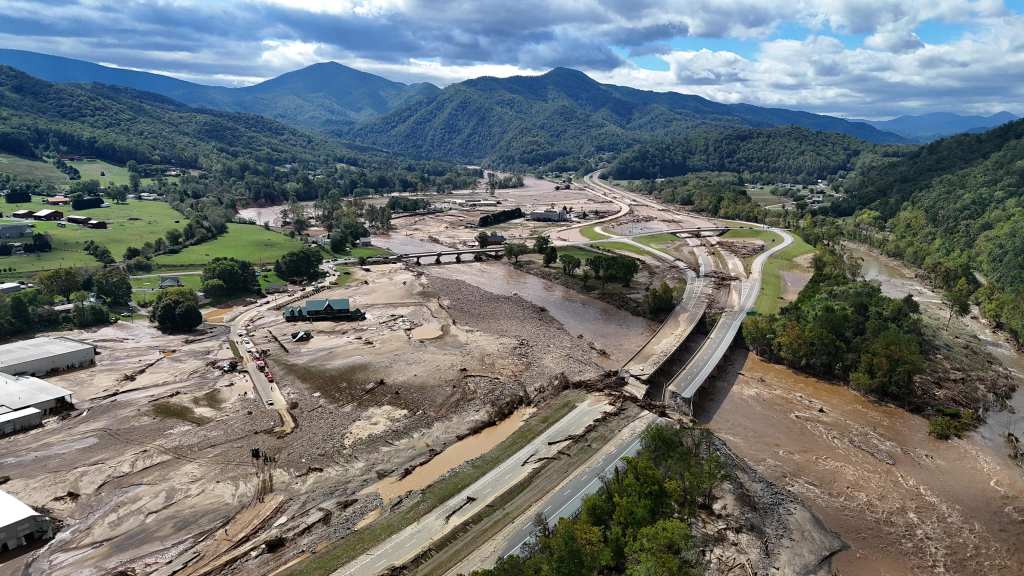
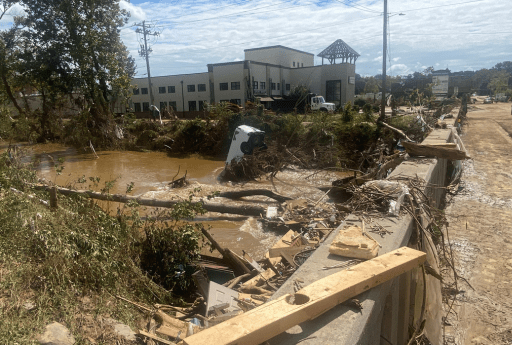
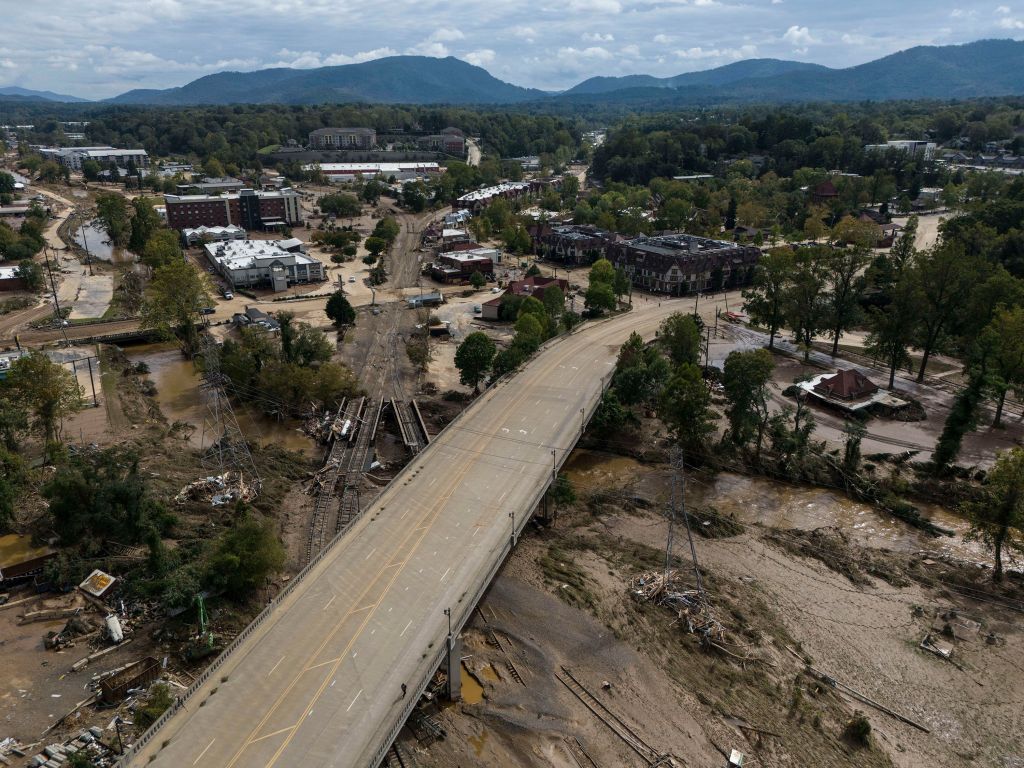
    In September 2024, Hurricane Helene roared through the Southern Appalachians and brought record-breaking rain and wind that transformed the High Country in ways that will shape the region for decades to come. Boone experienced its most devastating flood event since 1940, and before that, 1916, leaving scars on communities that had already endured a long history of severe weather. For many residents, Helene marked the most terrifying experience of their lives. Emergency officials described it as a disaster without precedent in Western North Carolina’s modern history.

    According to the National Weather Service, Helene arrived after a band of heavy rain had already saturated soils and raised river levels across the Mountains in Appalachia. By the time the storm completed its passage, some locations in the Southern Appalachians recorded upwards of 30 inches of rainfall, while most of the High Country received 10 to 20 inches. Wind gusts reached 40 miles per hour in valleys, climbing to more than 100 miles per hour along the exposed ridges and peaks. Those forces combined to unleash floods, landslides, and widespread destruction of infrastructure.

    The North Carolina Office of State Budget and Management placed damage estimates at $59.6 billion statewide, nearly four times greater than the impact of Hurricane Florence in 2018. More than 100 people lost their lives, thousands of homes were destroyed, tens of thousands more suffered damage, and millions experienced interruptions to water, electricity, telecommunications, and health care. Entire communities were left isolated when bridges washed away or mountain roads collapsed under torrents of water.

    The toll extended beyond lives and property. According to the U.S. Geological Survey, Helene triggered more than 2,000 landslides across the Southern Appalachians in less than a week. That number astonished scientists who had studied landslides in the region for decades. The storm revealed how vulnerable the High Country remains to the combination of heavy rainfall and steep slopes.

    Experts explained that hurricanes carry unique risks when they move inland toward mountain terrain. Unlike coastal plains where floodwaters linger for days or weeks, mountain valleys experience rapid rises and equally rapid drops in water levels due to steep gradients. Anderson, a regional hazard specialist, described this phenomenon in stark terms. In his words, when major rainfall strikes mountain watersheds, flash floods follow quickly, leaving little time for residents to react. Torrential runoff scours banks, undermines hillsides, and rips trees from slopes. This dynamic produced the catastrophic landslides that reshaped many valleys in the wake of Helene.

    Stories from communities across the High Country illustrate the magnitude of the disaster. In Boone, downtown businesses filled with water as the South Fork of the New River swelled over its banks. Students at Appalachian State University were forced to evacuate dormitories when floodwaters approached. Along the Blue Ridge Parkway, landslides blocked stretches of road and tore away entire sections of pavement. Smaller towns such as Blowing Rock and Banner Elk experienced similar devastation, with residents cut off from emergency services when roads became impassable.

    Farmers across Watauga and Ashe Counties faced ruin as floodwaters drowned livestock and swept away topsoil. Families who had lived on the same land for generations watched barns collapse under relentless winds and mudslides. Tourism, a vital lifeline for the region, came to a standstill as cabins and lodges sustained heavy damage and scenic byways closed indefinitely. The cascading effects reached into every sector of the High Country’s economy.

    Statewide, Helene touched nearly half of North Carolina’s population. More than 4.6 million people lived in designated disaster areas. Recovery crews struggled to reach all corners of the affected counties. Power companies worked around the clock, yet hundreds of thousands of households remained without electricity for days, some for weeks. Hospitals relied on generators, while clinics in rural areas had to shut down entirely. Communities organized makeshift shelters in schools and churches, where volunteers distributed food and clothing.

    The sheer scale of destruction prompted comparisons to the great floods of the past century. The 1916 flood in Asheville and the 1940 flood in Boone had long stood as benchmarks of mountain disasters. Helene surpassed them both in rainfall totals, wind speeds, property damage, and loss of life. Meteorologists warned that climate change may be increasing the frequency of extreme storms in regions previously thought safer than coastal areas. For many in the High Country, this realization has raised new questions about how to prepare for the future.

    Recovery from Helene has proven daunting. Rebuilding roads and bridges in steep mountain terrain requires far more time and resources than similar work in flatter landscapes. Engineers must stabilize slopes, reroute drainage, and reinforce foundations before construction can even begin. In some valleys, homeowners face the grim choice of relocating entirely rather than attempting to rebuild in high-risk zones.

    Local leaders have called for increased investment in resilient infrastructure. That includes upgrading stormwater systems, reinforcing dams, and creating early-warning networks for landslides. Emergency planners also stress the importance of education. Residents need to understand the speed with which floods can overtake mountain communities and the dangers of attempting to cross swollen streams.

    For many families, the emotional scars will linger as long as the physical damage. Survivors recount the sound of boulders tumbling down slopes in the dark, the sight of entire hillsides collapsing, and the fear of watching waters rise toward their homes. Children displaced from schools have struggled to adapt to temporary classrooms. Business owners weigh uncertain futures as insurance payouts fall short of rebuilding costs. Churches and civic organizations continue to serve as anchors for hope and support, yet the road to recovery remains long.

    The storm also spurred conversations about environmental stewardship. Scientists point to the role of deforestation and development in exacerbating landslide risks. As more roads and homes are built on steep slopes, natural buffers erode, making mountain communities more vulnerable. Conservation groups argue that protecting forests and wetlands is an essential part of preparing for future storms.

    Despite the devastation, examples of resilience emerged. Neighbors banded together to rescue stranded families, share food, and clear debris. Students volunteered to deliver supplies to remote hollows. Emergency responders worked around the clock, often risking their lives to reach people in distress. These acts of solidarity have provided a measure of comfort amid overwhelming loss.

    The lessons from Hurricane Helene will shape policy, planning, and community awareness in the Southern Appalachians for decades to come. Officials emphasize that while storms of such magnitude remain rare, the potential for recurrence cannot be dismissed. With climate patterns shifting, mountain regions must prepare for the possibility of heavier rainfall and stronger winds in future hurricane seasons.

    Helene has already secured its place in history as the most destructive storm to ever strike Western North Carolina. Its legacy lies not only in the billions of dollars in damages or the thousands of landslides, but also in the collective memory of the communities that endured it. For those who lived through the storm, the sound of rushing water and cracking trees will remain a reminder of nature’s power and vulnerability of life in the mountains.

    As recovery continues, the High Country stands at a crossroads. Choices made in the coming years about infrastructure, land use, and emergency preparedness will determine whether future storms bring similar devastation or whether communities emerge stronger and more resilient. Hurricane Helene revealed the risks, the costs, and the human toll of a changing climate. It also revealed the courage and determination of those who call the Mountains in Appalachia home.

    -Tim Carmichael

  • Nearly One Year since Hurricane Helene, Appalachia Continues to Clean Up

    Nearly one year after Hurricane Helene swept through the mountains of East Tennessee and Western North Carolina, the landscape continues to tell a story of devastation and renewal. Communities that were once overwhelmed by the floodwaters, landslides, and destruction have spent the past year working tirelessly to heal both physically and emotionally. The anniversary brings an opportunity to pause and reflect on what has been endured, to honor the lives lost, and to celebrate the remarkable progress made in recovery. Across the region, commemorations and rebuilding efforts remind everyone of the resilience that has carried Appalachian communities forward through one of the most challenging periods in their history.

    Events marking the anniversary began with gatherings like “Rise Up: Hope after Helene” in Jonesboro, Tennessee. The event created a space for remembrance and healing, where families of those lost, survivors, volunteers, and community leaders came together to reflect on the impact of the storm. Stories were shared, songs were sung, and names were spoken aloud, ensuring that those who did not survive remain part of the region’s collective memory. For many, it was the first opportunity to publicly acknowledge both the grief and the progress, combining solemn remembrance with hope for the future.

    Community archives have also begun to take shape, as local news outlets invited residents to share photographs, journals, and personal stories from the days during and after Helene. These archives serve not only as historical records but also as tributes to the perseverance of mountain towns that refused to be defined by loss alone. Some of the most powerful images include children returning to newly rebuilt schools, volunteers clearing debris from waterways, and families gathering in newly repaired homes. Together, these stories and visuals create a patchwork of memory that keeps the collective spirit of recovery alive.

    In terms of rebuilding, infrastructure has remained one of the most demanding challenges since the storm. Heavy rainfall from Helene destroyed or severely damaged roadways and bridges that link mountain communities to the outside world. Crews have spent months clearing landslides, stabilizing slopes, and laying down new roadbeds across precarious mountain terrain. Bridges that collapsed under raging floodwaters are being rebuilt with stronger materials and improved engineering designs intended to withstand future storms. Stream banks have been reinforced with new technologies that blend natural stabilization with modern engineering, offering both protection and environmental balance. The work is ongoing, and while major routes have reopened, smaller roads remain vulnerable, keeping crews busy as the anniversary arrives.

    Homes and businesses have also demanded constant attention. For families whose houses were washed away or condemned due to flooding, the past year has been a time of immense challenge. Volunteers, faith-based groups, and non-profit organizations have played a critical role in helping residents rebuild. Modular homes, repairs to foundations, and community-driven building projects have created tangible signs of progress, though many families are still waiting for permanent housing solutions. Business owners face similar struggles, balancing the financial burden of reconstruction with the hope of drawing customers back to local stores, restaurants, and craft shops. Rebuilding commercial life has become essential not only for economic survival but also for restoring a sense of normalcy. The reopening of a small diner or the relaunch of a family-owned general store signals far more than economic activity; it represents resilience, determination, and continuity of community traditions.

    The emotional and spiritual resilience of Appalachian communities has been one of the most remarkable aspects of the recovery process. Time and again, residents have stepped forward to help their neighbors. Families shared meals when food supplies were scarce, church groups organized clothing drives, and volunteers from across the country descended upon the region to lend their skills. This unity has become a cornerstone of recovery, reminding everyone that even in the face of massive destruction, solidarity remains the greatest resource. Children painted murals on rebuilt school walls, farmers gathered to share resources, and local musicians held benefit concerts. These small but meaningful gestures highlight the extraordinary ability of communities to not only survive hardship but to grow stronger in its wake.

    The lasting impact of Hurricane Helene remains clear. For many residents, the sound of rushing water still triggers anxiety, and the sight of scarred hillsides serves as a constant reminder of nature’s power. Some areas remain difficult to access due to ongoing reconstruction, and not every family has returned home. Trails once beloved by hikers and locals alike are still undergoing work to restore pathways and create a more resilient network for future generations. The phrase “work continues to reconnect and build a more resilient Trail” has become a rallying cry for outdoor enthusiasts and environmental groups who view the restoration of natural spaces as vital to the region’s identity and economic health.

    One year later, the balance between what has been accomplished and what remains undone defines life across East Tennessee and Western North Carolina. Progress has been undeniable: roads reopened, schools repaired, families reunited under repaired roofs. At the same time, the sheer scope of recovery underscores the storm’s lingering presence. Engineers warn that more slope stabilization is required to prevent future landslides, and local leaders continue to seek federal and state funds for long-term rebuilding projects. The journey forward requires patience, investment, and continued cooperation among government agencies, non-profit organizations, and ordinary citizens.

    This anniversary season is therefore less about closure and more about reaffirming commitment. Commemoration events honor lives lost and celebrate milestones, but they also remind residents and leaders alike that recovery is a marathon. The Appalachian spirit, shaped by centuries of enduring hardship, shines through once again. Faith communities gather to pray for protection, local officials press for greater resources, and neighbors remain ready to help one another in practical and emotional ways. That enduring unity is the most powerful legacy of Helene’s aftermath.

    As the region moves forward, stories of courage and resilience continue to inspire. A retired teacher in western North Carolina who rebuilt her family home with the help of neighbors has turned her experience into a book project. A group of teenagers from East Tennessee who organized a year-long fundraiser to support displaced families are being honored at a local festival. Volunteer fire departments across the region have received new equipment, often donated through national relief efforts, providing greater security for the next emergency. These personal and communal stories illustrate that while scars remain, renewal is already flourishing.

    Nearly a year after Helene, Appalachia is neither defeated nor defined solely by destruction. The recovery process demonstrates the power of resilience, the strength of community, and the unwavering determination to rise from tragedy stronger than before. The anniversary serves as markers of both remembrance and progress, blending sorrow for what was lost with pride in what has been rebuilt. The mountains of East Tennessee and Western North Carolina continue to echo with songs of survival and renewal, carrying forward the spirit of people who refuse to yield. Recovery continues, progress remains visible, and hope endures in every repaired bridge, every reopened business, and every gathering of neighbors who have chosen unity over despair.

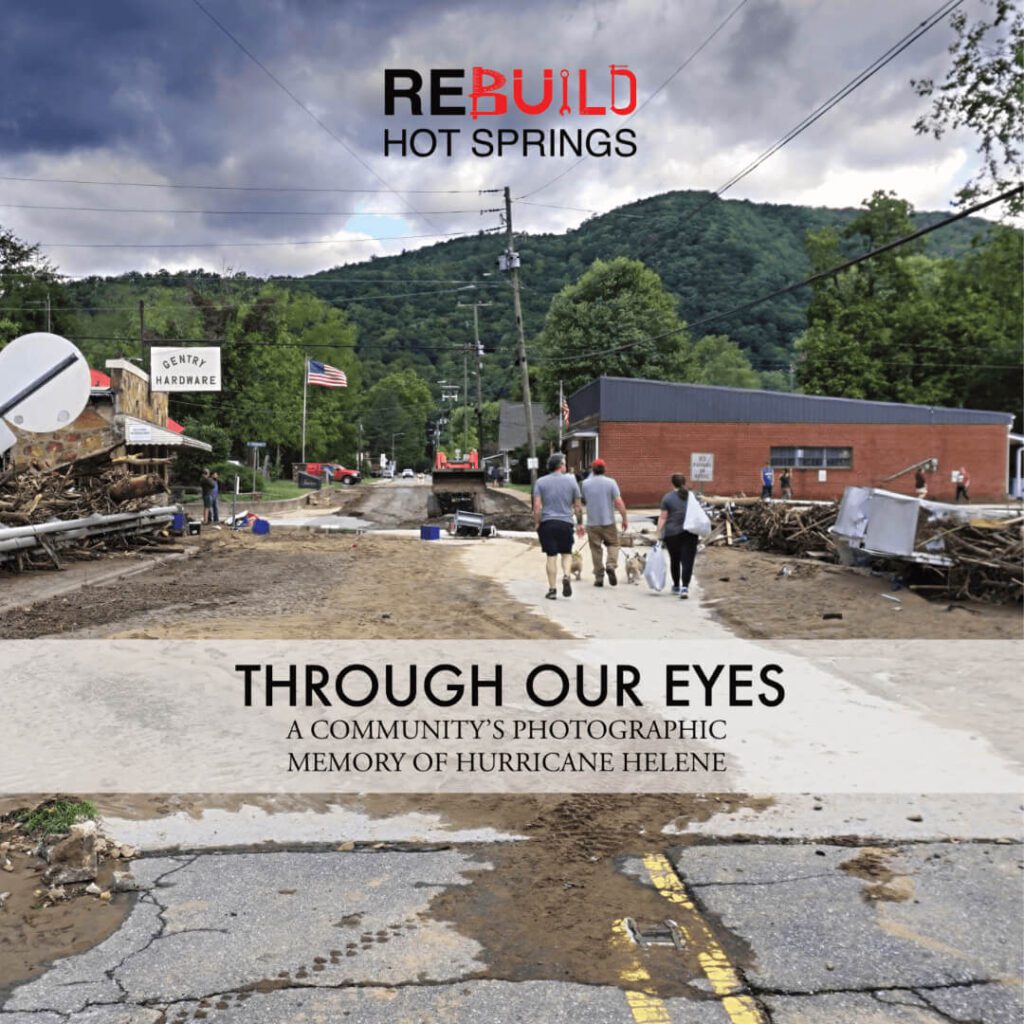
    Check out the upcoming book from Hot Springs, North Carolina, created to help raise funds for the community’s rebuilding efforts. It will be released in just a few weeks—stay tuned for its launch!

    “On the one-year anniversary of Hurricane Helene, the community of Hot Springs is releasing a book unlike any other: Through Our Eyes: A Community’s Photographic Memory of Hurricane Helene. More than a traditional photo book, it is the collective story of a town battered by floodwaters, yet bound together by resilience, memory and hope.

    The book was created through an open call for photographs, stories and oral histories from residents who lived through the storm and its aftermath. Hundreds of submissions poured in—from first responders and neighbors who helped pull families from danger- to snapshots of the rebuilding process that continues today. The result is a vivid, community-published record. A book built by Hot Springs, for Hot Springs, and one that resonates far beyond the mountains, offering a rare, ground-level view of how a community isolated by disaster turned inward-and to each other-to survive. 

    Featuring over 200 curated images contributed by more than 45 community members, along with oral histories from those who helped lead the response in the days after the storm, the full-color book will be available at launch in both hardcover and paperback editions.

    “This project is about more than remembering a storm,” said local Hot Springs community organizer Kevin Reese. “It’s about honoring the people who carried each other through it, and ensuring that the story is preserved for generations to come.” Link below so that you can save this and keep an eye open for the book.

    -Tim Carmichael

  • Appalachian Recovery at Risk: Medicaid Gains in Eastern Kentucky Face a Dire Threat

    Kentucky’s 2014 expansion of Medicaid under the Affordable Care Act delivered tangible improvements in healthcare access and treatment options across some of the nation’s most economically challenged Appalachian counties. Expansion drove broader insurance coverage, augmented access to substance use interventions, bolstered rural clinics and hospitals, and supported thriving recovery services. Current proposed funding reductions, however, threaten these gains and raise alarm that vulnerable communities may endure disproportionate impacts.


    Expansion with Impact: Strengthening Health and Recovery in Appalachia

    Expansion of Medicaid eligibility in 2014 transformed access to care across Eastern Kentucky. Counties among the nation’s poorest benefitted from expanded coverage enabling low income adults to receive much needed health services, including evidence based treatments for substance use disorders. Over $800 million in federal funding underpinned provision of medications for opioid use disorder, distribution of naloxone, counseling, harm reduction programs and community based outreach, largely credited with declines in overdose deaths and stabilization of fragile recovery networks. Those improvements were especially meaningful in Appalachian areas where overdose mortality remained stubbornly high. The expanded access facilitated renewed hope, job reintegration, and public health momentum in a region long grappling with systemic deprivation and isolation. Benefit extended beyond clinical outcomes as communities gained economic resilience as providers expanded operations and treatment centers opened to meet demand.


    Rural Providers and Hospitals: Lifelines Supported by Medicaid

    Rural Appalachian providers relied heavily on Medicaid expansion to stabilize finances and preserve critical services. Hospitals and clinics that served as essential lifelines in isolated regions saw improved operating margins, enabling retention of staff, expansion of behavioral health offerings, and maintenance of emergency care. A comprehensive review found expansion correlated with revenue growth for rural hospitals, fueling sustained operations where alternatives would be sparse. Medicaid also encouraged providers, particularly dentists, to establish practices in previously underserved rural settings. Across Kentucky’s Appalachian belt, these developments translated directly into improved access to preventive care, dental services, treatment for chronic illnesses, and timely interventions.


    Federal Funding Cuts: A Looming Rollback of Progress

    Current legislative proposals now imperil health gains in Appalachian Kentucky. The so called “Big Beautiful Bill” aims to slash roughly $1 trillion from Medicaid over the coming decade, potentially triggering work requirements, stricter income verifications, and dismantling of provider support mechanisms. Experts warn that rural hospitals, already operating under tight margins, face closure. Kentucky alone may lose over $12 billion, threatening roughly 35 rural hospitals and jeopardizing maternity care and emergency services.

    Providers in Eastern Kentucky express rare alarm. Long time nurses report unprecedented concern as clinics brace for financial collapse and diminished capacity. Recovery programs that rely on Medicaid backed services fear disruption. Harlan County, where nearly half the residents depend on Medicaid and opioid recovery remains fragile, stands as a vivid example; sustaining treatment services here has become a matter of life or death.


    Disproportionate Risks for Appalachian Communities

    Cuts would blunt Medicaid’s reach where public health needs are greatest. Appalachian counties carried out measurable reductions in overdose mortality through harm reduction strategies and accessible treatment. Expansion nourished those efforts with stable reimbursement and infrastructure support. Removing that lifeline risks reversing years of recovery, returning communities into cycles of overdose and despair. Funding reductions could shutter treatment sites, restrict access to medications, and unravel trust earned by providers. Expansion fostered not only clinical gains but cultural shifts toward care seeking and stabilization. Regression would be steep and sudden.


    Economic and Social Ripple Effects Across Appalachia

    Health gains under Medicaid supported broader economic vitality. Hospital revenues, clinic operations, and provider investments generated local employment and hygiene of community services. With Medicaid cuts looming, those economic anchors face collapse. Job losses among healthcare workers, evaporation of community clinics, and health deserts that could stretch dozens of miles become real possibilities. That scenario compounds the region’s existing struggles with poverty, workforce decline, and geographic isolation.

    Appalachian Kentucky’s recovery strategies extended into families and backyards. Parents stabilized by treatment program access maintained employment. Children benefited from early interventions. The region’s fragile rebound in health, work, and family well being now stands at a crossroads.


    What’s at Stake

    Expansion gifted Appalachian Kentuckians with access, hope, health, and economic opportunity. Those advances arrived where traditional safety nets had failed, delivering mental health support, overdose prevention, chronic care access, maternal services, and dental clinics into rural counties once considered neglected. Medicaid expansion allowed recovery programs to flourish, empowered hospitals to survive, and brought dignity back into the daily lives of residents.

    Now, proposed cuts threaten cascading reversals such as loss of coverage, closures of clinics, interrupted treatment, and surging uninsurance. Appalachia risks becoming a national symbol of rollback, where policy reversals devastate communities left behind by prosperity elsewhere.


    Charting the Path Forward

    Safeguarding gains requires advocacy, awareness, and policymaker responsiveness. Arguments grounded in public health data, hospital survival analysis, and stories from recovery survivors can build momentum to resist harmful reductions. Coalitions of providers, families, local governments, and advocates can amplify the message: scaling back Medicaid in Appalachia delivers a blow not only to individuals but to the soul of entire communities. Preserving recovery progress demands tangible commitments such as preventing budget reductions, avoiding punitive eligibility constraints, maintaining grants for substance use and mental health services, and preserving funding for rural facilities.


    Closing Reflection

    Appalachian Kentucky’s Medicaid expansion marked a turning point, healthcare access made possible for communities left behind, addiction interventions building a path toward recovery, and rural providers sustained. That transformation unfolded one family, clinic, and hospital at a time. Proposed federal cuts stand poised to dismantle those hard won gains in months. In that sense, cuts will deliver an outsized blow, disproportionate in impact, catastrophic in scale, and unjust in intent. Upholding Medicaid in Appalachia does more than protect access, it preserves the fragile promise of health, healing, and hope.

    -Tim Carmichael

  • What J.D. Vance Got Wrong About Appalachia in Hillbilly Elegy

    When J.D. Vance first published Hillbilly Elegy in 2016, the book was quickly embraced as a cultural touchstone, an explanation, at least in the eyes of many coastal journalists, for the rise of working class resentment in white, rural America. Billed as a memoir, it chronicles Vance’s upbringing in a struggling Rust Belt town in Ohio and his family’s Appalachian roots in eastern Kentucky. The narrative is deeply personal, but it was received and marketed as something much larger, a sweeping diagnosis of “hillbilly” culture itself.

    Now, with the book surging again on the New York Times Best Seller list amid Vance’s ascendance to national political prominence, it is worth revisiting what the memoir actually says about Appalachia and what it gets profoundly wrong. Critics from within the region have long argued that Vance perpetuates harmful stereotypes, cherry picks anecdotes to prove preconceived notions, and downplays the broader structural forces shaping Appalachian life. While Vance has framed Hillbilly Elegy as a tough love critique of his community, many Appalachians see it as a caricature that advances his career at their expense.

    This article takes a close look at the book’s most controversial portrayals, especially around welfare, Appalachian culture, and the broader politics of poverty, and examines why many believe Vance misrepresents the region he claims to represent.


    Welfare Stereotypes and the Myth of the “Welfare Queen”

    One of the most criticized aspects of Hillbilly Elegy is its treatment of welfare recipients. Vance recounts his frustration as a young man working a low wage job while watching neighbors, who received government assistance, purchase items like T bone steaks at the grocery store. He also recalls seeing people with cell phones in line to pay with food stamps, and refers to knowing “many welfare queens,” a phrase with a long, racially coded history in American politics.

    On the surface, these anecdotes are presented as authentic snapshots of Vance’s world. But the way he frames them mirrors decades of conservative talking points that depict welfare recipients as lazy, manipulative, or fraudulent. Scholars of poverty studies note that these narratives, however emotionally resonant they may be for individuals like Vance, are anecdotal distortions. Research consistently shows that fraud within welfare programs is rare, and the majority of recipients use benefits for basic needs. Moreover, access to cell phones or occasional small luxuries does not negate the lived experience of poverty.

    By spotlighting these stereotypes, Vance amplifies an image of Appalachians as uniquely prone to “gaming the system.” This ignores the structural reality. Welfare in the United States is often inadequate, heavily stigmatized, and increasingly difficult to access. It also erases the countless Appalachian families who rely on programs like food stamps, Medicaid, and housing assistance not to live lavishly but to survive in regions devastated by deindustrialization and economic decline.


    Generalizations About Appalachian Culture

    Beyond welfare, Vance makes sweeping claims about the cultural values of Appalachians. He describes young men in his community working fewer than twenty hours a week, attributing their struggles not to a lack of opportunity but to their own laziness and fatalism. He paints Appalachian culture as one of deep pessimism, contrasting it with the optimism and grit of his grandparents, whom he credits with instilling in him a sense of discipline.

    Perhaps the most glaring example comes from his retelling of an encounter with someone from eastern Kentucky who asked, “What’s a Catholic?” Vance follows with the claim that “down in that part of Kentucky, everybody’s a snake handler.” This statement is not just a stereotype but a gross exaggeration. Snake handling is a fringe practice within a tiny subset of Pentecostal churches, hardly representative of Appalachian religion as a whole. By presenting it as a cultural norm, Vance reduces the rich diversity of Appalachian faith traditions including Protestant, Catholic, Jewish, and even growing Muslim communities, to a bizarre caricature.

    Such passages reinforce an image of Appalachia as backward, insular, and deficient. They also overlook the resilience, creativity, and solidarity that define many Appalachian communities. From vibrant traditions of storytelling, music, and labor organizing, to long histories of mutual aid in the face of poverty, Appalachia is more than the dysfunction Vance depicts.


    The Problem of Representation: Ohio vs. Appalachia

    Another major criticism of Hillbilly Elegy is that Vance presents his story as emblematic of Appalachia, when in fact his upbringing was in Middletown, Ohio, a Rust Belt town shaped by industrial decline but not within the Appalachian cultural core. While Vance’s family ties trace back to eastern Kentucky, critics argue that his lived experience was suburban and Midwestern as much as Appalachian.

    This matters because Vance writes as though his personal journey explains an entire region’s supposed pathology. In reality, Appalachia is vast and diverse, stretching from southern New York to northern Mississippi, encompassing cities like Pittsburgh, Asheville, and Birmingham, as well as remote rural areas. To collapse all of this complexity into a single narrative of laziness, fatalism, and cultural dysfunction is both misleading and damaging.

    As Appalachian writer Elizabeth Catte argues in her book What You Are Getting Wrong About Appalachia, Vance’s memoir resonates with outsiders precisely because it confirms their preexisting stereotypes. It is less a work of regional representation than a political parable, one man’s story of escaping poverty through grit and military service, contrasted against a “culture” that he claims traps others in dependency.


    Overlooking Structural Issues: Deindustrialization and the Opioid Crisis

    Perhaps the most consequential omission in Hillbilly Elegy is its treatment of systemic forces. Vance acknowledges economic decline but quickly pivots to cultural explanations, suggesting that the real problem is a lack of personal responsibility. He minimizes the role of deindustrialization, globalization, union busting, and decades of policy neglect that devastated communities like Middletown. Instead, he emphasizes individual moral failings such as violence, addiction, and laziness as the root causes of poverty.

    This framework is particularly problematic in light of the opioid crisis. Appalachia has been one of the hardest hit regions in the country, not because of cultural dysfunction but because pharmaceutical companies deliberately flooded these communities with addictive painkillers while regulators looked the other way. By treating addiction as evidence of cultural weakness rather than the result of systemic exploitation, Vance shifts blame from corporations and policymakers to the very people most harmed.

    In doing so, Hillbilly Elegy aligns with a broader political narrative that individualizes poverty while obscuring structural inequality. It is easier, perhaps, to tell a story of dysfunctional families than to grapple with the collapse of an economic order that once sustained entire regions. But the cost of this narrative is that it stigmatizes poor Appalachians while excusing the systems that failed them.


    The Self Made Man Myth and the Invisible Safety Net

    Another irony of Vance’s memoir is its embrace of the “self made man” myth. He positions his own success, Yale Law School, a career in venture capital, a U.S. Senate seat, and now Vice President as the result of personal grit, discipline, and hard work. He acknowledges his grandparents’ role in raising him but largely downplays the institutional supports that enabled his rise.

    For example, Vance served in the Marine Corps, which provided him with structure, discipline, and educational benefits through the GI Bill. These forms of government support were pivotal in his trajectory, yet he rarely frames them as such. Instead, he casts welfare programs for the poor as enabling dependency while presenting his own access to state resources as a deserved reward for personal virtue. Not to mention he had a millionaire Peter Thiel funding most of his investments.

    This double standard reinforces a broader cultural myth, that some forms of government assistance such as veterans’ benefits, tax breaks for homeowners, subsidies for corporations are legitimate, while others such as food stamps or Medicaid are handouts. In reality, all of these are forms of redistribution. By obscuring this, Vance perpetuates the idea that poverty stems from moral failure rather than unequal access to resources and opportunities.


    A Political Treatise Disguised as Memoir

    Though marketed as a personal memoir, Hillbilly Elegy functions as a political treatise. It arrived in 2016 at the exact moment when journalists and policymakers were desperate to understand the appeal of Donald Trump among white working class voters. Vance’s story, with its mix of personal struggle and conservative moralizing, offered an easily digestible explanation. Rural whites are angry and left behind, not because of structural inequality, but because of their own dysfunctional culture.

    This framing has proven politically useful, not only for the book’s reception but for Vance’s own career. He leveraged Hillbilly Elegy into a platform as a commentator, investor, and now politician. But the cost has been the reinforcement of damaging stereotypes about Appalachia, presented to a national audience as objective truth.

    Many Appalachians reject this portrayal, pointing instead to traditions of solidarity, labor activism, and resilience that run counter to Vance’s narrative. They argue that the region’s struggles are not the result of cultural rot but of systemic exploitation, from coal companies to pharmaceutical giants, that has left communities struggling against immense odds.


    Conclusion: Reclaiming the Story of Appalachia

    Hillbilly Elegy may have captivated audiences eager for an explanation of rural white America, but it did so by flattening the complexity of Appalachia into a caricature of laziness, dysfunction, and fatalism. Vance’s anecdotes about welfare recipients perpetuate harmful stereotypes. His generalizations about Appalachian culture misrepresent the region’s diversity. His memoir overlooks the structural forces such as economic collapse, opioid profiteering, and policy neglect that have shaped Appalachian life. And his embrace of the self made man myth obscures the very forms of government support that enabled his own success.

    For Appalachians, the frustration is not that Vance told his own story, it is that he framed it as the story of a region, while reinforcing stereotypes that harm real communities. With the book once again in the spotlight, it is crucial to challenge these narratives and amplify the voices of Appalachians telling their own stories on their own terms. Works like Elizabeth Catte’s What You Are Getting Wrong About Appalachia or Silas House’s novels offer more nuanced, empathetic, and accurate portrayals of the region.

    Ultimately, Appalachia is not defined by the dysfunction Vance describes. It is defined by resilience in the face of hardship, creativity in the face of neglect, and a rich cultural tapestry that resists reduction to stereotypes. The real error of Hillbilly Elegy is not that it tells one man’s story, but that it mistakes that story for the soul of an entire people.

    -Tim Carmichael