• Bloody Breathitt: The Murder That Shook Appalachia

    Breathitt County, Kentucky, is a place with a complicated history. By the early 1900s, it had earned the nickname “Bloody Breathitt” for its reputation of violence, political corruption, and feuds. In 1903, the murder of James B. Marcum, a lawyer who challenged the powerful, became a defining moment in the county’s story.

    This is not just a tale of a killing. It’s a look at how one murder revealed the deep cracks in a community ruled by fear and power.

    A Lawyer Who Took Risks

    James B. Marcum was a defense attorney in Jackson, Kentucky, the seat of Breathitt County. In a place where political factions settled disputes with guns, Marcum stood out. He represented clients who opposed the Hargis family, a powerful political group that controlled much of the county. The Hargis faction was known for using violence to maintain its grip, and Marcum’s work made him a target.

    At the time, Breathitt County was in the middle of a violent feud between the Hargis and Cockrell families. Shootings and assassinations were common, and the courthouse in Jackson was often the backdrop for bloodshed. Marcum knew the risks but continued to take on cases that others wouldn’t touch.

    The Killing on the Courthouse Steps

    On May 4, 1903, Marcum was walking up the steps of the Breathitt County courthouse when two men, Curtis Jett and Tom White, opened fire. Marcum was shot multiple times and died on the spot. The shooters escaped into the crowd, leaving behind a scene of chaos and fear.

    Jett and White were known enforcers for the Hargis faction. Their attack in broad daylight sent a clear message: challenging the powerful came with deadly consequences.

    Library of Congress

    A Trial That Failed to Deliver Justice

    The murder of James Marcum shocked the community, but the trial that followed exposed the corruption that ran deep in Breathitt County. Witnesses who had seen the shooting either changed their stories or refused to testify. The defense argued that Marcum had provoked the attack, a claim that didn’t hold up to scrutiny but played well to a jury likely influenced by fear.

    In the end, Jett and White were acquitted. The verdict was less about the evidence and more about the power dynamics in the county. The Hargis faction had won again, and the message was clear: crossing them was a death sentence.

    The Aftermath

    Marcum’s murder didn’t end the violence in Breathitt County. If anything, it reinforced the county’s reputation as a place where justice was hard to come by. The feuds continued, and the name “Bloody Breathitt” stuck.

    But over time, the killing of James Marcum became a symbol of the lawlessness that once defined the region. It drew national attention to the corruption and violence in Breathitt County, and eventually, the feuds began to fade.

    A Legacy That Lingers

    Today, Breathitt County is a quieter place. The courthouse where Marcum was killed still stands, a reminder of a darker time. For those who know the history, it’s a stark example of what happens when power goes unchecked, and justice is out of reach.

    The story of James Marcum isn’t just about a murder. It’s about a community’s struggle with its own demons and the slow, difficult path toward change.

    -Tim Carmichael

  • True Story: The Appalachian Murder Mystery That Haunts Rainbow Valley

    On a summer evening in June 1980, what appeared at first glance to be a couple sharing an intimate moment in West Virginia’s Droop Mountain Park turned out to be a gruesome discovery. A college student stumbled upon the bodies of two women—Vicki Durian (26) and Nancy Santomero (19)—who had been shot at close range and abandoned in a secluded clearing. Medical examiners confirmed neither victim had been sexually assaulted.

    The two women had departed from Iowa City earlier that month with plans to attend the Rainbow Gathering, a counterculture peace festival taking place in Monongahela National Forest. They chose to hitchhike their way there but never reached their destination. These killings, which became known as the “Rainbow Murders,” cast a shadow of fear and suspicion over the local community that persists to this day.

    A third traveler, Liz Johndrow, had been journeying with Durian and Santomero but separated from them at a Virginia truck stop the day before the murders. She later explained that an inexplicable feeling of unease prompted her decision to change course, along with news that her father was getting married that weekend. Now in her fifties, Johndrow remembers Durian (whom she knew as “Bright Star”) as a warm, instantly friendly person, while describing Santomero as more serious but curious and adventurous.

    Despite thousands attending the Rainbow Gathering, investigators focused on local suspects due to the remote location of the crime scene. The case went cold until 1982 when Jacob Beard, a 36-year-old farmer from the area, drew attention after making several calls to Durian’s parents. Beard claimed he had become preoccupied with the murders after reading a newspaper article about the anniversary of the case. During these calls, one of which was recorded by authorities, he criticized local law enforcement and suggested the FBI should take over the investigation.

    Nearly ten years after the killings, in April 1992, Beard and six other local men faced murder charges. Two co-defendants initially identified Beard as the shooter, but accusations of police misconduct during questioning emerged at a pre-trial hearing. Authorities subsequently dropped all charges but later reindicted five men, eventually pursuing charges only against Beard.

    The case took an unexpected turn when Joseph Paul Franklin—a convicted serial killer notorious for shooting and paralyzing Hustler magazine publisher Larry Flynt—confessed to the Rainbow Murders in 1984. Franklin later recanted his confession and refused further discussion about the case. The trial judge deemed Franklin’s statement unreliable and prevented its introduction as evidence.

    In June 1993, a jury found Beard guilty and sentenced him to life imprisonment without parole. His attorneys continued to fight, presenting both Franklin’s original confession and new testimony placing Beard elsewhere on the day of the murders. In January 1999, the court overturned his conviction and ordered a new trial, which resulted in Beard’s acquittal in May 2000. He later received a $2 million settlement for wrongful conviction.

    Many believe the Rainbow Murders case will never be truly solved. The investigation was complicated by apparent friction between local sheriff’s deputies and state police. After more than four decades, this tragic crime continues to haunt the rural Appalachian community where it occurred, leaving lasting trauma not only for the victims’ families but also for locals who were accused, those who investigated the case, and their families.

    -Tim Carmichael

  • The Hidden Cost of Budget Cuts- How Republican Proposals Could Impact Their Own Voters in Appalachia

    House GOP passes budget resolution, crucial step toward Trump’s agenda | AP News

    In the aftermath of the 2024 election, the newly empowered Republican government is moving forward with an ambitious budget resolution that proposes significant cuts to federal spending. While budget restraint is often framed as fiscal responsibility, a closer examination reveals a concerning reality: the proposed cuts could disproportionately impact many of the same voters who helped secure Republican victories.

    The Numbers Behind the Cuts

    The current Republican budget resolution proposes approximately $800 billion in cuts to the Commerce Department, which plays a crucial role in administering Medicaid programs, and another $250 billion in cuts to the Agriculture Department, which oversees the Supplemental Nutrition Assistance Program (SNAP), commonly known as food stamps.

    These aren’t just abstract numbers on a spreadsheet. They represent real resources that millions of Americans — particularly those in economically challenged regions — depend on for healthcare and food security.

    Red State Reliance

    What makes these proposed cuts particularly notable is the demographic reality of who benefits from these programs. In many Republican-dominated states, especially across the Appalachian region and rural America, there is significant reliance on these social safety net programs:

    • In states like Kentucky, West Virginia, and Mississippi, between one-third and one-fifth of residents receive Medicaid benefits
    • SNAP participation rates in many red states significantly exceed the national average
    • The Appalachian region, which has consistently voted Republican for decades, has some of the highest participation rates in both programs

    This creates a paradoxical situation where the representatives elected by these communities are proposing policies that could directly impact their constituents’ access to healthcare and food assistance.

    House Republican Cuts for Kids by the Numbers — Center for American Progress

    The Economics of Distraction

    The budget resolution aims to find approximately $900 billion in savings, which critics argue will primarily fund tax cuts that disproportionately benefit wealthier Americans. This raises important questions about priorities and representation.

    Political strategists have noted a persistent pattern where economic anxieties in struggling regions are often channeled toward cultural issues rather than policy discussions about programs that directly impact daily life. The resulting voting patterns sometimes create situations where communities elect representatives whose economic policies may work against local interests.

    The Appalachian Example

    The Appalachian region serves as a particularly illustrative example of this dynamic. Despite decades of Republican representation at various levels of government, the region continues to face significant economic challenges, including:

    • Persistently high poverty rates
    • Limited economic diversification following the decline of coal and manufacturing
    • Health outcomes that lag behind national averages
    • High rates of dependence on federal assistance programs

    Yet political messaging in the region often focuses on cultural identity and opposition to “outside” influences rather than the concrete impacts of policy decisions on local communities.

    Beyond the Budget Numbers

    The debate around these budget cuts goes beyond simple accounting. It touches on fundamental questions about governance, representation, and the role of government in supporting vulnerable communities.

    For many families in economically challenged regions, programs like Medicaid and SNAP represent not handouts but essential support systems that help them weather economic transitions and hardships that are often beyond individual control.

    Looking Forward

    As this budget resolution moves through the legislative process, it remains to be seen whether constituent concerns about potential cuts to these programs will influence the final outcome. The tension between fiscal conservatism and the practical needs of many Republican-voting communities presents both a challenge and an opportunity for more nuanced policy conversations.

    What’s clear is that the impacts of these proposed cuts would not be limited to Democratic-leaning urban areas. They would be felt deeply in the rural communities and small towns that have become the backbone of Republican electoral success.

    Perhaps the most productive path forward lies not in partisan positioning but in developing budget approaches that recognize the complex needs of all American communities — including those whose votes helped shape the current political landscape.

    -Tim Carmichael

  • The Soul of the Mountains- What Makes Appalachian Cooking Unforgettable?

    “From cornbread to ramps, the flavors of the mountains tell a story of resourcefulness, community, and deep-rooted tradition. As the author of three cookbooks on the subject, I’ve spent years uncovering what makes this cuisine so special.”

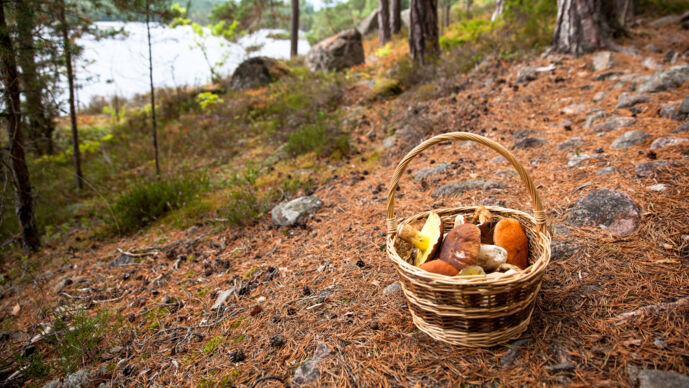
    Photo by: Margin Making Mom

    Appalachian food has always been about working with what’s available. Long before “sustainable” and “organic” became trendy, mountain cooks were already living those principles. A summer meal at a farmhouse table might include sliced tomatoes still warm from the garden, corn on the cob dripping with butter, cucumber slices chilling in ice water, and a pot of green beans simmered with a piece of salt pork. It’s food that’s fresh, straightforward, and deeply tied to the seasons.

    One of the region’s most iconic dishes is soup beans and cornbread. Soup beans — pinto beans slow-cooked with a ham hock or fatback — are hearty and rich, often paired with a wedge of cornbread made from stone-ground cornmeal. This meal, rooted in the traditions of Native Americans and African Americans, shows how mountain cooks transformed simple ingredients into something nourishing and deeply satisfying.

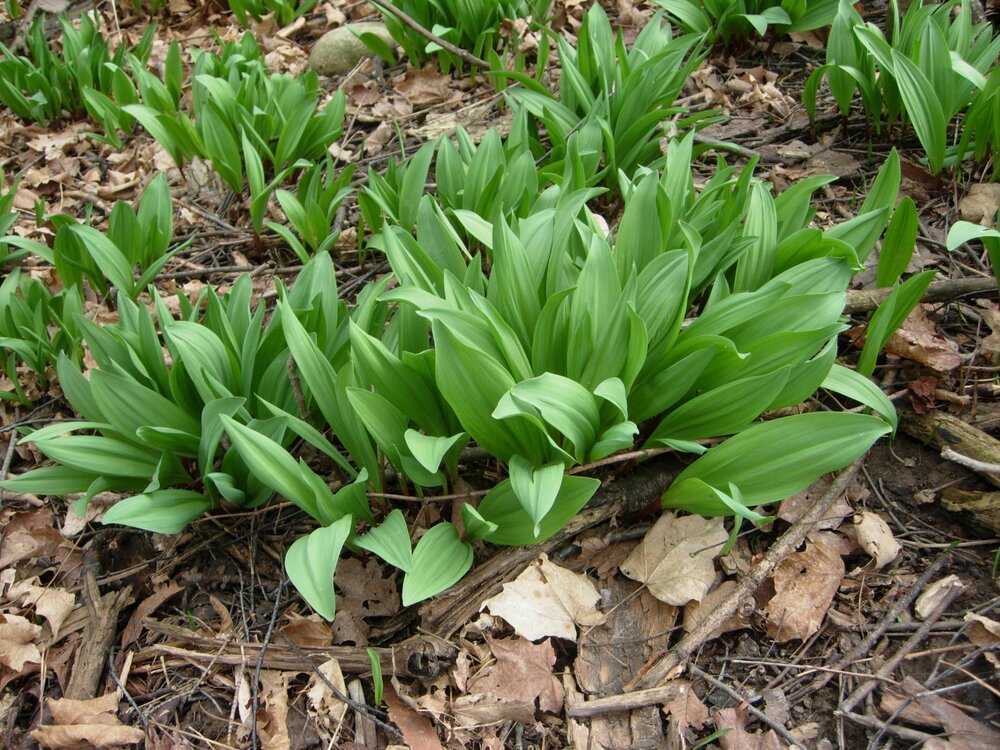
    Then there are ramps, the wild mountain leeks with a sharp, garlicky flavor. For generations, ramps have been foraged in the spring, valued not just for their taste but also for their role in traditional medicine. Cherokees believed ramps helped “thin the blood” after a long winter. Today, ramp festivals celebrate this wild onion across the region, and chefs nationwide eagerly seek them out for their unique flavor. What was once a foraged staple has become a sought-after delicacy, a testament to how Appalachian food reflects its history and heritage.

    Wild Ramps

    Preservation has always been central to Appalachian cooking. Canning, pickling, and drying were essential for making the harvest last through the winter. Salt-cured ham, with its deep, savory flavor, is a centerpiece of many mountain tables, especially during the holidays. Desserts like apple stack cake and blackberry cobbler often rely on preserved fruits, turning humble ingredients into something special.

    But Appalachian food isn’t just about practicality — it’s about community. Church potlucks, family reunions, and community suppers are where this cuisine truly comes alive. Tables are loaded with fried chicken, deviled eggs, green bean casseroles, and pies of every kind. These gatherings are as much about connection as they are about food, a reminder that in the mountains, cooking is an act of care and generosity.

    In recent years, the rest of the world has started to take notice of Appalachian food. With a growing emphasis on locally sourced, sustainable ingredients, chefs are rediscovering the wisdom of mountain cooking. When done with respect and authenticity, this recognition is long overdue. Appalachian cuisine isn’t just about what’s on the plate — it’s about the stories, traditions, and people behind it.

    So, the next time you sit down to a plate of soup beans and cornbread, or bite into a slice of pawpaw pie, remember you’re tasting a piece of history, a legacy of resourcefulness, and a celebration of the region’s rich heritage.

    -Tim Carmichael

  • The Night the Church Bell Rang on Its Own in the Heart of Appalachia

    In the backwoods of eastern Kentucky, there’s an old church that’s been standing longer than anyone can remember. It’s a plain, boxy building with peeling white paint and a steeple that tilts like it’s about to give up. The bell inside hasn’t been rung in years, not since the last preacher left town. But folks around here still whisper about it — how sometimes, late at night, the bell rings on its own.

    The legend goes back to the 1920s, when the church was still active. The preacher then was a man named Silas Hargrove, a fire-and-brimstone type who didn’t tolerate much nonsense. He was a hard man, strict with his congregation and even harder on his family. His wife, Eliza, was quiet and kept to herself, but their son, Caleb, was wild. He’d sneak out at night, drink moonshine, and run with a rough crowd. Silas tried to beat the devil out of him, but it never took.

    One night, Caleb didn’t come home. Silas found him the next morning, lying at the bottom of the church’s steeple. The boy had been climbing the ladder, drunk, and fell. Some folks said it was an accident, but others whispered it wasn’t. Silas never talked about it, and Eliza died not long after, some say of a broken heart. The church closed its doors a few years later, and Silas left town, leaving the bell hanging in the steeple, silent.

    But the stories didn’t stop. People started saying they’d hear the bell ring late at night, always when the moon was full. It wasn’t a regular ringing, like for a service, but a single, heavy clang that seemed to come from nowhere. Some said it was Caleb’s ghost, trying to warn people away. Others thought it was Silas, cursed to haunt the place where his son died. Whatever it was, no one could explain it.

    One chilly October night in 1987, a group of teenagers decided to see if the stories were true. They’d grown up hearing about it — how the bell would sound without anyone touching it, how it only happened when the moon was full. Most people brushed it off as nonsense, but the kids were curious. Or maybe just bored. Either way, they grabbed a couple of flashlights and headed out.

    The church sat at the end of a dirt road, surrounded by woods so thick you couldn’t see the sky. The moon was bright that night, lighting the way as they walked. The air smelled like damp leaves and wood smoke, and the only sound was the crunch of their boots on the gravel. When they got to the church, they stopped. The steeple looked taller in the dark, the bell just a shadow against the sky.

    “Go on,” one of the boys said, shoving his friend forward. “Climb up and see if it’s real.”

    The friend, a skinny kid named Danny, shook his head. “No way. You do it.”

    They went back and forth for a while, each one daring the other, until Danny finally gave in. He grabbed the rusty ladder on the side of the church and started climbing. The rungs groaned under his weight, and the higher he got, the more he regretted it. When he reached the top, he shone his flashlight into the steeple. The bell was covered in rust and bird nests, but it looked solid, like it hadn’t moved in years.

    “See?” Danny called down. “Nothing’s gonna — ”

    The bell rang.

    It wasn’t a soft ding, but a deep, heavy clang that shook the steeple and echoed through the trees. Danny nearly fell off the ladder, scrambling down so fast he skinned his hands. The others froze, their flashlights darting around, looking for what had caused it. But there was no wind, no animals, no reason for the bell to move. It rang again, louder this time, and the group took off running, leaving their flashlights and half-empty soda cans behind.

    The next day, the whole town was talking. Some said it was a prank, others blamed it on the weather, but the teenagers swore they hadn’t touched the bell. Danny refused to go near the church again, and the others weren’t far behind. The adults shook their heads, saying kids these days had too much time on their hands, but even they couldn’t explain it.

    The church is still there, though the steeple leans a little more every year. The bell hasn’t rung since that night, but people say you can still hear it sometimes, if you’re brave enough to get close. It’s a story that gets told at family reunions and late-night bonfires, a reminder that some things don’t have answers — and maybe that’s the point.

    -Tim Carmichael

  • Betrayed by the Ballot- How Appalachia Voted for the Politicians Slashing Their Healthcare

    In the Appalachian Mountains, a healthcare emergency is taking shape. The new Republican budget resolution threatens to destroy the medical safety net that millions of residents depend on in a region already hit hard by poverty, health problems, and limited care options.

    Throughout Appalachian states — Kentucky, West Virginia, Tennessee, and Ohio and more— Medicaid isn’t just another government program but essential healthcare. Between 20–33% of residents in these states rely on Medicaid. These numbers represent real people: miners with black lung disease, rural families, elderly mountain residents, and working people trying to get by.

    House Republicans have called for $2 trillion in cuts through 2034 across social programs, with Medicaid as a primary target. For communities where hospitals are already closing and doctors are scarce, these cuts could be catastrophic.

    The most puzzling aspect is that many communities most threatened by these cuts strongly supported Donald Trump in recent elections. Counties with the highest Medicaid enrollment in Kentucky, West Virginia, and Tennessee often show the strongest Republican support.

    This disconnect stems partly from campaign tactics that divert voters’ attention from economic policies that would harm them. Republican candidates often rally support by stoking fears about cultural issues — claiming Democrats are “attacking Christianity,” “waging war on Christmas,” or allowing transgender athletes to dominate women’s sports, despite only a handful of such athletes competing worldwide. These emotional appeals, amplified through conservative media outlets like Fox News, create a smoke screen that obscures policy discussions about healthcare, food assistance, and education.

    Many Appalachian voters, bombarded with these messages daily, cast ballots based on manufactured cultural grievances rather than economic self-interest. The constant stream of misinformation creates a political environment where voters support candidates whose policies directly threaten their access to healthcare.

    While slashing vital programs, the budget simultaneously allows the Ways and Means Committee to increase the deficit by $4.5 trillion over the same timeframe. This includes extending expiring tax cuts through 2034 and adding roughly $900 billion in new tax cuts. Budget experts note these tax benefits would flow mainly to wealthy Americans and corporations — not to mountain communities that depend on the programs being cut.

    The damage extends past healthcare. The food assistance program (SNAP), which feeds struggling families throughout Appalachia, faces major reductions. In counties where hunger rates already exceed national averages, these cuts mean more empty refrigerators. Cuts to student loan programs would further limit education access in a region struggling to build new economic opportunities beyond coal — a transition that demands education and training.

    Each percentage point in these budget documents represents thousands of real stories. Picture a single parent from eastern Kentucky, raising two kids while working at a dollar store. Their job offers no health insurance, so Medicaid covers their children’s medications and their own health needs. Under the proposed cuts, this parent might soon choose between medicine and groceries. Multiply this situation by millions across Appalachia to understand the true cost of these budget choices.

    As these proposals move forward, mountain communities are bracing for impact. Rural health clinics are preparing for waves of uninsured patients. County officials from both parties are questioning how their towns will survive these changes. The outcome remains uncertain. Will elected officials from Appalachian states defend their constituents’ healthcare needs? Will voters recognize how campaign rhetoric diverts attention from policies that affect their families’ well-being? The answers will determine not just funding levels, but the health and survival of one of America’s most overlooked regions.

    Appalachian residents need to start educating themselves on the economic issues that directly affect their families’ wellbeing and healthcare access. The time has come to look beyond the culture war distractions and examine which policies actually improve life in their communities. By focusing on concrete issues like Medicaid funding, hospital access, and job creation rather than manufactured outrage, voters can hold elected officials accountable for decisions that impact their daily lives. The region’s future depends on breaking the cycle of voting against economic self-interest based on scare tactics and misinformation.

    For now, Appalachian families wait, wondering what comes next, while the politicians they voted for advance policies that could devastate their communities.

    -Tim Carmichael

  • The Stone Terror of the Smokies- Exploring the Legend of Spearfinger

    In the Great Smokie Mountains, Cherokee stories tell of a dangerous being that once hunted in the forests in the Smoky Mountains. Known as U’tlun’ta’ or “Spearfinger,” this shapeshifting witch is one of the most frightening characters in Native American folklore.

    Spearfinger had one terrifying feature: her right index finger was long and sharp like a spear or obsidian knife. She used this to cut open victims and take their livers. Her skin was like stone, making her almost impossible to kill as she walked through the Appalachian wilderness.

    What made her even more dangerous was her ability to change how she looked. She often appeared as a harmless old woman to trick people, especially children, into coming close to her.

    Spearfinger was incredibly strong. She could move huge boulders that humans couldn’t budge and used this ability to build structures throughout the Appalachian region.

    She could also copy the voices of family members perfectly, calling children away from safety. This made her legend especially scary — the monster could sound like someone you trust.

    Spearfinger mainly went after children, making her story a useful warning to keep young ones from wandering off. She would use her sharp finger to take a child’s liver without them even knowing they’d been attacked. Then she would eat the organ.

    Some stories say she would even sew her victims back up so well that the children wouldn’t realize what happened — until they began to get sick from the missing organ.

    The Cherokee eventually had enough of Spearfinger’s attacks. Hunters and medicine men tracked her down, finding that she had one weak spot: a vulnerable area on her hand where her heart was hidden.

    In the final battle, the hunters shot an arrow into this spot, finally killing her. Different versions of the story involve different tricks and special medicines used to defeat her.

    The Spearfinger legend did more than scare kids. It warned children about wandering off alone, taught people to be careful with strangers, showed the real dangers of the wilderness, and passed on values about protecting the community.

    Like many native stories, Spearfinger’s tale wrapped important survival lessons in a memorable story.

    The legend lives on in books about Native American folklore and Cherokee cultural programs. Her story shows how traditional tales do more than entertain — they teach wisdom, give practical warnings, and strengthen community bonds.

    The mountains where she once hunted are still there, and some who walk those trails might still feel a chill when the wind moves through the ancient trees, almost like a voice calling them deeper into the woods.

    -Tim Carmichael

  • Mountain Symphony

    Through ancient ridges draped in blue,
    I wind my way on trails worn true.
    Where rhododendrons paint the way
    With pink and white on summer’s day.

    The valley stretches far below,
    A patchwork quilt of green and gold.
    While hawks drift lazy circles high,
    Their shadows dancing cross the sky.

    Each footfall brings a gentle peace,
    As worldly troubles find release.
    The mountain air, so crisp and clean,
    Whispers stories yet unseen.

    Along the path, a stream flows clear,
    Its music drawing creatures near.
    A gentle doe with watchful eyes
    Pauses briefly, then softly flies.

    The summit calls with patient voice,
    Each step upward now a choice.
    Until at last the view unfolds—
    Mountains stacked in purple blues,

    Rolling endlessly in hues
    That change with every passing cloud,
    Nature’s majesty allowed
    To simply be, while I stand proud

    Upon this peak, my spirit bowed
    By beauty that no words contain,
    A peace I’ll climb to find again.

    -Tim Carmichael

  • Mountain Lawmaker – Liston B. Ramsey A Legacy of Service to Western North Carolina

    Liston B. Ramsey, an influential North Carolina legislator who championed the interests of Western North Carolina’s rural communities, left an indelible mark on the region through his decades of public service and dedication to local development.

    Liston B. Ramsey

    Born on February 26, 1919, in Madison County’s Walnut Creek community, Ramsey showed promise early in life. As valedictorian of Marshall High School’s class of 1936, he went on to earn his associate’s degree from Mars Hill College in 1938. His commitment to service led him to join the United States Army Air Corps during World War II, where he served in the Pacific Theater and attained the rank of Sergeant.

    Upon returning home in 1945, Ramsey began his political career serving on the Marshall Board of Alderman from 1948 to 1960. This experience laid the groundwork for his distinguished tenure in the North Carolina House of Representatives, where he became known for his steadfast advocacy for farmers and working families.

    Throughout his legislative career, Ramsey secured funding for numerous projects that continue to benefit Western North Carolina today. His legacy is visible in institutions like the North Carolina Arboretum, the Western North Carolina Farmers Market, and the Liston B. Ramsey Activity Center at Western Carolina University. In 2003, a section of Interstate 26 between Asheville and Johnson City was renamed the Liston B. Ramsey Freeway, honoring his contributions to regional infrastructure.

    Ramsey passed away on September 2, 2001, following a period of declining health.

    I was proud to know Mr. Ramsey and was invited to attend his funeral. I have never forgotten him and what he did for Madison County where I was from, even after nearly 25 years of him being gone I still remember him and his stories he would tell me. He was a good man who always talked to you as if he had known you his whole life.

    Today, Ramsey’s influence on Western North Carolina’s development remains evident, serving as a testament to his dedication to public service and his commitment to improving life in the mountain communities he called home.

    -Tim Carmichael

  • The Granny Women of Appalachia: Mountain Medicine and Folk Healing

    The first time I watched my grandmother cure a wart, it wasn’t magic — it was something far more powerful. She took an onion hull in her weathered hands, a small heated rock, and a piece of clean white cloth. With practiced movements, she rubbed the wart on my hand with the onion hull and the warm rock, her touch gentle but purposeful. She wrapped these items carefully in the white cloth, then walked to the forks of the road near our home. There, she placed the bundle and spoke words I couldn’t quite hear. Within days, the wart that had troubled me for months simply vanished.

    I was young then, and I didn’t understand that I was witnessing something far more precious than magic. I was watching a Granny woman at work — one of the fierce, wise healers who kept Appalachian communities alive through centuries when doctors were as rare as gold in these mountains.

    My grandmother could smell rain coming two days early and spot healing plants from thirty paces away. I remember the morning she taught me about yellowroot — how she grabbed my hand to stop me from picking the wrong plant. “This one looks similar,” she said, “but it’ll make you sick as a dog. You have to look at the stem, not just the leaves.” She then showed me how to dig up the real yellowroot, explaining how its golden center could cure thrush in babies and wash out infected cuts.

    Her hands were always stained from plants — green from pokeweed in spring, purple from blackberries in summer, yellow from goldenrod in fall. Each color told a story of healing. Those same hands delivered babies, set bones, and mixed medicines that could break fevers or ease a dying person’s final hours.

    On many nights, neighbors would come pounding on our door. A child with fever, a difficult birth, a broken bone — they all knew my grandmother could help. She’d grab her birthing bag — filled with red raspberry leaf, blue cohosh, and other herbs I’d helped her gather. She knew exactly which plants would ease labor pains and which would help deliver a stuck baby.

    These women were the original healers of the mountains, but calling them “folk healers” doesn’t do them justice. They were pharmacists who could tell you exactly how many minutes to steep spicebush for a fever. They were midwives who could turn a breech baby using just their hands and knowledge. They were counselors who knew that sometimes a troubled spirit needed healing more than a sick body.

    My grandmother’s remedies worked because she understood both medicine and human nature. For arthritis, she prescribed a poultice of crushed dandelion roots and a reason to get out of the house each day to gather fresh ones. For a chronic cough, she made a syrup of wild cherry bark and honey, but she also knew to check for damp in the house that might be causing it.

    I learned that healing wasn’t just about knowing plants — it was about knowing people. When my grandmother treated someone, she listened to more than just their symptoms. She heard their fears, their family troubles, their secret hopes. People trusted her not just because her medicines worked, but because she saw them as whole human beings.

    The legacy of these remarkable women inspired me to write my book “The Magic of the Mountains: Appalachian Granny Witches and Their Healing Secrets” Their story is one of practical knowledge, deep wisdom, and dedicated service to their communities. While modern medicine has largely replaced their practices, their understanding of local plants and healing traditions remains valuable. They remind us that healing comes in many forms, and that knowledge rooted in careful observation and practical experience deserves our respect.

    My grandmother didn’t just heal bodies; she healed spirits. She taught me that real medicine isn’t always found in pills and hospitals. Sometimes it grows wild on mountainsides, and sometimes it comes from the simple act of being heard and cared for by someone who knows both the old ways and the human heart.

    Today, when I dig in my own herb garden or make teas for sick friends, I feel my grandmother’s wisdom living on through my hands. The Granny women may be fewer now, but their legacy lives on in every wild plant that still grows on these mountains, waiting to heal whoever knows its secrets.

    -Tim Carmichael