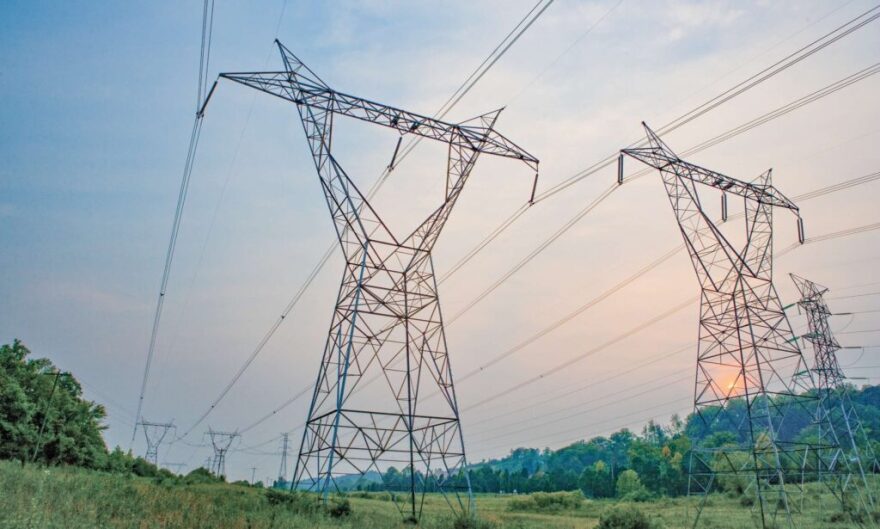
A storm is gathering across the Tennessee Valley, one rooted in history, identity, and the future of public infrastructure. At the center stands the Tennessee Valley Authority, an institution born during the Great Depression and long regarded as a symbol of collective progress. Today, that legacy faces a profound challenge as political leaders and private interests push toward a sweeping transfer of its assets into corporate hands, while a parallel struggle unfolds over who will control the authority itself.
The TVA emerged in 1933 under the New Deal, designed to electrify a struggling region, control flooding, and stimulate economic growth. Entire communities watched as power lines stretched across rural landscapes, bringing electricity to homes that had relied on kerosene lamps. The project carried a sense of shared ownership. Families whose land was taken through eminent domain often believed their sacrifice contributed to a public good that would serve generations.
That shared belief now sits at the heart of a fierce debate. Since late 2025, proposals have surfaced that call for the gradual sale of TVA infrastructure to private corporations. At the same time, a political struggle over leadership has intensified, raising fears that control of the utility could shift before any formal sale takes place.
The involvement of Donald Trump has transformed what once seemed like a policy discussion into a high stakes power struggle. Efforts to reshape the TVA leadership structure have drawn national attention, especially after pressure mounted on the board to remove its chief executive. The attempt to force out the CEO signaled a broader strategy aimed at aligning the authority with a new political vision.
This confrontation followed earlier moves that disrupted the TVA board itself. Several members were dismissed, leaving the governing body weakened and vulnerable to further changes. With fewer voices in place, the balance of oversight shifted, creating conditions where leadership decisions could be influenced more directly from the federal level.
Observers across the energy sector see a clear pattern. By removing board members, pressuring remaining leadership, and attempting to install new figures, federal power can gain indirect control over the TVA. Once that control is secured, the path toward privatization becomes far more achievable. Analysts have warned that installing a supportive board and executive team could enable the sale of assets or even the entire utility.
Residents across Tennessee, Alabama, Mississippi, and Kentucky have begun to voice alarm. Many view the potential sale as a betrayal of the original mission of the TVA. The phrase highway robbery has echoed through town halls and community meetings. For these critics, the issue extends beyond economics. It touches on fairness, memory, and the idea of who owns essential resources.
Electricity in the Tennessee Valley has long been treated as a public service rather than a luxury. Rates have historically remained lower than national averages, a fact often attributed to the nonprofit structure of the TVA. Families, small businesses, and farmers have built their lives around that stability. The prospect of privatization introduces uncertainty, with many fearing that profit motives could drive significant rate increases.
Critics argue that the current political maneuvers represent more than routine governance. They see an attempt to reshape the TVA from the top down. By influencing leadership, they argue, federal power can redirect the mission of the utility toward private interests or ideological goals tied to energy policy.
Supporters of the administration’s approach offer a different perspective. They argue that the TVA requires reform to meet modern energy demands. They point to the need for expanded capacity, grid resilience, and faster development timelines as reasons for stronger executive influence. Some policymakers have framed the authority as a potential driver of national energy strength, suggesting that tighter federal alignment could accelerate large scale projects.
For many families, the issue feels deeply personal. Stories passed down through generations recount the displacement caused by early TVA projects. Homes, farms, and entire communities were relocated to make way for dams and reservoirs. Those sacrifices came with an implicit promise that the benefits would remain public. Critics argue that privatization breaks that promise, converting a shared asset into a source of private profit.
Corporate interest in TVA assets has intensified. Energy companies see potential in the authority’s vast network of power plants, transmission lines, and hydroelectric facilities. The region’s growing population and industrial base add to its appeal. For investors, the TVA represents a rare opportunity to acquire a large scale energy system with an established customer base.
Consumer advocacy groups have mobilized in response. Petitions have gathered thousands of signatures, and demonstrations have taken place outside government offices. Organizers emphasize the importance of maintaining public control over essential services. They argue that energy access influences every aspect of daily life, from housing costs to economic mobility.
Environmental concerns have also entered the debate. The TVA operates a diverse energy portfolio that includes nuclear, fossil fuels, and renewable sources. Some analysts worry that a shift toward privatization could prioritize short term profits over long term sustainability. Others argue that private investment could accelerate innovation in cleaner energy technologies.
The federal government’s role remains central. The TVA operates as a federally owned corporation, with board members appointed by the president. That structure creates a unique dynamic in which political decisions can directly influence the direction of the utility. The recent clash over leadership highlights the extent of that influence.
Economic forecasts offer a glimpse into possible outcomes. In scenarios where privatization leads to higher rates, households with limited income could face increased financial strain. Rural areas could experience disproportionate impacts. On the other hand, proponents argue that private investment could enhance infrastructure resilience and service quality.
Media coverage has amplified the debate, bringing national attention to what once seemed a regional issue. Reports detailing the attempted removal of leadership and the reshaping of the board have fueled speculation about long term intentions. Some analysts believe these actions represent an early phase in a broader strategy to transform the TVA.
Amid the noise, some voices call for compromise. They propose hybrid models that retain public ownership while allowing private partnerships in specific areas. Such approaches aim to capture the benefits of investment while preserving affordability and access. Whether these ideas can gain traction remains uncertain.
Historical context continues to shape perceptions. The TVA stands as one of the most ambitious projects of the New Deal, representing a moment when government intervention sought to lift an entire region out of poverty. That legacy carries symbolic weight, making any attempt to alter its structure deeply consequential.
As the debate unfolds, trust emerges as a central theme. Public confidence in institutions plays a critical role in shaping acceptance of any proposed changes. Skepticism toward both government and corporations complicates the conversation, leaving many unsure whom to believe.
The coming months may determine the trajectory of this controversy. Legislative proposals, public hearings, and potential legal challenges will likely define the next phase. Each development will carry implications for millions of people who rely on the TVA for power and economic stability.
In living rooms and community centers across the Tennessee Valley, conversations continue. Some residents express hope that the system can evolve while preserving its founding principles. Others fear that a defining piece of regional identity stands on the verge of dissolution.
The dismantling of what many call the people’s power now involves more than a debate over privatization. It has become a struggle over control itself, where leadership decisions may shape the fate of an institution built on public trust. Whether the TVA remains a public resource or transitions into private hands will depend on choices unfolding in real time, under pressure, and under scrutiny from a region that has far more at stake than electricity alone.
-Tim Carmichael
 Echoes of Appalachia
Leave a comment