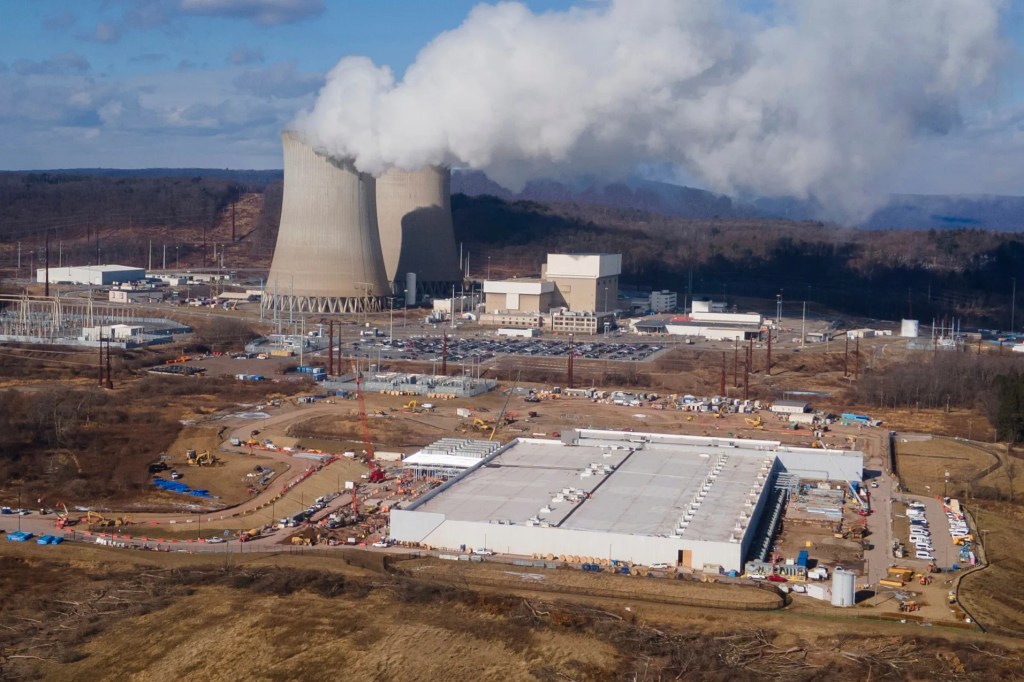
Northern Virginia remains the Northern Virginia data center capital of the world, home to the highest concentration of operational facilities on Earth. The dense corridor that stretches through Loudoun County continues to anchor global cloud traffic, financial systems, federal networks, streaming platforms, and artificial intelligence infrastructure. Rows of warehouse sized buildings hum with servers that store, process, and transmit vast quantities of information every second. For more than a decade, this region has served as the beating heart of the modern internet.
Yet beyond the suburban office parks and fiber rich interchanges of Northern Virginia, a dramatic shift is unfolding across the mountains and valleys of Appalachia. Rural counties in West Virginia, Pennsylvania, Kentucky, and Southwest Virginia are witnessing an unprecedented surge in data center proposals, land acquisitions, and infrastructure planning. Technology developers who once focused almost exclusively on Northern Virginia are now turning their attention toward ridgelines, reclaimed coalfields, and small towns that rarely appeared in conversations about digital infrastructure.
The momentum reflects both necessity and opportunity. Traditional hubs such as Loudoun County face land constraints, rising property values, transmission congestion, and growing community resistance. Developers searching for large tracts of affordable property with access to high voltage lines are increasingly drawn toward Appalachia. The region offers expansive acreage, legacy energy infrastructure, and state governments eager to attract major investment.
A September 2025 national pipeline report identified approximately ninety two gigawatts of data center capacity under development across the United States. A significant share of that capacity is moving into Appalachian territory. Gigawatt scale campuses, once concentrated near major metropolitan areas, are now appearing on planning maps in counties known historically for coal extraction, timber, and agriculture.
In many communities, the transition has been framed as coal to cloud. In Wise County and Mingo County, former mining land is being marketed as prime real estate for hyperscale facilities designed to power artificial intelligence systems. These sites often come with existing transmission corridors and industrial zoning legacies that simplify large scale construction. Reclaimed land that once produced fossil fuels is being reshaped to host the digital engines of the twenty first century.
Local leaders describe the shift as a path toward economic reinvention. Coal employment declined steadily over the past two decades, leaving many Appalachian communities searching for stable tax bases and long term investment. Data centers promise billions of dollars in capital expenditures, expanded property tax revenues, and improved infrastructure. The image of towering cooling systems rising where coal tipples once stood carries symbolic weight. It signals an attempt to align regional identity with technological progress rather than industrial decline.
State governments have moved aggressively to position themselves as attractive destinations. In April 2025, lawmakers in West Virginia approved legislation removing local zoning authority over designated high impact data center projects. The measure streamlined approvals and authorized large scale energy developments built specifically to supply new facilities. Supporters argued that centralized decision making would accelerate construction timelines and strengthen the state’s competitiveness in attracting hyperscale operators.
Other Appalachian states have pursued incentive packages that include tax abatements, sales tax exemptions on equipment, and workforce training grants. Economic development agencies market abundant land, proximity to Eastern population centers, and comparatively low energy costs. The pitch emphasizes speed, scale, and readiness.
Energy availability stands at the center of the regional appeal. Appalachia contains extensive high voltage transmission infrastructure built to serve coal fired plants and heavy industry. Developers view that legacy grid as a foundation for rapid expansion. Proposals for new natural gas generation facilities and utility scale solar installations are being evaluated to meet the immense electricity requirements of modern data centers. Artificial intelligence workloads in particular demand continuous, high density power flows.
In West Virginia, Fundamental Data LLC is advancing a major project in Tucker County, a largely rural area known for forests and outdoor recreation. A separate 1.9 million square foot high impact facility is planned for Berkeley County, situated along the state’s eastern panhandle with access to interstate highways and fiber routes. Together these projects signal a scale of investment rarely seen in the state’s recent economic history.
In Kentucky, PowerHouse Data Centers and Poe Companies are developing the state’s first hyperscale campus in Louisville. The project represents a milestone for Kentucky’s digital infrastructure ambitions. State officials describe it as a catalyst that could attract related technology firms and supply chain partners.
Southwest Virginia, long overshadowed by its northern counterpart, is also experiencing renewed attention. A proposed one billion dollar artificial intelligence campus in Wythe County underscores the region’s potential to host energy intensive facilities. Local leaders highlight transportation access, available land, and the possibility of integrating new renewable generation into project designs.
Despite the enthusiasm among policymakers and developers, the expansion raises complex questions for host communities. Data centers operate around the clock, drawing enormous quantities of electricity. Facilities exceeding one hundred megawatts require substantial upgrades to substations, transmission lines, and distribution networks. Local utilities must plan years in advance to accommodate projected loads. In smaller counties, the scale of required investment can challenge existing budgets and engineering capacity.
Water use also emerges as a focal point. Many data centers rely on water based cooling systems to manage server temperatures. In regions where public water systems serve small populations, additional industrial demand may require infrastructure expansions. Residents in some Appalachian counties have voiced concern regarding long term sustainability, particularly during periods of drought or extreme heat.
Noise from cooling equipment and backup generators has sparked debate in rural areas where ambient sound levels remain low. Large buildings illuminated through the night alter visual landscapes traditionally defined by forests and rolling hills. Community meetings often feature spirited discussion over how to balance economic opportunity with preservation of local character.
Utility rate impacts present another dimension of the conversation. Critics argue that rapid industrial growth could shift infrastructure costs onto residential customers. Supporters counter that new tax revenue and long term contracts may strengthen grid reliability and distribute expenses across a broader base. The financial structure of each project varies, shaping outcomes differently from county to county.
Employment expectations generate additional scrutiny. Construction phases bring a surge of activity. Skilled trades workers, engineers, heavy equipment operators, and suppliers benefit during multi year build outs. Hotels, restaurants, and service providers experience temporary boosts in demand. Once facilities become operational, staffing levels typically decline to a few dozen permanent positions focused on maintenance, security, and network oversight. For communities seeking large scale, long term job creation, the employment profile may fall short of earlier industrial eras.
Even so, supporters argue that the value of data center investment extends beyond direct payroll. Property tax contributions can support schools, emergency services, and infrastructure upgrades. Fiber expansions and substation improvements may enhance regional connectivity. The presence of hyperscale operators can signal economic stability to other investors considering manufacturing or technology projects.
Northern Virginia’s continued dominance remains undeniable. The region still leads in total operational capacity, planned expansion, and global interconnection density. Fiber networks in Loudoun County connect directly to major exchange points, enabling low latency communication across continents. That ecosystem took years to build and continues to attract new tenants.
Yet the very success of Northern Virginia has encouraged diversification. Developers recognize the strategic advantage of geographic distribution. Spreading facilities across multiple states enhances resilience against outages, weather events, and grid congestion. Appalachia’s proximity to Eastern population centers makes it a logical extension of the existing corridor while offering room to grow.
The phrase data center capital of the world may still belong to Northern Virginia, though the frontier spirit increasingly defines Appalachia’s role. Mountains once associated primarily with extraction industries are being reframed as hosts for digital infrastructure. Economic development strategies that once revolved around mines and manufacturing plants now feature artificial intelligence clusters and hyperscale campuses.
The outcome of this transformation remains uncertain. Energy policy debates, environmental considerations, market fluctuations, and technological advances will shape the trajectory. Artificial intelligence growth could accelerate demand beyond current projections. Efficiency improvements in server design could alter power requirements. Community response may influence permitting decisions and regulatory frameworks.
What stands clear is the scale of ambition. Billions of dollars are flowing into counties that have faced decades of economic hardship. State legislatures are adjusting statutes to attract and accommodate development. Transmission planners are modeling new load scenarios across mountain ridges and river valleys.
Appalachia’s emergence as a major destination for data center construction represents a defining moment in the geography of the American cloud. Northern Virginia retains its crown as the world’s most concentrated hub, though the digital map is expanding westward into terrain shaped by a very different industrial past. The story unfolding across West Virginia, Kentucky, Pennsylvania, and Southwest Virginia reflects a broader national shift in how and where the infrastructure of the internet is built.
From reclaimed coalfields to newly cleared campuses, the region is positioning itself at the center of the next era of technological growth. Servers that power artificial intelligence models, financial transactions, and global communication may soon rely on electricity generated amid Appalachian peaks. In that evolution lies a powerful narrative of adaptation, ambition, and the ongoing redefinition of place in the digital age.
-Tim Carmichael
 Echoes of Appalachia
Leave a comment