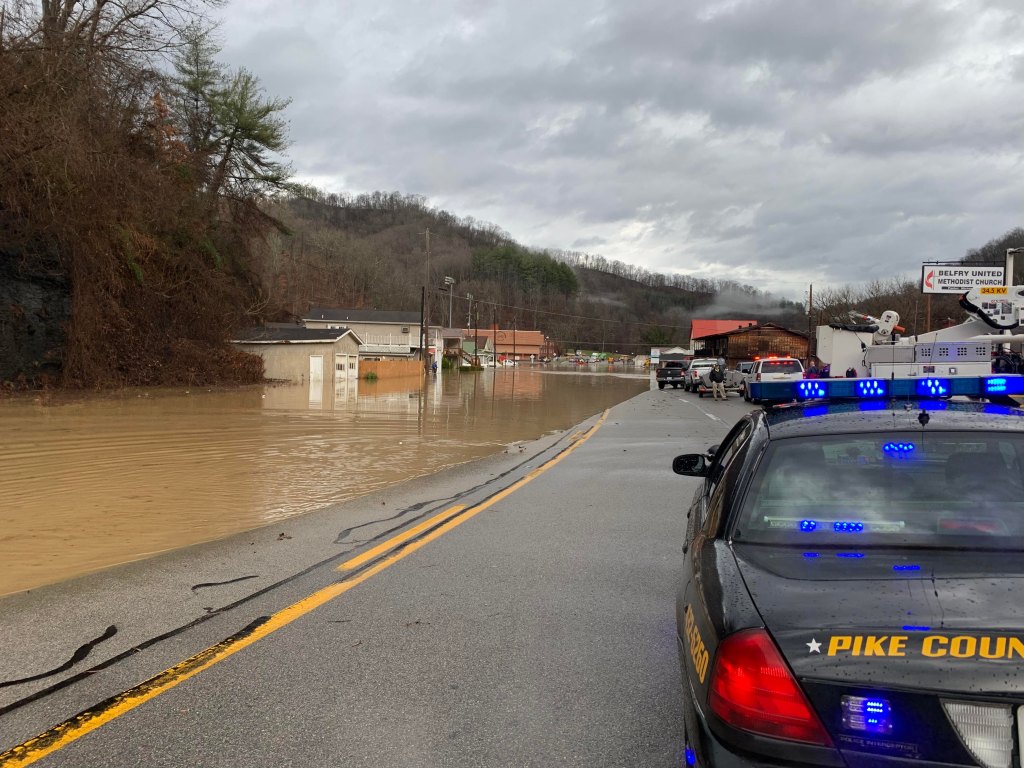
In the wake of the catastrophic floods of 2025, a transformation is unfolding across Pike County that few residents ever imagined possible. Entire neighborhoods are being purchased by the government, razed to their foundations, and returned to open ground. The language attached to the process sounds clinical: “managed retreat,” “risk mitigation,” “floodplain restoration.” On the ground, it feels like disappearance.
The floods started after days of relentless rain that swelled creeks into rivers and rivers into walls of brown water that tore through hollers with terrifying speed. In communities stretching from small crossroads settlements to the edges of Pikeville, homes that had stood for generations filled to their rafters. Trailers were knocked from blocks. Farm equipment twisted in currents. Gravel roads dissolved. In a region carved by narrow valleys and steep ridges, water had nowhere to go except through living rooms and bedrooms.
For many families, flood recovery had always meant cleanup and rebuilding. Eastern Kentucky has endured high water before. People hauled out soaked furniture, replaced drywall, and returned to the rhythms of mountain life. This time, the response carries a different trajectory. Instead of reconstruction, officials are offering buyouts. Instead of rebuilding neighborhoods, bulldozers are flattening them.
State and federal agencies, working through disaster mitigation programs, have launched one of the largest property acquisition efforts in the history of the region. Homeowners in designated flood zones receive offers based on pre-disaster value. If they accept, their properties transfer to public ownership. Structures are demolished. The land is restricted from future residential development and is slated for open space, wetland restoration, or permanent green buffer.
The policy rests on a clear premise: recurring floods will intensify, and moving residents out of high-risk areas will save lives and reduce long-term costs. Officials describe it as forward-looking planning in an era of climate instability. Many residents hear a different message: the hollers that shaped their families for centuries are deemed uninhabitable.
In Pike County, geography defines identity. Homes sit close to creeks because flat land exists only in ribbons between water and mountainside. Generations share adjoining parcels, cousins within walking distance, grandparents across a narrow bridge. Family cemeteries dot the slopes above the floodplain, holding the names of those who cut timber, mined coal, preached in clapboard churches, and taught in one-room schools. To remove a house from a holler carries more problems than a change of address. It disrupts a lineage rooted in place.
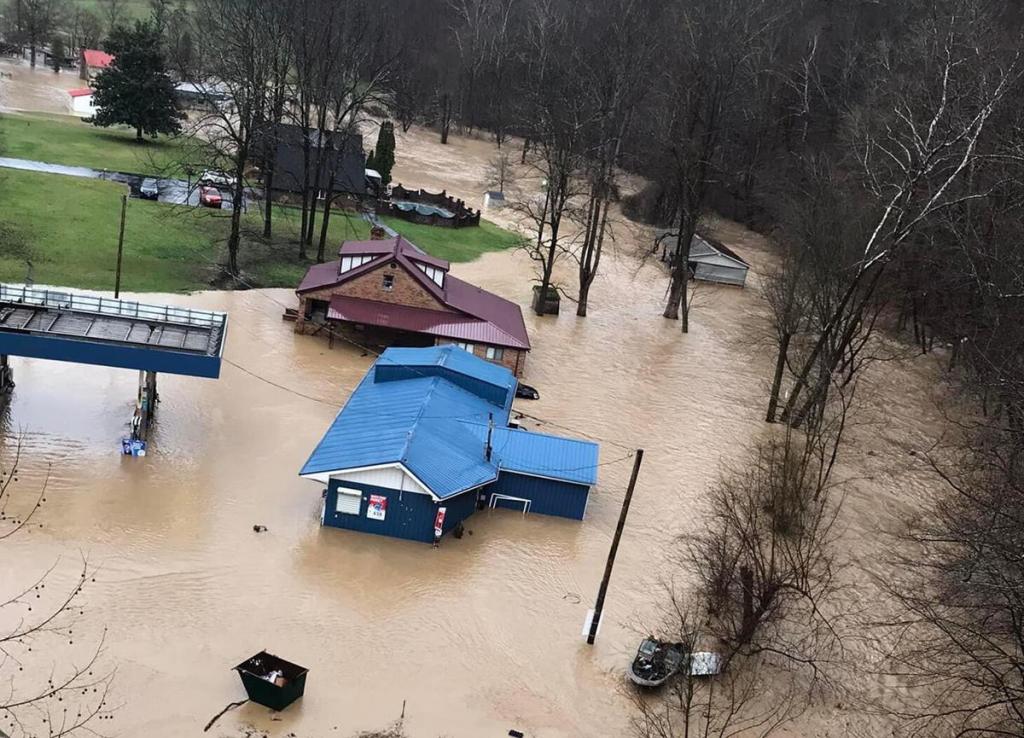
Participation in the buyout program is described as voluntary. On paper, homeowners choose whether to sell. In practice, choice narrows under the pressure of repeated disaster, insurance complications, mounting repair costs, and the prospect of future floods. Rebuilding in a mapped floodplain invites higher premiums and stricter codes. For elderly residents on fixed incomes, or young families already strained by economic uncertainty, the offer can feel like the only viable path forward.
Drive along certain stretches of creek road today and the pattern becomes visible. One home remains, curtains drawn and porch swept. Next door, a cleared lot spreads where a house once stood, its outline faintly visible in disturbed soil. Farther along, another structure sits vacant, windows boarded, awaiting demolition. The rhythm of habitation has fractured into gaps.
The physical dismantling unfolds methodically. Crews disconnect utilities. Personal belongings are removed or abandoned. Excavators claw through siding and roof trusses. Debris is loaded into trucks and hauled away. Within hours, decades of birthdays, funerals, arguments, and reconciliations are reduced to splintered lumber and dust. What follows is grading and seeding, a deliberate smoothing of the terrain that erases signs a neighborhood ever existed.
For those who remain nearby, the silence can be startling. No porch lights flicker at dusk. No engines start before dawn for a shift at the mine or hospital. Dogs that once barked across property lines have been relocated. The absence acquires a presence of its own.
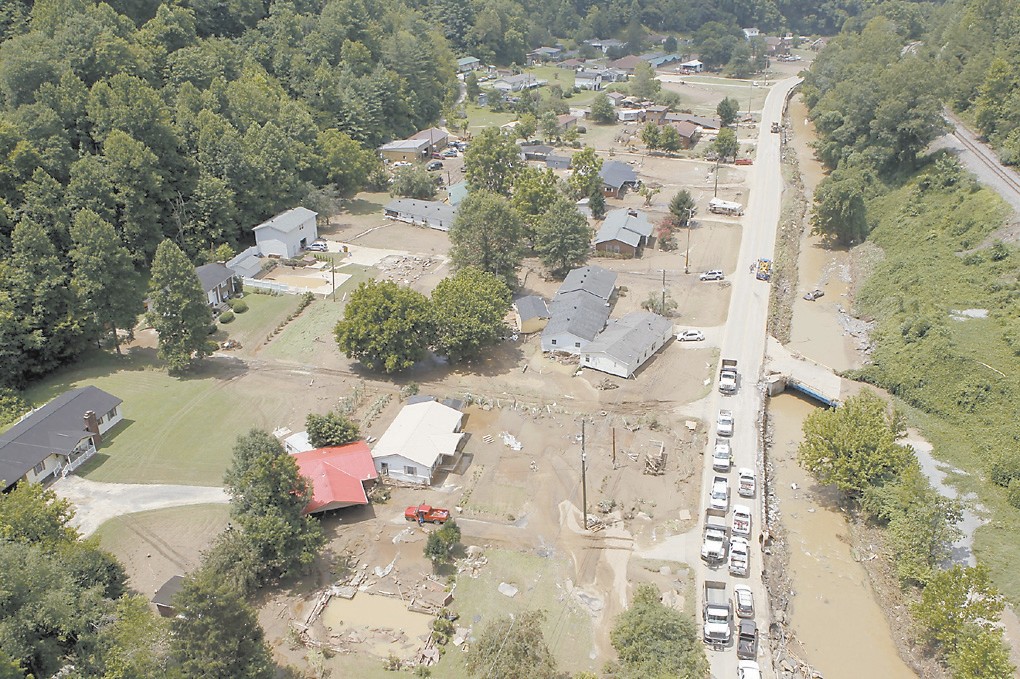
Relocation reshapes social networks that once functioned as informal safety nets. In tight-knit hollers, neighbors checked on one another during illness, watched children after school, shared garden harvests, and organized church suppers. Dispersal scatters those relationships across towns and counties. A family that accepts a buyout may find affordable housing miles away on higher ground, severing daily contact with relatives who remain. Churches lose congregants. Volunteer fire departments lose members. Small stores lose customers.
Younger residents often frame the buyouts as an opportunity. Some see a chance to move closer to jobs, schools, and medical care. For families who endured multiple floods in recent years, the promise of safety carries undeniable appeal. Parents who carried children through chest-deep water in 2025 weigh memories of fear against attachment to land. Security exerts a powerful pull.
Older residents frequently describe a more complicated calculus. Their sense of self intertwines with ridgelines and creek bends. They recall stories of ancestors who settled the hollows long before paved roads arrived. They remember coal camps, labor strikes, high school football games under Friday night lights. Selling a family home can feel like relinquishing stewardship of a story that extends beyond any single lifetime.
Local officials navigate competing pressures. On one hand lies responsibility to protect residents from predictable danger. On the other lies awareness that shrinking population undermines the tax base and strains public services. Schools consolidate as enrollment declines. Hospitals confront financial stress when communities thin out. The economic ripple spreads outward from each demolished house.
Managed retreat in Pike County also intersects with a longer narrative of extraction and transition. For more than a century, coal defined the region’s economy and landscape. As mining employment declined, communities searched for new footing. Now, climate-driven disaster overlays economic fragility. The buyouts arrive within that context, amplifying anxieties about whether Eastern Kentucky will be sustained as a living region or gradually reduced to memory.
Environmental advocates emphasize that restoring floodplains can yield ecological benefits. Reconnected wetlands absorb water, reduce downstream flooding, and create wildlife habitat. Reforestation stabilizes soil on steep slopes. In purely hydrological terms, fewer structures in harm’s way translate into fewer tragedies. The science underpinning that logic carries weight.
Yet land carries meaning beyond hydrology. When a holler empties, cultural knowledge tied to that specific place risks fading. Dialects, recipes, local histories, and kinship patterns developed in relation to terrain. Remove the terrain from daily experience and those elements evolve in unpredictable ways. Migration has long shaped Appalachia, though the current wave bears a distinct driver: environmental risk acknowledged at governmental scale.
The term “erasure” circulates quietly among some residents. It captures a sense that what is occurring transcends relocation. The bulldozed lots signal a permanent shift. Zoning restrictions prevent future residential construction. Children who grow up after the buyouts may find it difficult to imagine houses lining creeks where only grass stretches now.
Photographs taken before demolition assume new significance. A snapshot of a modest white house with a swing set in the yard becomes archival evidence of existence. Social media groups dedicated to former neighborhoods share memories and images, stitching together a digital version of what physical space no longer holds.
There are residents who decline buyouts and choose to rebuild on the same footprint. Their homes stand as solitary markers amid expanding green space. They speak of resilience and attachment, of refusing to surrender land their grandparents cleared. Their presence complicates any simple narrative of departure.
Across Pike County, the process continues, parcel by parcel. Government vehicles mark boundaries. Survey flags punctuate yards. Meetings in community centers explain timelines and eligibility. Paperwork flows through offices in Frankfort and Washington. Meanwhile, backhoes idle beside porches that once hosted summer evenings.
The transformation unfolding in these hollers raises broader questions about how a nation responds to intensifying climate disasters. Coastal communities confront rising seas. Western towns face wildfire corridors. Here in the mountains, water courses through valleys with renewed force. Managed retreat emerges as one tool among many, though its human cost remains difficult to quantify.
For families packing boxes in Pike County, policy debates feel distant. Their focus rests on immediate logistics: finding new housing, enrolling children in different schools, transferring mail, transporting heirlooms. Amid those tasks, grief surfaces in unexpected moments. A final walk through an empty room. A hand resting on a doorframe marked with growth measurements. A glance toward hillsides where ancestors lie buried.
When the last structure in a holler falls, the landscape settles into a quieter configuration. Grass spreads. Birds nest where eaves once sheltered porch swings. Water flows through a broader channel unobstructed by foundations. The view from the road opens wider, revealing slopes that had been partially hidden by homes.
What disappears along with those homes carries no simple replacement. Pike County endures, its courthouse still standing, its ridges unchanged in outline. Yet within its boundaries, whole neighborhoods fade from lived reality into recollection. The managed retreat advances with administrative precision, while families negotiate the emotional terrain of departure.
In years to come, travelers passing through Eastern Kentucky may see open fields along creeks and assume they have always been that way. Only longtime residents will recall the cadence of daily life that once animated those spaces. The erasure unfolding now ensures that memory, rather than architecture, will hold the burdens of centuries-old communities rooted in the hollers of Pike County.
-Tim Carmichael


 Echoes of Appalachia
Leave a comment