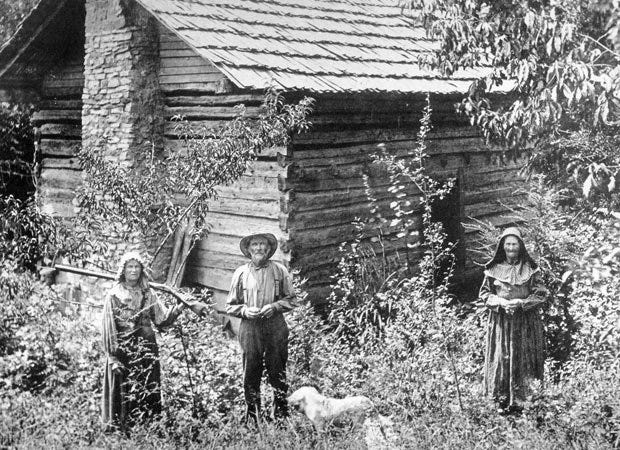
Appalachia stands today as a living mosaic of peoples, traditions, languages, faiths, and foods. The mountains, valleys, hollers, rivers, and towns reflect centuries of human movement, courage, survival, and adaptation. Every family line in Appalachia traces back to immigrants. Every surname, dialect, recipe, hymn, and craft carries the memory of people who crossed oceans, borders, and frontiers to build new lives in rugged land. Appalachia exists because of immigration, and its identity flows directly from the courage and culture of those who came seeking home, land, work, faith, and freedom.
Long before the word Appalachia became a label, Indigenous nations lived across these mountains. Cherokee, Shawnee, Yuchi, and other peoples shaped the land with agriculture, trade routes, and spiritual traditions. Their presence formed the first cultural foundation of the region. Later waves of settlers arrived from across the Atlantic, bringing languages, beliefs, and customs that blended into something entirely new. This blending created the cultural soul of Appalachia, a place shaped by movement rather than isolation.
Scots Irish immigrants arrived in large numbers during the eighteenth century, fleeing religious persecution, economic hardship, and political conflict in Northern Ireland and Scotland. They brought fierce independence, clan loyalty, ballad traditions, storytelling, fiddle music, and a strong work ethic. Their speech patterns shaped Appalachian dialects. Their music became the backbone of mountain folk songs and later influenced bluegrass and country music. Their farming methods adapted to steep hillsides and narrow valleys, creating subsistence farming traditions that sustained families for generations.
English settlers brought legal systems, land ownership structures, and agricultural practices. Their church traditions shaped early Appalachian faith communities. German immigrants contributed craftsmanship, woodworking skills, herbal medicine knowledge, and food preservation techniques. Sauerkraut, sausage making, bread baking, and root cellaring became common practices in mountain households because of German influence. Their craftsmanship built homes, barns, and tools that supported mountain life.
Irish immigrants added strong storytelling traditions, spiritual music, and deep community bonds. Welsh immigrants brought mining knowledge that later shaped coal country. Cornish immigrants carried mining expertise that supported Appalachian coal and mineral industries. Each group left fingerprints on the mountains, shaping labor systems, town structures, and economic development.
African Americans played a central role in shaping Appalachian culture. Enslaved Africans and free Black families carried agricultural knowledge, culinary traditions, music, rhythm, and spiritual expression into the mountains. Cornbread, a staple of Appalachian tables, reflects African culinary influence blended with Indigenous corn traditions. Foodways such as greens, beans, stews, and slow cooked dishes carry African roots. Music traditions like call and response singing, spirituals, work songs, and rhythmic patterns formed the foundation of Appalachian gospel, blues, and folk music.
African American musicians shaped banjo traditions, string band music, and early country music. The banjo itself has African origins, evolving into one of Appalachia’s most iconic instruments. Black communities in Appalachia built churches, schools, businesses, and social networks that strengthened mountain society. Their contributions created cultural richness that continues today.
Native American agricultural traditions also shaped Appalachian food culture. Corn, beans, squash, and foraging knowledge formed survival systems for early settlers. Indigenous trail networks became roads. Herbal medicine traditions influenced Appalachian healing practices. The land itself carries their legacy in place names, farming patterns, and environmental knowledge.
Later immigrant groups continued shaping Appalachia. Italian families arrived to work in mining and construction. They brought food traditions like pasta, bread baking, gardening, and winemaking. Polish immigrants added cabbage dishes, sausage making, and strong church centered communities. Jewish families opened stores, businesses, and trade routes in Appalachian towns, supporting economic growth and community development. Eastern European immigrants brought labor skills, faith traditions, and family centered values that shaped coal camps and industrial towns.
Chinese immigrants contributed railroad labor, trade networks, and culinary traditions that blended into local foodways. Hispanic and Latino immigrants in modern Appalachia contribute agricultural labor, construction skills, entrepreneurship, and cultural festivals that continue the region’s tradition of cultural fusion. Middle Eastern families brought commerce traditions, hospitality values, and business networks that strengthened small towns.
Every wave of immigration reshaped Appalachia’s identity. Language blended into dialect. Music blended into new genres. Food blended into new traditions. Faith practices blended into mountain spirituality. Clothing styles adapted to climate and terrain. Architecture evolved from European designs into uniquely Appalachian homes and barns. Survival skills merged into mountain resilience.
The myth of Appalachia as isolated overlooks its true history as a crossroads of migration. Trade routes passed through the mountains. Rivers connected communities. Railroads brought people from across the world. Coal camps became multicultural settlements. Logging towns housed families from many nations. Mills and factories drew workers from Europe, Africa, Latin America, and Asia. Appalachia developed through cultural exchange, shared labor, and collective survival.
Immigrant women shaped Appalachian culture through midwifery, herbal medicine, cooking, weaving, quilting, storytelling, and childcare traditions. Their knowledge passed through generations, forming the backbone of family survival. Their recipes became staples. Their songs became lullabies. Their prayers became community rituals.
Faith traditions also reflect immigration. Protestant denominations shaped early mountain churches. Catholic immigrants built parishes. Jewish communities formed synagogues. African spiritual traditions influenced worship styles. Appalachian religion reflects global roots expressed through mountain culture.
Education systems grew from immigrant efforts. Schools formed in church buildings. Literacy spread through family teaching. Craft traditions passed through apprenticeships. Music education passed through community gatherings. Knowledge transmission sustained cultural continuity.
Even Appalachian resilience itself reflects immigrant experience. Survival in harsh terrain required cooperation, adaptation, and innovation. Families shared food, tools, labor, and knowledge. Communities formed mutual aid systems. These values mirror immigrant survival strategies across history.
The idea of pure lineage dissolves under historical truth. Every Appalachian family descends from movement. Borders shifted. Names changed. Languages blended. Bloodlines crossed. Identity formed through shared land rather than shared origin. Appalachia became a home for people seeking stability after displacement.
Today’s Appalachia continues this legacy. New immigrants arrive, bringing languages, foods, music, and traditions that blend into the mountain fabric. Festivals celebrate diversity. Markets sell global foods. Schools teach multicultural histories. Churches welcome multilingual worship. The region grows richer through cultural exchange.
Appalachia’s beauty comes from its diversity. Its strength comes from shared struggle. Its soul comes from blended heritage. Immigrants built its roads, farms, towns, mines, music, kitchens, churches, and communities. Every porch song, every family recipe, every quilt pattern, every hymn, every garden row carries immigrant memory.
To honor Appalachia means honoring immigration. To understand Appalachia means understanding movement. To love Appalachia means embracing its multicultural roots. The mountains stand as witnesses to centuries of courage, hope, faith, and resilience carried by people from every corner of the world.
Immigrants shaped the soil, the sound, the spirit, and the story of Appalachia. Their descendants carry forward traditions that continue evolving. Appalachia remains alive because people continue coming, building, sharing, and belonging. The region’s identity flows from the truth that home can be built anywhere people commit to one another and to the land they love.
Appalachia stands today as proof that immigration creates culture, community, and continuity. It shows how diversity strengthens identity. It reveals how shared labor creates belonging. It teaches that roots grow through movement, not stillness. The mountains hold countless stories of arrival, survival, and transformation. Those stories form the heart of Appalachia, a land shaped by immigrants who turned wilderness into home and difference into unity.
-Tim Carmichael


 Echoes of Appalachia
Leave a comment