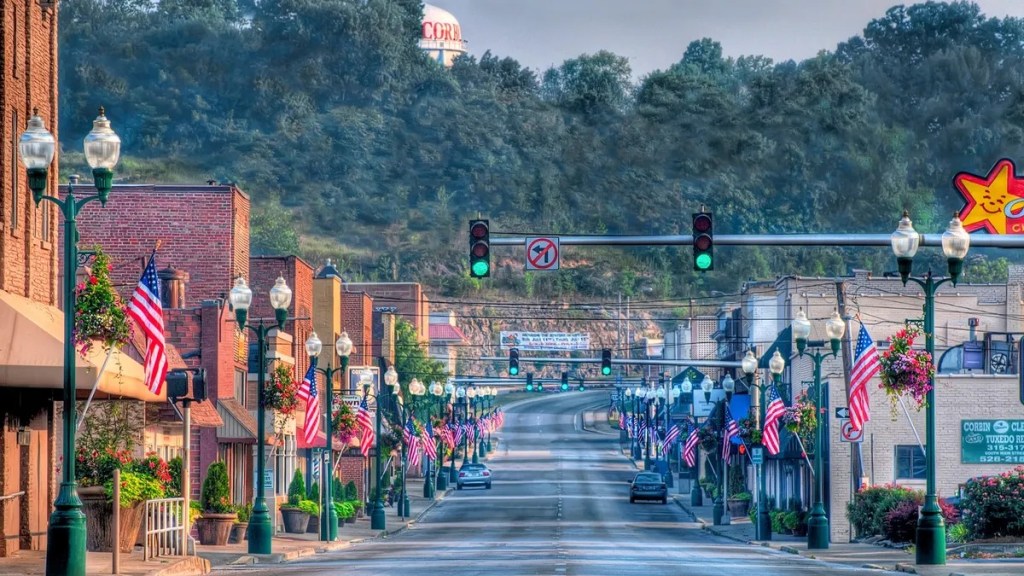
Urban Appalachia exists in cities like Asheville, Knoxville, and Charleston, West Virginia, whether city leaders acknowledge it or not. These places did not suddenly become “mountain cities” once tourism and development arrived. They grew from river crossings, rail hubs, and industrial corridors where families from surrounding counties settled for work, stayed through decline, and built neighborhoods long before the cities were considered desirable. The tension shaping urban Appalachia today comes from that history colliding with rapid growth driven by outside money, new residents, and an economy that often values image more than continuity.
The idea that Appalachian culture belongs only to remote hollers collapses inside these cities. Urban neighborhoods once held vegetable gardens behind duplexes, smokehouses near alleys, and informal labor exchanges that mirrored rural patterns. City life altered the scale of these practices rather than erasing them. What changed most was visibility. As development accelerated, the quieter forms of Appalachian life faded from public narratives, replaced by curated versions designed for outside consumption.
The controversy surrounding urban Appalachia begins with ownership of story. City branding campaigns celebrate mountain heritage through murals, festivals, and slogans, presenting culture as welcoming, creative, and timeless. Missing from these portrayals are the economic pressures, labor struggles, and displacement shaping daily life for long-term residents. Culture becomes scenery rather than lived experience, a background aesthetic supporting growth rather than a force guiding it.
Migration built these cities through necessity rather than aspiration. Coal decline, farm consolidation, and industrial shifts pushed families toward urban centers offering wage labor. Mill work, rail yards, hospitals, and government offices provided stability compared to rural uncertainty. Appalachian identity traveled with these workers into row houses and apartment blocks. Church communities reorganized around city schedules. Food preservation continued in basements and shared freezers. Storytelling adapted to kitchens instead of porches.
Present narratives often treat Appalachian presence in cities as a rediscovery rather than a constant. That framing allows new residents and investors to position themselves as cultural stewards while ignoring those who maintained traditions during decades when the cities lacked prestige. Long-term residents see their history reframed through outsider language that prizes charm over continuity.
Tourism amplifies this tension most visibly in Asheville. Visitors arrive seeking authenticity, music, and craft rooted in place. Businesses respond with curated experiences drawing from Appalachian imagery. Handmade aesthetics, reclaimed materials, and folk references dominate commercial spaces. Economic growth follows, yet control over representation drifts away from communities whose lives shaped the culture being sold.
The problem extends beyond taste. When culture becomes product, certain expressions gain value while others disappear. Mountain identity linked to poverty, labor organizing, or environmental resistance finds little space in tourist economies. The acceptable Appalachian becomes friendly, artistic, and apolitical. The unacceptable version fades from view, even though it remains central to lived reality.
Housing pressure exposes the cost of this transformation. Rising property values push long-established residents toward city edges where services thin and transportation costs rise. In Asheville and Knoxville, neighborhoods once dismissed as undesirable suddenly attract investors. Property taxes climb faster than wages, forcing families to choose between relocation and financial strain.
Displacement fractures cultural continuity. Extended families scatter. Churches lose generational depth. Informal support systems weaken. The loss affects more than housing stock. It removes memory anchored to specific streets and hillsides. City leaders describe revitalization as progress, while residents experience erasure. Policy choices drive these outcomes through zoning decisions, tax incentives, and rental regulations that favor capital mobility over rootedness.
Labor identity adds another layer of conflict. Urban Appalachia once promised upward movement through industrial employment. Those pathways narrowed as manufacturing declined. New economies emphasize healthcare, education, hospitality, and remote professional services. These sectors require credentials and cultural fluency unevenly distributed across populations shaped by extraction-era schooling and limited access.
Service work fills gaps, offering employment without stability. Regional pride rhetoric celebrates resilience while ignoring precarity embedded in the labor market. Appalachian identity becomes symbolic rather than protective. The cities profit from narratives of grit without providing material conditions supporting those who embody it.
Environmental values further complicate urban growth. Appalachian relationships with land emphasize observation, restraint, and adaptation learned through experience rather than policy. Urban expansion often dismisses this knowledge. Hillsides are cut, waterways altered, and flood risks amplified. When disasters strike, officials acknowledge local warnings retroactively.
Charleston’s flood history illustrates this pattern. Residents remember how land behaved across generations. Their observations carried little weight during planning processes dominated by technical assessments. After damage occurs, those same insights gain legitimacy. The cycle reinforces perceptions that lived knowledge holds low value until validated by crisis.
Green branding attempts to bridge this gap while often deepening it. Sustainability language appears alongside development practices that strain ecosystems. Bike lanes and rooftop gardens coexist with deforestation and watershed stress. Residents recognize contradiction rather than balance, fueling distrust toward environmental promises framed without community authority.
Education institutions shape urban Appalachia in powerful ways. Universities bring resources, global networks, and demographic shifts. They also create cultural distance between students and surrounding neighborhoods. Academic interest in Appalachia thrives inside these cities, producing research and programming that rarely translates into material benefit for those studied.
Long-term residents express fatigue with constant observation. Being analyzed without agency reinforces extraction dynamics echoing the region’s economic history. Education remains a source of aspiration within Appalachian families, yet institutional expansion often displaces housing or reshapes neighborhoods without inclusive planning.
Political identity within urban Appalachia defies simple classification. Cities lean progressive compared to surrounding areas, though residents hold views shaped by labor history, religious practice, and skepticism toward centralized authority. Political messaging flattens these complexities, reducing engagement to demographic targets.
Urban governance privileges those fluent in bureaucratic language and process. Planning meetings reward time, transportation access, and confidence navigating formal systems. Many long-term residents feel sidelined even as civic participation initiatives expand. Power concentrates among professionals whose attachment to place may remain temporary.
Despite these pressures, Appalachian culture persists through adaptation rather than nostalgia. Mutual aid networks operate quietly. Music scenes resist commercialization by favoring informal venues. Food traditions continue through exchange rather than branding. Urban gardens preserve seed knowledge on limited land. Churches adjust rhythms around shift work and caregiving demands.
These practices survive without recognition, sustained by necessity and care rather than policy. The controversy lies in how success is measured. Festivals, murals, and heritage districts offer visible markers of preservation, while the material conditions supporting lived culture receive less attention. Preservation through display differs fundamentally from preservation through stability.
Urban Appalachia forces a confrontation with uncomfortable questions about progress, ownership, and respect. Cities can pursue development models centered on affordability, resident leadership, and cultural continuity. They can also continue extractive growth patterns that treat heritage as a renewable resource disconnected from people.
The stakes remain high because cultural ecosystems depend on density and continuity. Once displacement reaches a tipping point, restoration proves difficult. Fragmentation disrupts transmission across generations, leaving symbols without substance.
Urban Appalachia challenges the assumption that rural tradition and urban life exist in opposition. The reality reveals coexistence shaped by power imbalance, negotiation, and endurance. Whether mountain cities choose futures grounded in respect rather than exploitation will determine whether Appalachian culture remains a living practice or survives only as imagery curated for passing audiences.
-Tim Carmichael
 Echoes of Appalachia
Leave a comment