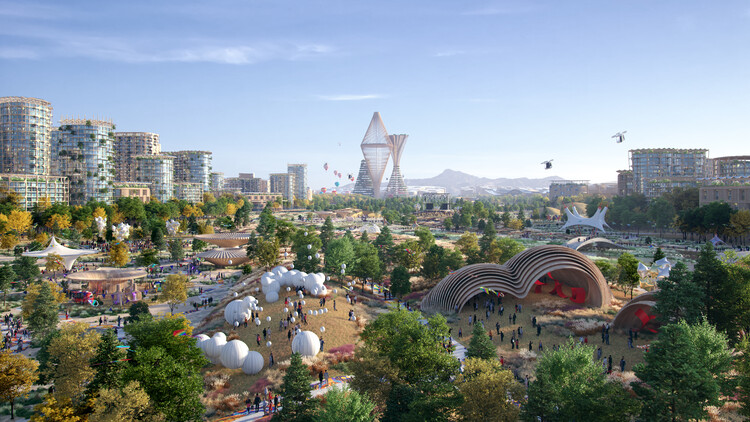
When billionaire entrepreneur Marc Lore began talking publicly about his dream of creating an entirely new city from the ground up, many people imagined sunbaked deserts and endless flat land somewhere out West. What surprised urban planners, economists, and rural advocates alike was the emergence of Appalachia as a potential setting for this ambitious experiment. The idea that one of the wealthiest tech visionaries in America could plant a futuristic city in the heart of one of the nation’s most historically complex regions has ignited fascination, skepticism, and intense debate.
Marc Lore earned his fortune through relentless innovation in e-commerce, most famously as the founder of Jet.com and later as a key executive shaping Walmart’s digital strategy. After stepping away from corporate leadership, he redirected his attention and wealth toward a project that blends philosophy, urban planning, environmental sustainability, and economic reform. That project, known as Telosa, represents Lore’s belief that cities can be redesigned to serve people more equitably while minimizing environmental damage and maximizing opportunity.
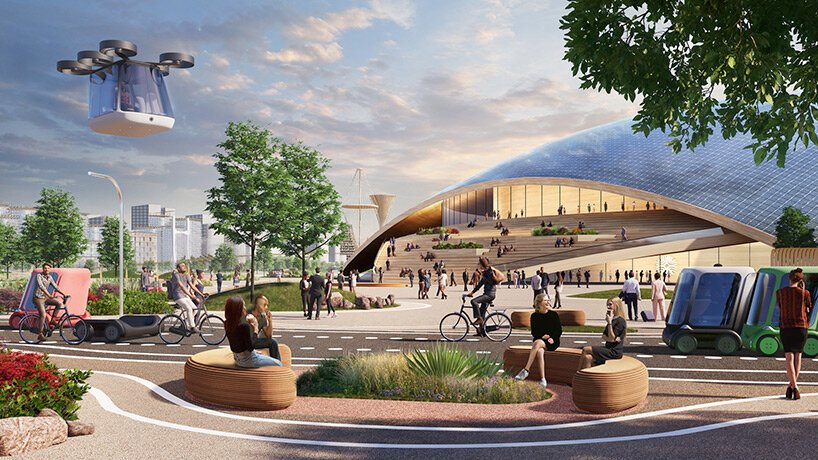
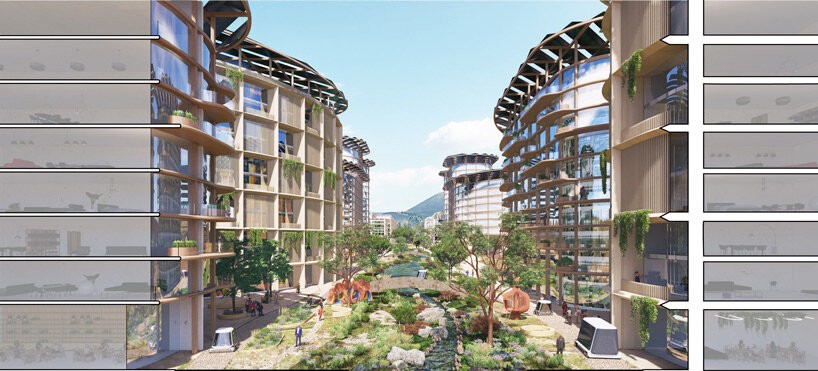
Telosa has been described as a city built with purpose at every level. Lore’s vision includes renewable energy powering homes and businesses, transportation systems centered on walking, cycling, and autonomous electric vehicles, and neighborhoods designed so residents can reach work, education, healthcare, and recreation within minutes. Public spaces, green corridors, and mixed-use developments would dominate the landscape rather than sprawling highways and isolated suburbs. The city would grow in phases, beginning with tens of thousands of residents and expanding toward millions over several decades.
At the core of this vision lies a proposed economic framework Lore calls equitism. In this model, land would be owned collectively by the city rather than privately hoarded. Individuals and businesses could own buildings and enterprises, while land value increases would cycle back into public services such as schools, transit, and social programs. Supporters see equitism as a potential antidote to extreme wealth inequality and runaway real estate speculation that plague many modern cities.
The question of location remains one of the most intriguing elements of the project. Early concepts focused heavily on wide-open land in western states where large parcels can be acquired with fewer zoning obstacles. Yet Appalachia entered discussions for several compelling reasons tied to geography, economics, and long-term impact.
Appalachia stretches across more than a dozen states, from southern New York through Pennsylvania and Ohio and deep into the mountainous regions of West Virginia, Kentucky, Virginia, Tennessee, North Carolina, and Georgia. The region carries a powerful identity shaped by rugged terrain, dense forests, winding rivers, and generations of communities built around mining, timber, and manufacturing. Over the past several decades, many Appalachian areas have faced population decline, limited job growth, and underinvestment following the collapse of coal and heavy industry.
For a project like Telosa, Appalachia presents vast tracts of comparatively affordable land near existing towns, rail lines, and highways. Water availability, a major concern for western desert locations, remains far more abundant in much of the Appalachian range. Rivers, aquifers, and rainfall patterns offer a natural advantage for sustaining a large population when paired with modern conservation and recycling technologies.
Several parts of central Appalachia have drawn attention from developers and planners looking for large, contiguous parcels suitable for master-planned communities. Eastern Kentucky, southern West Virginia, southwestern Virginia, and portions of eastern Tennessee frequently appear in discussions about economic redevelopment, technology hubs, and renewable energy investments. These areas combine lower land costs with proximity to mid-sized cities such as Lexington, Knoxville, Roanoke, and Charleston, offering access to labor markets, universities, and transportation networks.
The idea of placing a futuristic city within this context sparks both optimism and caution. Supporters argue that Telosa could inject massive investment into a region long overlooked by coastal capital. Construction alone would create thousands of jobs, while long-term operations could support careers in engineering, education, healthcare, research, and clean energy. Partnerships with regional colleges and universities could provide new pathways for Appalachian students to remain close to home while pursuing high-skill professions.
There is also the symbolic appeal. Appalachia has often been portrayed through narratives of decline and hardship. A city built around sustainability, innovation, and equity could rewrite that narrative, presenting the region as a proving ground for solutions to global challenges. From this perspective, Telosa in Appalachia would represent renewal rather than replacement, blending advanced technology with a landscape shaped by resilience.
At the same time, critics raise serious concerns. Appalachia’s terrain poses engineering challenges that differ sharply from flat desert land. Mountains, valleys, and complex geology would require extensive planning for transportation, utilities, and construction. Large-scale excavation and infrastructure development could disrupt ecosystems and watersheds that local communities depend upon.
Cultural concerns also weigh heavily. Appalachian communities possess deep ties to place, family, and tradition. Skeptics worry that a billionaire-led city could feel disconnected from local values or create economic divisions between newcomers and long-time residents. Questions arise about housing affordability, land acquisition, and whether existing communities would share meaningfully in the benefits promised by the project.
History adds another layer of caution. Appalachia has experienced repeated waves of outside investment that extracted resources while leaving environmental damage and limited long-term prosperity. Any new mega-project entering the region would face scrutiny rooted in that experience. Residents and leaders would likely demand transparency, local participation, and enforceable commitments to environmental protection and community development.
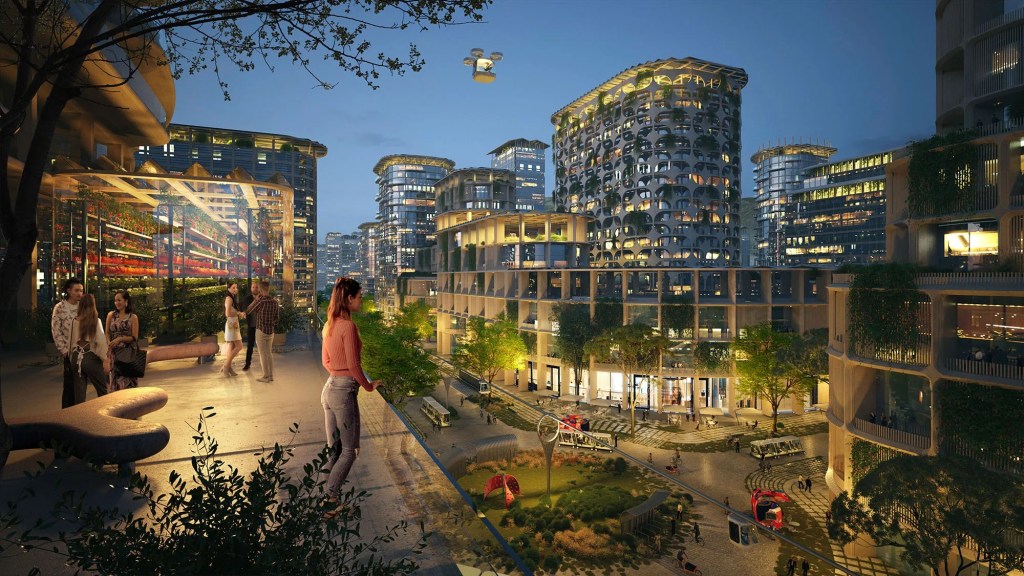
From a national perspective, Telosa represents a rare attempt to rethink urban development at a fundamental level. Most American cities evolve incrementally, shaped by decades of policy decisions, infrastructure constraints, and market forces. Starting anew allows planners to integrate sustainability and equity from the beginning rather than retrofitting aging systems. Whether such a city can thrive socially and economically remains an open question.
Marc Lore has acknowledged that building a city involves far more than architecture and funding. Governance structures, democratic participation, legal frameworks, and long-term adaptability all play critical roles. In Appalachia, those considerations become even more complex given the interplay between state governments, local jurisdictions, and regional development agencies.
Despite uncertainty, the very discussion of a utopian city in Appalachia has already shifted conversations about the region’s future. It challenges assumptions that innovation belongs only in coastal tech corridors. It highlights the potential of rural and post-industrial regions to host bold experiments in sustainability and social design. It also forces a reckoning with past development models that prioritized profit over people.
Whether Telosa ultimately rises among Appalachian hills or settles elsewhere, the idea has illuminated both the promise and the tensions embedded in large-scale visionary projects. Appalachia stands at the crossroads of tradition and transformation, carrying lessons forged through hardship and perseverance. A city built with intention, accountability, and respect could align with that legacy, while a city imposed without deep engagement could deepen divides.
For now, Telosa remains a vision on paper, a collection of renderings, economic theories, and strategic plans. Yet visions matter. They shape dialogue, influence policy, and inspire alternatives to the status quo. The possibility that Appalachia could host one of the most ambitious urban experiments of the modern era ensures that the region remains central to conversations about America’s future.
As Marc Lore continues to explore locations and refine his plans, Appalachia watches with a mix of curiosity and caution. The mountains have witnessed cycles of boom and bust, exploitation and endurance. Whether they someday cradle a city designed for equity and sustainability will depend on choices made far beyond blueprints and budgets. One thing remains clear: the mere idea has already shaken assumptions about where innovation belongs and who gets to imagine the cities of tomorrow.
-Tim Carmichael


 Echoes of Appalachia
Leave a comment