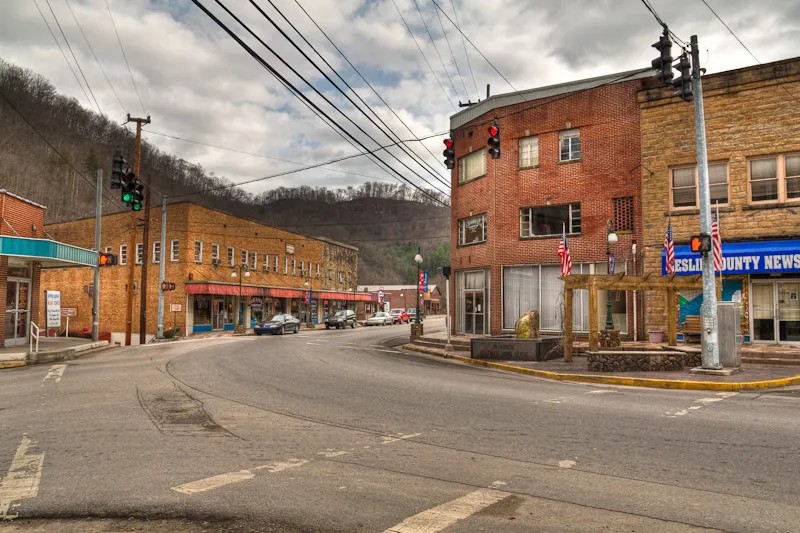
Conversations about Appalachia often swing between two poles. One pole highlights predatory external forces: absentee landholders, federal extraction policies, media caricatures, corporate exploitation, and political strategies that treat the mountains like a stage backdrop. The other pole focuses on agency within the region: cultural choices, community structures, local leadership, and patterns of resistance or resignation. Each pole tries to claim the dominant explanation for every hardship, every triumph, every setback. The truth, as always, lives in the space where these currents collide. The question “Is Appalachia helping itself or blaming outsiders?” presses directly into that tension, and the intensity of responses shows how sensitive the issue feels across the mountains.
Observers often describe Appalachia as a territory shaped by forces far beyond its borders. Coal operators secured mineral deeds through deceptive contracts. Rail lines and extraction corridors gave corporations immense leverage over local life. Political figures treated the region as either an electoral pawn or a symbolic cautionary tale. News outlets elevated stories of hardship while ignoring stories of ingenuity. All of that created a perception that Appalachia lived under an external thumb for generations. Many argue that the region still moves through the world with that heavy pressure on its back.
Yet the region carries its own forms of agency. That agency flows through town councils, church communities, revival circles, hunting clubs, kin networks, informal economies, and patterns of local governance that feel distinct from the rest of the country. This agency does not always manifest through unified vision. Sometimes it leads to community renewal. Sometimes it maintains social structures that weaken collective progress. Other times it fuels deep skepticism toward partnerships or reforms. People debate whether that skepticism acts as a shield or a cage.
When the conversation turns toward accountability, each side feels attacked. Those who emphasize internal agency often hear accusations that Appalachians “cannot take care of themselves.” Those who emphasize external forces often hear claims that Appalachians “refuse to own their problems.” Both framings carry a sharp edge. The truth requires nuance that public debate rarely rewards.
Many mountain counties experienced a century of extraction that drained tax bases, disrupted ecosystems, and weakened avenues for long-term planning. Entire landscapes changed to serve industries headquartered far away. Schools, roads, and healthcare networks developed under conditions shaped by those industries. This legacy created a kind of historical momentum, an inherited structure that influences decision-making even today. Communities that live within those structures often describe a feeling of constraint: limited resources, limited options, limited leverage.
At the same time, the region includes communities that demonstrate extraordinary resilience. Cooperative farms, volunteer fire departments, mutual aid networks, cultural preservation projects, small-scale enterprises, and creative arts collectives show how mountain communities adapt when external support fails. These efforts challenge the idea that the region lives solely at the mercy of outside influences. They reveal layers of initiative that shine through hardship.
One challenge arises when local agency shifts into patterns that shield individuals or institutions from scrutiny. This can happen in many ways. Loyalty to kin networks may obstruct accountability for public decisions. A culture of privacy may discourage residents from reporting corruption or abuse. Suspicion toward outside expertise may hinder educational advancement or economic diversification. A deep desire to preserve tradition may conflict with efforts to improve civic infrastructure. These patterns do not define every community, yet they appear often enough to influence regional reputation.
Media portrayals play their own role in shaping perceptions. Stories that highlight individual responsibility create narratives that appeal to a national audience seeking moral clarity. Stories that highlight external oppression appeal to audiences seeking evidence of structural injustice. Each narrative omits something important. Each narrative reinforces stereotypes. Mountain residents watch these portrayals with frustration, since the reality of daily life rarely fits into tidy storylines.
When people ask whether Appalachia helps itself, the question sometimes carries an implicit expectation that the region must follow a single roadmap. Yet no region with millions of residents and hundreds of counties moves as a unified body. Decisions made in a courthouse in Hazard might diverge from decisions made in a community center in Boone. Leadership in a coal-dependent county may prioritize survival strategies that differ from leadership in a university town. The variety across the region challenges every simplistic explanation.
The question takes on another layer when young people leave for cities elsewhere. Some view this migration as a sign of individual ambition and an extension of Appalachian adaptability. Others see it as evidence that communities failed to create conditions that encourage people to remain. External opportunity acts as a magnet. Internal limitations act as a push. These forces interact in ways that complicate narratives of choice.
Economic strategies often place the region at a crossroads. For years, reliance on extractive industries shaped work rhythms, political allegiance, and landscape transformation. Communities that built their identity around those industries face a painful transition. When advocates encourage diversification, some residents interpret the message as an attack on heritage. When economic developers propose new industries, residents fear repeating the mistakes of earlier extractive eras. The region grapples with an ongoing question: how to achieve prosperity without surrendering autonomy.
Cultural factors also influence the debate. Mountain communities cultivate powerful traditions of self-reliance. Families and neighbors help one another through crisis with extraordinary commitment. That ethic offers strength and continuity, though it can also create pressure to handle every hardship privately. When residents hesitate to seek outside assistance, agencies view the region as resistant. When agencies fail to understand local values, communities view them as condescending. Each side interprets the other through lenses shaped by history.
Religious life adds another dimension. Churches act as centers of social cohesion, emotional support, and civic organization. They fill roles that government institutions fail to fill. They also influence attitudes toward social welfare, reform, and change. In some counties, political leadership emerges directly from church networks. This connection shapes how residents view responsibility, whether local or external. It can foster unity or division, progress or stagnation.
Education remains a sensitive frontier of the accountability debate. Teachers and administrators work with limited budgets, aging facilities, and students who face intergenerational trauma. Some policymakers argue that schools fail to prepare students for modern careers. Many educators argue that structural deprivation creates challenges that schools alone cannot overcome. Communities wrestle with questions about curriculum, culture, heritage, and opportunity. These debates reveal underlying tensions about where responsibility begins and ends.
A related issue involves trust. Appalachian communities carry long memories of broken promises: railroad barons who drained resources, philanthropists who vanished after photo ops, politicians who campaigned on hope and delivered little. This memory shapes interaction with every newcomer, program, and proposal. When residents express caution, outsiders often mislabel the caution as apathy or hostility. The region holds a deep awareness that outside aid often arrives with conditions that sacrifice local control. This awareness influences every decision.
The conversation grows even more complex when examining internal divisions within Appalachia. Wealthier enclaves within the region sometimes adopt attitudes that mirror national stereotypes about poorer counties. College towns may distance themselves from neighboring rural communities. Suburban developments may treat mountain traditions as curiosities rather than living cultures. These internal dynamics show that Appalachia contains its own hierarchies and prejudices.
So, is the region helping itself? Absolutely, in countless ways that rarely reach headlines. Communities clean cemeteries, rebuild playgrounds, rescue neighbors during floods, preserve dialects, support elders, and create new arts scenes. Residents form cooperatives, advocate for environmental recovery, establish local businesses, write novels, build recording studios, and fight for democratic reforms. These examples show a region filled with determination.
Is the region blaming outsiders? At times, yes. When historic exploitation leaves a long shadow, people understandably interpret new challenges through old wounds. When outside criticism arrives without understanding, communities respond defensively. When federal agencies impose solutions without listening, residents recoil. These reactions reflect both trauma and pride.
The tension arises because both forces operate simultaneously. External pressure shapes the environment. Internal choices shape the response. The region exists within a long continuum of interaction between those currents. The most productive framing acknowledges that Appalachia carries profound capability alongside genuine constraint.
Asking whether Appalachia helps itself or blames outsiders reveals something deeper: the region seeks dignity, agency, and respect. Communities want acknowledgment of their strength without dismissal of their struggle. They want accountability from leaders without erasure of cultural identity. They want opportunity without sacrificing sovereignty.
The path forward lies in embracing complexity rather than seeking a single cause. Appalachia thrives when residents claim agency while also demanding equitable treatment from external institutions. Progress emerges through partnerships rooted in mutual respect, where neither side speaks over the other. Mountain communities elevate their future through a blend of heritage and innovation, tradition and transformation.
The debate will continue, since identity, pride, history, and hope collide in every conversation. Yet the question itself shows something important: the region continues to wrestle with its own story. That ongoing struggle reflects a deep desire for a future shaped through action rather than stereotype, through courage rather than resignation, and through collective insight rather than a cycle of blame.
-Tim Carmicahel
 Echoes of Appalachia
Leave a comment