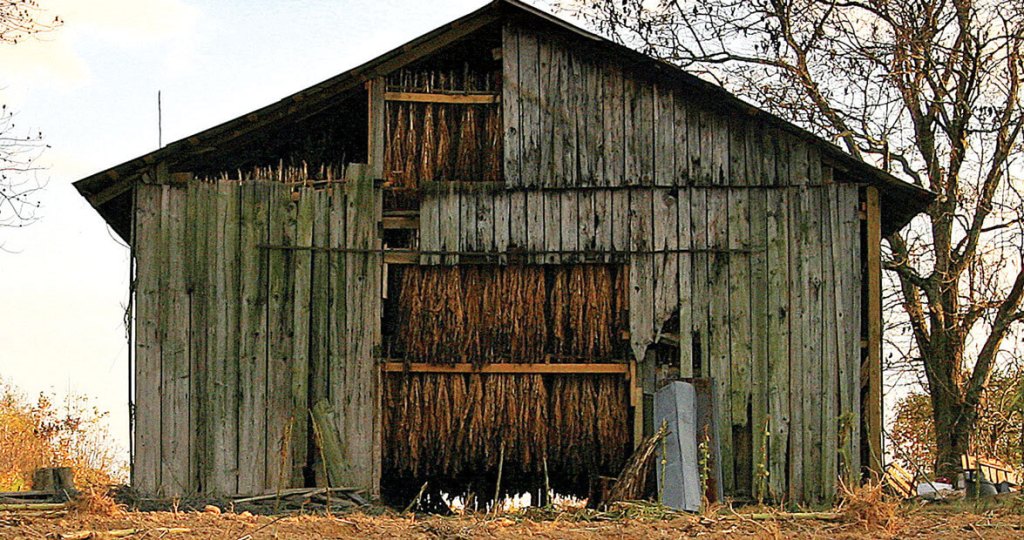
Life in the Appalachian mountains created a rhythm shaped by the land, the weather, and the work that filled every season. Tobacco ruled that rhythm for many families, and mine lived inside that cycle from early spring through late fall. Handing tobacco stood at the final stretch of a long year of labor, and the memories from those cold days still rise with a clarity that time cannot dim. The scent of cured leaves, the bite of November air, and the sting of tobacco gum that clung to our fingers shaped my childhood in ways I still feel.
When the season reached its close, handing tobacco transformed into a kind of ritual. The fields had already surrendered their last leaves. The curing barns had stood tall through late summer and fall, full of rows of tobacco tied to sticks and hanging in the shadows. By the time we gathered to hand the leaves, they had dried and absorbed months of work and weather. Those final steps in the process always arrived with cold mornings that drained the warmth from our fingertips before we could settle into the rhythm of the day.
To beat the cold, we lit a kerosene heater and placed it near the work area. Its glow created a small circle of comfort inside the drafty barn. My hands would hover above the heater again and again, chasing every bit of warmth I could gather. The heater hissed softly, filling the air with a faint smell of fuel that mixed with the sweet heaviness of cured tobacco. We huddled around it at intervals, since handling the leaves chilled our hands until they felt stiff. A moment at the heater revived them enough to continue, although the sticky tobacco gum that coated our fingers collected dirt, heat, and every bit of effort we poured into those long days.
Tobacco gum formed a stubborn layer that stuck to skin like a badge earned through hours of labor. It sank into every crease and refused to release its hold. Washing it away required determination long after the work had ended for the day. We rubbed, scrubbed, and still carried traces of it across the next morning. Those brown stains held the proof of what we did, even when our hands tried to rest.
Handing tobacco created stacks of sorted leaves ready for bailing. Each leaf held its own weight, shape, and story from the fields. We pulled them from the sticks in bunches, smoothing them into piles arranged by quality. It felt like the most delicate stage of the year, since the warehouse inspectors would judge everything we presented. Any mistake or rough handling could lower the price for our entire crop.
Once the piles reached the right size, we turned to the tobacco baskets. These wide, flat baskets filled the barn floor, ready to receive the sorted leaves. We layered them carefully, pressing the leaves into tight bundles so the baskets could hold as much as possible. Each basket becoming a final product ready for market. As each bale took shape, I felt every minute of the season inside it. Every bale represented days spent cutting, hanging, tying, curing, tending, and worrying.
When the time came, we loaded the bales on the back of a truck and made the trip to the warehouse in Asheville. That journey felt like a strange mixture of hope and dread. The warehouse buzzed with farmers who had spent their entire year chasing a fair price. The place was filled with voices carrying the same anxieties and the same expectations. Rows of bales lined the floor, each marked with a number that determined its fate.
I remember my daddy’s reaction every time the grades came in. His face carried lines carved from years of labor and years of disappointment. After the inspectors made their decisions and assigned the price, he always shook his head with frustration. He said they gave us whatever figure suited them, far less than the true value of our effort. His voice carried a weight that came from knowing the family depended on every dollar earned from that crop. That money never felt like a reward. It served as a necessity for winter shoes, coats, and gifts for Christmas morning. We stretched it across months of cold weather, making every coin carry as much as possible.
Reaching that point each year created a sense of relief mixed with exhaustion. Everything began in early spring with the tobacco beds. We cleared the soil, spread the seed, covered the beds, and protected them from frost and pests. The tiny plants needed constant attention through those first weeks of fragile growth. Once the seedlings reached the right size, we transplanted them into the fields. Rows stretched wide, and the work shifted into a routine of weeding, hoeing, topping, and removing the suckers that grew between the leaves. Each step required time, strength, and energy that summer heat drained from every family member.
The fields demanded everything through June, July, and August. By the time the harvest arrived, our arms carried scratches from stalks and leaves. Our shirts smelled like the fields. Our days revolved around cutting the stalks, spearing them onto sticks, and hanging them in the curing barn. The barns held shadows, ladders, and the sound of leaves brushing against one another as they dried over several weeks. The hours inside the barn grew long, since each stick had to be placed high overhead. Sweat dripped from our foreheads in the heat of late summer and early fall. Then the cool weather arrived, and the barns shifted from suffocating heat to biting cold.
Once November rolled in, the end finally approached. Handing the tobacco signaled the closing chapter of the year’s work. While the season delivered a sense of pride, the process carried enough struggle to create strong feelings toward the crop. Those final chilly mornings near the kerosene heater reminded me of everything we endured to reach that moment.
After we delivered the bales to Asheville and returned home, the fields appeared bare. The barns turned silent for the first time since spring. We experienced a stretch of months where tobacco demanded nothing from us. That break felt like a breath we had waited to take since the first seeds touched the soil. The relief from that work shaped one of my clearest childhood realizations. I felt no longing for the next season. The break delivered a freedom that made its value undeniable.
Growing up in Appalachia created a strong sense of place, community, and resilience, although that tobacco work shaped a part of life I never hoped to repeat. Each year that cycle held my family inside a pattern of physical strain and financial uncertainty. Many families endured the same challenges and passed those experiences from one generation to the next. For some, the work created a sense of tradition. For others, it held a sense of duty. For me, it became a motivation to push myself toward an entirely different path.
Education created the doorway I aimed toward. I worked through school assignments with the memory of the fields behind me. I pushed through classes with the hope of reaching a future that offered choices far from barns filled with hanging leaves. Every hour spent handing tobacco made that dream clearer. I carried the determination to finish school and reach a life that created opportunities my childhood never provided.
The memory of that cycle still shapes my appreciation for the life I built. The fierce work ethic from those years remains a part of me. The long days taught me endurance. The cold mornings at the kerosene heater taught me perseverance. The frustration I witnessed in my daddy’s voice taught me the value of pursuing something more stable. Those memories rise every time I smell wood smoke, dried leaves, or chilly November air.
Although the tobacco fields created hardship, they also held moments of connection. Families gathered around the work, sharing stories, laughter, and determination. The neighbors who helped with cutting and hanging supported one another through every stage. Communities across Appalachia understood the weight of the harvest and rallied together to finish before the frost arrived. Even through the strain, a sense of shared effort shaped the culture of the region.
The cycle repeated each year with the same demands. The fields waited, the barns filled, and the warehouses held the final verdict on our work. That rhythm created stability through routines even though it created financial uncertainty at the same time. In those mountains, survival required creativity, grit, and commitment. Tobacco provided income when few alternatives existed, and families accepted the labor because survival required it.
Looking back, handing tobacco remains one of the clearest chapters of my childhood. The heater’s glow, the gum on my hands, the ache in my back, and the heavy bales delivered memories that remain vivid across the years. Although the work challenged me physically and emotionally, it shaped the strength that guided my choices. It pushed me to seek an education and carve a future different from the one I grew up in.
Every November still carries a faint echo of those days. The season’s shift reminds me of the long journey from tobacco beds to tobacco warehouses. The memory of that work will always stay a part of my story, even though my path carried me far from those barns and fields. Those experiences taught me resilience, determination, and appreciation for every opportunity that arrived later in life. Through all the hardship, the season gave us enough to make it through the winter, and the lessons it taught carried me through much more.
-Tim Carmichael
 Echoes of Appalachia
Leave a comment