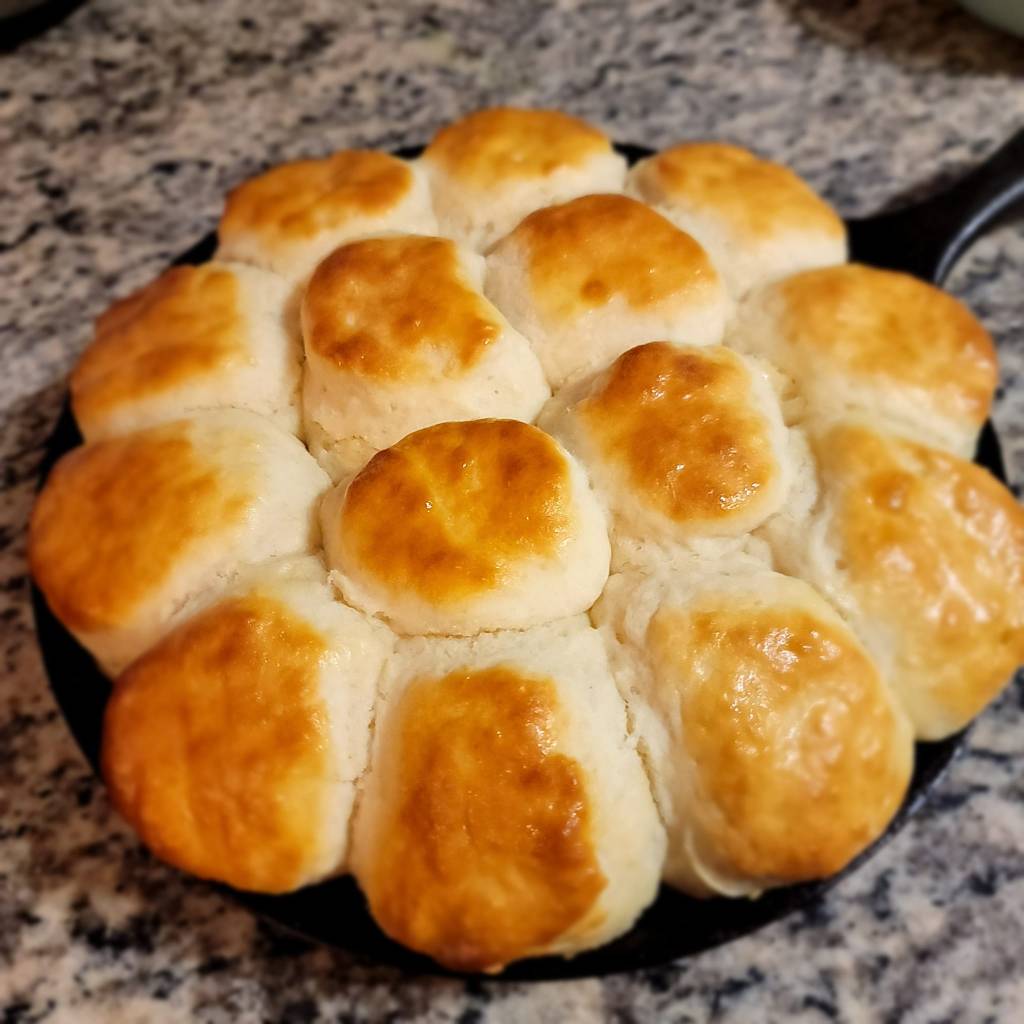
When I was 10 years old my granny taught me how to make biscuits and gravy. The picture above is a pan of biscuits that I made, and if I had a dime for every biscuit I have made over the years, I would be a very rich man. Thinking back on those early mornings in her kitchen always fills me with a warm mix of gratitude, and comfort.
Granny believed that cooking created a kind of steady confidence. She said a person who could stir a silky gravy, fold tender dough, and feed a household held a skill that carried through every challenge. She never spoke in fancy phrases, though. Her strength lived in actions: rising before sunrise, lighting her old cast iron stove, and singing gospel hymns while her hands shaped each biscuit with loving care. I remember watching her fingers, lined with decades of work, move through motions that felt both simple and magical at the same time.
Her recipe traveled through our family like a treasured tale. While she stood over the counter, she would talk about the first time she learned the craft. She learned from her own grandmother, who learned from hers, and through that chain I gained a piece of history much bigger than myself. That gentle passing of culinary wisdom sparked a curiosity in me that carried far beyond our kitchen. I wondered where biscuits came from long before they reached our family table. I wanted to understand how a food so comforting across the American South gained such a deep foothold in households around the world.
Tracing the Roots of the Biscuit
The story of the biscuit stretches through centuries of human experience. Early forms appeared across many cultures, long before modern ovens existed. Travelers, soldiers, sailors, traders, and farmers all relied on durable baked goods made from simple ingredients. These early biscuits were firm, dry, and created for survival rather than delicate flavor. They needed to keep for weeks, even months, without crumbling or spoiling. People carried them on ships, packed them in pouches, and used them as vital nourishment through long journeys.
The English word “biscuit” grew from a phrase meaning “twice baked.” Bakers prepared a dough, baked it once, then dried it thoroughly in a second heating. This created a food that endured through harsh conditions. These early forms were far from the tender, flaky treats we enjoy today. Sailors in particular depended on them. They called them “sea biscuits” or “hard tack,” and although they were tough as wood, they kept crews alive across oceans. When families migrated across continents, they brought their baking traditions along, gradually shaping new versions through local ingredients and cultural customs.
In time, softer styles of biscuits emerged as home kitchens flourished and ingredients like refined flour, rendered fat, and chemical leavening agents became common. The rise of these ingredients transformed biscuits from survival rations into tender comforts. European settlers in America adopted and adapted biscuit recipes using freshly milled flour, animal fat, and regional dairy products. Enslaved cooks across the American South refined the method even further, creating techniques that influenced countless households and shaped Southern cuisine into something deeply woven with memory, creativity, and resilience.
Biscuits in American Homes
By the nineteenth century, biscuits held a firm place in American kitchens. Families relied on them because they were affordable, filling, and adaptable. Farm families often needed meals that could be prepared early and served to large groups. Biscuits met every need: quick enough for busy mornings, hearty enough for long workdays, and delicious enough for special gatherings.
Chemical leavening revolutionized biscuit making. Ingredients such as baking powder allowed dough to rise with ease, producing the soft interior and delicate layers people adore today. Home cooks across every region experimented, sharing tips across town gatherings, church socials, and family reunions. Through each exchange, the biscuit evolved into something both accessible and deeply personal.
In the American South, biscuits developed an identity rich with heritage. Cooks shaped dough with experienced hands, pressing it gently to preserve airy layers. Kitchens echoed with the rhythm of flour dusting across wooden boards and pans warming on cast iron. Variations appeared everywhere: drop biscuits, layered styles, enriched versions made with cultured milk, and savory blends featuring herbs or cured meat. Families guarded their favorites while celebrating the creativity of neighbors.
A Tradition of Gravy
Gravy joined biscuits long before I arrived on this earth, and the pair grew into a culinary emblem across the region. Gravy stretched resources, transformed simple meals into satisfying feasts, and brought households together at tables filled with laughter and conversation. On early farms, cooks saved rendered drippings from meats, seasoned them with skill, and whisked them into smooth sauces that poured over warm biscuits like silk.
Granny had her own way of making gravy. She used a heavy skillet, always warmed to the right temperature, and stirred with a slow, steady motion. She never measured anything with gadgets. Her fingers served as her most reliable guide. She added flour with a practiced motion, added rich liquid in careful increments, and stirred until the mixture thickened into something comforting as a hug after a long day.
Food historians often describe gravy as a resourceful creation, made from whatever households had available. Families used the drippings from smoked pork, roasted poultry, or pan-fried sausage. Thick, creamy versions gained fame across rural communities, especially among families who needed filling morning meals before heading into fields or workshops. Through time, gravy evolved into many regional varieties while remaining a companion to biscuits, forming a partnership that feels eternal.
My Journey Through Years of Biscuit Making
My own biscuit-making journey started with Granny’s strong hands guiding mine. The first dough I helped mix came together unevenly, yet she smiled as if it were a masterpiece. She said every batch carried a lesson. Through the years I learned to feel when the dough reached the right texture. I learned how much pressure to use when folding layers. I learned that temperature mattered, timing mattered, and intention mattered most of all.
Cooking with her gave me more than food. It gave me stories, confidence, and a way to carry her memory through every kitchen I ever stepped into. Every time I pull a pan from the oven, I feel her presence beside me. I can almost hear her humming, see her smile, and sense her pride. Those memories flavor each biscuit more powerfully than any ingredient.
Over decades of making biscuits, I have shared them with friends, neighbors, coworkers, and family. I carried trays to gatherings, delivered warm batches to people who needed comfort, and used them as a bridge to share heritage with those unfamiliar with Southern traditions. Through every experience, I realized Granny had gifted me more than a recipe. She gave me a skill that nourishes hearts as much as it feeds stomachs.
A Shared Legacy
The history of biscuits stretches far across time, shaped by countless hands from ancient travelers to modern cooks. My place in that lineage feels small, yet deeply cherished. Every pan I pull from the oven connects me to a chain that began long before me and will continue long after. Biscuits hold stories within their layers: stories of survival, resilience, creativity, and community.
Granny’s wisdom echoes through my life with comforting clarity. She believed that knowing how to create nourishing meals ensured security, confidence, and the ability to care for others. Through biscuits and gravy, she taught me patience, resourcefulness, and joy in simple acts that brighten everyday life.
So when I look at the pan in the picture above, I see far more than baked dough. I see years of practice, love, memory, and heritage. And I hear her voice reminding me that as long as I can shape dough and stir gravy, I carry a timeless gift, one that brings warmth to every table I approach.
-Tim Carmichael


 Echoes of Appalachia
Leave a comment