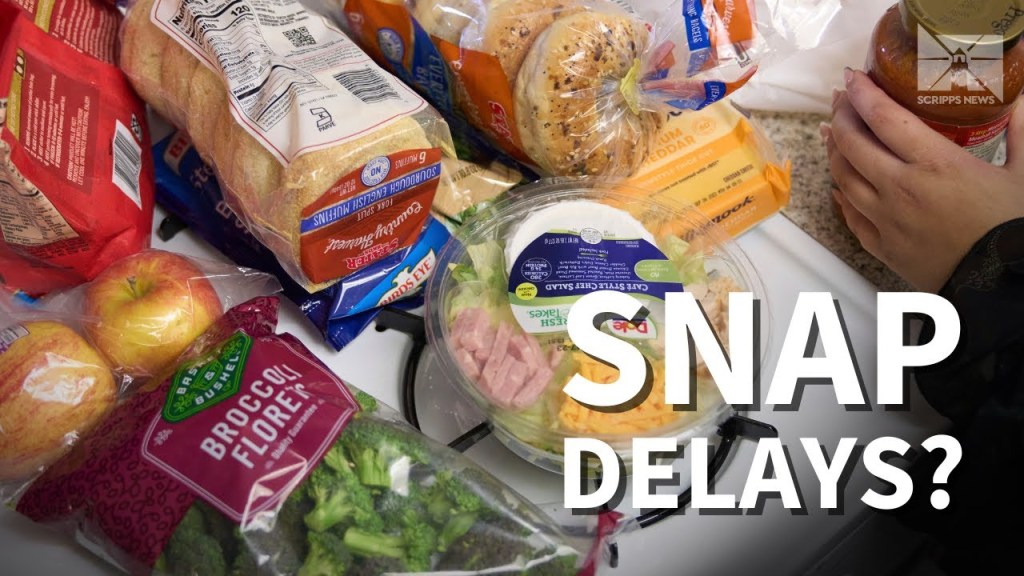
In November 2025, as the federal government teeters on the brink and key funding for the Supplemental Nutrition Assistance Program (SNAP) hangs in the balance, thousands of low-income families across Appalachia could face a crisis. Some states have already warned that November benefits may not be issued unless funding is restored. Tennessee has a huge surplus of money and Gov. Bill Lee said he would not use that money to help put food on the table of poor Tennessean’s. This right here shows they are only helping the rich. So why do Tennessee people keep voting for these candidates that have zero care about them. Why do we keep letting this happen?
For rural Appalachian communities where food insecurity is already elevated, this is not just a temporary hiccup; it is a potential disaster. Studies have shown that participation in SNAP is strongly associated with greater food security in rural Appalachian counties. Households that receive SNAP benefits are significantly more likely to have enough to eat, and when that support disappears, hunger and hardship rise immediately.
The region’s particular vulnerabilities make the stakes higher. Rural Appalachian counties have among the highest rates of SNAP usage in the nation, and food access is challenged by geography, poverty, transportation, and infrastructure. Remove or delay the benefits, and you remove a critical stabilizer. Families that rely on that assistance for groceries will see immediate pain, fewer meals, lower nutrition quality, greater health risks, and ripple effects across local economies where every dollar counts.
Health Care, Premiums, and the Ripple Effects
On top of that, health care costs in Appalachia are poised to skyrocket. The region already suffers from significant disparities in health outcomes and access to care. The Appalachian Regional Commission has documented that health care access and affordability remain persistent challenges in the region.
In Appalachia, health is closely tied to nutrition and economic security. When food assistance programs like SNAP are cut, health outcomes worsen. Research consistently shows that SNAP participation is linked with lower health care expenditures, fewer emergency visits, and fewer hospitalizations. If benefits are reduced or halted while premiums triple, the effect will be devastating.
People who lose access to affordable food often skip preventive care, delay medications, and experience deteriorating chronic conditions. The cost burden of health care grows as nutrition declines, and families are forced to choose between paying rent, buying food, or covering their medical bills.
Soaring Costs: Food, Rent, Energy, and Farms
Appalachia is being hit on multiple fronts. Food, housing, and energy costs have surged in 2025, and families that were already struggling now find themselves on the edge.
Food prices have nearly doubled since January. In rural mountain towns where access to large grocery stores is limited, residents are paying higher prices for basics like bread, eggs, and milk. For many, a single month without SNAP benefits could mean going hungry.
Rent and housing costs are out of control. In many Appalachian counties, affordable housing is scarce. Older homes require costly repairs, and rental prices have climbed as new development has lagged. Families living paycheck to paycheck now find themselves spending more than half their income on rent.
Energy costs have nearly doubled under the current administration, even as voters are being told that if they support Democrats, their gas and electricity bills will skyrocket. The reality is that energy costs are already rising steeply. Appalachians, who rely heavily on electricity, propane, or heating oil to stay warm in winter, are facing crushing utility bills.
Farmers across Appalachia are also feeling the squeeze. Tariffs introduced by the Trump administration have driven up the price of farm equipment, seeds, and fertilizer while shrinking export markets for American crops. Small farms, many of which have been passed down for generations, are struggling to stay afloat. Tariffs designed to help American producers are instead putting them at risk of bankruptcy.
When farms fail, rural communities fail with them. The loss of local farm income means fewer jobs, lower spending in nearby towns, and deeper rural decline. These challenges add to the growing sense of despair across Appalachia.
The Political Backdrop: Who Has Been in Charge
To understand why Appalachia is suffering, it is important to look at who has held political power in the region. For much of the twentieth century, Appalachia was a Democratic stronghold. The region’s loyalty to the Democratic Party was forged during the New Deal, when federal investments in infrastructure, labor protections, and social welfare lifted millions out of poverty.
But over the past several decades, Appalachia has shifted decisively to the Republican Party. Starting in the 1980s and accelerating after 2000, Republican candidates successfully appealed to cultural and social values such as faith, gun rights, and opposition to government overreach, while promising to defend coal, protect traditional lifestyles, and bring back jobs.
Today, Republicans control most of the state governments across Appalachia and dominate its congressional representation. Yet the economic picture has not improved. Many of the same problems persist: declining coal jobs, limited access to health care, high poverty, and crumbling infrastructure. The party that now governs most of Appalachia has failed to deliver the economic revival it promised.
Republicans’ Promises and the Reality on the Ground
Republican leaders have long claimed to be champions of the working class, especially in rural areas like Appalachia. But their policies often tell a different story.
Consider tariffs. While framed as a way to protect American workers, they have increased the cost of critical inputs for farmers and manufacturers. Fertilizer, equipment, and fuel have all become more expensive. Small farmers who were already struggling with thin margins are now seeing losses mount.
Consider the SNAP program. Conservative lawmakers have repeatedly proposed cuts or new work requirements for food assistance, even though the program serves as a lifeline for millions of rural Americans. Eliminating or delaying benefits would be disastrous for Appalachian families.
Consider energy and health care. Despite promises to lower costs, energy prices have nearly doubled, and health care premiums are reportedly set to triple. Families are facing record bills while wages remain stagnant.
Despite these outcomes, Republican politicians in the region continue to frame the Democrats as the ones responsible for economic pain, even though Democrats currently hold little governing power in Appalachia. The rhetoric is effective, but the reality on the ground tells another story, one of broken promises and worsening hardship.
Democrats’ Role: Promise Versus Reality
To be fair, the Democratic Party has not done enough to win back the trust of Appalachian voters. Over the past few decades, many Democrats shifted their focus to urban centers and suburban districts, leaving rural areas feeling ignored.
Appalachia’s economic and cultural challenges require consistent, tailored engagement, not one-size-fits-all policies. Many residents feel abandoned by Democrats and have turned to Republicans who, at least rhetorically, promise to fight for them. But promises are not policies, and in many parts of Appalachia, the promises have not materialized.
The result is a political paradox. The region remains one of the most Republican in the country, yet its residents suffer some of the highest poverty, lowest wages, and worst health outcomes.
What Happens in November If Food Stamps Stop
If the federal government fails to fund SNAP in November, the effects in Appalachia will be immediate and severe.
Thousands of families will lose their primary source of food assistance. With grocery prices already high, many will face hunger or be forced to rely on food pantries that are already stretched thin. Nutrition will decline, health will worsen, and poverty will deepen.
Local economies will suffer too. SNAP dollars are spent quickly and locally. When that money disappears, small stores and markets lose business. The economic contraction will ripple through rural towns, leading to job losses and closures.
The combination of rising rent, higher energy costs, tripled health premiums, and missing food assistance will create a perfect storm of hardship for Appalachian families. These are not abstract policy debates; they are real-life consequences for real people.
The Blame Game: Who Has Power and Who Uses It
As the crisis deepens, politicians will continue to blame each other. Republicans will warn that voting for Democrats will cause energy and gas prices to skyrocket, while Democrats will argue that Republican mismanagement and misplaced priorities have already caused those increases.
But the truth is clear. Republicans have dominated Appalachian politics for years. They control statehouses, governors’ offices, and congressional seats across the region. If Appalachia is suffering, if families are hungry, if rents are unaffordable, if energy costs are rising, and if farmers are failing, then those in power must be held accountable.
It is disingenuous to blame Democrats who currently lack the political power to make or block most policies affecting the region. For years, Republican leaders have made promises to restore coal, lower costs, and protect the working class. Yet the data and daily reality show a widening gap between those promises and the outcomes.
What Can Be Done
Short-term relief must focus on restoring SNAP funding immediately so November benefits are not disrupted. Food banks and community organizations should receive emergency support to meet rising demand. State and federal agencies should coordinate to prevent health insurance premium spikes and ensure that rural residents maintain access to care.
Long-term, Appalachia needs a renewed investment strategy. Infrastructure, broadband access, small business support, and clean energy projects can provide stable jobs and diversify the economy. Farmers need targeted assistance to weather tariff-related losses, and housing investments are necessary to stabilize rent and upgrade older homes.
Perhaps most importantly, the people of Appalachia need a political system that prioritizes them over partisan rhetoric. Accountability must be demanded from leaders who have governed for decades without delivering tangible improvement.
Conclusion
In Appalachia, the looming suspension of food stamps in November is not just an administrative failure; it is a humanitarian crisis in the making. Rising food costs, surging rents, escalating energy bills, and skyrocketing health care premiums are pushing the region’s most vulnerable families to the brink.
For years, Republican leaders have promised to defend rural America, to protect jobs, and to bring prosperity back to the mountains. But under their leadership, Appalachia has continued to struggle. Energy costs have climbed, farmers are hurting from tariffs, and families are facing hunger and poverty once again.
Meanwhile, Democrats are blamed for problems they currently lack the power to solve. The cycle of blame continues while families in the hollers and mountain towns suffer.
Appalachia stands at a crossroads. Without decisive action to restore food assistance, reduce costs, and rebuild the rural economy, the region will continue to decline. The people of Appalachia deserve more than political slogans. They deserve leaders who will fight for their health, their livelihoods, and their future. The real question is when are we going to wake up? When are we going to stand up and start speaking out? Does it take people dying? Because I truly feel that’s where we are heading.
-Tim Carmichael
 Echoes of Appalachia
Leave a comment