Appalachia powered America, and in return, America left it behind.
This is the story of how both political parties failed the mountains they keep claiming to love.
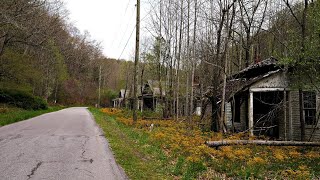
You do not have to look far in Appalachia to see the wreckage left behind. Old mines caved in, stores boarded up, and families scattered across the country chasing work that never came home. The region that once fueled the nation through coal, timber, and hard labor has been left carrying the weight of broken promises.
The betrayal came from both directions. One party promised renewal and delivered neglect. The other promised revival and delivered exploitation.
For years, Appalachia has been used as a political stage. Each side visits during election season, offering promises of jobs, dignity, and respect. Then the cameras leave, and the hollers grow quieter. What follows is another round of closures, another generation moving away, another wave of addiction and despair.
The story is written across trade policy, the collapse of coal, land ownership, and the opioid crisis.
Trade Policy And The Illusion Of Opportunity
Back when the big trade deals rolled through Washington in the 1990s, the talk was all about progress. More trade meant more opportunity, they said. Politicians from both parties told the people of Appalachia that global markets would lift all boats. The only thing that rose was unemployment.
When factories closed, whole towns emptied out. The furniture plants, textile mills, and machine shops that once paid steady wages either shuttered or moved overseas. The folks left behind did not just lose jobs. They lost identity, purpose, and pride.
Free trade looked great on paper for those who could afford to leave, but for the ones who stayed, it tore the heart out of local economies.
Both sides had their hand in it. Democrats pushed trade as modernization. Republicans praised it as freedom for business. Neither stopped to think about the people who would be caught in the fallout. There were no serious plans for retraining, no real investment in rural infrastructure, no cushion for the crash.
When the jobs went away, despair filled the gaps. People turned to what little work they could find, or to pain medicine to get through the day. Trade policy was sold as progress, yet it became the first cut in a deep wound that never healed.
The Collapse Of Coal And The Broken Promise Of Revival
Coal built Appalachia and destroyed it all the same. It put food on tables, bought homes, and sent kids to school. Then it left. Between the early 2000s and 2020, production dropped so fast that counties once booming with miners now feel like ghost towns.
Republicans stood in front of miners and promised to bring the coal jobs back. Democrats said they would build new industries to replace them. Neither happened. Coal did not just fade because of environmental policy. It collapsed because the market changed. Natural gas got cheaper, automation took over, and the demand for coal power fell.
The companies that profited for generations pulled out, leaving cleanup bills behind.
The so-called transition plans never reached deep into the mountains. Federal grants went to consultants and studies, not to the people trying to keep their lights on. Talk of green jobs sounds nice, but the solar farms and wind projects often pop up far from the old mining counties.
So the miners stayed home, waiting for help that never came. Both sides loved to use them as symbols, holding up coal dusted helmets during rallies or photo ops. Yet few ever returned once the cameras shut off.

Land Ownership And The Power Imbalance
If you want to understand why Appalachia struggles, start with the land. For generations, most of it has not belonged to the people living on it. Corporations from outside the region bought up mineral rights and timber tracts long ago. The profits flowed outward while the pollution stayed behind.
Local families often rent or farm on land owned by investors who live hundreds of miles away. When coal companies finished mining, they did not rebuild. They took the wealth and left behind slag piles and poisoned streams. Politicians from both parties allowed it through tax breaks, lenient laws, and silence.
Every few years, new outsiders arrive claiming they will bring renewal. Sometimes it is a tech investor talking about data centers or a company promoting carbon capture. They promise progress but keep the ownership structure the same. Locals still have little control over their own resources.
Until Appalachia owns its own land and what lies beneath it, the region will always live under someone else’s thumb. No amount of speeches or ribbon cuttings will fix that.
The Opioid Crisis And The Human Cost Of Abandonment
When the work disappeared, pain filled the empty space. Factories and mines may have closed, but the injuries, exhaustion, and hopelessness stayed. Doctors started writing painkiller prescriptions like they were candy. The pills flooded in by the millions, sent by companies that knew exactly what they were doing.
In some Appalachian counties, there were more pain pills shipped in a year than there were people living there. It started with prescriptions and turned into addiction, then overdoses, then funerals. Grandparents started raising their grandkids. Whole towns went quiet.
Both political parties talk about addiction when it is convenient, but neither built a lasting system to deal with it. Treatment centers are few and far between. Many require long drives, long waits, or money that most folks do not have.
The opioid crisis is not just a drug story. It is a story of neglect. A story of a region stripped of work and purpose, where despair became a business model. Companies made billions while the mountains buried their dead.

How Each Party Played Its Part
It is easy to point fingers, but the truth is both parties share the blame. Republicans have used Appalachian pride as a rallying cry while backing the same corporate systems that keep the region poor. They talk about freedom, but freedom without opportunity means nothing.
Democrats like to talk about helping the working class, yet too often their version of help never makes it past the city limits. They promote innovation and green energy but forget to build it where the need is greatest.
Both sides love the idea of Appalachia as a symbol, hardworking, resilient, and loyal, yet few have treated it as a partner. One sold the region nostalgia, the other sold it hope, and both cashed the check.
A Region Between Two Promises
If you drive through the mountains today, you can see the pattern clear as day. Broken roads, closed hospitals, and schools hanging on by threads. Yet you also see stubborn pride. You see people growing food, building small businesses, fixing what is broken even when no one helps. Appalachia keeps moving, even when the country seems to forget it exists.
What it needs is not another speech. It needs real ownership, fair wages, broadband that reaches every holler, and leaders who live here and understand what it means to stay when everything tells you to leave.
The region has the talent, the creativity, and the grit to rebuild itself. What it lacks is power, the kind of power that comes from owning the land, the industries, and the decisions that shape its future.
A Question For The Reader
So here is the hard question. Which party failed Appalachia worse? Was it the Democrats, who sold the region the dream of progress while signing trade deals that gutted local jobs? Or the Republicans, who promised a revival while letting corporations run wild and take what was left?
Maybe the real answer is that both failures look different but hurt the same. The first took away opportunity. The second took away control. Either way, the result is a region left to pick up the pieces alone.
Conclusion
The story of Appalachia is the story of a country that forgot where its power came from. The coal that lit the cities, the steel that built the skyscrapers, the labor that fed the economy, it all came from places like these hills. What came back was neglect, extraction, and addiction.
Both parties share that blame. One turned its back, the other looked the other way. Appalachia gave everything it had, and all it got was a promise that someone else would fix it someday.
That promise never came true.
The future of these mountains depends on people building from the ground up, not waiting for Washington to remember them again. The next generation of Appalachian leaders will have to do what neither party has done, give the region back to its own people.
Until then, the mountains will remember who showed up only for the photo and who stayed to fight.
Tell me in the comments, which party failed Appalachia worse, and what would real accountability look like to you?
-Tim Carmichael
 Echoes of Appalachia
Leave a comment