
For those who love the Smoky Mountains, the call of the backcountry is irresistible. Winding footpaths, hidden campsites, and the promise of solitude all pull hikers deep into the heart of one of the most beloved national parks in the country. Among the network of more than 900 miles of official trails, a handful stand out as true tests of endurance and patience. The Lakeshore Trail is one of them.
I’m currently working toward joining the “900 Miler Club,” an informal but respected community of hikers who have completed every trail in Great Smoky Mountains National Park. Fewer than 900 people are known to have accomplished it. With just about 150 miles left, I’ve seen the highs and lows of what this park has to offer. But I can honestly say the Lakeshore Trail is one of the toughest hikes I’ve ever tackled, despite the books and blogs that paint it as “the easiest long trail in the Smokies.” Let me be clear: this trail will kick your butt. I don’t care who says it will not.
Overview of the Lakeshore Trail
The Lakeshore Trail stretches roughly 33 miles point-to-point, starting near the infamous “Road to Nowhere” tunnel outside of Bryson City, North Carolina, and ending at Fontana Dam. On paper, the description sounds manageable: rolling terrain, access to water, campsites along the way, and a route that parallels Fontana Lake. Many descriptions present it as an “easy long-distance hike,” perfect for trail runners, section hikers, and backpackers.
But the truth on the ground tells a different story. The Lakeshore Trail is less maintained than many other routes in the park. It’s remote, underused, and full of obstacles. For casual hikers who wander a mile or two past the tunnel and then turn back, the trail might feel like a pleasant stroll. But for those who attempt the entire route, especially with overnight packs, it quickly transforms into a grueling test of stamina, navigation, and mental toughness.

Constant Elevation Changes: The Smokies’ Rollercoaster
If you picture a lakeside walk with gentle terrain, think again. The Lakeshore Trail is a relentless series of ups and downs. Flat stretches are rare, and every time you get a reprieve, you can be sure another climb or descent is waiting around the bend. These aren’t long, dramatic ascents like you might find on the Appalachian Trail, but the accumulation of short, steep climbs drains your energy over the miles.
By the time you’re deep into day two, the constant elevation shifts take a toll on knees, ankles, and hips. Even experienced hikers accustomed to long days in the mountains will find themselves humbled. Personally, I’ve hiked from Springer Mountain, Georgia, to the Grayson Highlands of Virginia on the Appalachian Trail—a challenging stretch in its own right—and I still felt more beat up after three days on the Lakeshore Trail.
Navigation and Trail Markings
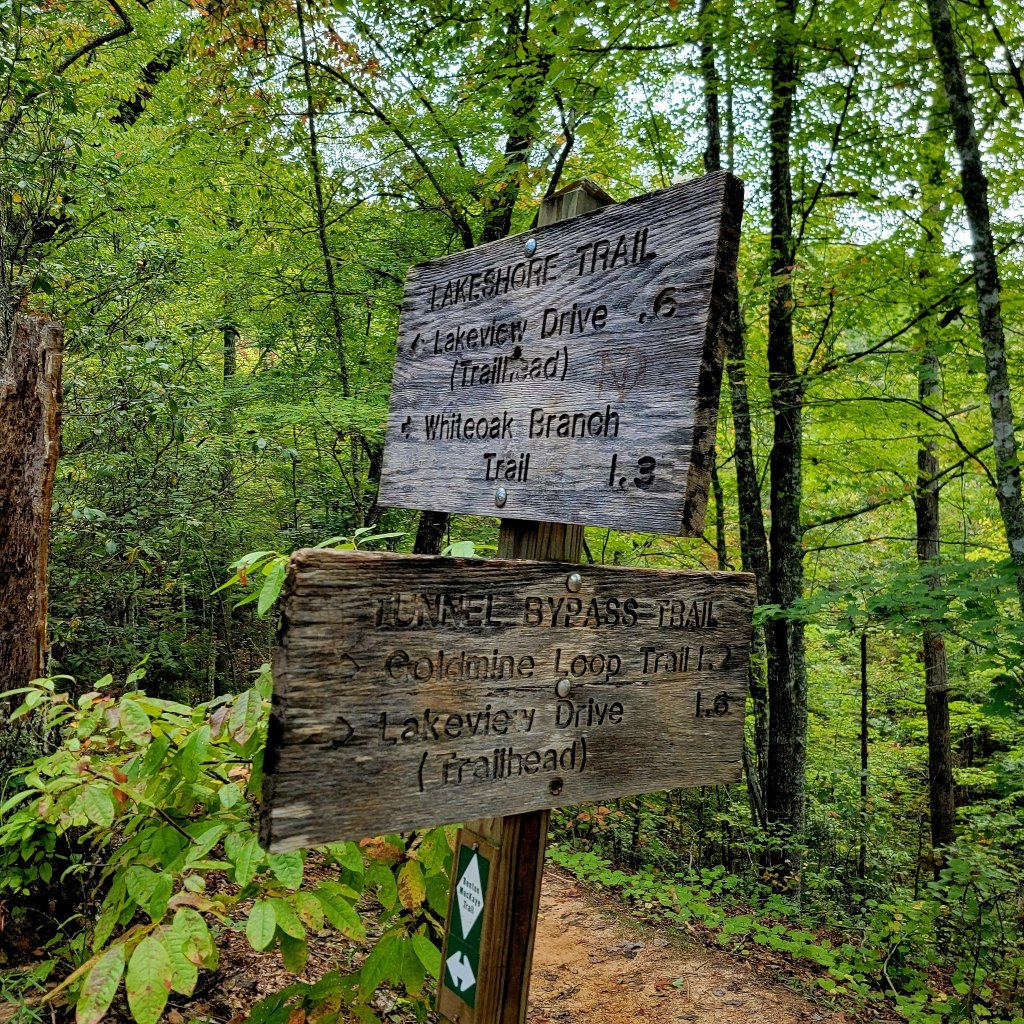
Another factor that makes the Lakeshore Trail more difficult than advertised is its poor signage and overgrown conditions. Unlike the Appalachian Trail or other well-marked routes, this one demands close attention to maps, GPS, or guidebooks. Junctions can be confusing, and spurs that count toward the 900 Miler Club add mileage and complexity.
In places, you’ll find yourself questioning whether you’re even still on the right path. Blowdowns—massive fallen trees—often obscure the route entirely. Some of these trees are so large you have to take off your pack just to crawl over them, while others force you into an awkward limbo beneath their trunks. Add in slippery acorns scattered like marbles across the ground, and it feels more like an obstacle course than a maintained hiking trail. There are very few signs like the ones below.
Wildlife and Wilderness Encounters
One of the saving graces of the Lakeshore Trail is its wild, remote beauty. The trail meanders through quiet forests, across creeks, and near sections of the shoreline that few people ever see. Solitude is almost guaranteed; on my trip, we saw only three other hikers over three days.
Wildlife sightings are frequent. Birds, deer, and small mammals are common companions. Near Campsite 81, signs of wild boars—rooted earth and torn-up patches of ground—become evident. Luckily, we never encountered one face to face, but their presence was unmistakable. In this isolated stretch of backcountry, you’re reminded that you’re a guest in a truly wild environment.
Water and Campsites
Water sources are plentiful along the route, but as always in the Smokies, a filter or purifier is essential. Streams and creeks provide reliable refills, but hikers should never drink untreated water here.
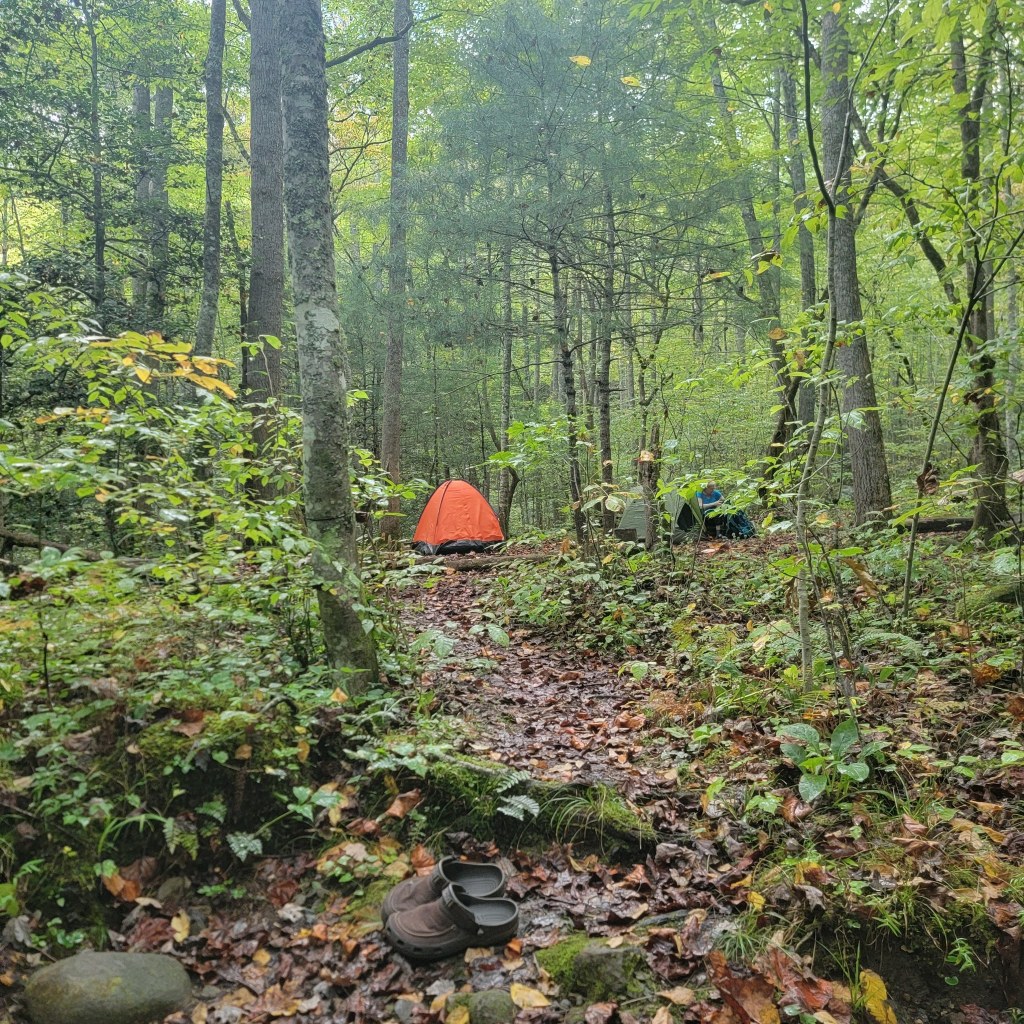
Campsites, on the other hand, are a mixed bag. Many of the designated backcountry sites along Lakeshore Trail are overgrown and rugged. Don’t expect manicured tent pads or easy fire rings. This is rough camping at its core. You’ll want a solid backcountry setup, including multiple ways to start a fire—because most of the wood is damp and reluctant to burn.
Permits are required for all backcountry camping in the Smokies, so be sure to reserve your sites in advance. The remoteness of the trail means you’ll likely have your campsite all to yourself, which is both a blessing and a challenge.
Unexpected Challenges: Chiggers, Acorns, and Fatigue
One of the harshest lessons I learned on the Lakeshore Trail was just how relentless the small challenges could be. Acorns underfoot made every descent feel like skating on marbles. Fallen trees forced repeated pack-off maneuvers. And the damp wood made building a campfire an exercise in frustration.
But the worst by far was the onslaught of chiggers. After more than 15 years of hiking and backpacking, I’ve never had bites like I did after this trip. These tiny pests are easily overlooked in planning, but once you’ve been through the Lakeshore Trail in summer, you’ll never forget them.
Combine these nuisances with the constant climbs and poor trail maintenance, and the fatigue sets in fast. By the end of our hike, I felt more physically punished than on any other multi-day trek I’ve ever attempted.
The Distance Debate: Is It Really 33 Miles?
Officially, the Lakeshore Trail is listed as 33 miles long. But if you’ve hiked it, you may find yourself questioning that figure. My own calculations suggested it was much longer, especially when factoring in spur trails that must be completed to count the Lakeshore toward the 900 Miler Club.
This discrepancy adds to the sense of unpredictability. Just when you think you’re making progress, you realize you’ve got extra miles to cover. Mentally, it can be draining, and it’s another reason this trail shouldn’t be underestimated.
The Road to Nowhere and Fontana Dam
One of the quirks of the Lakeshore Trail is its starting point: the Road to Nowhere tunnel outside of Bryson City. This abandoned project from the 1940s has become both a curiosity and a trailhead. Many day hikers walk through the tunnel and onto the first mile or two of the trail, enjoying an easy out-and-back stroll before returning.
At the other end of the trail lies Fontana Dam, a striking and historic structure that serves as a gateway for Appalachian Trail thru-hikers. Connecting these two landmarks gives the Lakeshore Trail a sense of continuity, linking modern history with wild backcountry.

Who Should Attempt the Lakeshore Trail?
Given all this, who is the Lakeshore Trail really for? The answer is: experienced backpackers prepared for adversity. This is not the place for beginners or casual hikers to attempt a first multi-day trek.
If you’re used to rough conditions, can handle route-finding, and thrive in solitude, then this trail offers a rewarding challenge. The isolation is profound, the scenery is untouched, and the sense of accomplishment is immense. But you must prepare for obstacles, discomfort, and unpredictability.
Preparation Tips for the Lakeshore Trail
If you’re considering tackling the Lakeshore Trail, here are some hard-earned lessons:
- Navigation Tools: Carry a detailed map, GPS, and compass. Don’t rely on signage.
- Fire Starting: Bring at least three methods of ignition; the wood is damp and stubborn.
- Bug Protection: Chiggers are fierce. Long pants, permethrin-treated clothing, and repellents are highly recommended.
- Footwear: Sturdy boots with excellent traction are essential—acorns and slick ground make for treacherous footing.
- Water Treatment: A reliable filter or purifier is a must.
- Pack Management: Be ready to remove and re-don your pack frequently to climb over blowdowns.
- Mental Readiness: Know that this hike will be harder than it looks on paper. Patience and persistence are your greatest allies.

Final Thoughts: A Trail That Demands Respect
The Lakeshore Trail is not the “easy Smokies hike” that some resources claim. It’s a bruising, humbling journey that tests even seasoned hikers. Yet for those willing to endure the obstacles, it’s also an unforgettable experience.
Solitude, wildlife, rugged wilderness, and the satisfaction of conquering one of the park’s longest and most misunderstood trails await. Just go into it with eyes wide open, respect for the backcountry, and the preparation to survive whatever the Lakeshore throws your way.
For me, this trail was a reminder that the Smokies still have wild, untamed corners where hikers can feel truly tested. As I edge closer to completing all 900 miles, the Lakeshore Trail stands out as one of the hardest and most memorable sections of the journey.

-Tim Carmichael
 Echoes of Appalachia
Leave a comment