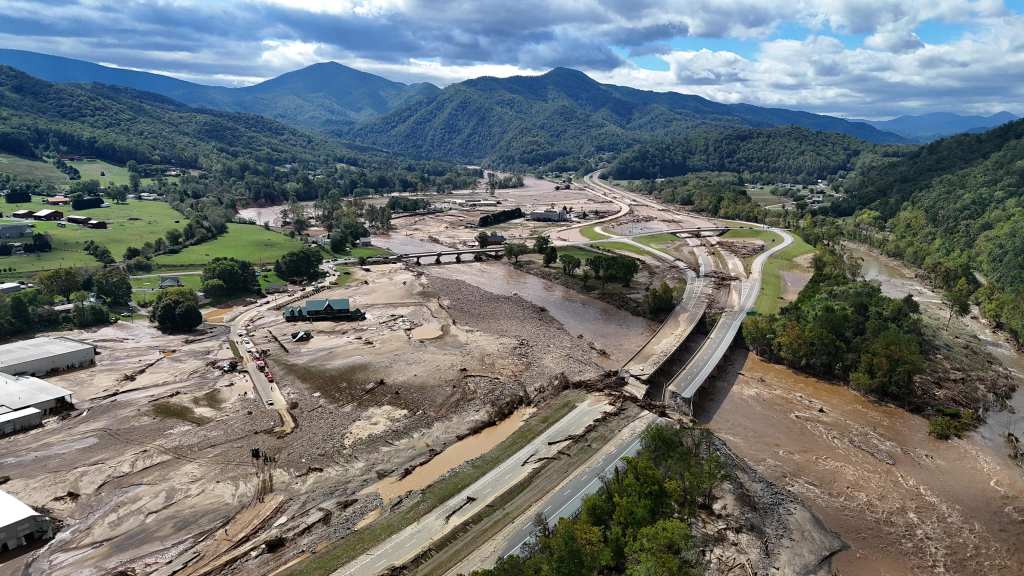
Saturday will be one year since Hurricane Helene tore through the mountains of Western North Carolina and East Tennessee, leaving a mark on the region that will remain for generations. On September 27, 2024, the storm brought winds that roared past 100 miles per hour and unleashed rainfall that reached nearly 30 inches in some valleys and hollows. The result was devastation on a scale that few in the Southern Appalachians had ever seen. Entire communities were swept away by walls of water, and mountainsides collapsed into valleys in a cascade of deadly landslides. The storm claimed more than 200 lives, left thousands without homes, and turned once-thriving towns into landscapes of ruin.
The destruction caused by Helene carried a staggering price tag. Experts estimate the total damages at $78.7 billion, placing the storm among the most expensive natural disasters in American history. That figure is hard to fully comprehend, yet for those living in the impacted counties, the cost is measured not only in dollars but in broken families, vanished neighborhoods, and a deep sense of dislocation. The hurricane transformed the physical landscape of the Appalachians, carving new scars into mountainsides and river valleys. For those who survived, recovery has been an uneven, exhausting, and ongoing process.
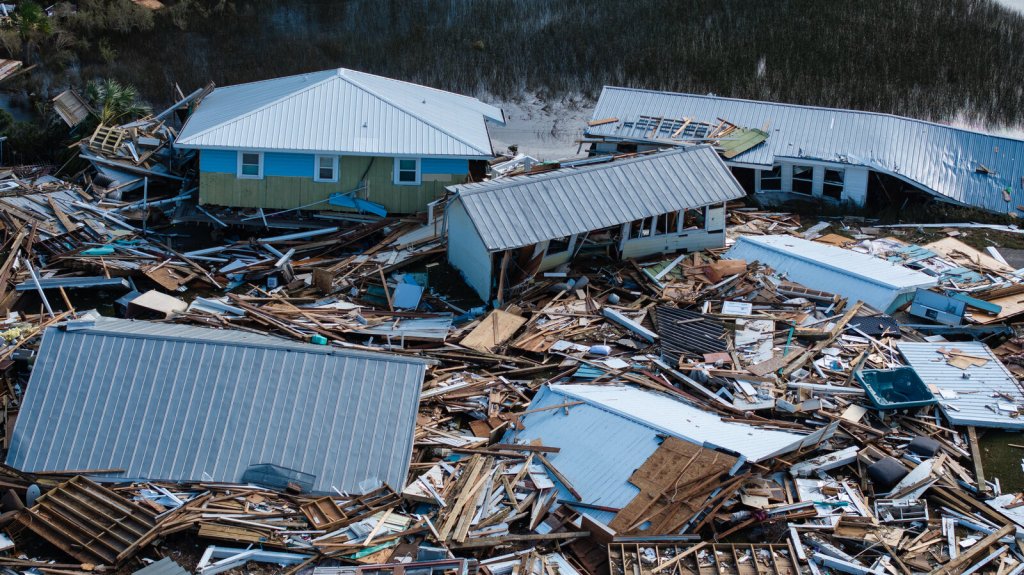
In many places, cleanup alone stretched into the winter months. Entire stretches of roadway were obliterated by mudslides, leaving mountain towns cut off for weeks. Power lines dangled over rivers where bridges once stood. School buildings were filled with mud and debris. Local governments scrambled to set up temporary shelters and provide food for residents who had lost nearly everything. State and federal emergency funds poured into the region, yet the magnitude of the damage often outstripped available resources.
Now, a year later, signs of progress can be seen. Families who lost homes have begun moving into new ones, though for many, rebuilding remains out of reach. Federal assistance programs provided some relief, yet construction costs in the region have soared. The demand for labor and materials has exceeded supply, delaying projects and leaving families in limbo. Insurance coverage gaps added to the challenges, as many homeowners had policies that excluded flood damage. For those without significant financial resources, recovery has been painfully slow.
Road repairs remain one of the most visible reminders of the storm’s enduring impact. Across Western North Carolina and East Tennessee, crews are still working to stabilize mountainsides and rebuild highways that serve as lifelines for rural communities. Some roads have reopened, though only partially, while others remain impassable. Detours that add hours to daily commutes have become a frustrating reality for residents. Truck drivers hauling goods to small mountain towns often face long delays, which affects local economies that were already fragile before the storm. Tourism, a vital source of income in the Appalachian region, continues to struggle as access to hiking trails, scenic byways, and historic towns is limited by road closures and construction zones.
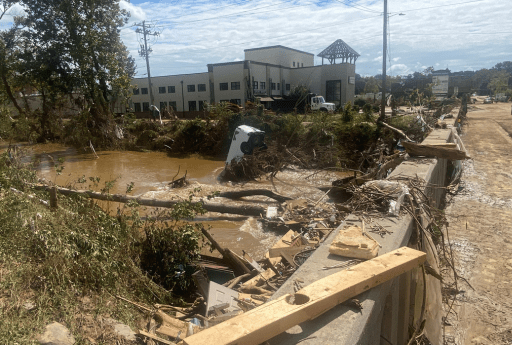
The sheer scale of infrastructure repair is daunting. Engineers faced the challenge of rebuilding in terrain where heavy rains can trigger landslides without warning. Traditional road construction methods have proven inadequate in many locations, forcing officials to explore new strategies for slope stabilization and drainage. These projects are expensive and time-consuming, requiring extensive geological surveys before work can even begin. For communities reliant on a single highway or bridge for access to schools, hospitals, and grocery stores, delays have been agonizing.
For those who lived through the storm, the emotional toll has been profound. Survivors speak of the constant sound of rainfall that night, the roar of rivers that overflowed their banks, and the chaos of trying to flee as roads collapsed around them. I know this pain personally, as two of my cousins were lost in a mudslide during the height of the storm. Their absence is a daily reminder of how fragile life can be in the face of nature’s fury. Many others across the region carry similar grief, having said goodbye to loved ones whose lives ended suddenly in the floodwaters and landslides. Counseling services have been stretched thin, as mental health needs in the aftermath remain high. Community organizations have stepped in to provide support, yet the scale of grief is overwhelming. Churches, fire halls, and schools have become centers of resilience, where residents gather to share stories, rebuild networks of support, and remind one another that they are not alone in their struggle.
The environmental consequences of Helene also continue to unfold. Landslides stripped vegetation from steep slopes, leaving raw earth exposed to further erosion. Rivers carved new channels, washing away farmland and leaving behind silt that has choked aquatic habitats. Fish populations in some streams have plummeted, and biologists warn that recovery could take decades. Forests, once dense and green, now reveal swaths of snapped and uprooted trees. The loss of tree cover has increased the risk of additional landslides during heavy rains, raising concerns about future storms. Scientists note that Helene represents what they call a 1-in-1000-year event, yet climate trends suggest that extreme weather in the Appalachians may grow more frequent in the coming decades.
Communities across the region face difficult choices about how to prepare for future storms. Some neighborhoods that were devastated by flooding are considering whether rebuilding in the same location is sustainable. In certain valleys, residents have chosen to relocate to higher ground rather than risk another disaster. Local governments are working with state agencies to identify areas at high risk for landslides and flash floods, yet relocation is both emotionally and financially complex. For families with deep roots in the mountains, leaving ancestral land is a painful decision, even when safety concerns loom large.
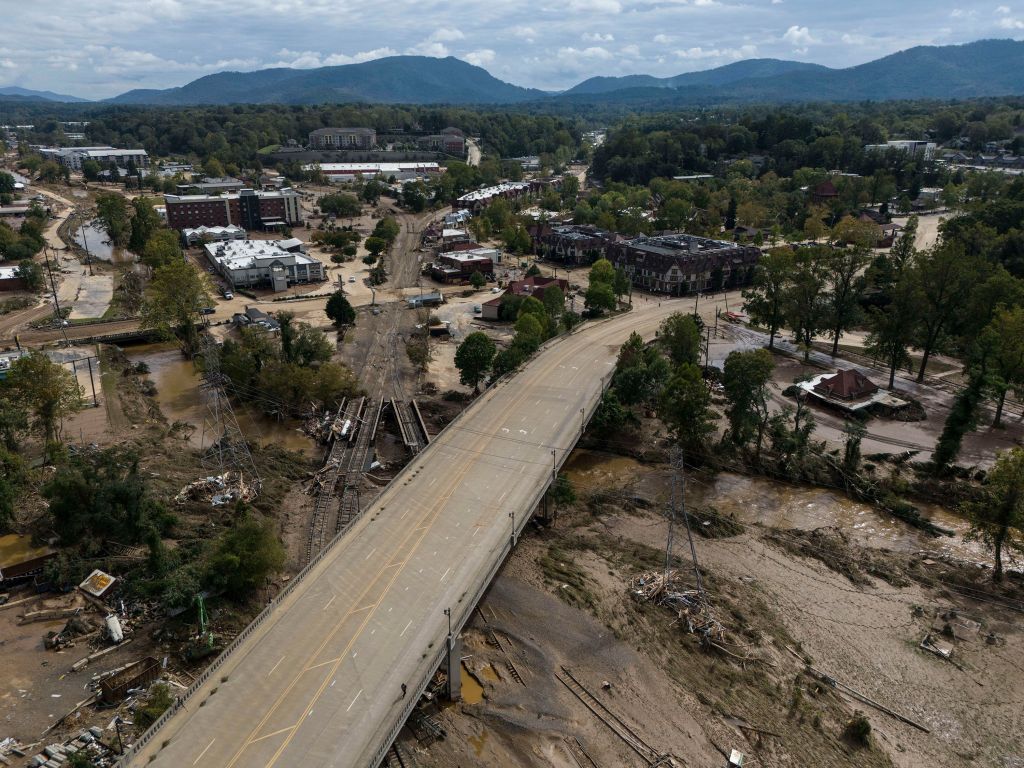
In the year since the hurricane, countless stories of resilience have emerged. Volunteers from across the country traveled to the region to assist with cleanup and rebuilding. Nonprofit organizations established supply centers and distributed food, clothing, and household goods to those in need. Teachers held classes in church basements and community centers to keep students on track academically. Local musicians organized benefit concerts to raise money for relief efforts. Acts of generosity, both large and small, have offered hope in the midst of devastation.
At the same time, frustrations remain high. Some residents feel forgotten as national attention shifted elsewhere after the initial shock of the disaster faded. Federal disaster relief programs, while vital, have been criticized for bureaucratic delays and uneven distribution of aid. Families who applied for assistance months ago are still waiting for approval. Small businesses struggle to reopen, hindered by damaged infrastructure and reduced customer traffic. Political disagreements over funding allocations have slowed down the flow of money to communities, leaving many projects stalled. In some cases, partisan battles in state and federal legislatures turned recovery aid into a bargaining chip, delaying desperately needed resources for families. Local officials continue to advocate for more sustained investment in the region, warning that without long-term support, recovery could stall.
Hurricane Helene has also reshaped the identity of the Appalachian communities it struck. For many, the storm reinforced the vulnerability of mountain towns to extreme weather events. For others, it highlighted the strength of neighbors pulling together in crisis. The scars left on the landscape are mirrored in the scars carried by the people, yet there is also pride in how much has been accomplished in a single year. Rebuilt schools now serve as symbols of renewal. Roads that reopen after months of closure are celebrated as victories. Every family that moves into a new home brings a sense of forward momentum.
Looking ahead, the lessons of Helene are shaping new approaches to disaster preparedness. Local emergency management agencies are investing in improved warning systems, recognizing that the mountains’ complex terrain can make flash floods particularly deadly. Engineers are revising building codes to better withstand high winds and heavy rain. Nonprofits and community leaders are advocating for mental health resources as an integral part of disaster response. There is a growing recognition that resilience in the Appalachians requires not only physical rebuilding, but also social and emotional support.
The road to full recovery remains long. Entire neighborhoods still wait for reconstruction, and infrastructure projects that stretch across counties may take years to complete. The estimated $78.7 billion in damages underscores the immense financial challenge. Yet amid the hardship, there is determination. Residents speak of a love for their mountains that cannot be shaken by even the most destructive storm. The beauty of the Appalachians endures, even as scars from Helene remain visible. Rivers still sparkle in the sunlight, forests are slowly regenerating, and communities are finding ways to adapt and thrive.
One year after Hurricane Helene, the Appalachian region continues to live with the consequences of one of the most destructive natural disasters in its history. The memory of the storm’s winds and waters is fresh, yet so too is the memory of neighbors helping neighbors, of communities refusing to surrender to despair. For me, the loss of my cousins will always be part of the story of that night, though their memory strengthens my resolve to honor the resilience of this region. To everyone including my family, thank you all for stepping up and making a difference. To all the first responders, what you all did will never be forgotten. The story of Helene is one of tragedy and loss, yet it is also one of courage, determination, and the enduring human spirit that shines most brightly when tested by the fiercest storms.
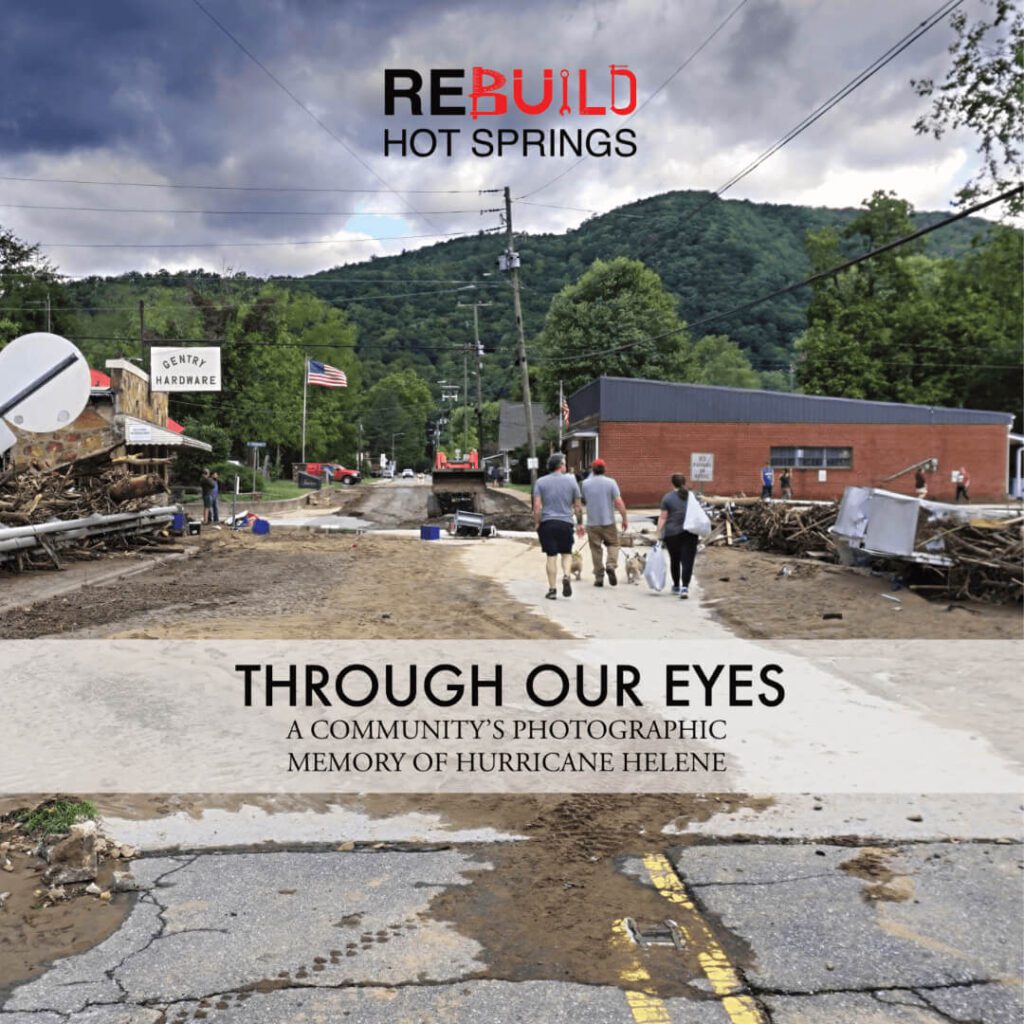
If you would like to help in the rebuild effort, you can preorder the book that will be launched this weekend to help rebuild Hot Springs, North Carolina. The book is called “Through Our Eyes” the link for the book is under the picture below.
-Tim Carmichael
 Echoes of Appalachia
Leave a comment