
In September 2024, Hurricane Helene roared through the Southern Appalachians and brought record-breaking rain and wind that transformed the High Country in ways that will shape the region for decades to come. Boone experienced its most devastating flood event since 1940, and before that, 1916, leaving scars on communities that had already endured a long history of severe weather. For many residents, Helene marked the most terrifying experience of their lives. Emergency officials described it as a disaster without precedent in Western North Carolina’s modern history.
According to the National Weather Service, Helene arrived after a band of heavy rain had already saturated soils and raised river levels across the Mountains in Appalachia. By the time the storm completed its passage, some locations in the Southern Appalachians recorded upwards of 30 inches of rainfall, while most of the High Country received 10 to 20 inches. Wind gusts reached 40 miles per hour in valleys, climbing to more than 100 miles per hour along the exposed ridges and peaks. Those forces combined to unleash floods, landslides, and widespread destruction of infrastructure.

The North Carolina Office of State Budget and Management placed damage estimates at $59.6 billion statewide, nearly four times greater than the impact of Hurricane Florence in 2018. More than 100 people lost their lives, thousands of homes were destroyed, tens of thousands more suffered damage, and millions experienced interruptions to water, electricity, telecommunications, and health care. Entire communities were left isolated when bridges washed away or mountain roads collapsed under torrents of water.
The toll extended beyond lives and property. According to the U.S. Geological Survey, Helene triggered more than 2,000 landslides across the Southern Appalachians in less than a week. That number astonished scientists who had studied landslides in the region for decades. The storm revealed how vulnerable the High Country remains to the combination of heavy rainfall and steep slopes.
Experts explained that hurricanes carry unique risks when they move inland toward mountain terrain. Unlike coastal plains where floodwaters linger for days or weeks, mountain valleys experience rapid rises and equally rapid drops in water levels due to steep gradients. Anderson, a regional hazard specialist, described this phenomenon in stark terms. In his words, when major rainfall strikes mountain watersheds, flash floods follow quickly, leaving little time for residents to react. Torrential runoff scours banks, undermines hillsides, and rips trees from slopes. This dynamic produced the catastrophic landslides that reshaped many valleys in the wake of Helene.
Stories from communities across the High Country illustrate the magnitude of the disaster. In Boone, downtown businesses filled with water as the South Fork of the New River swelled over its banks. Students at Appalachian State University were forced to evacuate dormitories when floodwaters approached. Along the Blue Ridge Parkway, landslides blocked stretches of road and tore away entire sections of pavement. Smaller towns such as Blowing Rock and Banner Elk experienced similar devastation, with residents cut off from emergency services when roads became impassable.
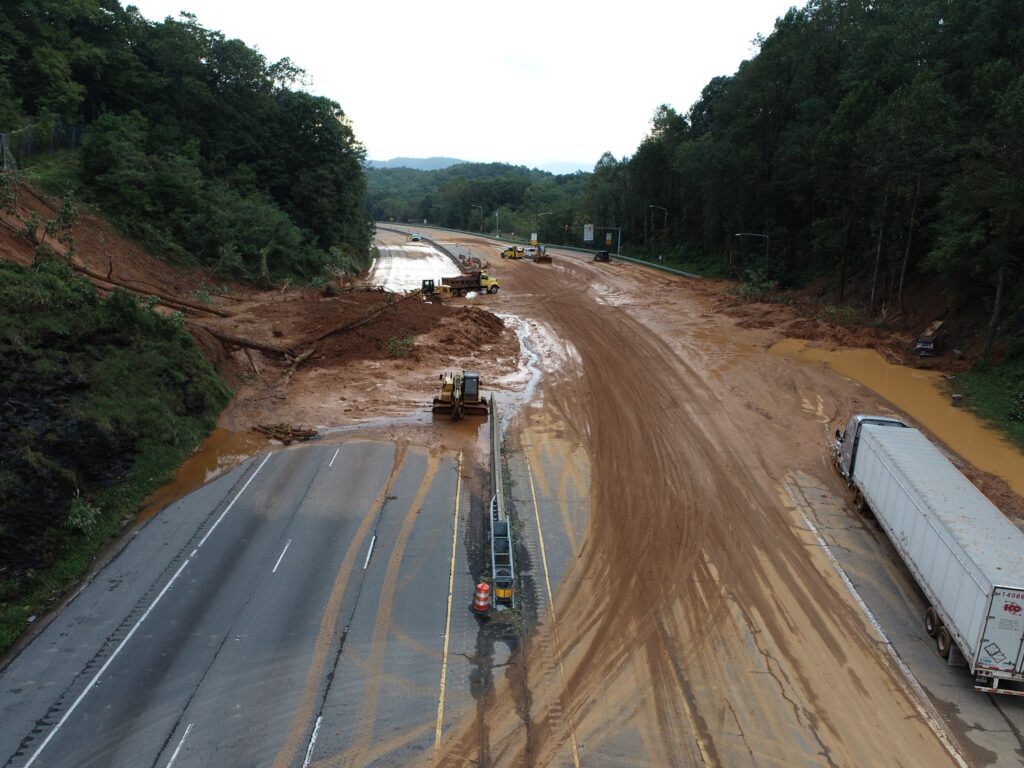
Farmers across Watauga and Ashe Counties faced ruin as floodwaters drowned livestock and swept away topsoil. Families who had lived on the same land for generations watched barns collapse under relentless winds and mudslides. Tourism, a vital lifeline for the region, came to a standstill as cabins and lodges sustained heavy damage and scenic byways closed indefinitely. The cascading effects reached into every sector of the High Country’s economy.
Statewide, Helene touched nearly half of North Carolina’s population. More than 4.6 million people lived in designated disaster areas. Recovery crews struggled to reach all corners of the affected counties. Power companies worked around the clock, yet hundreds of thousands of households remained without electricity for days, some for weeks. Hospitals relied on generators, while clinics in rural areas had to shut down entirely. Communities organized makeshift shelters in schools and churches, where volunteers distributed food and clothing.
The sheer scale of destruction prompted comparisons to the great floods of the past century. The 1916 flood in Asheville and the 1940 flood in Boone had long stood as benchmarks of mountain disasters. Helene surpassed them both in rainfall totals, wind speeds, property damage, and loss of life. Meteorologists warned that climate change may be increasing the frequency of extreme storms in regions previously thought safer than coastal areas. For many in the High Country, this realization has raised new questions about how to prepare for the future.
Recovery from Helene has proven daunting. Rebuilding roads and bridges in steep mountain terrain requires far more time and resources than similar work in flatter landscapes. Engineers must stabilize slopes, reroute drainage, and reinforce foundations before construction can even begin. In some valleys, homeowners face the grim choice of relocating entirely rather than attempting to rebuild in high-risk zones.
Local leaders have called for increased investment in resilient infrastructure. That includes upgrading stormwater systems, reinforcing dams, and creating early-warning networks for landslides. Emergency planners also stress the importance of education. Residents need to understand the speed with which floods can overtake mountain communities and the dangers of attempting to cross swollen streams.
For many families, the emotional scars will linger as long as the physical damage. Survivors recount the sound of boulders tumbling down slopes in the dark, the sight of entire hillsides collapsing, and the fear of watching waters rise toward their homes. Children displaced from schools have struggled to adapt to temporary classrooms. Business owners weigh uncertain futures as insurance payouts fall short of rebuilding costs. Churches and civic organizations continue to serve as anchors for hope and support, yet the road to recovery remains long.

The storm also spurred conversations about environmental stewardship. Scientists point to the role of deforestation and development in exacerbating landslide risks. As more roads and homes are built on steep slopes, natural buffers erode, making mountain communities more vulnerable. Conservation groups argue that protecting forests and wetlands is an essential part of preparing for future storms.
Despite the devastation, examples of resilience emerged. Neighbors banded together to rescue stranded families, share food, and clear debris. Students volunteered to deliver supplies to remote hollows. Emergency responders worked around the clock, often risking their lives to reach people in distress. These acts of solidarity have provided a measure of comfort amid overwhelming loss.
The lessons from Hurricane Helene will shape policy, planning, and community awareness in the Southern Appalachians for decades to come. Officials emphasize that while storms of such magnitude remain rare, the potential for recurrence cannot be dismissed. With climate patterns shifting, mountain regions must prepare for the possibility of heavier rainfall and stronger winds in future hurricane seasons.
Helene has already secured its place in history as the most destructive storm to ever strike Western North Carolina. Its legacy lies not only in the billions of dollars in damages or the thousands of landslides, but also in the collective memory of the communities that endured it. For those who lived through the storm, the sound of rushing water and cracking trees will remain a reminder of nature’s power and vulnerability of life in the mountains.
As recovery continues, the High Country stands at a crossroads. Choices made in the coming years about infrastructure, land use, and emergency preparedness will determine whether future storms bring similar devastation or whether communities emerge stronger and more resilient. Hurricane Helene revealed the risks, the costs, and the human toll of a changing climate. It also revealed the courage and determination of those who call the Mountains in Appalachia home.
-Tim Carmichael
 Echoes of Appalachia
Leave a comment