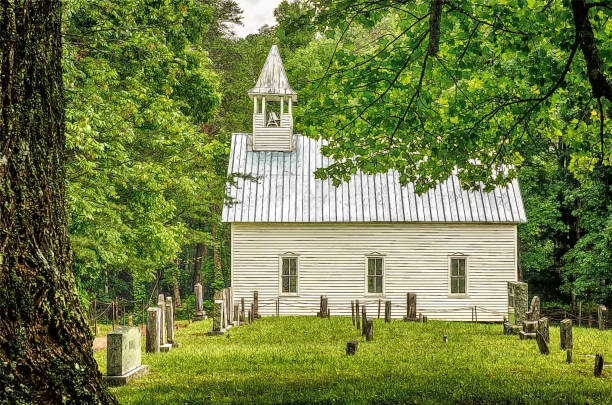
Contemporary Appalachia stands at a crossroads between tradition and transformation, where faith and politics remain deeply intertwined. Religion has long shaped the cultural, social, and political fabric of the region, with churches serving as not just places of worship but as community centers, town halls, and engines of social change. Yet, as Appalachian society evolves, so too do its religious institutions, leading to new challenges, tensions, and opportunities in how faith leaders influence policy and local politics.
Appalachia’s religious tapestry originated from a blend of European settler beliefs, Native American spirituality, and localized traditions. Christianity, especially Baptist, Methodist, and Presbyterian denominations, still dominates the region and is responsible for shaping spiritual and cultural life for generations. Small country churches often referred to as “meeting houses” once offered spaces for pure spiritual teaching and community unity, emphasizing scripture over dogma and embracing an ethos of helping one’s neighbor.
The role of the church in Appalachian life has shifted, reflecting wider social trends and internal transformations. While the message of God’s love and redemption persists, many observers lament that some churches have become vehicles for promoting exclusionary views, political partisanship, and rigid interpretations of scripture instead of fostering open, inclusive spiritual guidance. Where worship was once focused on spiritual nourishment and community support, today’s services can feel more polarized, with ideological divides sometimes overshadowing traditional teachings and practices.
In Appalachia, religious leaders remain highly influential voices in local and regional policy discussions. Many pastors and church elders actively engage in issues such as economic development, education, labor rights, and environmental stewardship. They often serve on local councils, organize grassroots campaigns, and shape community norms with sermons that explicitly address social problems. For example, faith based opposition to environmental damage from mining practices has prompted some churches and ecumenical bodies to advocate for regulatory reform and stewardship of natural resources, framing these issues through a biblical lens.
Historically, religious institutions have been central to labor movements and campaigns for social justice in Appalachia. Personal faith traditions provide courage and resolve for confronting economic hardship and exploitation, while some community churches have hosted activism for better wages and safer working conditions. Yet, the church’s stance on labor issues varies by denomination and local context, with some clergy supporting workers and others maintaining neutrality or siding with business interests.
Religion is often a predictor of political behavior in the region. Candidates who underscore their faith and moral values tend to resonate with rural voters, and religious institutions frequently advocate for socially conservative policies, such as opposition to abortion or support for traditional family structures. This tendency has reinforced the region’s reputation as a stronghold for conservative politics, though there is considerable diversity of opinion among different denominations and congregations.
While Protestant Christianity dominates Appalachia, the religious landscape is expanding to include Jews, Muslims, Orthodox Christians, and Cherokee spirituality. These minority communities face unique challenges adapting to local norms and sometimes responding to negative sentiments from the majority. Nevertheless, their presence enriches the region’s spiritual diversity and offers models for religious pluralism, dialog, and mutual understanding.
Cherokee spirituality, for example, demonstrates a blend or syncretism of indigenous beliefs with Christian traditions, showing that Appalachian faith is not monolithic but evolving through intercultural exchange. Similarly, Jewish and Orthodox Christian congregations, though small, have carved out spaces for worship and cultural preservation amid a Christian majority environment, contributing to the region’s changing religious profile.
Many lifelong Appalachians remember churches as places of collective solace, charity, and learning, the heart of community life. Today, some experience disappointment as sermons become more politically charged, promoting exclusion and intolerance instead of unity and hope. Critics argue that the politicization of the pulpit has allowed outside agendas to infiltrate local churches, eroding their role as spiritual guides. Others contend that churches are responding to genuine threats to traditional values.
Amid concerns over divisiveness and politicization, there is a growing movement to return churches to their original purpose teaching compassion, respect, and the true teachings of God. Faith leaders who embrace social justice, interfaith cooperation, and community support are building coalitions to confront poverty, addiction, and environmental decline while rejecting hate and exclusion. This renewal seeks to rekindle the churches’ historic mission as beacons of hope and service.
Programs have emerged to help religious leaders address the complex web of Appalachia’s social challenges. Seminaries and nonprofit organizations are training clergy to become community organizers, bridge builders, and advocates for policy change rooted in ethical and spiritual commitments. These efforts underscore the enduring potential of Appalachian faith to fertilize real progress while staying true to core teachings.
Despite the changes, churches remain critical anchors for many Appalachian communities, offering essential social services, education programs, and disaster relief. Ecumenical events, like joint nativity scenes, food banks, and family festivals, showcase the enduring spirit of cooperation and care that defines the best elements of regional religious life.
Faith and religion continue to shape Appalachia, not only in personal lives but in collective politics and policy. The region’s religious institutions are at a crossroads they can continue down a path of division and exclusion, or they can reclaim their legacy as sources of compassion, justice, and unity. For Appalachia, the future of faith lies in rediscovering its roots, welcoming diversity, and inspiring positive change in society and politics. The call to “bring churches back to the way they used to be” is not simply a yearning for nostalgia, it is an urgent imperative to re center communities around the teachings of kindness, love, and true fellowship.
-Tim Carmichael
 Echoes of Appalachia
Leave a comment