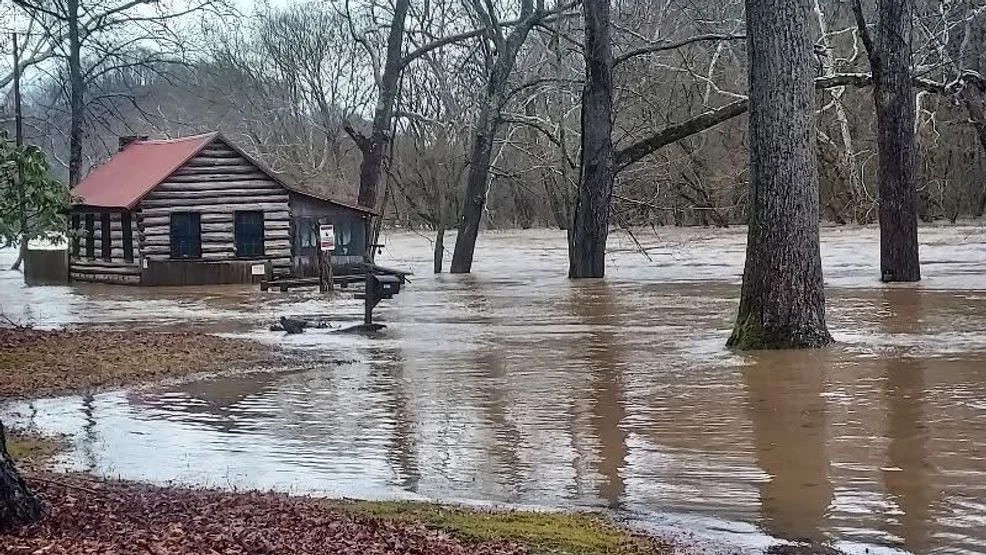
Since September, Appalachia has been overwhelmed by a string of natural disasters that have pushed the region into a state of constant recovery. Towns tucked into the valleys of the Appalachian Mountains, once known for their scenic beauty and tight-knit communities, are now struggling against a surge of what meteorologists have called 1,000-year floods. The name is chilling, not because of the statistical rarity it implies, but because of the devastation it continues to bring.
Floodwaters have rushed into small towns and cities across Kentucky, West Virginia, Virginia, Tennessee, and parts of North Carolina. In many places, rivers that locals say had never risen above the banks have crested by more than ten feet, swallowing homes, schools, and businesses in hours. The death toll across the region has passed 94 since the start of the crisis last fall, with Kentucky suffering the worst hit at 38 fatalities. Entire neighborhoods were erased in places like Letcher County and Pikeville, and families have had to rely on rescue boats to flee rising water in the dead of night.

The geography of Appalachia makes it uniquely vulnerable. The terrain is carved by steep hills and narrow hollows. Rainfall in one area flows quickly into nearby valleys, turning streams into raging torrents within minutes. When those streams are overwhelmed, there is little space for the water to go except through homes and across roads. Heavy rainfall, even over a short span, builds up fast and hits hard.
Climate experts say the pattern emerging here cannot be chalked up to bad luck or an isolated storm. Appalachia is experiencing more frequent and intense rainfall events, with warmer air carrying more moisture that fuels longer, heavier downpours. In the past, the region would see brief storms with moderate accumulation. Now, back-to-back systems dump more than eight inches of rain in some places within hours. That kind of water load overwhelms infrastructure that was never built to handle it.
Urban sprawl and mining have also reshaped the land over decades. Paved surfaces prevent water from seeping into the ground. Mountaintop removal and other mining practices have altered the natural flow of water and left the soil loose and unstable. Deforestation means that rain is no longer slowed by roots and leaves, and runoff moves downhill with brutal speed. Combined, these factors contribute to flash flooding that feels sudden, yet has deep roots in long-term environmental change.

Communities across the Appalachian states are facing the hard reality of rebuilding while still drying out. In eastern Kentucky, towns like Whitesburg and Hazard have become centers of mutual aid. Churches have turned into food banks, and school gymnasiums now hold clothing donations and emergency shelters. In southwest Virginia, volunteers from nearby counties have spent their weekends clearing debris from homes, helping elderly residents whose houses were gutted by mud and water.
Federal and state agencies have stepped in to provide support, but progress remains slow. FEMA has allocated disaster relief funds, and the Army Corps of Engineers has sent teams to assess infrastructure damage. Still, many residents say they are frustrated with the pace and bureaucracy of federal assistance. In the hollers and backroads, neighbors often rely on each other before help arrives from the outside.
Recent budget cuts to FEMA have raised even more concerns. With less federal money available, states are being asked to shoulder more of the financial burden. For a region already struggling with high poverty rates, aging infrastructure, and limited resources, the question remains whether Appalachia can fully recover with only state support. Many emergency managers warn that state budgets alone cannot meet the scale of need these floods have created. Without robust federal aid, rebuilding may be slower and less resilient, leaving communities exposed to future disasters.
Rebuilding here is more than replacing drywall and road signs. It is about finding ways to live with the new reality of extreme weather. Local leaders are looking into flood-resistant infrastructure, such as elevating buildings or creating natural floodplains where water can collect safely. In towns like Norton, Virginia, planners are studying how to rebuild bridges and culverts to withstand higher volumes of water. In Hazard, conversations are underway about relocating some residents from areas most vulnerable to future floods.

For many, the emotional toll runs deeper than the loss of property. These floods have pulled families apart and forced difficult decisions. Some people have left altogether, moving to bigger cities or to higher ground where they feel safer. Others remain, tied to their land and determined to stay. For them, the floods are another chapter in a long history of hardship and survival. Appalachian culture is rooted in endurance, and that strength is carrying communities forward even as rain continues to fall.
At the heart of this crisis is a changing climate that is reshaping the way people live. Weather patterns are shifting, and experts say that storms which once occurred once in a millennium may become much more frequent. That raises hard questions for regional leaders. How do you protect the most vulnerable communities when the land itself seems to be turning against them? How do you rebuild while preparing for the next disaster?
Research groups are working with local governments to map risk zones more accurately. Satellite data and hydrological modeling are being used to identify the places most likely to flood again. These efforts are crucial, as rebuilding in the wrong spot could set up entire towns for repeated disaster. The challenge is balancing heritage with safety. In many cases, the places most at risk are also the most historic, towns that have been around for generations, built along rivers that once sustained them.
Schoolchildren in eastern Tennessee have started writing letters to Congress, asking for more support and attention. Local newspapers are filled with stories of volunteer fire departments using their own savings to replace damaged equipment. The region is pulling together, but many feel that broader awareness and action are needed if Appalachia is to weather the storms ahead.
Faith plays a large role in the recovery process. In West Virginia, pastors have opened their sanctuaries as makeshift shelters, and sermons have turned into spaces of collective mourning. People gather not only to grieve but also to plan. They share information about grant applications and home repairs. This mix of faith and action speaks to the deep resilience that defines the Appalachian spirit.
What is happening in Appalachia cannot be dismissed as a fluke. It is the product of natural terrain, altered landscapes, and a warming world that brings heavier rains with less warning. As communities look to the future, they are calling for deeper investment in flood protection, more responsive disaster management, and the tools to adapt to a new climate reality.
This region has long been stereotyped or ignored in national conversations. Yet it is now on the frontlines of a crisis that touches every part of the country. The floods in Appalachia are a signal of what can happen when past neglect meets a future of environmental upheaval. Still, amid the mud and water, a powerful story is unfolding. One of grit, community, and the hope that tomorrow might be safer than today.
-Tim Carmichael
 Echoes of Appalachia
Leave a comment