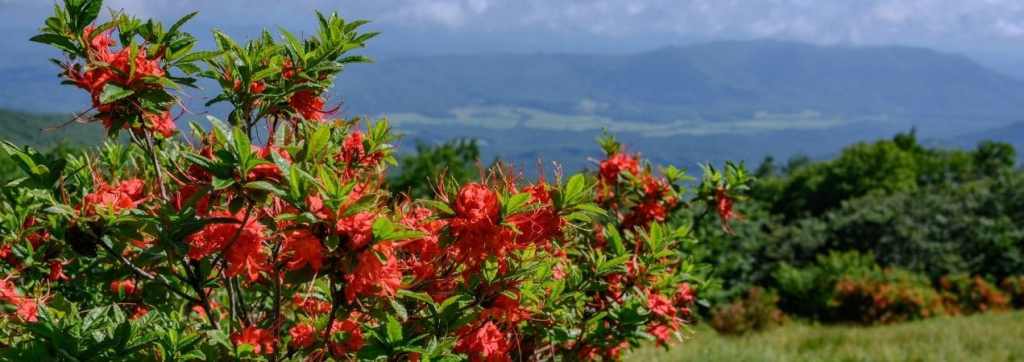
High atop the Smoky Mountains, far from the bustling roads and visitor centers, lies a summit where summer unfurls in rare, blazing colors. Gregory Bald, a rounded, grassy knob standing at 4,949 feet, remains one of the few places in the world where a natural garden bursts to life with fiery azaleas in hues so vivid they seem almost otherworldly. Every year in mid to late June, this secluded mountaintop transforms into a vibrant spectacle, attracting hikers, botanists, photographers, and lovers of wild beauty.
The star of this seasonal show, the flame azalea (Rhododendron calendulaceum), creates a display that has been called one of the greatest wildflower events in the eastern United States. Though flame azaleas grow elsewhere in the Appalachian range, nowhere do they put on such a display as they do here. Dozens of hybridized varieties flourish across the bald, forming a living canvas that spans oranges, pinks, reds, yellows, and whites.
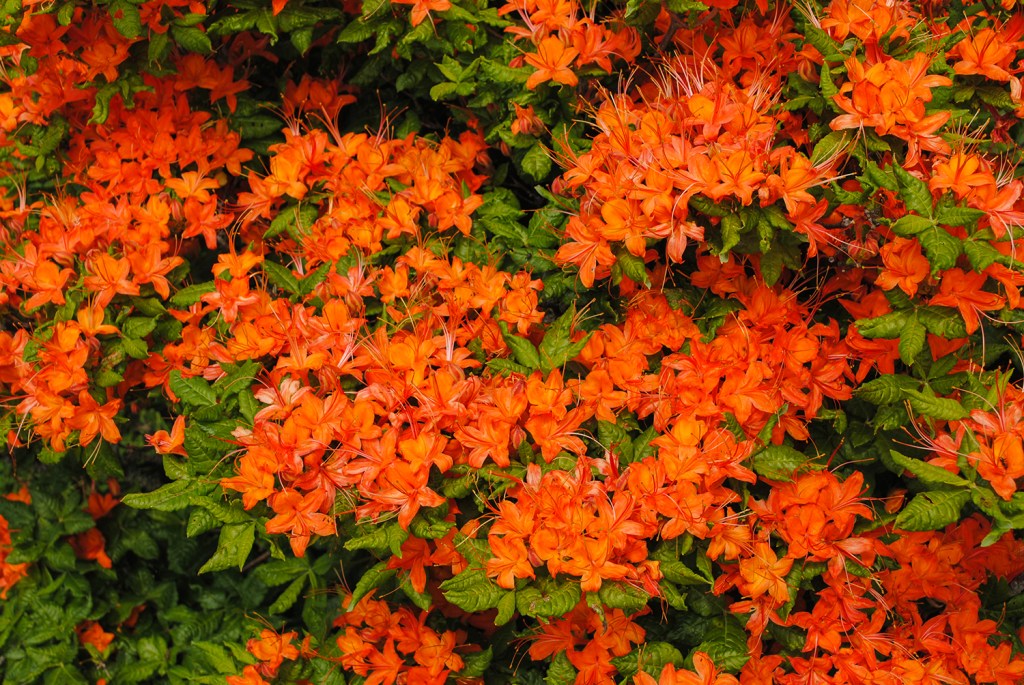
These azaleas are part of a natural garden. Their origins reach back through centuries, with hybridization occurring naturally on the bald. Gregory Bald’s unique combination of open grassy spaces, acidic soils, high elevation, and abundant sunlight creates ideal conditions for this spectacular floral evolution. Over generations, the azaleas have crossbred into myriad forms found nowhere else.
The term “bald” refers to mountaintops in the Southern Appalachians that, unlike surrounding peaks, remain unforested. Gregory Bald is a “grassy bald,” a type characterized by open meadows that resist reforestation despite seemingly ideal growing conditions for trees. The reasons behind this phenomenon remain a subject of scientific inquiry, though theories include grazing, fire regimes, soil chemistry, and climate patterns.
The azalea bloom on Gregory Bald lasts for roughly three weeks each year. At the height of the bloom, visitors will find themselves walking among waist high shrubs ablaze with color. Some blossoms display uniform shades, while others exhibit wild mixtures — fiery orange petals rimmed in scarlet or pink flowers streaked with butter yellow. The effect feels more like walking through a painter’s palette than a typical mountain landscape.
Getting to Gregory Bald requires effort. There are no roads to the summit; every visitor must hike in. The most popular route begins at the Gregory Ridge Trailhead in Cades Cove. From there, it is a steep, strenuous climb of about 5.5 miles, gaining over 3,000 feet in elevation. Those who undertake the journey find themselves richly rewarded. Not only do they reach one of the finest floral displays in the country, they also earn sweeping views across the Smoky Mountains, stretching into Tennessee and North Carolina.
The best time to witness the bloom is usually mid to late June. Timing varies slightly from year to year, depending on elevation, rainfall, and temperature. Hikers hoping to catch the peak bloom often rely on local trail reports or updates from the Great Smoky Mountains National Park rangers.

The azaleas’ presence on Gregory Bald also carries cultural and scientific importance. Botanists from the U.S. and abroad have long studied the plants for their hybrid vigor and diversity. The azaleas have been cataloged and classified over the decades, with new variations occasionally documented. Their persistence in a high altitude bald reflects complex ecological interactions, with pollinators, soil microorganisms, and elevation specific weather patterns all playing vital roles.
Though the bald has resisted reforestation, its open space requires active stewardship. Without maintenance, fast growing woody species might slowly overtake the bald, reducing both its visibility and ecological distinctiveness. Park staff engage in regular management efforts, sometimes mowing or using hand tools, to ensure that the open, grassy conditions supporting the azaleas remain intact.
This conservation work speaks to a broader truth: the bloom on Gregory Bald represents more than a pretty view. It symbolizes the intricate balance between natural processes and human responsibility. Without careful oversight, the unique conditions that foster these rare azaleas could fade, along with the breathtaking spectacle they create.
Many visitors hike up early in the day to watch the morning mist lift from the valleys below. Some stay late into the afternoon, letting the golden light of evening wash over the flowers. Others make overnight trips, camping at backcountry sites like Sheep Pen Gap. Sunrise and sunset from the bald offer unforgettable experiences, particularly when clouds drift through the ridges below, creating the “smoky” effect that gives the mountains their name.
What draws people to Gregory Bald year after year goes beyond floral beauty. It is the sense of awe that arises in the presence of wild, untamed splendor. These azaleas, growing freely at nearly 5,000 feet, defy easy explanation. Their colors appear to defy classification. Their survival, in an age of shrinking wildlands, feels like a quiet triumph.
No artificial light touches the summit at night. No road cuts through the bald. No fences enclose the azaleas. Everything about this mountaintop garden evokes the sacredness of wild nature. For those who make the climb, the experience often lingers long after the flowers fade, etched into memory like a bright flame against darkened ridgelines.
Gregory Bald remains a living reminder that nature, left to its own mysterious devices, can outdo even the grandest human vision. Its fiery azaleas bloom for no other reason than that the mountain has allowed them to thrive. In their fleeting summer blaze, they offer a glimpse into a world shaped by wind, sun, and time.
-Tim Carmichael
 Echoes of Appalachia
Leave a comment