
Coopering—the making of wooden barrels, buckets, tubs, and casks—was once a common and essential trade throughout Appalachia. For centuries, it was part of daily life. If a household needed to carry water, store food, churn butter, or age liquor, it relied on the work of a cooper.
The process is exact. Staves, usually of white oak, are split, shaped, and fitted together without nails or glue. They are bound with iron or wooden hoops and tightened through heat and pressure until watertight. Every piece must be precise. If the grain is wrong or the cut is off, the barrel leaks. Coopering isn’t decorative. It’s functional, demanding, and built on repetition, muscle memory, and judgment.
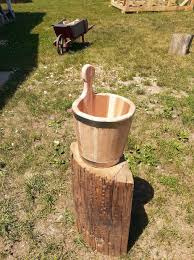
Tools are specific to the trade: drawknives, hollowing planes, crozes, sun planes, and hoop drivers. Most are hand tools, often passed down or made by the coopers themselves. Modern machinery can produce barrels faster, but not with the same understanding of the wood’s behavior or the purpose behind the object.
For a long time, Appalachian families depended on the cooper’s work. General stores sold dry goods in barrels. Farmers stored apples, salt pork, or beans in them. Liquor was transported in charred oak casks, and butter was made in hand-crafted churns. Each of these required slightly different construction, and the cooper had to know how to adjust the shape, size, and seal for the job.
Today, the trade is nearly extinct in the region. Plastic and metal replaced wood in nearly every setting. Skills that once passed from father to son, or neighbor to apprentice, were interrupted by changes in industry and economy. Few people still make these objects by hand, and fewer still make a living doing it.
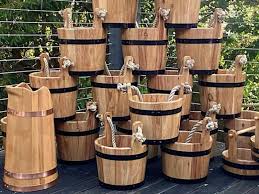
There is interest from hobbyists and historical interpreters, but learning the craft takes more than weekend workshops. It demands time, mistakes, and patience. Without new apprentices willing to commit years—not months—the knowledge will vanish when the last working hands are gone.
What disappears with coopering isn’t just a method of building containers. It’s a way of working with wood that understands function over form. It’s a connection to land, resourcefulness, and community. Coopering was never about art for art’s sake. It was about need. And for generations, it filled that need with skill and quiet pride.
Now, it hangs by a thread.
-Tim Carmichael
 Echoes of Appalachia
Leave a comment