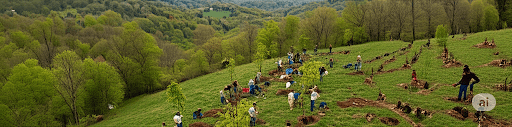
In Charleston, West Virginia, there’s a retired miner named Carl who plants trees on old strip mine sites. Not because somebody pays him—he just got tired of looking at what got torn up. He’s quiet about it. Packs a shovel, saplings, and water jugs into the back of his truck and hikes in before daylight. He says, “If I helped dig it out, I can help patch it back.”
Down in Asheville, North Carolina, a group of kids ride their bikes every Saturday morning to pick up litter along the French Broad River. Nobody asked them to. One of their uncles caught fish with oil slicks on the skin, and they decided that was enough. They call themselves “Trash Bandits.” They’ve pulled out tires, scrap metal, even a shopping cart with moss growing on it. They don’t pose for Instagram. They just want clean water.
In Knoxville, Tennessee, Miss Lila grows okra in five-gallon buckets on the edge of a parking lot. She used to have a yard, but the developers came. Now she teaches young folks how to grow vegetables in tight spaces—plastic totes, kiddie pools, milk crates. “The land don’t have to be perfect,” she says. “You just have to care about it.”
That’s Appalachia’s environmental story. Not policy. Not protests. Work. Quiet, steady work by people who aren’t trying to get credit. Folks who’ve seen land taken, air dirtied, rivers choked—and are still out there planting, hauling, and fixing.
Go out past Beckley, West Virginia, and you’ll find a man named Darnell who built a rain collection system off his barn roof. Uses it to water his tomatoes, clean tools, even flush toilets in summer. He put the same system on his daughter’s house in Oak Hill. “Clean water’s worth more than folks act like,” he told me. “One day they’ll remember.”
In Marshall, North Carolina, an old gas station got turned into a tool library. You can borrow shovels, post-hole diggers, even a cider press. It’s run by volunteers, mostly older women who don’t want to see another chain store take over the block. They fix up tools people leave on the curb and lend them out to anyone trying to start a garden or fix their roof. “You don’t save the land by talking,” one of them said. “You save it by using it wisely.”
These stories don’t make the news. They don’t fit into soundbites. But they’re real.
The region’s been scraped, dumped on, burned, and bought up—but we’re still here. And plenty of us haven’t given up on the idea that land can heal if you help it.
Some days it’s small things. A boy in Johnson City building birdhouses from scrap wood. A church group in Pikeville, Kentucky, pulling invasive vines off the hiking trails. A grandmother in Oak Ridge teaching her granddaughter how to compost eggshells and coffee grounds.
Some days it’s bigger. A co-op near Boone that turns leftover cooking grease into diesel. A family in Norton, Virginia, who planted native wildflowers along an old rail bed to help the bees come back.
What holds it all together isn’t a program. It’s a mindset. A refusal to walk away. An understanding that the land’s not separate from us.
We’re not outsiders trying to “save” the mountains. We live here. We drink the water, breathe the air, watch our kids run barefoot in the same soil our grandparents plowed. That’s why we fight for it—not with slogans, but with sweat and stubbornness.
You can drive from Charleston to Asheville to Knoxville in a day and see it: a place both bruised and alive. Some of it’s been wrecked. Some of it’s blooming again. But all of it still belongs to people who care deeply, even if they don’t write about it.
Nobody’s waiting around for someone to fix it. We’re already out there with shovels, gloves, water jugs, seed packets, and elbow grease.
Appalachia won’t be saved by policy alone. It’ll be saved by Carl, the Trash Bandits, Miss Lila, and everyone else doing the quiet work of keeping it.
We don’t need a headline. Just good ground to stand on.
-Tim Carmichael
 Echoes of Appalachia
Leave a comment